
Fall means time to clean out your medicine cabinet. How officials help you do it safely.
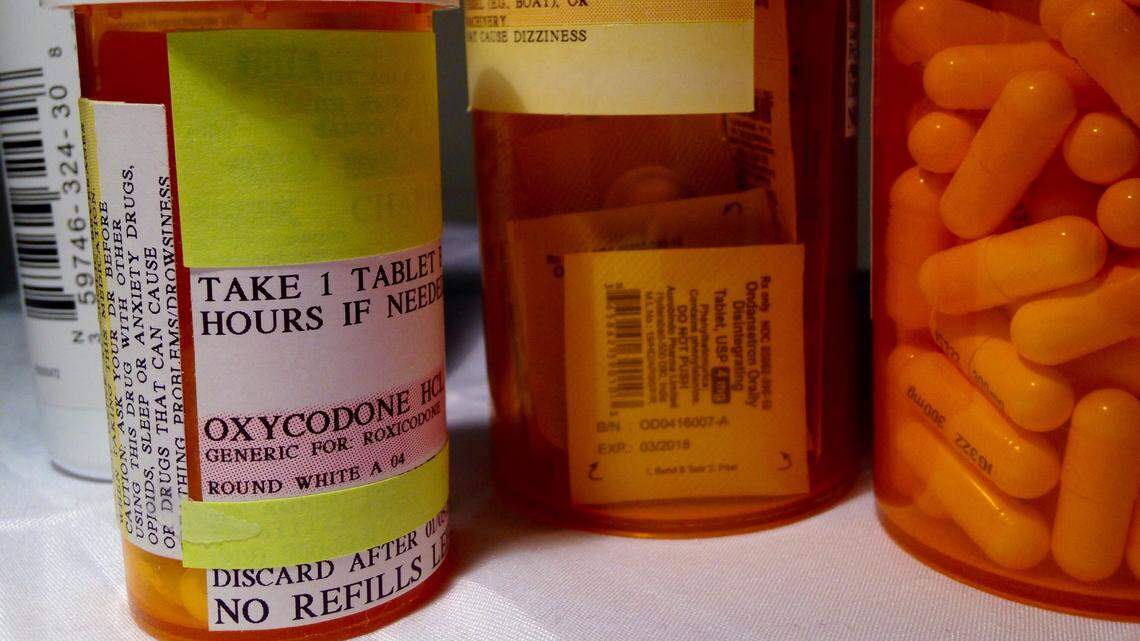
With all the extra time spent at home this year, some folks have cleaned out everything in the house but the medicine cabinet.
It’s time to tackle the medicine cabinet.
Each spring and fall, the N.C. State Bureau of Investigation — with help from the federal Drug Enforcement Agency, dozens of police and sheriff’s departments and local SAFEchild chapters across the state — destroys leftover prescription drugs to prevent them from being misused.
The program, called Operation Medicine Drop, was designed to keep the most dangerous prescription drugs, such as opioids, depressants and stimulants, out of the hands of children, but it accepts all kinds of prescription and over-the-counter medicines that are no longer needed or have expired.
Poisoning, including accidental drug overdose, is the leading cause of unintentional death in the United States, surpassing vehicle crashes, according to the Centers for Disease Control. The majority of unintentional death by poisoning is caused by the abuse and misuse of drugs, the CDC says.
One pill can ‘negatively impact a child’s life’
Five people die every day in North Carolina from opioid overdoses, according to morepowerfulnc.org, a coalition of state government and health officials. The number killed each year by accidental opioid overdose has doubled over the past decade.
“It takes just one pill to negatively impact a child’s life,” said John Keane, special agent-in-charge of the drug division of the SBI who oversees Operation Medicine Drop. “We’re trying to just instill a culture, a way of thinking. So if mom or dad had a surgical procedure and there is hydrocodone left over, let’s not keep that around for eight months because I might twist my ankle. That will be a new medical visit and a new prescription if I need it. Let’s just get rid of that.”
Throughout the year, families can take unneeded medications to drop boxes at participating police departments, sheriff’s offices and pharmacies. The state Department of Insurance has an online search tool that shows the nearest drop box to any address.
Typically, the medicines are stored until the twice-annual SBI collection dates, when local law enforcement delivers the medications to the SBI, which then takes them to a commercial incineration company to be destroyed. The fall collection date is the last week of October.
Besides keeping potentially dangerous drugs out of the hands of children or others who might misuse them, the take-back program prevents medicines from being flushed down the commode and into the environment, and out of landfills.
Each of the past several years, Keane said, North Carolina has collected about 60,000 pounds of drugs — two tractor-trailer loads each year — to be destroyed.
“We have the Number One program in the Southeast,” Keane said.
While everything that comes into Operation Medicine Drop gets destroyed, North Carolina has some alternative avenues through which some prescription medications can be donated for reuse by clinics and pharmacies that provide services to clients with no insurance and limited or no income.
No controlled substances can be donated for reuse. But some other medications can be, if they are in the manufacturer’s original, unopened packaging and have not expired. Pills or tablets that were taken out of the manufacturer’s original bottle and put into an amber pharmacy bottle, for example, may not be donated. But unexpired blister packs of medicines that are in the original unopened box may be.
Randy Jordan, CEO of the North Carolina Association of Free and Charitable Clinics, said many of the donations are medicines that were dispensed to nursing homes, where prescriptions often are individually packaged and are clearly labeled, dated and sealed. If a patient stops taking such a medication, what’s left over can be donated to a pharmacy operating within the Association of Free Clinics.
Drug donations can add up
Occasionally, Jordan said, individuals outside of nursing homes also have medications that qualify, and those may be accepted by pharmacies within the network for redistribution to patients in need.
Jordan couldn’t guess what percentage of medications that get destroyed each year might be eligible for reuse, “But prescription drugs are so expensive that even if you recovered 1% of them, that would be a material amount,” he said. In 2019, Jordan said, the clinics served more than 82,000 patients.
Not every clinic in the network accepts drug donations, however, and it’s best to check with a clinic before dropping off any medications.
Terry Price, manager of the pharmacy at the Helping Hand Clinic in Sanford, part of the network of charitable clinics, said she accepts donated medications for her Lee County patients because that frees up money to buy other needed prescriptions.
“We take maintenance medications, especially,” she said, “to treat high blood pressure, diabetes, that sort of thing.”
Often, Price said, the medications are donated by veterans who get their prescriptions from the Veterans Administration in 60-day or 90-day quantities, and then their doctor changes their prescription, leaving them with unused doses that have never been opened.
“There is a lot of good medicine being thrown away, and it’s such a waste,” Price said. “But at the same time, we have strict laws that are meant to protect people. You wouldn’t want to go into a pharmacy and get a bottle of medicine that had been in somebody’s house, open. I know I wouldn’t.”
To locate or contact a free clinic, go to the website of the North Carolina Association of Free and Charitable Clinics. To find a drop box to get rid of medications that cannot be reused, go to the map on the website of the N.C. Department of Insurance.
Needles should not be placed into drop boxes that accept unused medications. Those should be placed into hard plastic containers and taken to special drop boxes that accept them. Durham has one, as do Chapel Hill and Hillsborough. A full list can be found at safeneedledisposal.org.
This story was originally published October 14, 2020 at 12:47 PM with the headline "Fall means time to clean out your medicine cabinet. How officials help you do it safely.."
