
Residents fear treatment plant polluted pristine NC river. Regulators don’t agree.
North Carolina water quality officials have issued repeated violation notices and fines against the owner of a wastewater treatment plant that some residents fear is contaminating a pristine mountain river where they fish and swim.
But state regulators have found no evidence of raw sewage being released from the plant into Jacob’s Fork River near South Mountains State Park in Connelly Springs, Burke County, Anna Gurney, spokeswoman for the N.C. Division of Water Resources, said Friday. The park is about 60 miles northwest of Charlotte.
The state has issued seven violation notices and taken “three enforcement actions” against the Pine Mountain Property Owners Association since January 2019, including for high levels of fecal coliform, vegetation and other matter in a pond where the treated wastewater is sent before being discharged into the river.
The enforcement actions totaled $2,600 in penalties and $409 in enforcement costs, Gurney said.
The violations, however, “do not involve any known impacts” on the river where the treated wastewater is discharged, Gurney said in an email to The Charlotte Observer.
State regulators recently renewed the plant’s permit, effective Nov. 1, while ordering the property owner’s association to more frequently check fecal coliform and other levels at the plant and in the river.
Catawba Riverkeeper Brandon Jones said the state’s July 10 draft renewal permit “failed to require any improvements” to the plant.
“After an unusual outpouring of public interest and comments, the state issued a new permit which incorporated many of the requests,” Jones said in an email to the Observer. “This is an all too rare example of citizens working within the framework created by the Clean Water Act to improve the protections of their local resources.”
Jacob’s Fork is a 41-mile long tributary to the South Fork Catawba River. The tributary winds through Burke and Catawba counties, including the state park, whose river trail is easy enough for children to walk on with their parents.
But road signs posted by residents near the state park say the river they’ve enjoyed for generations has been polluted.
In a Change.org petition calling for closer scrutiny of the plant, resident Jeanna Cook said her daughter ended up at the doctor’s office with inner and middle ear infections after swimming at the family’s usual spot in the river.
But to blame the treatment plant is to perpetuate a falsehood, Edie Stitt, the Pine Mountain homeowner’s association president, told The Charlotte Observer Saturday.
40 miles of hiking trails
Stitt said she moved to the Pine Mountain development 25 years ago with one purpose: “To hike.”
Nearby South Mountains State Park sits in one of the “most rugged areas” of the state, with the highest peak reaching 3,000 feet, according to the park website.
With nearly 21,000 acres, the park is the largest state park in North Carolina. It features 40 miles of hiking trails and an 80-foot waterfall, High Shoals Falls, from which Jacob’s Fork River spills. The park is in the N.C. foothills, about 20 miles south of Morganton.
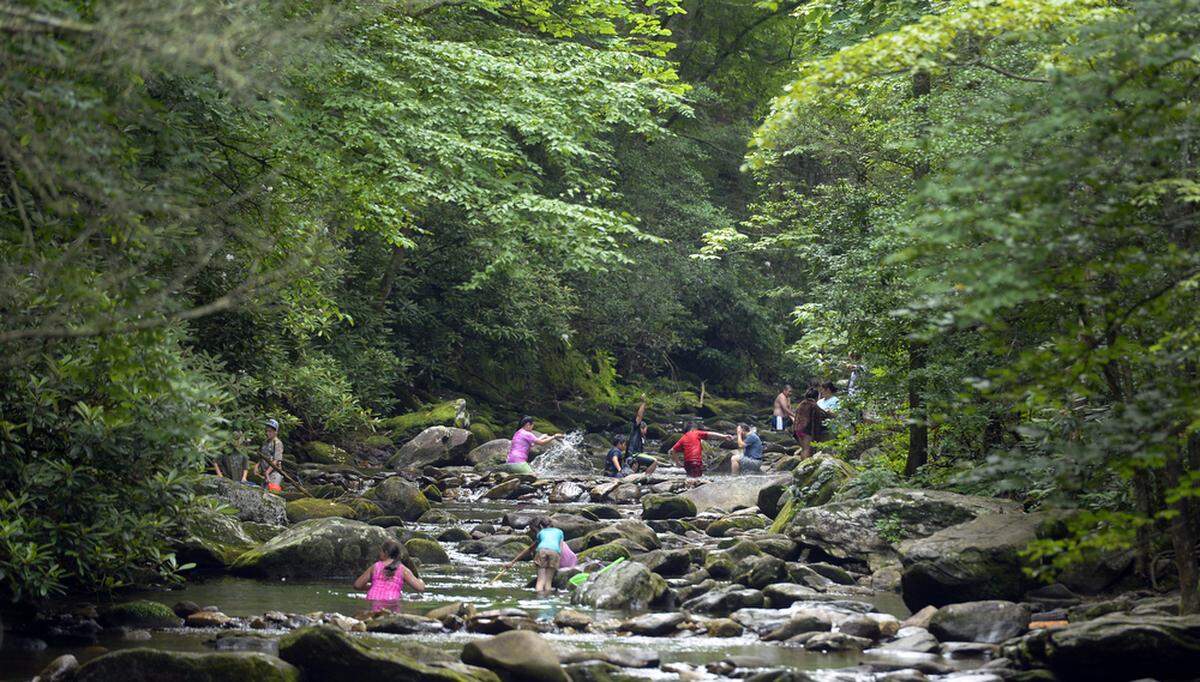
With Jacob’s Fork River regarded by government environmental officials as one of the cleanest in North Carolina, Stitt said, “(the state) wants to keep it clean, and so does our association.”
Equipment at her association’s treatment plant “has not been well-cared for and is old,” Stitt said in the association’s online newsletter this month.
“Repairs, renovations, and reorganizing has been going on in everything Pine Mountain does as fast as the money permits us to go,” Stitt wrote.
But claims the plant is “dumping raw sewage” into the river aren’t true, she said in the newsletter and during her interview with the Observer.
“Because we exist in an ‘outstanding watershed,’ Pine Mountain’s effluent is held to very high standards,” Stitt said in the newsletter. “We have had some violations this last year, which resulted in penalties. There are problems we, with the state, and Envirolink (the current operator) are trying to identify and remedy to prevent violations.”
A church group that moved into a motel and former restaurant on the Pine Mountain property during the same period of the fines increased the amount of effluent handled by the plant by 70%, further stressing the system, Stitt told the Observer.
The church group is finishing packing up to move to Tennessee, which should greatly ease demand on the plant, she said. The plant has received no violation notices or fines in the past five months, Stitt said. Gurney of the N.C. Division of Water Resources confirmed the last action taken was in April.
Staff from the Division of Water Resources’ Asheville regional office will help the association find “appropriate (bacteria) sampling locations” in the river and “to review your ongoing assessment activities,” division director Daniel Smith wrote Stitt on Sept. 23.
Pond had the bad readings
The fines stemmed from conditions in the pond where the treated wastewater is sent before being released into the river, Stitt and state officials said.
The plant uses chlorine to help treat the waste. Releasing the wastewater into the pond lets the chlorine evaporate before the water is sent to the river, Stitt and state officials said.
The state considers the pond part of the treatment plant, according to Division of Water Resources officials.
Clearing duckweed from the pond might help lower some readings the state found too high regarding plant and other matter, Stitt said. “Other matter” in the pond also could include additional plants, dirt that may have loosened into the water from the side of the pond and goose droppings, Stitt said. State officials told the Observer they consider those statements accurate.
This story was originally published October 21, 2020 at 10:50 AM.