Three hot dogs sent NC man to prison years ago. Now his freedom may depend on them.
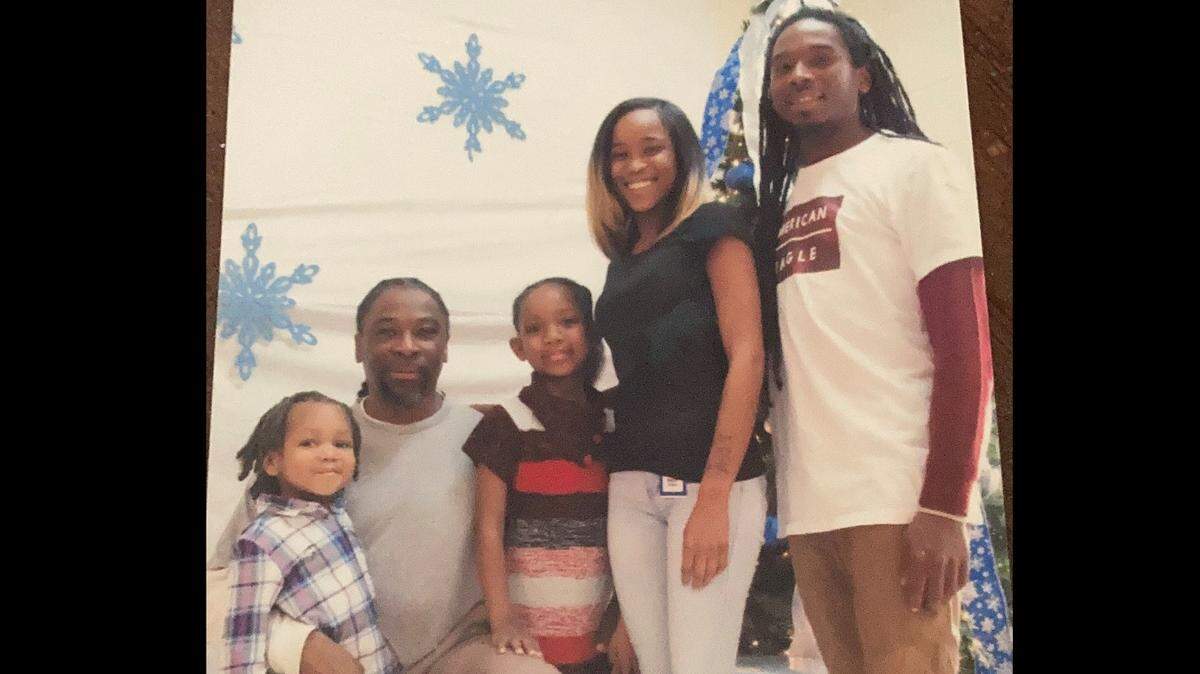
David Twitty’s future hangs, not by a thread, but on three hot dogs, a soda and a pack of gum.
Altogether, the care package the Charlotte man says he received from a Lincoln County convenience store in 1994 totaled $3.25. But it was enough to put him behind bars, convicted of the felony offense of Obtaining Property Under False Pretenses.
The impact of the hot dog incident on Twitty’s life would only mushroom from there. Fifteen years later, the Lincoln County conviction was among three previous felonies on Twitty’s record that were used by two other North Carolina counties to prosecute him as a habitual offender.
As before, Twitty was charged in both places with Obtaining Property Under False Pretenses. But this time he was sentenced as a criminal recidivist.
Normally, the two felony convictions would have called for concurrent four-year sentences. But under the state’s habitual-offender rule, the prison terms became consecutive and could have run for as long as 33 1/2 years — all for nonviolent crimes in the two counties that, according to court records, netted Twitty less than $700 total.
That said, many will find Twitty, 57, a less-than-sympathetic figure.
Court filings reveal an enduring criminal history as a scam artist that spanned at least a dozen N.C. counties. Twitty targeted churches and individuals with fictitious tales of woe. Often, he would appear at Sunday services, using his children as co-conspirators in his frauds.
In one Lincoln County case in which charges were never brought, prosecutor Rick Shaffer says, Twitty pressured a pastor to give him $141 for supposed car repairs, then threatened to show up on Sunday to call out the minister in front of his congregation if he reneged.
Shaffer, who would become a two-term district attorney for Lincoln and Cleveland counties, describes Twitty as a career criminal for whom the state’s habitual offender law was designed to control.
“He engaged in repeated and despicable acts of fraud,” Shaffer told the Observer in a recent email. “... He did not limit his activity to one county, and his actions took place over a long period of time. So it was pretty clear he chose to be a criminal.”
Court verdicts ‘don’t make sense’
Legal reformers, however, argue that Twitty’s current punishment is overly harsh given the nature of his crimes. Habitual-offender laws, they say, are relics of an earlier tough-on-crime era that continue to fill prisons and unnecessarily wreck lives.
The designations for cases such as Twitty’s are rare. Of the 1.3 million criminal filings in North Carolina during 2019, just under 3,000 involved nonviolent habitual offenders.
Miriam Krinsky, who heads the California-based nonprofit, Fair and Just Prosecution, says cases like Twitty’s reveal a race by prosecutors “to be tougher than the next person” rather than arriving at a fair and sensible resolution.
“These kinds of results in many instances just don’t make sense,” says Krinsky, herself a former federal prosecutor. “They don’t make sense for the individual defendant. They don’t make sense for the taxpayer, and they don’t make sense for communities when we think of how to keep them safe. No one wins.”
Victim or not, Twitty, who has been imprisoned for the last 12 years, says he has more than paid for his crimes. Besides, as a Stage IV lung cancer patient, he says he has little chance of serving out his sentence.
“I’ve made a lot of bad choices, and I’m never going to ask anyone to overlook those choices. But all I want to do is die at home. I don’t want to die in here. No more than that,” Twitty told the Observer during an emotional phone call from Pender Correctional Institution, north of Wilmington.
“I’m in prison with people who are convicted murderers, and they got six or seven years. My crimes were not violent offenses and I get (more than 30)? That is grossly disproportionate. I’ve got grandchildren I’ve never laid eyes on.”
That could be changing.
The same hot dogs that helped put Twitty in prison may soon be getting him out.
Begging for food at a Smart Shop
On April 24, 1994, according to court documents, the manager of the Smart Shop in the Lincoln County hamlet of Denver received a phone call from a purported minister at a Charlotte church, asking her to give $40 and some food to a man and woman in need of help who would be stopping by the store that day.
When Twitty turned up, the manager refused to give him cash, even when he came back, got down on his knees and begged. But she did pull together some food and drink.
Twitty says he was arrested that afternoon for a crime he never committed. He says he was between jobs and that his family of five needed money for food and gas, and that an actual minister — and not himself — made the call to the Smart Stop. He says he gave the hot dogs to his three hungry kids.
A year later, a Lincoln County grand jury indicted Twitty, not on simple larceny as a transaction of that size might have warranted, but on the felony charge of Obtaining Property Under False Pretenses.
Shaffer, now back to being an assistant district attorney, says that in 1994-95 Twitty was a suspect in a series of reported scams across Lincoln and other nearby counties. Shaffer says he doesn’t remember why he chose to prosecute Twitty solely over the Smart Shop incident, but that he still believes he chose a felony charge because it fit the seriousness of Twitty’s charged and uncharged criminal activity.
For his part, Twitty says he was railroaded into pleading guilty to the charge. He received a three-year sentence and ended up serving about seven months.
The time away from his family, coupled with the felony on his record, wrecked his marriage, made it almost impossible for him to get a legitimate job, and forced him to turn further to crime to support his children, Twitty says.
While the Lincoln County conviction appears to be Twitty’s first adult felony, court filings in his various cases show his criminal history dating back to at least 1991.
Over the next decade, Twitty said, he ran up a slew of additional crimes, including a series of drunk-driving arrests. That led in 2002 to a felony habitual impaired driving conviction in Mecklenburg County. Four years earlier, he was also convicted in Mecklenburg with eluding arrest in a motor vehicle.
Both felonies were used in Moore and Alamance counties to try Twitty as a habitual defender.
Pivotal court hearing
Last year, however, the dominoes in the state’s criminal justice system — perhaps for the first time ever — began to tumble in Twitty’s favor.
In 2020, his new appellate attorney, Warren Hynson of Raleigh, discovered that the long-ago Lincoln County indictment leading to Twitty’s arrest and conviction was defective, in part, because it never spelled out what was criminal about accepting $3.25 worth of stuff.
Hynson, who declined to comment for this story, filed a motion calling for his client’s 1995 conviction to be dismissed. On New Year’s Eve, Superior Court Judge Forrest Bridges, who sentenced Twitty a quarter of a century ago, formally removed the hot-dog conviction from his record.
Suddenly, Twitty’s 2010 convictions for scamming churches in Alamance and Moore counties no longer had the required number of “predicate felonies” to earn Twitty the much harsher punishments the law reserves for habitual offenders.
Based on Hynson’s motion, an Alamance County judge in January threw out Twitty’s 14 1/2- to 16-year sentence for swindling $300 from Mount Olive Baptist Church in Pittsboro. Twitty was resentenced to time served.
On Wednesday, Hynson and Twitty take their arguments to Moore County.
There, according to Twitty and his family, newly elected District Attorney Mike Hardin has pledged to fight to keep Twitty’s 14- to 17 1/2-year, habitual-offender sentence, possibly convening a grand jury to bring a new felony charge against Twitty if necessary.
Reached by phone on Friday, Hardin said he could not discuss a pending case, citing professional ethics.
Could Twitty become a free man?
Duke law professor Jim Coleman, a Charlotte native, says he believes any attempt to backfill a felony onto Twitty’s criminal record would be prosecutorial overreach.
“You don’t get two bites of the apple,” said Coleman, co-director of Duke’s Wrongful Convictions Clinic. “This represents the same kind of abuse of the system that results in wrongful convictions ... judges and prosecutors cutting corners to put people away. They stop paying attention to the niceties of the law.”
Nonetheless, depending on how Moore County Superior Court Judge James Webb rules, Twitty could walk out of a courthouse 90 miles east of Charlotte as a free man.
Last year, Shaffer did not oppose the defense motion to vacate Twitty’s conviction in Lincoln County. In an email to the Observer, he said he did not draft Twitty’s 1995 indictment but should have noticed its errors.
However, he says the use of a “mistake” to overturn Twitty’s convictions in Moore and Alamance doesn’t make Twitty any less guilty and is “a travesty of justice which unfortunately I am, at least partially, responsible for enabling.”
From inside prison, Twitty says it should have been clear to his attorney, Shaffer and the judge that his indictment was defective.
“I was the one who was young. I was the one who was scared, the one who didn’t know the law,” he said. “... And then to find out 26 years later that this should never have happened?”
Staff writer Gavin Off contributed to this story.
This story was originally published March 13, 2021 at 6:30 AM.