Feds escalate fight for seized money. ‘Law enforcement out of control,’ expert says.
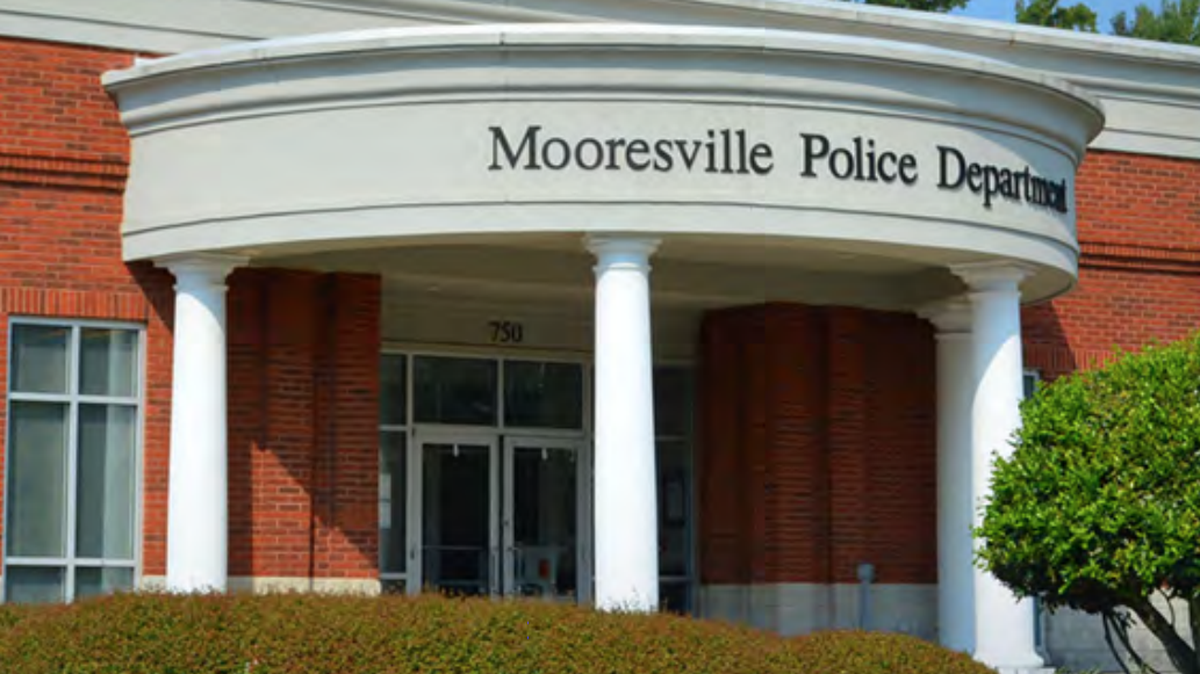
The legal battle over Jermaine Sanders’ money has opened another front. And taxpayers are footing the bill.
In November, Mooresville police seized almost $17,000 in cash during a warrantless search of Sanders’ rented pickup truck. They also charged the Connecticut man with misdemeanor marijuana possession.
Yet, two Iredell County judges ordered police to return the money. Some 120 days of legal trench warfare later — including an explosive February court hearing in which District Judge Christine Underwood threatened to throw police and Mooresville town leaders into jail for contempt — Sanders still does not have it.
Now, both Mooresville police and federal prosecutors are digging in to keep it that way.
Civil forfeiture
First, the town and police have asked the N.C. Court of Appeals to overrule the Iredell judges’ orders to return the money and to hold them in contempt.
Last week, the police received legal backup from the U.S. Attorney’s Office in Charlotte, which filed a formal claim on Sanders’ money in federal court.
The 15-page filing, detailing Sanders’ lengthy criminal background, says his money is likely tied to illegal activity and thus is open to seizure.
But the federal argument makes no mention of the earlier judicial order demanding that police return the cash, setting up a potential jurisdictional dispute over which court has ultimate say.
Meanwhile, the widening legal fight joins a nationwide debate over civil asset forfeiture — a controversial law designed to give police and prosecutors a tool to fight organized crime through the seizure of money, cars and homes. Government claims under the law bring in billions of dollars every year, money that often augments police budgets.
Critics — which in North Carolina range from the liberal American Civil Liberties Union to the conservative John Locke Foundation — say the practice often tramples on the constitutional rights of everyday citizens who can lose their money and property without being charged with a crime.
Sanders’ attorney, Ashley Cannon of Statesville, has described police seizure of her client’s money as “highway robbery.” She told the Observer this week that Mooresville and the federal government will spend more taxpayer dollars to win the case than they will ever pocket from Sanders.
“Obviously this is a lot of money to my client. But it seems to me that the government is throwing a lot more money at fighting a valid court order,” she said. “It seems like it actually will cost them less to give Mr. Sanders his money and just follow the order.”
Attorney David Smith, one the country’s leading legal experts in civil asset forfeitures, described the legal maneuverings in the Mooresville case as “unique and outrageous.”
“There seems to be this attitude between the local cops and their federal enablers that ‘We can do whatever we like,’” said Smith, a formal federal prosecutor from Alexandria, Va., who reviewed the Sanders case at Observer’s request.
“This is a more outrageous case than many of the others because, here, the state court had already issued an order setting a hearing on the money, and right before the hearing, the police pulled the rug from under the judge.
“That’s disrespect of the court in the extreme ... This is law enforcement out of control, and it’s very improper for the feds to be assisting them.”
Charlotte attorney Pat Flanagan, who represents both the Mooresville police and the town, declined comment. He told the Observer it is inappropriate for a lawyer to discuss an ongoing case.
Likewise, U.S. Attorney spokeswoman Lia Bantavani said Thursday that the federal prosecutors’ office in Charlotte cannot comment on active cases.
Police seized money
One of the most controversial aspects of civil asset forfeiture is this: Law enforcement agencies in many cases get to keep most of what they seize, providing a revenue stream.
According to critics, however, this provision gives police a significant profit motive to customize their crime-prevention activity in hopes of winding up with drug money or other potential windfalls.
For example, a 2019 investigation by St. Louis Public Radio and the Pulitzer Center for Crisis Reporting found that officers in Missouri and other states focused their drug-prevention traffic stops on the west bound lanes of interstates, when dealers were more likely to be returning with the money from their East Coast sales. The drugs themselves had been allowed to pass.
Last May, police in Monroe pulled over a pickup truck for a blown license-plate bulb and found almost $1 million in cash. Federal prosecutors in Charlotte filed a claim for the money in January, saying it had ties to drug trafficking. Under the rules of asset-seizure partnerships between the feds and police, the Monroe department could wind up with as much as 80% of the money.
North Carolina has been one of the country’s leaders in addressing the issue of police directly profiting from their law-enforcement work. Under the state’s asset-forfeiture law, no property can be seized unless its owner has been convicted of a crime. In addition, all seized money or personal property goes to the schools, not the law enforcement agency that seized it.
Smith, the forfeiture legal expert, says that makes the federal government a far more attractive partner for police in forfeiture cases, which may have been a factor in the Sanders case.
Mooresville officers seized the money from Sanders’ leased Chevrolet Silverado pickup before dawn on Nov. 16. The U.S. Attorney’s filing in the matter said the truck smelled strongly of marijuana, some traces of the drug had been found inside, and that a drug dog had picked out the cash during a lineup. It also said Sanders fled the motel in which he was staying and abandoned most of his belongings rather than talk with police.
Two days later, Cannon filed a motion for police to return the money, saying that the currency was not proof of a crime and that the sum taken was far greater than any damages from her client’s misdemeanor drug charge. Judge Brown scheduled a hearing for Nov. 24.
The day before, however, a Mooresville police detective sent a check for the entire amount to U.S. Customs and Border Protection. The police argued in court that they could not return Sanders’ money because they no longer had it.
Brown ordered them to give it back anyway.
That led to a series of other hearings in which contempt of court orders were threatened but no money changed hands. On Feb. 9, a furious Judge Underwood threatened to jail police and any other town official who had the authority to cut Sanders a check.
Underwood declined to comment to the Observer for this story. But she had plenty to say after her courtroom eruption in February.
“It’s incredibly hard to put a town in jail,” she told the Observer at the time. “We don’t like putting people in jail for contempt. We like them to do what they were supposed to do in the first place ... But it’s unconscionable to me as a judge to have a valid court order that someone is willfully failing to comply with.”
In his making the federal government’s claim for the money, Assistant U.S. Attorney Seth Johnson cited Sanders’ previous criminal convictions and the list of charges pending against him — several of them drug related.
“These circumstances — an individual with no known legitimate income, documented prior drug trafficking convictions ... flight by that individual when approached by law enforcement, multiple K9 alerts, a large amount of currency, and the actual presence of illegal drugs with the currency — are clear indicators that the currency is involved in illegal drug trafficking,” Johnson’s court filing said.
On March 26, the federal courts issued an arrest warrant for the money.
Maria Perry, the money’s defense attorney in the federal case, declined comment.
This story was originally published April 2, 2021 at 10:27 AM.