
$2M in city funds will house former Charlotte tent encampment residents for a year
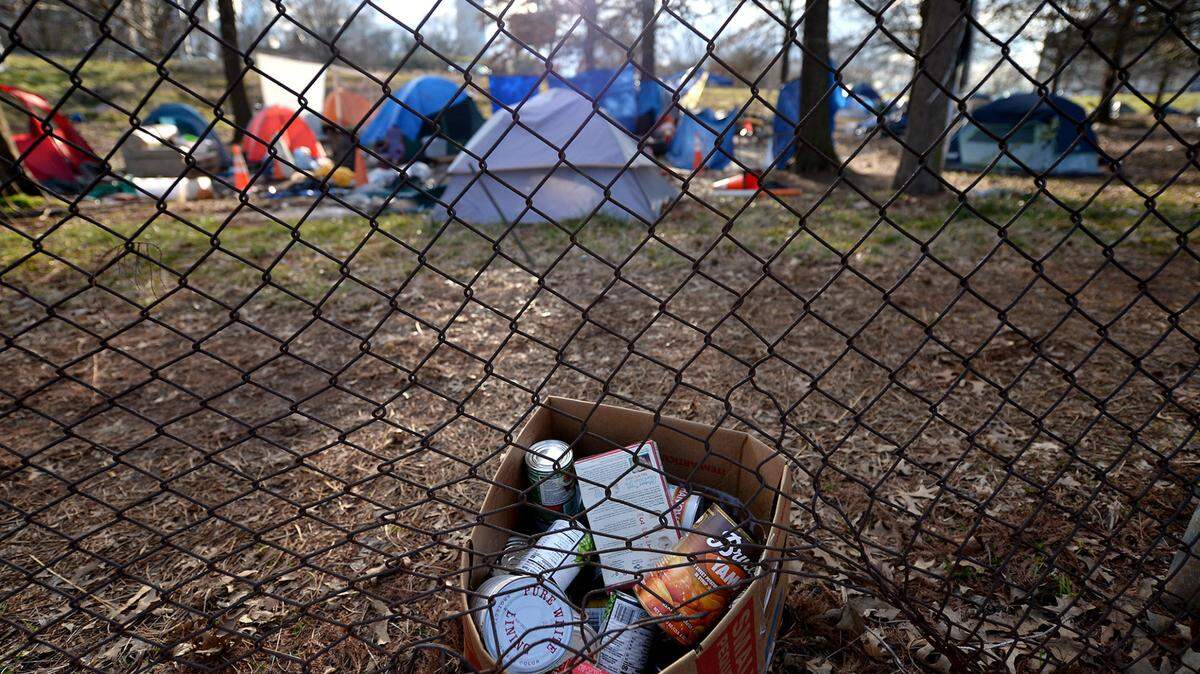
Some residents of the former tent encampment near uptown Charlotte will have housing for at least a year, city officials announced this week.
City Council will allocate $2.1 million for one year of rent and utility subsidies for 75 households who lived in the encampment, and for social workers to connect them with employment, child care and health services. County officials cleared the camps in February to address growing health and safety concerns.
The money, which comes from the first federal COVID-19 relief package passed last year, will be given to the United Way of Central Carolinas, housing nonprofit Socialserve and Catholic Charities.
In addition to rent subsidies, it will fund employment and workforce development assistance, child care, mental health and substance abuse counseling. Program leaders will also connect residents to Social Security, Medicaid and Medicare, veteran and other benefits if they’re eligible.
“The pandemic has really taught us that housing is health care — and it will remain true once it’s done. But for now it’s critically important that we keep that front and center,” said Kathryn Firmin-Sellers, chief impact officer for the United Way.
She said similar rehousing programs with individualized supportive services have been successful, giving her confidence that people will be able to stay housed after the 12-month subsidy ends.
Those covered by the new United Way-led program do not encompass everyone who was moved from the camps, city officials said. Of the 184 people evaluated, 75 were considered good candidates for the level of services provided through this program, said Shawn Heath, special assistant to the city manager.
The other 109 were determined to need “a higher level of service,” Heath said, adding that county leaders were “exploring opportunities” for those people.
Permanent housing solutions
In February, County Health Director Gibbie Harris issued a public health order to clear the North End encampment after inspectors identified a growing rat infestation and other hazards. The encampment was concentrated around the areas of North College, North Tryon and East 12th streets.
Some 200 people moved into motels that county officials paid for with federal relief funds for an initial 90-day period. But government officials, nonprofits and housing advocates have said permanent housing, not temporary shelter like motel rooms, is the ultimate goal.
Several council members praised the allocations.
Council member Braxton Winston said he was glad to see the city invest in people with some of the lowest incomes, as housing for those at or below 30% of the area median income is a consistent challenge. The pandemic and its related influx of federal funding give city leaders a unique opportunity, he said.
“In terms of the ability to have funds and try things that are out of the ordinary — because this is obviously an extraordinary experience — I would hope that my colleagues can see that, and we will kind of hone in on this work,” he said.
The funding for former encampment residents is one of several allocation of federal money for homeless-related programs city council is expected to vote on at its April 12 meeting.
Council is expected to approve $300,000 to Socialserve to increase staffing for housing navigators, who will help up to 300 people secure housing, including the 75 from the encampment.
Council is also expected to approve $700,000 to the Salvation Army Center of Hope shelter to fund hotel rooms for up to 400 people from July through December, as well as $2.5 million to the shelter to help it buy the hotel outright.
This story was originally published April 6, 2021 at 4:59 PM.
%20Cropped.jpg)