
Plane stopped in Charlotte had some legal hemp — but most was marijuana, feds claim
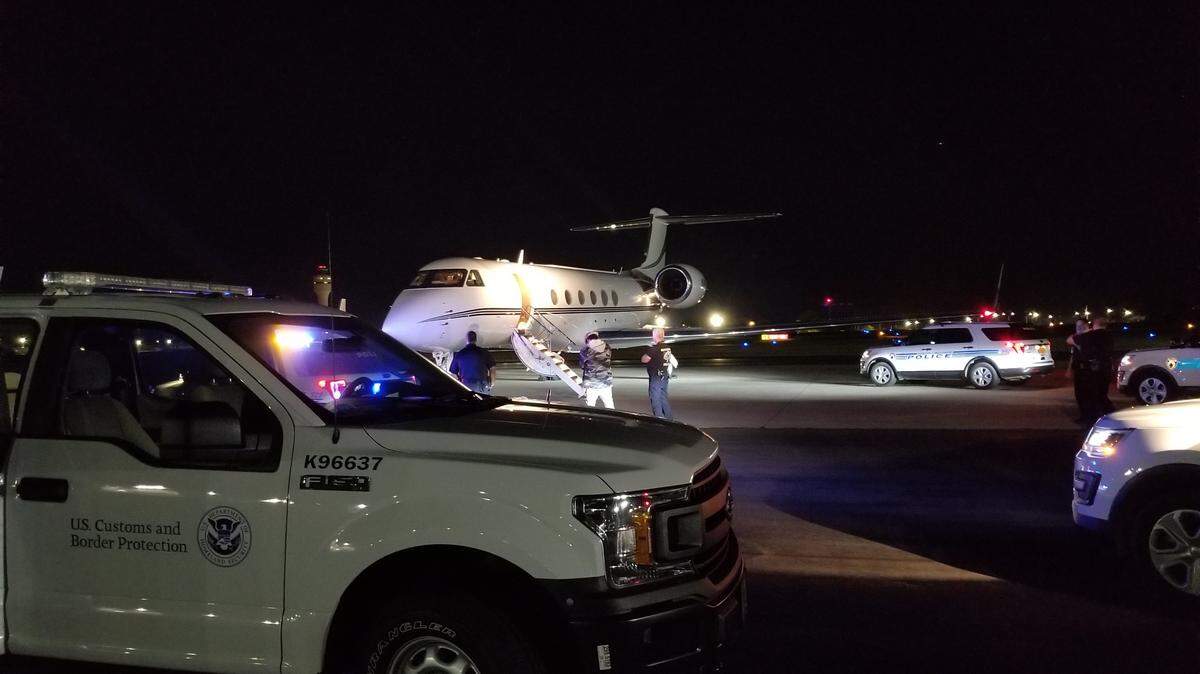
It began with a tip from Oregon law enforcement officials about individuals loading a plane with military-style duffel bags and black trash bags, removing what appeared to be the plane’s seats.
The plane was headed to Charlotte-Douglas Airport, then on to Switzerland, but agents say they found nearly 2,800 pounds of marijuana on the plane. The remaining 550 pounds of cargo tested as lawful hemp.
This November seizure — where government officials claimed a company, We CBD, smuggled marijuana disguised as legal hemp cargo — has unleashed an ongoing legal battle.
In the latest development, U.S. Customs and Border Protection (CBP) has asked the courts to dismiss We CBD’s lawsuit over the confiscated 3,300 pounds of cannabis.
Additionally, in the new filling, an attorney for the federal border patrol writes that We CBD’s representatives did not file the correct documentation for its cargo. Even industrial hemp with legal amounts of THC must be declared at U.S. airports when planes, passengers and cargo are headed overseas, the government’s lawsuit response claims.
The legal line between marijuana and hemp is distinct. Marijuana is a cannabis plant that contains over 0.3% delta-9 THC. Anything less than that is consider hemp, which the U.S. legalized in 2018.
The distributor, We CBD, filed its lawsuit against CBP claiming that the government acted improperly when it seized the marijuana/hemp and that the methods of testing the substance were flawed. We CBD was not allowed to test the substance to challenge the government’s results, its lawsuit claims.
Pushing back, however, CBP’s newly submitted motion to dismiss argues that We CBD failed to exhaust its administrative remedies and that the case should be dismissed because it lacks subject matter jurisdiction.
In a verified complaint for forfeiture, CBP also claims that We CBD didn’t declare its cargo through the automated system or list it on an air cargo manifest. According to CBP, that means the hemp is subject to forfeiture.
Still, William Terpening, an attorney representing We CBD, said that Border Patrol’s motion to dismiss the case was solely procedural on whether the court has jurisdiction to hear the case.
“We CBD expects and is hopeful that it will be allowed to move beyond this technical motion to properly examine the evidence and seek justice regarding these important constitutional and statutory issues surrounding federal seizure of property, which have broad implications for many people and companies,” Terpening said.
The U.S. Attorney’s Office of Charlotte that is representing CBP declined to comment, according to spokesperson Lia Bantavani.
This story was originally published June 10, 2021 at 1:46 PM.