
What’s the future for old plantations with dark pasts around Charlotte?
Latta Plantation remains closed following backlash against a Juneteenth-timed event advertised as highlighting the plight of “white refugees” in the aftermath of the Civil War.
After the event was canceled, Mecklenburg officials ended the county’s annual contract with Historic Latta Place Inc., the nonprofit that managed the Huntersville site, and the Mecklenburg Park and Recreation Department says it will “evaluate the best path forward” for the historic plantation.
Plantation houses and their surrounding lands are a popular destination for field trips and visitors who want to learn more about history. Many offer immersive programs that include cooking classes, crafts or other activities. But some historians and activists say these sites often leave out the story of those who were enslaved there, instead emphasizing the white, often wealthy families who owned the land and who enslaved the people who worked on it.
At least one living history museum, Durham’s Stagville Plantation, has fought against this trend by focusing exclusively on the history of its enslaved laborers and their descendants. And locally, Historic Rosedale and Rural Hill — Mecklenburg County’s two remaining publicly-accessible historic plantations — both say they want to better highlight the stories of the people enslaved on their property.
A fundamental shift in how history is retold on these sites faces challenges — not just reluctance to broader inclusion, but also limited resources and scant artifacts saved that could honor the people who were forced to labor there. Historians agree it would be a major undertaking.
As Charlotte resident and activist Kass Otley sees it, such a shift is an imperative:
“If we’re not moving the needle forward, what are we doing,” she asks.
Inside Historic Rosedale
Pulling off North Tryon Street into the gates of Historic Rosedale is like entering another era.
Towering oak, magnolia and horse apple trees blot out the sight of uptown’s skyscrapers, just three miles down the road. A blacksmith’s forge sits on one side of the property, while a meticulously-maintained garden and hedge maze flourish on the other. At the center of all this is a three-story mansion, built in 1815 and maintained by generations of enslaved people.
The 2020 Charlotte Legacy Commission, which investigated Charlotte streets named in honor of slaveholders, estimated that Rosedale plantation enslaved at least 30 laborers at its height. In a statement to the Observer, however, Rosedale estimated that between 10 and 15 people were enslaved on the property between 1830 and 1860.
Few physical reminders remain at Rosedale of the generations of people forced to work there.
Some old metal cooking implements, likely used by enslaved cooks, hang over a pair of antique andirons in the kitchen fireplace. An upstairs bedroom contains a re-creation of a pipe that an enslaved woman, Cherry, is said to have smoked in secret.
By contrast, artifacts from the owners of the land and their descendants are more reliably preserved. Rosedale’s mansion is cluttered with portraits, photographs and keepsakes from the Frew, Davidson and Caldwell families. White mannequins don well-to-do dresses amid stately 19th-century style furniture. An enormous painting of one of the property’s last residents, Mary Louise Davidson, dominates an entire wall.
Rosedale caretakers granted an Observer reporter access to parts of the property typically seen on tours. Representatives declined to be interviewed on the record about how the historic site has portrayed slavery, but Rosedale’s leadership issued a statement to the Observer this month, saying they’ve made some progress toward better documentation of the people who were enslaved there.
Supported by a grant from the Arts & Science Council, Rosedale staff and volunteers pored through numerous historic documents between 2010 and 2013 in order to learn more about the site’s slave-owning past. Rosedale provided the names and some information about more than 20 people enslaved on the property in a 2009 Facebook post.
The andirons in the kitchen fireplace were made by an enslaved blacksmith named Nat, while an enslaved man named Alfred crafted some ironwork used in the construction of the Charlotte Mint. Cherry, the woman said to have smoked a pipe in the upstairs bedroom, was a nurse who was brought to the plantation as an adult.
Guides have incorporated information like this into their tours as the historic site has learned more, according to Rosedale’s statement.
“It is our ongoing mission to research, preserve, and present the stories of those who have lived at Rosedale, both the Frew, Caldwell, and Davidson families and the African-Americans, enslaved and free,” the statement says.
Tom Spada, the president of Rosedale’s board, declined to comment on Rosedale’s depictions of slavery. Kathryn Freeman, the property’s development and membership coordinator, also declined to comment on this subject. Both Spada and Freeman are white.
What the future may hold
Dozens of social justice advocates protested outside Latta on June 19, the day the shuttered plantation had planned to host its controversial Juneteenth program. The protest was organized by the civil advocacy group Seeking Justice Charlotte, headed by Kass Ottley, Charlotte Magazine’s 2020 Charlottean of the Year.
Latta’s manager, Ian Campbell, who identified himself as an American of African descent, defended the planned event.
“To tell the story of these freedmen would be pointless if the stories of others were not included,” Campbell wrote in a statement. “Many of you may not like this but, their lives were intertwined, the stories of massa, the Confederate soldiers, the overseer, the displaced white families.”
But Ottley, who is Black, criticized what she sees as excessive emphasis on the voices of those in power.
“I get that there are two sides of every story to tell, but here in America, the white side of the story is usually always in the forefront, while Black and brown voices are always suppressed,” she said.
Ottley believes historic plantations need to be critical of their past and do their best to accurately and compassionately tell the stories of those they enslaved.
“How did they get here? What happened to them? What were their lives like?” she asked.
Michelle Lanier, the director of the N.C. Division of State Historic Sites (DSHS), echoed these questions. The DSHS manages numerous historic sites throughout the state, including Stagville Plantation, which enslaved more than 900 people in present-day Durham County.
Lanier, who is Black, said she approaches these sites from a perspective she calls “true inclusion.” This means two things: presenting the history of a site from numerous different perspectives, and making a site accessible to people of many different backgrounds.
Stagville, which offers free admission, strives to do this by the telling the stories of numerous individual enslaved people, said Stagville Site Manager Vera Cecelski. These stories range from that of a formerly enslaved woman named Emma, who became one of the first black landowners in Durham, to that of Virgil, an enslaved body servant who was kept under constant surveillance.
Stagville’s website also provides a list of last names meant to help enslaved people’s descendants trace their lineage.
Lanier said she hopes historic sites like Stagville can offer a window into the daily lives of oppressed people, presenting both their sufferings and their joys. She believes these sites can be a space for “descendants of both the enslaved families and the slave-owning families to come together to reflect upon the painful history.”
Historian Loren Schweninger, who is white, spent four years collecting documents on slavery for the Race and Slavery Petitions Project, which now offers a database of personal information about slaveholders, enslaved people and the descendants of both groups.
Schweninger said most information about slaves comes from deeds and wills, where they were transferred between owners as property. These documents typically contain little personal information, except for squabbles between family members fighting for different pieces of property.
“Humanizing people from that group of records is difficult to say the least,” said Schweninger, a history professor at UNC Greensboro and author of books on Southern Black history.
Rural Hill plantation
Both Latta and Rural Hill have contracts with the county which provides some operating funds. The Town of Huntersville said earlier this month it would suspend its funding to Latta pending further investigation. Rural Hill receives an annual $20,000 in public support from the town.
Rosedale is owned by a private organization. Its income depends on tours, individual donations, in-person fundraising events and occasional weddings. But until a few months ago, Rosedale wasn’t running any tours or hosting any events. The pandemic almost entirely cut off the site’s revenue stream.
Rural Hill, Mecklenburg County’s other historic plantation, has also faced difficulties with manpower and resources on its grounds on the outskirts of Huntersville.
Unlike Rosedale, little remains of Rural Hill’s sprawling cotton and tobacco plantation, which once enslaved over 100 people. In fact, only two of its original buildings remain, Executive Director Jessica Bustamante said.
Today, Rural Hill is perhaps best known for its Loch Norman Highland Games, inspired by the Scottish heritage of the plantation’s former owners. Between 15,000 and 20,000 visitors attend the games each year, watching contestants face off at bagpiping or at throwing weights, hammers, stones and telephone poles, Bustamante said.
The games also feature a recreation of a small, 18th-century backcountry farm — which depicts no enslaved people, Bustamante said.
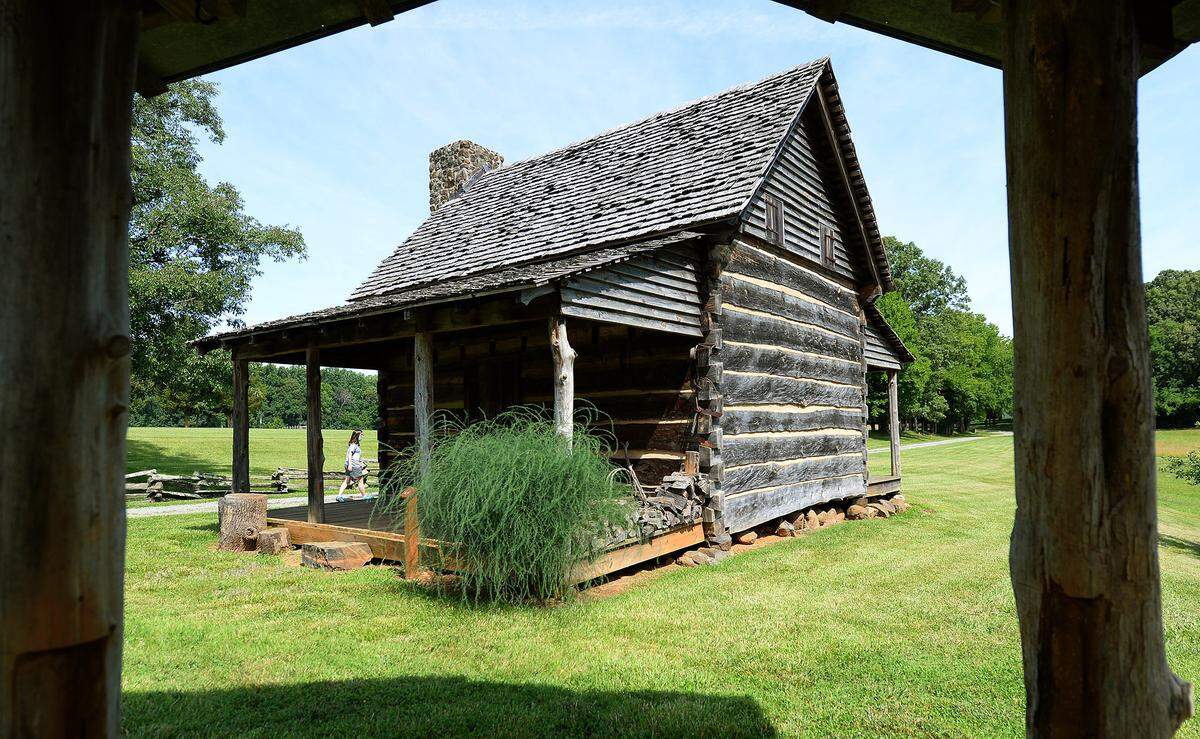
Like Rosedale, Rural Hill was hit hard by the pandemic. The Loch Norman Games were canceled in 2020 and 2021, and the site had to lay off almost all of its employees, Bustamante said.
The only people currently working there are Bustamante and a farmer who tends to the property’s hay and corn farms.
Before COVID-19, the site hosted occasional field trips that discussed slavery. Bustamante noted that the trips were typically run by elementary schools, so the tours walked a fine line between sensitivity and honesty about the horrors of enslavement.
“You can’t beat around the bush, but you have to be age-appropriate,” she said.
However, Bustamante noted how few resources there are to learn about the people enslaved at Rural Hill. Most of her knowledge about the plantation’s Black residents comes from local oral history and the journals of John Davidson, one of the property’s owners.
“You’re obviously keeping your eyes open, but there’s still limited amounts of information,” Bustamante said.
Bustamante hopes to expand Rural Hill’s emphasis on its past as school field trips start up post-pandemic. She plans to hire an education director to handle field trips. She also hopes to renovate and run tours of the Bethesda schoolhouse, a historic Black schoolhouse that was brought to Rural Hill in the early 2000’s.
Some historic documents are likely available at the Mecklenburg courthouse, at libraries or through the Race and Slavery Petitions Project. As for physical objects that enslaved people might have used, these might require excavation projects, Schweninger said.
But if plantations are serious about fairly representing the lives of the people they enslaved, Schweninger is optimistic that they will find results.
“The deeper you delve into it and the more expansive you are, the more you will understand,” he said.
Gavin Off contributed.
This story was originally published June 29, 2021 at 6:00 AM.