A revered Charlotte hero takes his place on the city’s Trail of History
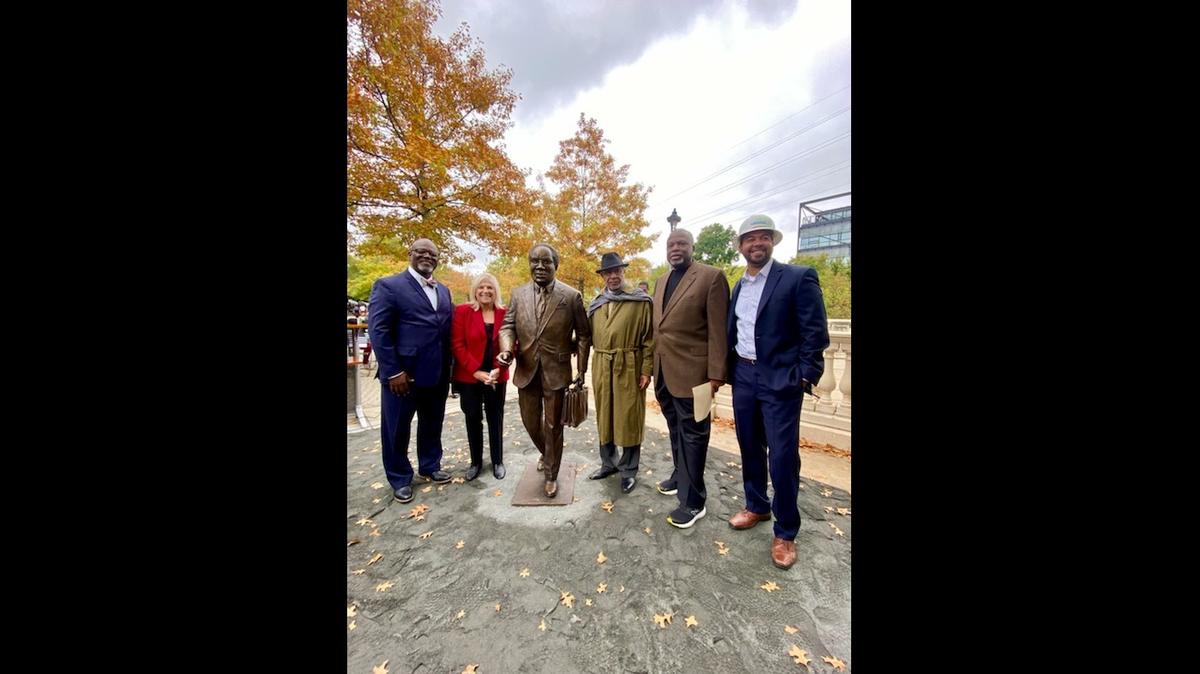
Starting today, Charlotteans walking along Little Sugar Creek Greenway in midtown will see a new face among statues on the Trail of History.
A statue honoring civil rights lawyer Julius L. Chambers was unveiled Saturday morning on the Little Sugar Creek Greenway at the main fountain on South Kings Drive. According to statue project manager and board member David Taylor, the decision to honor Chambers was an easy one.
“He was a giant in the Civil Rights Era,” Taylor said. “He was that voice for the voiceless and a beacon of hope that was so important for so many people during that time.”
The Trail of History, which honors a group of people who have shaped Charlotte’s history, stretches through a popular portion of the Little Sugar Creek Greenway, from 7th Street at Central Piedmont Community College south to Morehead Street.
Chambers is the trail’s ninth statue, and the second honoring a Black person. The statue was created by sculptor Edward Hamilton, whose most famous work is The Spirit of Freedom, a memorial to Black Civil War veterans located in Washington, D.C.
New Julius Chambers statue
Chambers was a prominent lawyer during the Civil Rights era. He won numerous landmark civil rights cases, including Swann v. Charlotte-Mecklenburg Board of Education which temporarily integrated local schools and planted the seeds of desegregation throughout the country.
He was born in rural North Carolina and attended the University of North Carolina’s law school, where he was the law review’s first Black editor-in-chief. He returned to Charlotte, living off Beatties Ford Road and served as a founding member of the first integrated law firm in North Carolina.
Chambers and his team also won two major Supreme Court Title VII employment discrimination decisions, Griggs v. Duke Power Co. in 1971 and Albemarle Paper Co. v. Moody in 1974.
But as he pushed for equality in North Carolina, it made him and his family targets, too — at the height of some of his most important work, his office, car and home were firebombed in the 60s and 70s. Still, he refused to stand down.
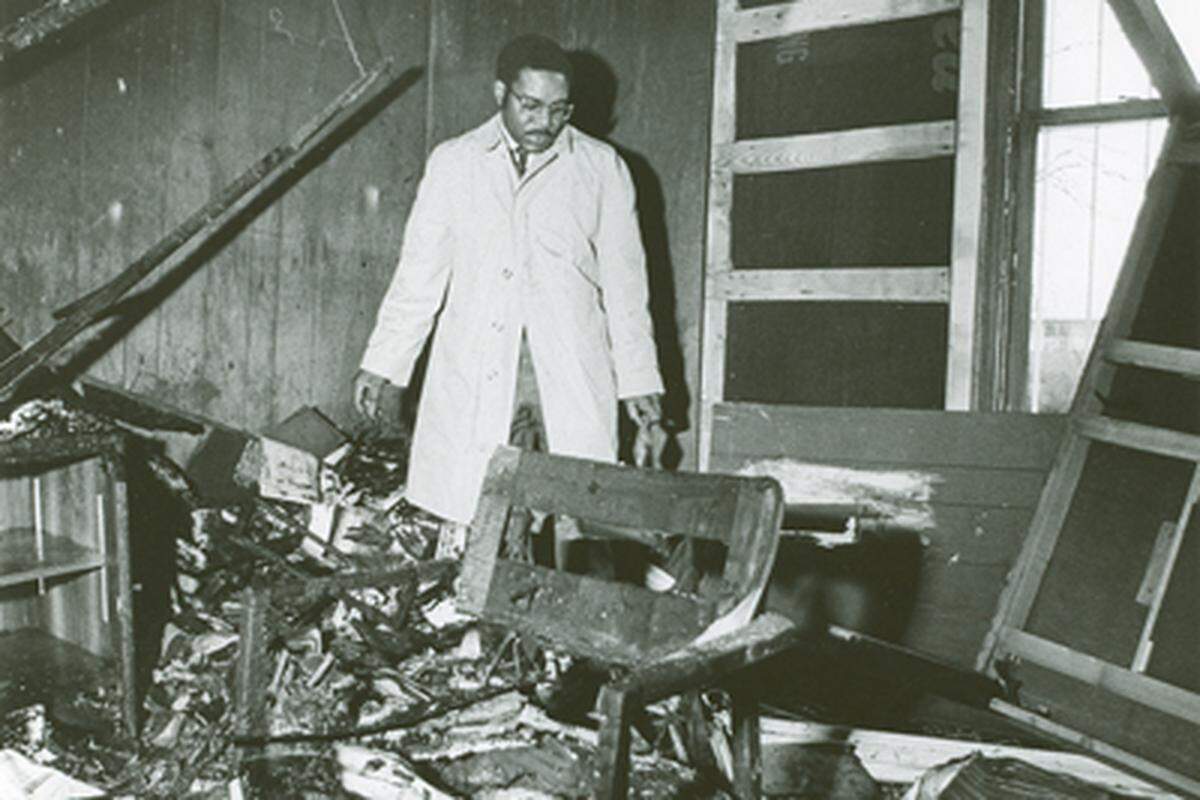
Chambers died at the age of 76 in 2013, months after a heart attack. His son Derrick said Chambers’ surviving family is honored by the statue.
“It’s been an awesome few years… the honors that have come through for my father,” he said. “It’s well deserved. We’re all so honored to be related to him.”
Chambers has been honored all over Charlotte in various ways recently. This month, the former Vance High School was formally renamed after Chambers, and back in February, a law introduced by U.S. Rep. Alma Adams changed the name of the Derita Station Post Office to the Julius Chambers Civil Rights Memorial Post Office.
“The feeling is hard to put into words,” Derrick Chambers said. “His lifelong work that he did for mankind… you can see now that people appreciate it so much. For Charlotte to recognize it, that’s a big honor.”
Historians on the Trail of History board research prospective additions to the collection of statues. A total of 21 statues will stand on the trail once the project is completed. Taylor said the board wanted to acknowledge Chambers’ contributions to Charlotte.
“Being able to highlight Charlotte’s history and the individuals who have been instrumental in building Mecklenburg County is what this mile-long journey is about,” Taylor said. “It’s an amazing project. Once it’s completed, it will be representative of our community.”
This story was originally published October 30, 2021 at 12:36 PM.