These 8 projects helped define foundation boss Michael Marsicano’s career
When Michael Marsicano took the helm of the Charlotte-based Foundation for the Carolinas in 1999, the nonprofit had some $245 million in philanthropic assets.
In the last two decades, Marsicano grew that number by more than 10 times: the foundation now stands as the country’s sixth largest community foundation, with assets totaling nearly $4 billion. Since 2019, he’s raised nearly half-a-billion dollars for civic initiatives, according to the foundation.
Marsicano will retire from his post next January 2023, he announced Tuesday. During his tenure, the foundation supported projects on everything from the arts to affordable housing. Here’s a look back at a few prominent initiatives:

Carolina Thread Trail
The foundation’s Robinson Center for Civic Leadership — created during Marsicano’s tenure — helped launch the Carolina Thread Trail, a 300-mile trail network that spans 15 counties in North and South Carolina.
The trail network is still growing. The project ultimately aims to connect 1,600 miles of trails, greenways and blueways across the 15 counties in the greater Charlotte region.
“Most of the trails are natural surface trails, so it gives you that direct connection to nature,” Vanessa Covington, volunteer and engagement manager for Catawba Lands Conservancy, told the Observer in 2020. “I love that you can really feel away from it all and encompassed by nature from a 15-minute drive from Charlotte.”

Project LIFT
The Robinson Center also helped launch Project LIFT, an ambitious reform initiative for nine low-performing Charlotte schools.
The project debuted in 2012 with roughly $50 million in pledged donations and a five-year plan to help students at high-poverty schools log achievements that would rival the best of the district. Private money was used to recruit and reward teachers, extend the school calendar at two schools and provide various kinds of support for students, families and faculty.
The project had mixed results, lifting graduation rates at West Charlotte High School and improving performance at some elementary and middle schools while others struggled.
Housing Opportunity Investment Fund
In 20218, Marsicano and the foundation aimed to tackle affordable housing needs in the city with the Charlotte Housing Opportunity Fund.
The fund, held and managed by local nonprofit LISC Charlotte, finances mixed-income housing for families that make 30 to 120% of the area’s median income. The foundation exceeded its $50 million fundraising goal for the fund in September 2019, according to its website. It currently stands at $53 million.
Carolina Theatre
Under Marsicano’s purview, the foundation took on a $50 million investment in the Carolina Theatre, a historic performing arts venue that closed in 1978 and sat vacant for years.
The project will renovate and restore the theater, which once served as a vaudeville and silent movie site that hosted acts like Katherine Hepburn and Elvis Presley, according to the foundation’s website. The theater was built in 1927.
The new theater will be a “civic engagement space” to host speakers, town hall meetings and other events. It is slated to reopen this fall. It adjoins the foundation’s uptown headquarters on Tryon street.
The Levine arts campus
The theater project is far from the only way Mariscano and the foundation has supported Charlotte’s local arts scene.
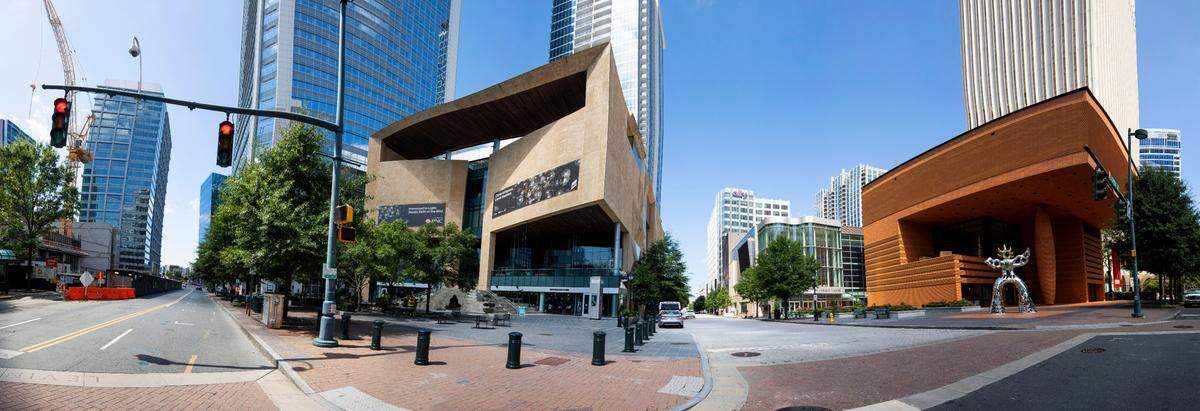
The foundation also launched an endowment campaign that made possible the Levine Center for the Arts campus in uptown, home to several museums and a theater.
The Great Recession
In 2009, Marsicano oversaw the foundation launching the Critical Need Response Fund, designed to help food pantries, shelters and other critical needs to overcome a loss of donations to nonprofits during the Great Recession.
The fund, which was eventually taken over by United Way, gave out more than $8 million in donated money during the recession.
Aid during COVID
In the midst of the coronavirus pandemic, the Foundation for the Carolinas launched a COVID-19 response fund that distributed more than $23.5 million to 240 nonprofits. The money helped local assistance with needs like child care, housing and education.

Mayor’s Racial Equity Initiative
Most recently, Marsicano and the foundation led fundraising for the Mayor’s Racial Equity Initiative, a $250 million program aimed at addressing racial disparities in Charlotte.
Donors like Bank of America and Lowe’s committed millions worth of investments to bridge the digital divide, diversify corporate leadership and support Charlotte HBCU Johnson C. Smith University, among other goals.
So far, $217 million has been raised. Finishing that fundraising is one of the items on Marsicano’s to-do list in his final year in the role, he said. “We’ve got a lot to do,” Marsicano said of the upcoming year.