DA drops death penalty in grisly Charlotte murder case over COVID concerns during trial
Mecklenburg County’s only death penalty case is no more due to COVID-19.
On Thursday, the District Attorney’s Office dropped its capital murder charge against Curtis Atkinson Jr., who is accused of the grisly 2017 shooting and stabbing deaths of his parents, Ruby and Curtis Sr. By the time the Atkinsons were found in their east Charlotte home, they had been dead for days.
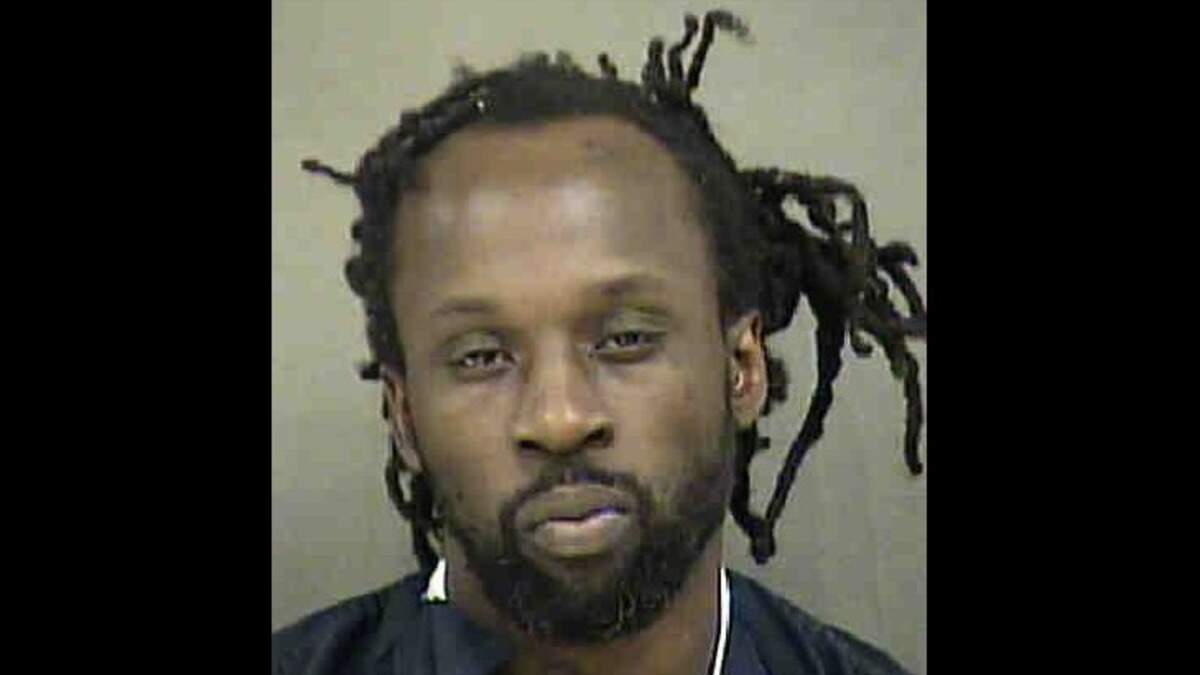
Atkinson Jr., a 41-year-old Charlotte man, will now be tried in May on a first-degree murder charge. If convicted, he faces a mandatory life sentence, not death row.
The change in murder charges, which comes almost five years after the killings, has nothing to do with the details of the case or the discovery of new evidence that might mitigate the shocking nature of the crimes.
Instead, Assistant District Attorney Jodi Anderson blamed the pandemic.
She told Superior Court Judge Lou Trosch that because death-penalty trials routinely run on for months, there’s an increasing likelihood of COVID-related delays.
Any outbreaks of the disease during the trial could indefinitely delay a verdict for Atkinson. Anderson says the surviving family and friends of Atkinson’s victims have waited long enough.
“As the Omicron wave wanes, we once again find ourselves at the precipice of hope that courts may soon resume normal operations. But if the last two years have taught us anything, it is that ‘hope’ is often just that,” Anderson said in a statement to the judge.
“The victim’s family and this community deserve more than just hope. They deserve justice. And the state believes our decision to proceed non-capitally is the best way to timely deliver justice to this family and this community. As such, we will not be seeking the death penalty in this case.”
COVID-19 has disrupted courts around the country. It shut down the North Carolina system for much of 2020. Because of pandemic-driven staff shortages and health safety protocols, the Mecklenburg courthouse continues to operate at a lower gear, leading to long backlogs of homicides and other crimes awaiting trials.
The pandemic has also caused chaos in capital-murder cases nationwide — disrupting trials, delaying executions, even blocking the release of an exonerated Pennsylvania death row inmate who was kept in custody after he showed symptoms of COVID-19, the Marshall Project reported in 2020.
In the Atkinson case, a capital-murder trial, which can take weeks simply to pick a jury, would place undue strain on a courthouse still trying to get back on its feet, Anderson said.
“A capital case is a significant undertaking, taking months instead of days or weeks to complete; requiring significantly more witnesses, more experts, an additional phase, and hundreds of potential jurors,” she said. “The likelihood of pandemic-related delays, interruptions, and uncertainty exponentially increases.”
Atkinson’s attorneys, Terry Sherrill and Johneric Emehel, left the courtroom by a side door and could not be reached for comment.
Inmates on death row
County prosecutors traditionally have reserved capital murder charges for crimes that “shock the conscience of the community.” That said, death penalty trials in Mecklenburg County have become increasingly rare. Atkinson’s was the last one on the current trial docket.
Mecklenburg, home to the state’s largest local criminal justice system, has four inmates on death row. The most recent went there in 1998.
North Carolina last put someone to death in August 2006.
The last Mecklenburg County inmate executed, Elias Syriani of Charlotte, died by lethal injection in 2005. He was accused of stabbing his wife with a screwdriver almost 30 times while the couple’s 10-year-old son watched.
Nationwide manhunt
The allegations against Atkinson are hauntingly similar to those against Syriani. Atkinson is accused of stabbing his father 69 times in April 2017 while forcing his 11-year-old niece to watch. Prosecutors say Atkinson and his girlfriend, Nikkia Cooper, now 30, fatally stabbed and shot the parents after an argument.
Ruby and Curtis Sr. had welcomed the younger couple into their home after they were evicted, Anderson said. After killing them, according to the prosecutor, Atkinson and Cooper covered the bodies with blankets and old rugs and stepped around them for days.

When Cooper triggered a fire alarm inside the home, the couple fled with the niece, setting off a nationwide manhunt. The child was found in Washington, after Atkinson crashed his car later that day near the Washington Monument after a police chase.
Cooper also was in the vehicle and is believed to have called 911 as part of a plan to use the niece to barter food and gasoline.
In a deal with prosecutors, Cooper pleaded guilty in 2019 to two counts of second degree murder and is serving a 56-year sentence in Anson Correctional Institution.
Atkinson also was expected to plead guilty to first-degree murder to avoid a possible death penalty. He changed his mind on the day of his 2020 hearing and pleaded not guilty, leaving the capital murder charge in place until now.
This story was originally published February 10, 2022 at 4:50 PM.