She survived Cambodia’s Killing Fields. In Charlotte, she gave back to her community.
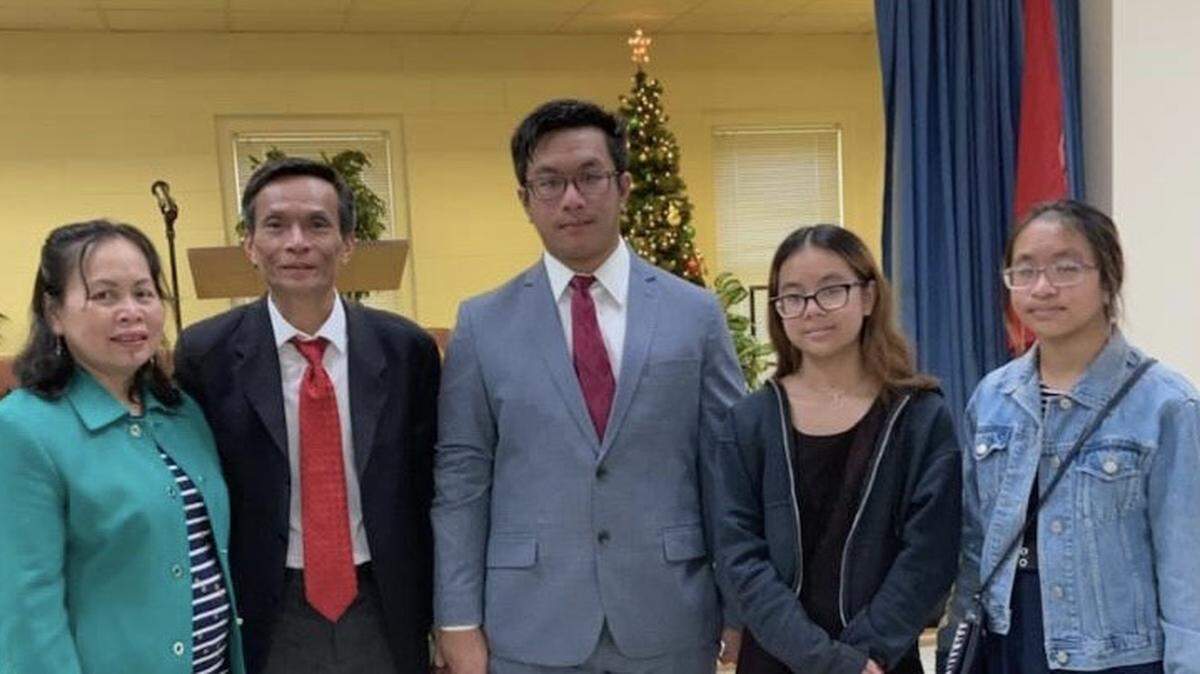
In the Duong household, Sundays were church days.
For the family of five, it meant piling into the car for a drive from Charlotte to a town just outside of Spartanburg, South Carolina, where they run a Cambodian Baptist church. Years ago, their dad, Pastor Sam Duong, ran another church in Greensboro. He put thousands of miles on the car.
But the church was more than just a place of respite. Sam Duong helped the Cambodian community with other services like helping with translations during medical appointments, at the DMV or at school.
His wife, Rath Prim, who died this month at age 47, was a constant, quiet-but-tough presence in the church.
She took care of their three children, cooked large meals for the church congregation and taught some younger people how to read Cambodian — even after she started to have kidney problems a few years ago.
Both Prim and her husband were survivors of Cambodia’s Killing Fields, which resulted in the deaths of an estimated 1.7 million people in the 1970s.
The Communist Khmer Rouge regime, led by the late Pol Pot, forced residents out of the cities into the countryside, where they labored under brutal conditions in giant agricultural cooperatives and work projects. The regime sought to eliminate all traces of what they saw as corrupt bourgeois life, destroying most religious, financial and social institutions.
In the Carolinas, Prim and Duong’s church congregation was made up mostly of other survivors, many of whom were looking for hope and a sense of community.
“I have to think a lot of the sacrifices they make is due to the struggles they had to endure,” said Don Lam, a friend who attended the Cambodian church and started a GoFundMe page after Prim’s death. “Maybe they were so grateful for the grace God gave them.”
Prim, who was born in Cambodia’s capital city Phnom Penh in 1974, died Feb. 4. She was taken to the hospital with very low sodium levels and later tested positive for COVID-19 and developed pneumonia, according to her son, Calvin Duong.
Someone to look up to
Calvin was in the 8th grade when his mom was diagnosed with kidney failure.
She had to go through dialysis three times a week and would come home exhausted. Still, Prim took her son to football practice, prepared food and picked up her younger daughter from school.
In 2019, Prim got a kidney transplant. But last year, she received another diagnosis: Fabry disease, her son said. It’s a rare inherited disorder that can exhibit itself with painful symptoms around the body.
Prim did not let her illnesses hold her down. The fact that she also survived the Killing Fields was something that her children learned from.
“She set a great example for me to stay strong,” Calvin Duong, 18, said. “I can only do my best to follow in her example.”
Starting a church
Calvin’s dad also speaks about surviving the Killing Fields.
Born in 1966, Duong said he lived in constant fear as a boy that one day, he and his family would be taken by the regime and killed. He recalls facing starvation. He eventually was able to escape Cambodia and, after living in refugee camps, arrived in New York City in 1980.
After studying accounting, he moved to California to be with his parents and siblings. He received a master’s degree from Pacific Christian College.
In the summer of 1994, Duong married Prim in an arranged marriage. Their fathers knew each other.
Duong and Prim soon moved to Greensboro, where Duong’s brother had asked for help running a ministry. In 1996, the couple moved to Charlotte to be in a bigger city.
Duong got a job working for BB&T; his wife worked for years on the assembly line for Kellogg’s, the food manufacturing company.
They started a church from their University City-area home in Charlotte with just about seven people.
Prim was constantly helping her husband meet the demands of the community, whether it was leading a church service or with translations. Prim was unable to go to church for the past several years because of her illness, but she kept cooking for the congregation on Sundays.
“She was my left hand, my right hand, my eye,” Sam Duong said.
There are pockets of Cambodian populations where Duong started his churches. In 2010, there were 1,050 Cambodians living in Mecklenburg County, U.S. Census data shows. That number dropped to 560 in 2019.
Guilford County, where Greensboro is, had an estimated 740 foreign-born Cambodians in 2019; Spartanburg County, South Carolina, was home to about 920 Cambodians in 2019, data shows.
A lasting impact
Calvin Duong said his mom would talk about what it was like living in Cambodia: How people didn’t have food and how they saw horrible things. She would remind her children about how much of a blessing it was being in the U.S.
Despite the fact that many Cambodians who attended the church survived a genocide, they still showed up to church singing and smiling, Duong said. It reminded him of the importance of what his parents were providing.
“Their commitment to service is another long-lasting ideal they imparted to me,” Calvin Duong said.
Observer data editor Gavin Off and the Associated Press contributed to this report.