As women’s history month begins, meet the trailblazers who shaped North Carolina’s history

March is Women’s History Month, a time to celebrate the contributions of women, and recognize the achievements they’ve have made throughout history.
Among them are several women with ties to the Charlotte area who have made significant achievements in education, medicine and politics. Here are a few of them:
Mary Biddle
With a donation from Mary D. Biddle, Henry J. Biddle Memorial Institute, named for her late husband, opened in Charlotte in 1867. The school was later renamed Johnson C. Smith University, and remains one of the oldest historically Black universities in the nation.
Biddle donated a total of $1,900 to the school. In her will, she granted another $5,000 to the university.
In 1883, the main academic building of the school was dedicated as Biddle Hall, and now serves as the main administrative building for the campus.

Dr. Annie Lowrie Alexander
In 1887, Dr. Annie Lowrie Alexander, a Mecklenburg County native, returns to North Carolina after graduating from medical school to become the state’s first licensed female doctor.
Alexander was influenced by her father, who was also a physician, to pursue medicine after one his patients died after refusing to be examined by a man, according to the North Carolina History Project. She graduated from the Women’s Medical College of Pennsylvania in 1885 and moved to Maryland shortly after for an internship at the Baltimore Children’s Hospital.
Following her move to Charlotte, Alexander purchased a small home in Charlotte, which was later remodeled to accommodate patients.
Alexander also served on the boards of Presbyterian Hospital and Saint Peter’s Hospital in Charlotte. She passed away in 1929 after contracting pneumonia from a patient.
Harriet Morrison Irwin
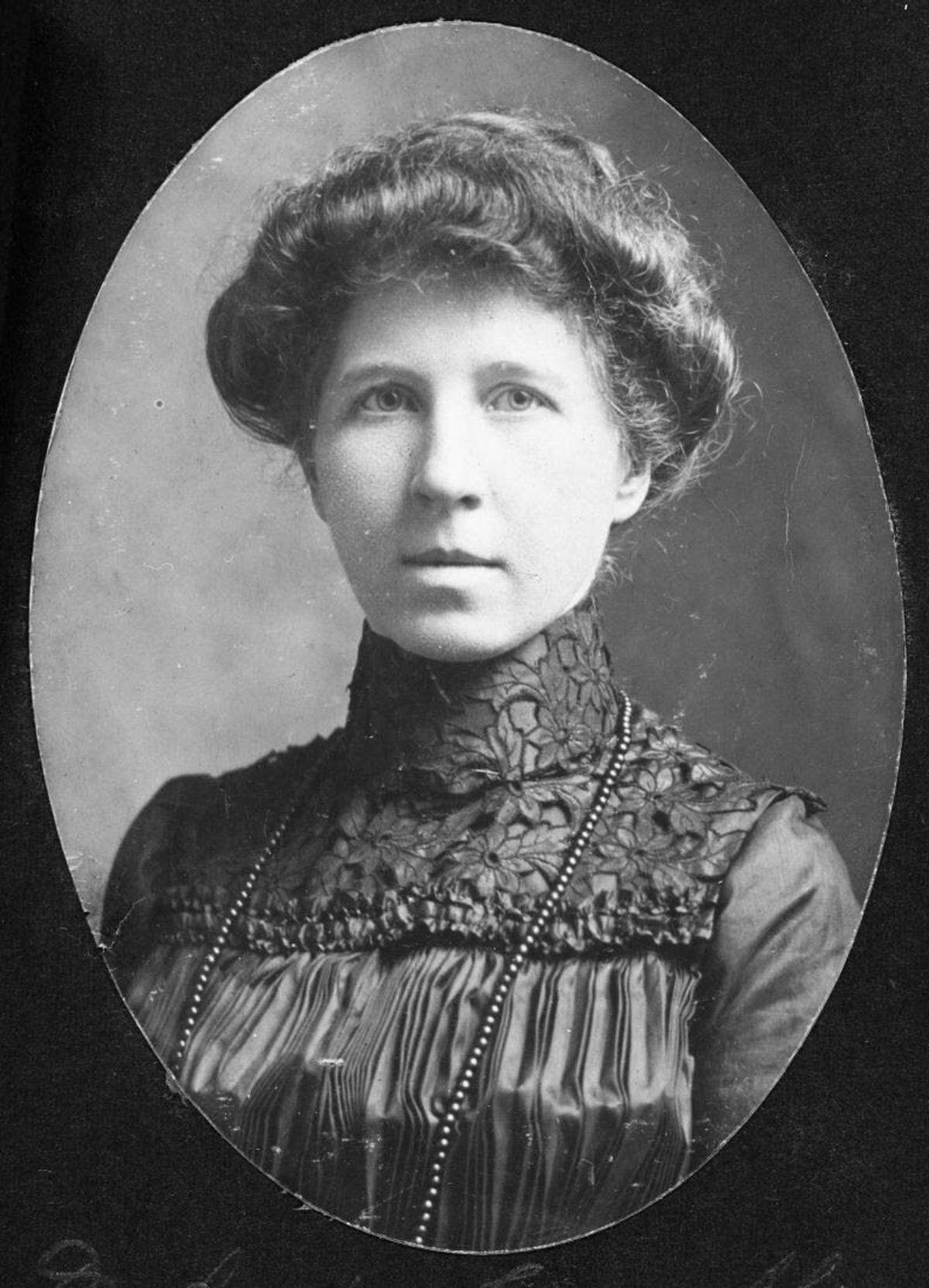
Charlotte native Harriet Morrison Irwin designed a hexagonal house in 1869 and became the first woman in the U.S. to patent an architectural innovation, according to the North Carolina Museum of History.
The patent highlighted more efficient lighting, better air circulation and more efficient use of space. Though she suffered from many chronic diseases, Irwin later published a book called “The Hermit of Petraea,” about a sickly youth who is banished to the Arabian peninsula and later finds better living conditions in a six-sided house.
Irwin studied literature, religion, history, math, painting, music and embroidery at the Salem Female Academy in Winston-Salem. Her father, Robert Hall Morrison, was the first president of Davidson College.
Mary Beatrice Davidson Kenner
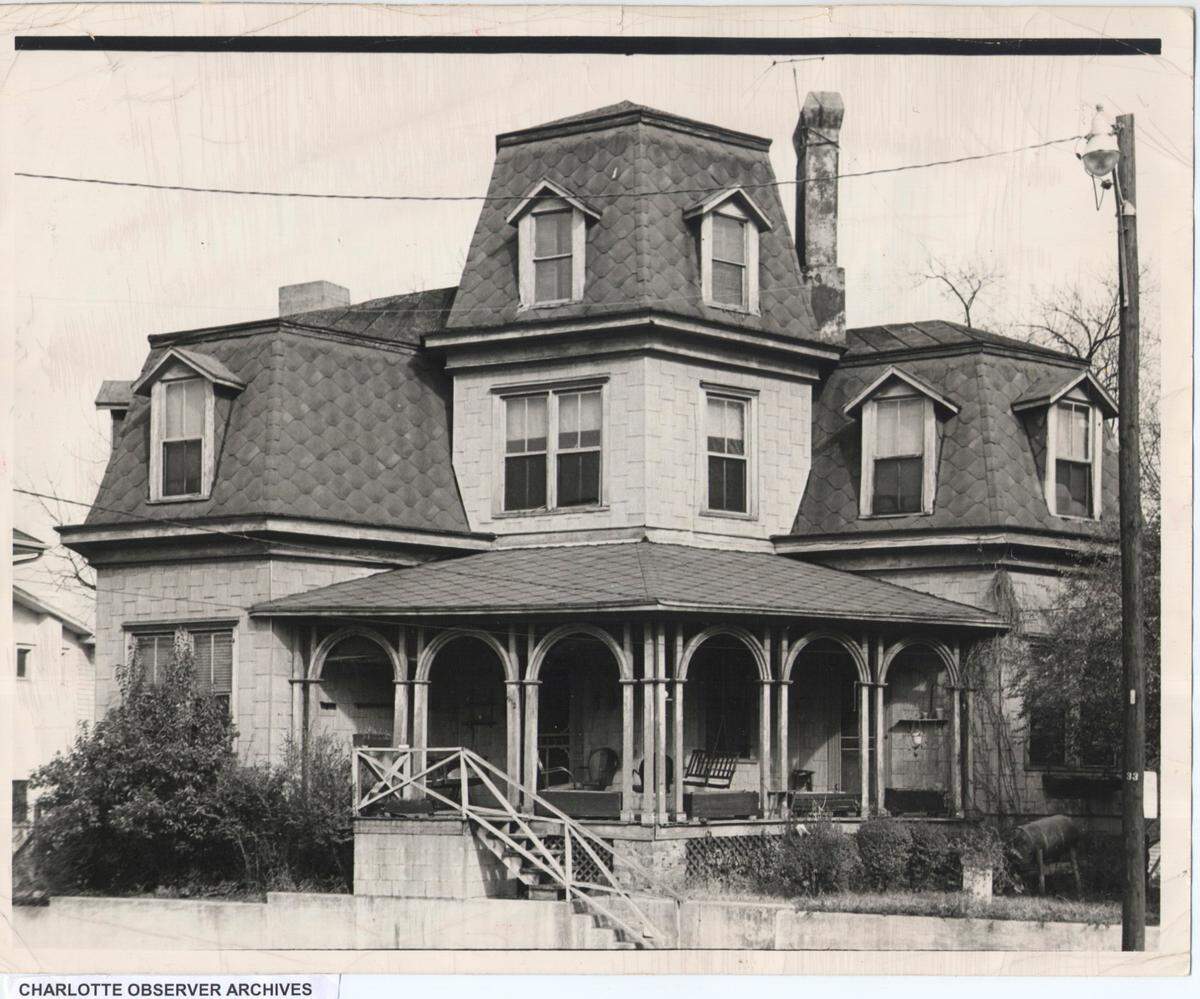
Mary Davidson Kenner was born in Monroe in 1912. Between 1956 and 1987, she received five patents for household and personal items, including a carrier attachment for a walker and a bathroom tissue holder.
Kenner started inventing at age six when she attempted to invent a self-oiling door hinge, according to historians at BlackPast.org. She had many ideas as a child, including a sponge tip at the end of an umbrella that would soak up rainwater and a portable ashtray that could attach itself to a cigarette pack.
Her maternal grandfather, Robert Phromeberger, invented a light signal for trains and a stretcher with wheels for ambulances. In 1914, he patented a clothing presser that could fit into a suitcase.

Elisabeth G. Hair
In 1972, Elisabeth G. Hair was the first female elected to the Mecklenburg County Board of Commissioners. She became the board’s first female chairman two years later.
Hair, who passed away in 2014, began her career as a reporter for a newspaper in Chicago, her obituary says. She moved to Charlotte with her husband, Samuel, in 1949 and later founded the Mecklenburg County Democratic Women’s Club in her living room.
In 2005, Hair, a strong advocate for parks and greenways, was honored by the City of Charlotte for her with the Liz Hair Nature Walk, a portion of the Little Sugar Creek Greenway. She also helped establish the North Carolina Ballet Theater in Charlotte.
Vi Lyles
In 2017, Vi Lyles became Charlotte’s first African American female mayor. She is also the first former city administrator to hold the position.
Prior to her election, she served two terms on the Charlotte City Council as an at-large representative from 2013 to 2017. She is credited with creating the city’s first capital budget, and leading the effort to restructure city government programs to evaluate and assess performance audits for city programs.
Lyles is also a trained facilitator and executive coach who has completed programs at the Institute of Government, North Carolina State University and the Lee’s Institute’s American Leadership Forum.
This story was originally published March 1, 2022 at 4:41 PM.