Everything you need to know about how the LYNX light rail system works in Charlotte
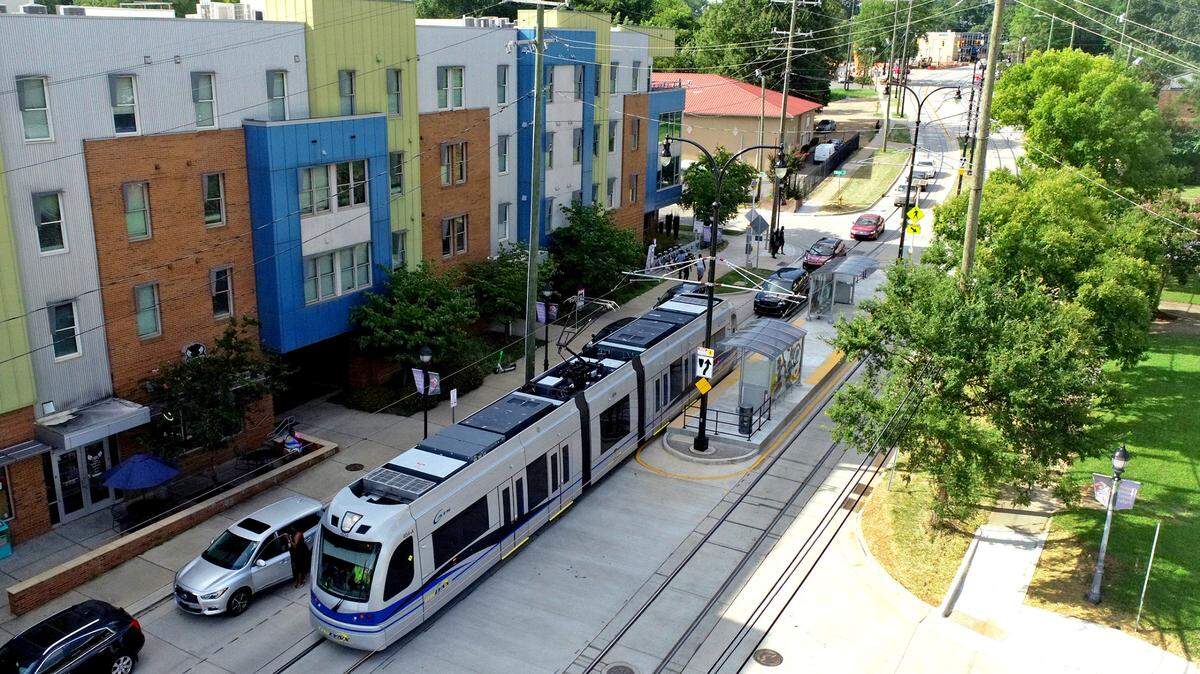
With tracks stretching for a little over 19 miles across Charlotte, the light rail has been a popular mode of transportation for work commuters and for individuals attending festivals, concerts and sporting events.
If you’re new to the area and curious about Charlotte’s public transit system, you’ll want to read through the answers to these common questions before your first ride:
Where will the light rail take me?
Unlike the train systems of metros such as Chicago and New York, light rail riders can expect a fairly straightforward commute on the main Blue Line. The light rail in Charlotte is considered a north-to-south route with unchanging stations in both directions. This means there are no transfers required for your commute — ever. The line begins at the I-485/South Boulevard station and ends at the UNC Charlotte station.
Where and when can I hop on?
The Blue Line runs seven days a week from 5 a.m. to 2 a.m., but you must be sure to check the train schedule as arrival times depend on which station you’re at. Hours of operation are subject to change. Although the line only runs in two directions, riders can hop on the light rail at one of these 26 stops around Charlotte:
LYNX I-485 Station*
LYNX Sharon Road West Station*
LYNX Arrowood Station*
LYNX Archdale Station*
LYNX Tyvola Station*
LYNX Woodlawn Station*
LYNX Scaleybark Station*
New Bern Station
LYNX East/West Blvd Station
Bland Street Station
LYNX Carson Station
Stonewall Station
3rd Street Station
CTC Station/Arena
7th Street Station
9th Street Station
Parkwood Station
25th Street Station
36th Street Station
Sugar Creek Station*
Old Concord Road Station*
Tom Hunter Station
University City Boulevard Station*
McCullough Station
JW Clay Boulevard Station*
UNC Charlotte Station
*Stations that have designated parking for riders
How much does it cost?
Fares and passes for riding the light rail differ based on age and accommodations. Riding without paying is strictly prohibited and could result in a fine, according to The City of Charlotte. Children under 5 ride for free. Here is a complete summary of fares and passes for passengers:
One-way
- Adult — $2.20
- Seniors 62+ — $1.10
- ADA-Disabled — $1.10
- Students K-12 — $1.10
Round-trip
- Adult — $4.40
- Seniors 62+ — $2.20
- ADA-Disabled — $2.20
- Students K-12 — $2.20
One-day unlimited rides
- Adult — $6.60
- Seniors 62+ — $6.60
- ADA-Disabled — $6.60
- Students K-12 — $6.60
Weekly unlimited rides
- Adult — $30.80
- Seniors 62+ — $30.80
- ADA-Disabled — $30.80
- Students K-12 — $30.80
Monthly unlimited rides
- Adult — $88.00
- Seniors 62+ — $44.00
- ADA-Disabled — $44.00
Blue Line, Red Line, and Gold Line
When researching information about the Charlotte Area Transit System or LYNX you may come across other lines such as the Red Line or the Gold Line. It’s important to understand that these lines are not alternate light rail lines but rather alternate modes of public transportation.
For instance, the Red Line is a bus route that replaced plans for a commuter passenger train. The Gold Line is a streetcar line or the equivalent of a modern-day trolley. Plans for adding another LYNX light rail line called the Silver Line have been proposed. That proposed line stretches for 29 miles to 29 stations in east and west directions across Mecklenburg County.