Corporate landlords own thousands of homes in Mecklenburg. What can leaders do?
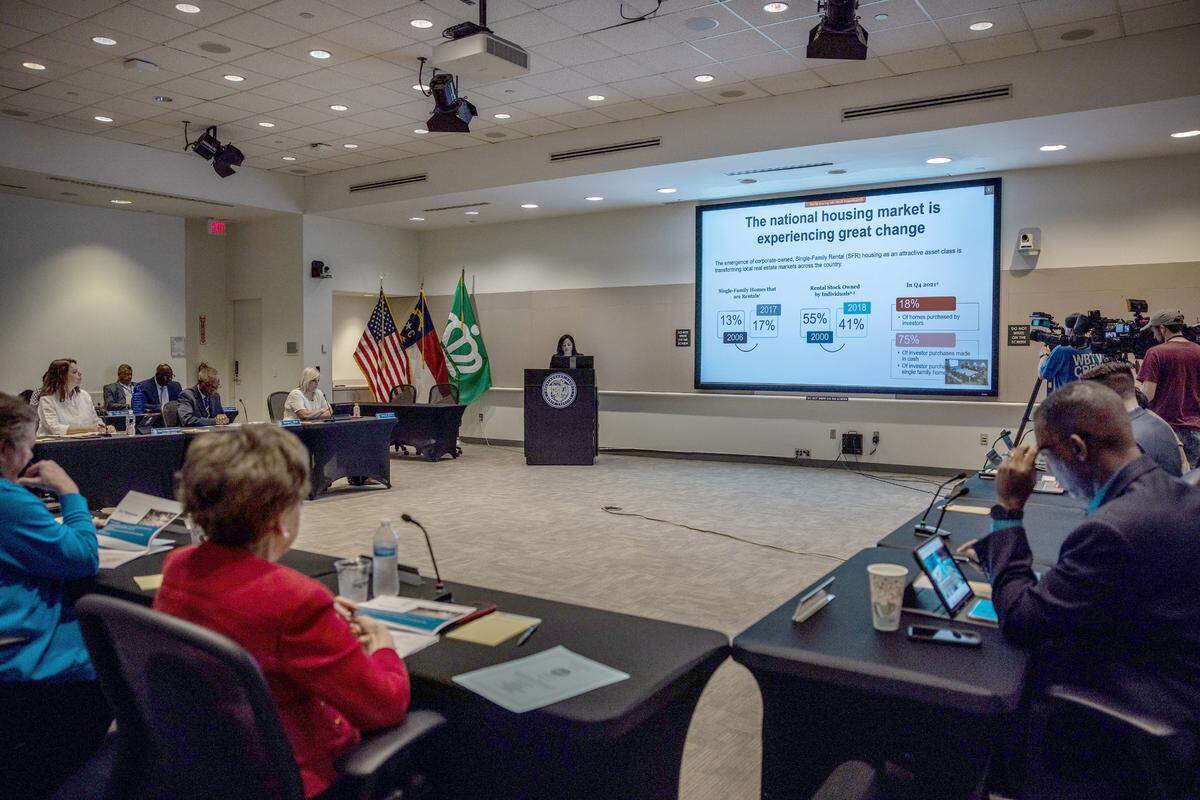
As institutional investors continue their squeeze on housing in Charlotte, county leaders met Tuesday to discuss what, if anything, they could do to wrangle the industry.
County commissioners were told that large investors own about 13,600 single-family homes in the county, according to a recent estimate by the county assessor’s office. These investors largely buy houses and rent them out.
“We need some clear guidance on what we can do,“ Commissioner Elaine Powell said during the meeting. “My lived experience is that the community is concerned about quality of life and what can we do to protect and preserve quality of life.”
She added: “I have not received one phone call to discuss the advantages of corporate landlords.”
The scale of investor-owned properties has contributed to problems in both the rental and for-sale housing markets in Mecklenburg County. During the fourth quarter of 2021, investors bought nearly one-third of houses sold in the Charlotte area, the real estate brokerage and research firm Redfin recently reported.
Several real estate agents and industry experts have told The Charlotte Observer that institutional investors are able to out-compete local homebuyers by paying all cash, often over the asking price. This activity, they say, has contributed to Charlotte’s spiking home costs.
A UNC Charlotte report on the state of the 2021 housing market found that housing prices jumped 16.3% from September 2020 to September 2021.
The UNCC report concluded that single-family rental prices increased 26.7% during the pandemic.
This type of investor activity — buying up large numbers of single-family homes with the intention of renting them out — has been going on in Charlotte for about a decade. But supercharged buying over the past year has left local officials unable to avoid the issue.
County commissioners on Tuesday discussed several potential actions to try and mitigate the impact of the single-family rental industry.
Those included funneling more money into affordable housing programs and rental assistance. Funding a land bank to allow the county to buy land with the intention of selling it at a discount to promote affordable housing or other beneficial uses is another idea.
In her presentation, Monica Allen, the county’s director of strategic planning, also suggested commissioners could work with the Charlotte City Council to revamp zoning laws to encourage dense residential development and to strengthen code enforcement to better protect renters from living in unsafe conditions.
But one of the big issues here, acknowledged Tuesday, is how little authority the county has in restricting institutional investors.
“People have the right to spend their money how they want,” Commissioner Pat Cotham said in an interview last week. “And people have the right to sell to whomever. We can’t control this but there should be” something we can do.
Cotham went on to say she thinks this is more an issue for the city rather than the county.
“The city hasn’t come out and talked about that this is happening,” she said. “They haven’t said jack. I wish the city would do something about it.”
The UNCC Urban Institute reported last month that city officials were considering tweaking its down payment assistance program to help make homebuyers more competitive. So far, the city has not put forward a substantive plan on how to respond to institutional investors.
One avenue the county commission could take that would not require policy changes or city buy-in is talking with homeowners associations, which have had some success in recent years of passing bylaws that restrict corporate landlords.
The Observer reported last year about communities introducing rules that say homebuyers must live in their homes for a year before renting them out, effectively undercutting the institutional investor business model.
County Board Chairman George Dunlap said that because the county is so limited in the action it can take, commissioners should focus on realistic steps.
“What I don’t want to do is have people believe that we can do something we can’t,” Dunlap said.
At the end of the presentation, commissioners asked County Manager Dena Diorio if she and her staff would continue looking into possible interventions, some with a sense of urgency.
“If we are not careful and we just sit back, we are going to find ourselves in a position where our constituents can never get on that rung of home ownership,” Commissioner Leigh Altman said.
This story was originally published April 12, 2022 at 4:47 PM.