He built Charlotte’s Black neighborhoods. Now a developer could take his family’s land.
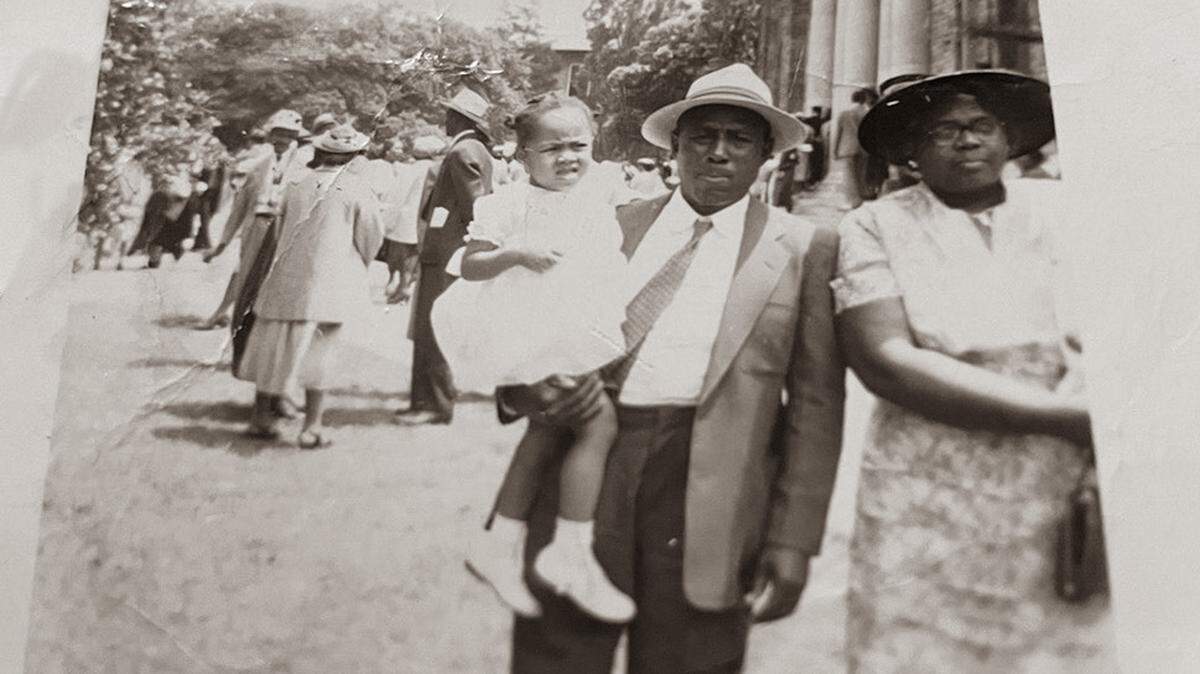
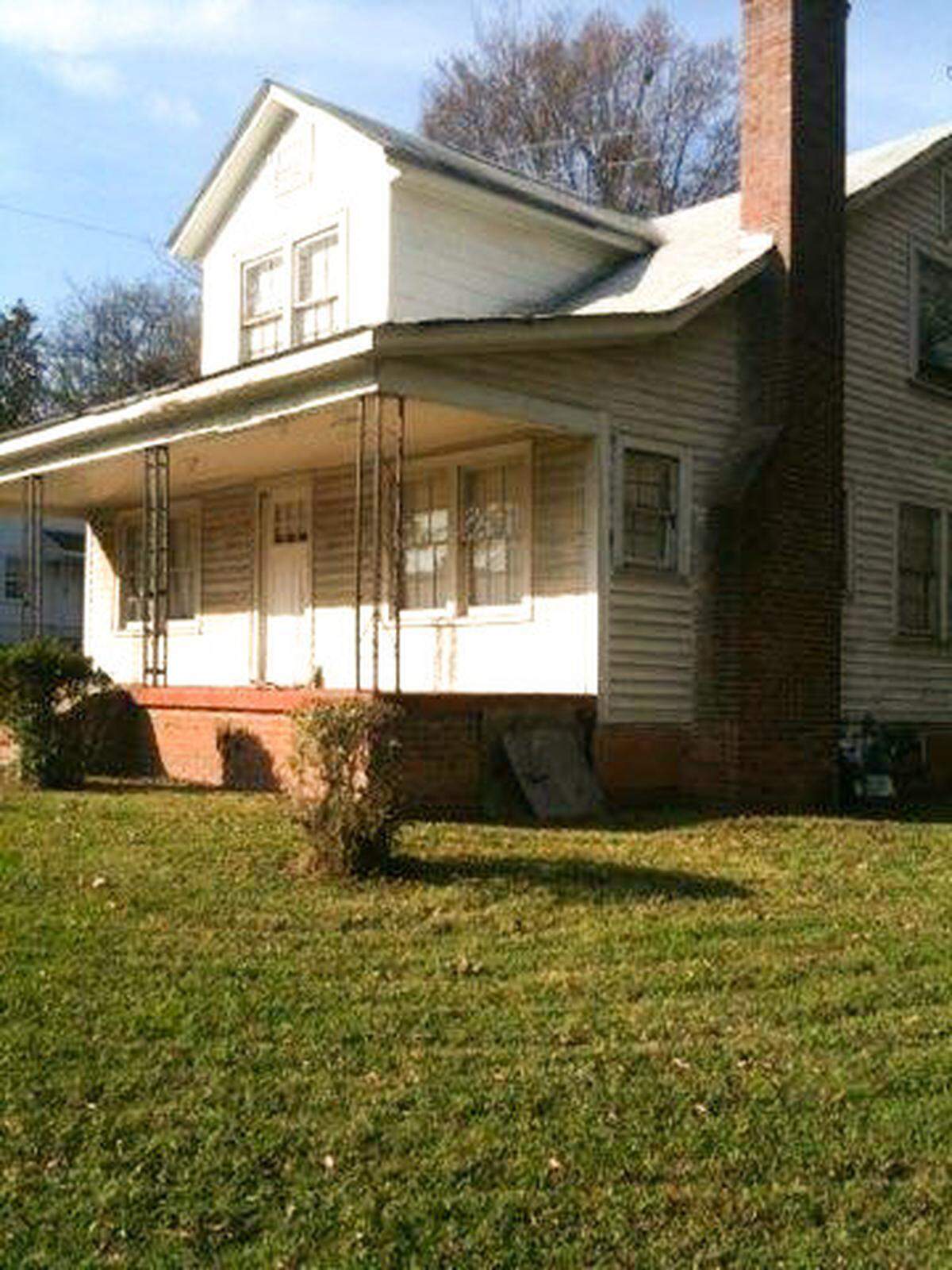
For decades the two-story house on the corner of St. Mark and Mitchell streets was the site of boisterous family dinners, impromptu piano recitals and a lovingly-tended garden.
It was among the first projects by home builder Mangie McQueen, intended for his family to flourish in one of Charlotte’s historically-Black neighborhoods.
All that remains today is a well-kept lawn and a towering pecan tree that faithfully bears nuts, calling McQueen’s family back most years even though the house has been torn down.
The lot in west Charlotte’s Lincoln Heights is the last vestige of McQueen’s personal property, meant to be a family legacy to preserve and build wealth.
But that’s now in jeopardy.
McQueen’s descendants say a developer took advantage of a vulnerable relative and bought from her one-third ownership of the land. Now, that developer is taking the family to court to force them to sell the land they’ve owned for nearly 80 years.
“It’s directly and intentionally going against the family’s wishes,” said Tea Previn, McQueen’s great-granddaughter. ”I know my great-grandfather would be ... rolling in his grave.”
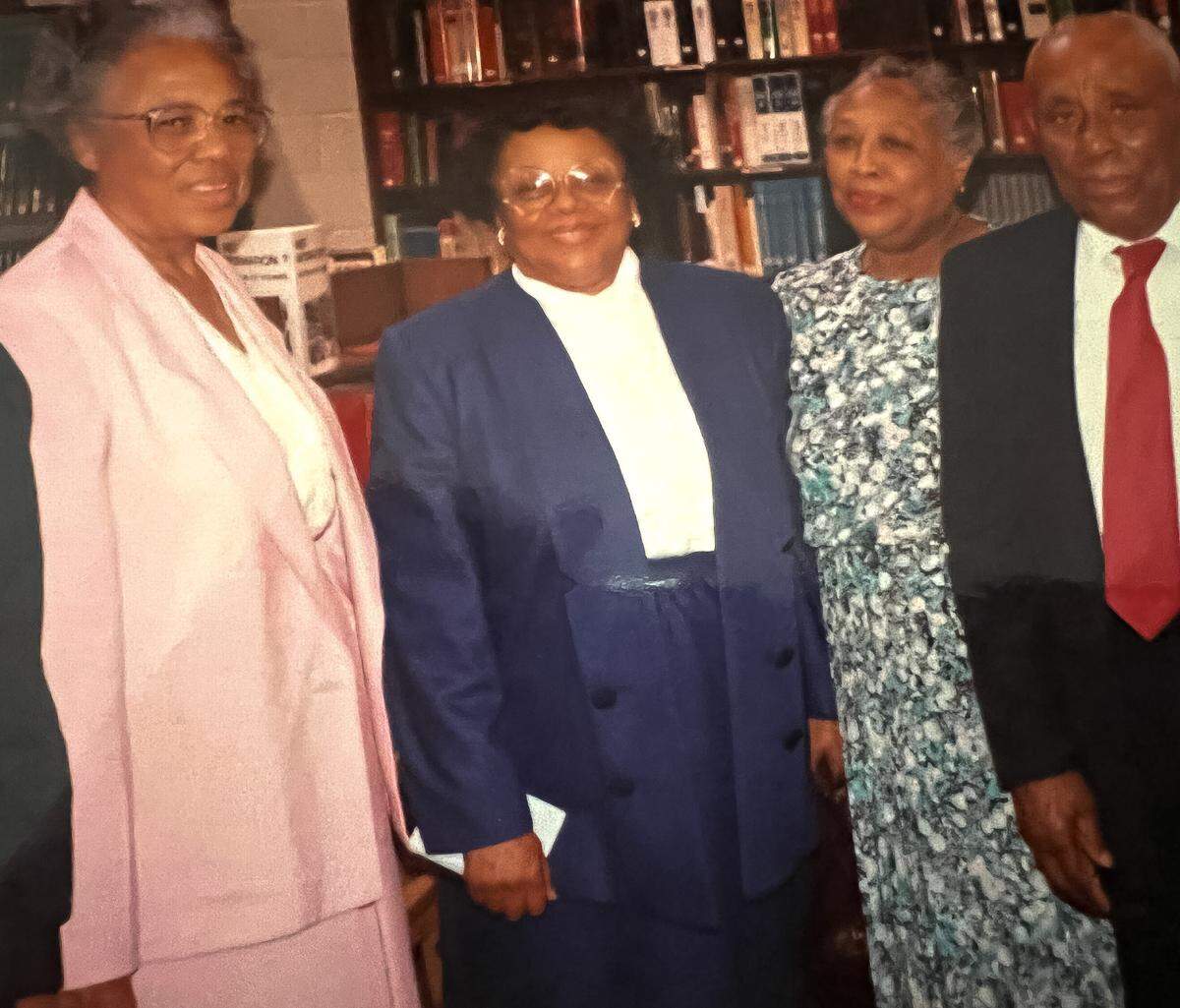
Last month Sigmon Homes LLC, connected to Charlotte developer Boyd Aaron Sigmon, filed a petition in Mecklenburg County Superior Court, seeking to force a sale of the property, stating he “is unable to enjoy (his) share” fully if the family keeps the other two-thirds.
Sigmon did not respond to requests for comment by phone, email or through his attorney.
This legal battle is a symbol of larger issues, the family says, including the struggle for Black Americans to build and maintain wealth, and the pressures on historically Black neighborhoods amid gentrification.
The developer has brought his case under a state law that says courts can intervene and make decisions about property if multiple owners can’t agree on its use. While court officials have commonly used these types of laws to settle estate disputes, to many it’s an obscure legal area — and one where local families increasingly are vulnerable to developers hoping to make profits in Charlotte’s housing market.
A family legacy
McQueen built some 80 homes, mostly in the Beatties Ford corridor, over several decades, family said. He was self-taught, and despite only a third grade education he taught himself calculus and the skills to build homes and start a business.
“People would say, ‘Are you a McQueen?’” Previn recalled from growing up in Charlotte. She now lives in New York.
“They all knew my great-grandfather because he’d done so much work.”
His clients were respected figures in Charlotte’s Black community. They were teachers, ministers and leaders in the Civil Rights movement. McQueen built the McCrorey Heights home of Dr. Reginald Hawkins that was bombed in 1965 along with those of other movement leaders.
But his greatest joy was in his family’s home.
They’d gather in the kitchen upstairs for meals, or join the family patriarch on the side porch, where he liked to linger after working in the garden. The sound of the piano in the living room would carry through the house.
For years he would drive grandchildren and great-grandchildren to school in his red car. His eyes would drift to construction projects along the way, always interested in the community’s growth even after retirement.
He came to every graduation and school event dressed in a suit.
McQueen was a significant figure in Charlotte’s building trades industry, said local historian Tom Hanchett, calling him “the most active Black builder” in the post-World War II suburbia boom.
“African Americans had always hungered toward property ownership” after it was denied under slavery, Hanchett said.
Homeownership — and the ability to build family wealth that came with it — was a powerful goal, Hanchett said, even as discriminatory practices like redlining by banks and covenants created by white owners denied Black families credit and access to certain neighborhoods.
Charlotte lawyer Alesha Brown works through her nonprofit For The Struggle to educate local Black residents about the importance of owning property and helps them safeguard their assets to build generational wealth in their families.
For Black people who have attained that goal of homeownership, Brown said, it’s frustrating that a single predatory practice can take it away.
“Homeownership and being able to pass down property through generations is fundamental for building generational wealth,” Brown said, citing Charlotte’s infamous “50 out of 50” designation for economic mobility in 2014.
In the McQueen family’s case, Brown said, “We’re not just looking at an interference to maintain property. We’re looking at a disruption… in trying to move out of the valley of alarming racial disparity when it comes to economic mobility.”
Unwanted developer interest
McQueen left no will when he died in 2003, just days before his 100th birthday. That set off a chain of inheritance divisions down the family tree. In 2014, the home was demolished after most of the family had moved out of Charlotte and the empty home became a target for break-ins and squatters.
The land ownership originally was divided into thirds. One third is owned by McQueen’s 91-year-old daughter, Clotelle Fisher. Another third is owned by four siblings, who are Previn’s cousins. The final third was owned by one of McQueen’s granddaughters before Sigmon’s purchase.
News that a developer had purchased part of the vacant land last year shocked the rest of the family, Previn said, especially after Fisher, her grandmother, had rebuffed previous inquiries.
Fisher’s daughter and caregiver rejected an April 2021 bid on behalf of her mother, who is currently in hospice with dementia. Sigmon offered to buy the 91-year-old’s share for “around $33,000,” according to a letter shared with the Observer.
“The goal was to keep the property in the family, period,” said Catherine Johnson, one of the siblings who lives near Raleigh.
But the developer succeeded in September 2021, buying the granddaughter’s one-third share for $30,000, property records show. Her stake in the property was in a special needs trust, controlled by her son, and had been transferred to the trust about one week before the sale, according to public records.
Attempts to reach her son by phone and social media were unsuccessful.
Family members say this relative has had severe mental illness for years that impairs her ability to take care of her daily needs, much less consent to a real estate transaction.
The woman later told a relative that it was the developer who suggested creating the trust, Previn said, so that the sale of the property wouldn’t jeopardize her eligibility for public benefits and the care she receives.
A special needs trust is set up for people with disabilities or other conditions that make it difficult to manage their own finances, according to the Special Needs Alliance, a national organization of disability and public benefits attorneys. These trusts can be managed by a third party, often a family member or other guardian.
Then, another shock: members of the McQueen family were served with a summons, notifying them the developer had filed a petition in March seeking the sale of the property.
The complaint argues that Sigmon cannot use the property as he wants while the family has partial ownership, and asks the court to order a public or private sale.
Sigmon is also a company official for several current or dissolved businesses in North Carolina, including a now-closed nightclub, manufacturing children’s toys, a record label and real estate, according to state business records. He is tied to the building company Sigmon Bridwell, which advertises “small luxury homes” for sale in Charlotte.
Facebook and Instagram accounts linked to his businesses have been disabled or made private, as has his personal Linkedin profile.
Legal process
When multiple owners of a property can’t agree on how to use it, one can take the others to court seeking to split or sell the property.
Those are called partition of property proceedings, when the court decides if it’s in the best interest of the parties to divide the property physically or split proceeds from a sale.
The legal process to settle land disputes with several heirs goes back centuries, said Rick Su, a University of North Carolina law professor who specializes in land use and property law.
This case will be heard by an assistant clerk of court in Mecklenburg County Superior Court. Historically, the practice has been used to divide up farmland or resolve disputes over an inherited family home.
But in hot housing markets like Charlotte, it’s been used by outside parties to take over properties after buying even a small sliver of ownership, Su said.
Su, who has not reviewed the McQueen case, said the process can embolden scammers to take advantage of people’s limited legal knowledge and financial resources.
That’s especially true for those who are “house rich and cash poor,” he said, meaning they hold a share of a valuable asset but not enough money to buy out the other owners.
“It’s become more common for scammers to exploit the system in order to get land and property for really cheap,” he said, often “exploiting families that are poor, minorities (and) vulnerable families that don’t have a lot of cash on hand.”
It allows some to obtain property well under market value.
Su said North Carolina courts have preferred to partition properties “in kind,” or physically divided. If that’s not possible, whether because it’s a house that can’t be split or the owners aren’t content with fractional ownership, the court can order a sale and divide the proceeds.
About 500 partition cases have been filed each year in North Carolina since 2016, state court data show. In Mecklenburg County, 33 cases were filed on average each year in that period.
Reporting by the Asheville Watchdog in November revealed the law allows developers to frequently target Black and lower-income families.
Previn cannot understand why a developer would pursue buying part of a property knowing that the other owners have no desire to sell.
“All of a sudden I figured out this was a strategy that allows people to force sales,” she said.
After her great-grandfather died, the family had on-and-off discussions about what to do with the property but was content with holding onto it for now, Previn said. Maybe a younger relative could buy the land one day and build for a new generation, they thought.
When the house was demolished in 2014, family members took as many bricks as possible — they’d build future homes with a piece of the house they grew up in.
In the meantime, Previn and others would stop by when they were in town to pay respects to McQueen’s memory and collect pecans from the tree. Now, they spend more time thinking about his legacy.
“We’ve spent a lot of time the past two weeks thinking about him and what he did, and I think we’re thinking of it a little differently now that we’re older,” Previn said.
The family is waiting for all parties involved to respond to the developer’s petition and a hearing date to be set. They have started an online petition to bring attention to the issue.
“It’s shocking that you can be answering to something like this in 2022,” Previn said. “Is this happening?”
Changing neighborhoods
Lincoln Heights and the surrounding neighborhoods where McQueen built homes face significant pressure. Like much of the west side, home prices have skyrocketed as new owners buy, and often flip or demolish the modest original homes.
Even while home values increase, the wealth generated by them doesn’t always stay in the area. Only one-third of Lincoln Heights’ homes are owner-occupied, according to Charlotte-Mecklenburg Quality of Life Explorer.
These neighborhoods can be lucrative opportunities for developers looking to renovate or rebuild.
The average home sales price in Lincoln Heights more than tripled since 2019, according to data from the explorer. In 2021 the average sales price was more than $362,000, essentially the same as the county average. Nearby McCrorey Heights and Washington Heights have seen similar home price spikes.
The property directly behind the McQueen property, two combined lots just like the McQueen’s, sold in February for $450,000, according to county records and is now being prepared for new construction.
Previn and Johnson see meaning in what Previn calls “the arc” of the family’s history, from McQueen’s humble beginnings to their current legal battle.
“When we grew up, Charlotte was segregated. When my grandfather built houses, this is where he was forced to go,” Johnson said of the historically Black neighborhoods where he made his livelihood.
“The place you pushed us out to is now the place you want,” she said, lamenting the loss of generational wealth when families are forced to give up their property.
“You can’t build if it someone keeps trying to take it from you.”
This story was originally published April 22, 2022 at 12:26 PM.
%20Cropped.jpg)