Mecklenburg’s food stamp delay is the worst in NC. Residents have waited months for help.
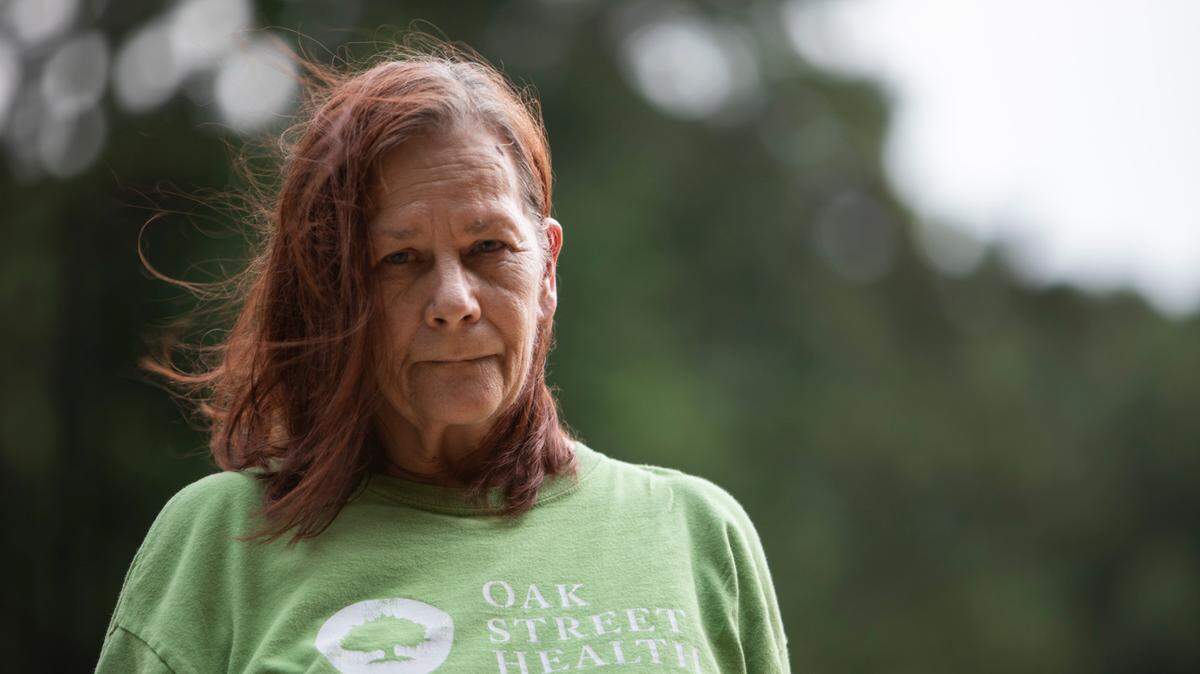
Despite her calls, letters and in-person pleas for help, the total on Lindsay Brown’s food stamps card has been $1.05 for months.
She received $100 per month in food stamp benefits for years until November, when she applied for an annual recertification to prove she’s still eligible.
Brown, an east Charlotte grandmother who retired 10 years ago, spends most days watching her grandchildren. She’s fortunate to not rely heavily on food stamps, she said, but she never anticipated waiting over half a year to have her account replenished.
Thousands more in Mecklenburg County are experiencing delays in receiving benefits as food assistance applications reach a two-year high in North Carolina and the price of groceries soars with inflation.
Brown hasn’t been ruled ineligible, as far as she knows, and says she still meets the state’s requirements to get public assistance. The problem is her application hasn’t been approved by Mecklenburg County.
A review of months of public records obtained by The Charlotte Observer shows Mecklenburg had the worst record among North Carolina Department of Social Services county offices last month for processing new food stamp applications and recertifications on time.
The backlog is mounting, too, for those applying for food stamps for the first time in Charlotte and surrounding communities. Records going back to mid-March show Mecklenburg, out of 100 counties, has routinely been at the bottom of the list for processing new applications on time.
Brown makes regular 8 a.m. phone calls and sent a letter to the Billingsley Road social services office in March. In May, she went to the office in person despite having mobility issues from surgeries on her ankles, spine and wrist. She still has no new information on when her benefits might be recertified. When no response came from the county DSS after months of attempts, she called the Observer.
“It’s not real easy for me to jump on the bus and make that ride,” Brown said. “What (an employee at the office) did when I went in was give me some paperwork, and he said, ‘It’s been so long by now that what you really need to do is just reapply.’ I was stunned. I just turned around and walked out.”
Without her family support system, Brown said, she’s unsure how she would’ve eaten since November. She’s especially concerned about the impact on people who don’t have the same security.
“I live with my son and my daughter-in-law, but I still do have to pay bills and everything,” Brown said. “Personally, I was lucky because I had some backup, but a lot of these people don’t … it’s the idea of so many people out there hurting, I had to say something.”
Mecklenburg County among the worst
The delay Brown is experiencing is not unique.
Data published by the North Carolina Department of Health and Human Services show Mecklenburg County for months has struggled to process new applications and recertifications for food assistance.
Most counties are processing 90% to 100% of recertifications and new applications in a “timely” manner — within 30 days of receiving them, according to the state’s standards. Mecklenburg is processing around half of both on time.
Between March and mid-May, the statewide average was 5% of new applications exceeding the 30-day period. In Mecklenburg, it was around 20%. Over the last few weeks, it’s gotten worse, with close to half of the county’s backlog outstanding for more than 30 days on new applications.
During that time, Mecklenburg County saw an average of 826 new applications per week.
Recertifications such as Brown’s have similar delays. In May, 3,297 of the 6,465 Mecklenburg County recertifications for food stamp assistance were processed late.
Applications for food assistance are at a two-year high across North Carolina, according to data from the NCDHHS. In May, the state received 64,536 new applications for aid. From April 2020 to April 2022, applications increased 29%, and more than 152,456 Mecklenburg County residents currently receive food aid, county public information officer Alex Burnette said. Approximately 1.12 million people live in Mecklenburg County according to U.S. census data.
Mecklenburg County’s struggles remain an outlier in the state. In an email to The Charlotte Observer, Burnette wrote the backlog was caused largely by staffing problems in the county DSS. The sharp increase in applications has exacerbated the issue, putting more work on a smaller staff.
“Mecklenburg County is one of many local agencies across North Carolina and the nation experiencing staffing challenges amid a historic accumulation of benefits in need of processing,” Burnette wrote. “This is due to several factors, including a growing number of applications and staff vacancies that we are trying to fill.”
NEED HELP? Here’s how to apply for food assistance, and where to use the benefit in Charlotte
Starting in November, when Brown filed her recertification application, Mecklenburg has been the worst or second-to-worst county for processing renewals of benefits on time. From November to February, renewals were processed within 30 days an average of 80% of the time in Mecklenburg. In the past three months, it’s been almost 50%.
Since the week of March 13-20, Mecklenburg County finished no higher than 97 out of 100 for timely fulfillment of new applications, and it finished last in 10 of those weeks.
How will county address problem?
New staff hiring is being expedited to address the problems, Burnette wrote, and 89 economic services staff have been hired this year. Nineteen vacancies have “pending or contingent offers” for hiring, and DSS has posted openings for 30 more positions. In the meantime, Burnette wrote, DSS is using temporary staff, approving overtime for existing staff or reassigning employees from other areas to process applications.
The increase in applications and recertifications are also partly due to automatic renewal waivers allowed in the height of the COVID-19 pandemic, Burnette wrote.
“FNS cases that were auto-renewed due to pandemic-related waivers are no longer being auto-renewed by the state and require interviews that were waived,” Burnette wrote.
On Dec. 18, the USDA announced that automatic extensions completed after Jan. 1 could only be applied to households that had not previously been extended under the pandemic waiver. Burnette wrote the state requested and received approval to continue automatic recertifications for “any six-month certification cases with certification periods ending in January-June 2022.”
NCDHHS spokesperson Catie Armstrong wrote in an email to the Observer state officials are partnering with Mecklenburg County to address the increase in applications.
“NCDHHS and Mecklenburg DSS staff and leadership are meeting regularly to discuss these concerns, to understand Mecklenburg’s plans to address ongoing issues and monitor progress, and to provide support and technical assistance for the county to provide timely FNS benefits,” Armstrong wrote.
In response to a request for comment, County Commissioner Pat Cotham told the Observer she wasn’t aware of the issue. Later, she provided an email response she received from John Eller, Mecklenburg County Social Services director. Eller said information on the increased caseload was provided to commissioners May 2, with the removal of pandemic waivers as a major cause.
“We’ve implemented a strategy to improve timeliness for the multiple programs managed by DSS,” Eller wrote. “We feel positive about the direction we’re going in and we will keep the board updated.”
As of June 21, Brown said she still has not received word on when her benefits might be renewed.
This story was originally published June 21, 2022 at 3:00 PM.