In Charlotte, she gave Black artists ‘roots and wings.’ Vivian Hewitt dies at 102.
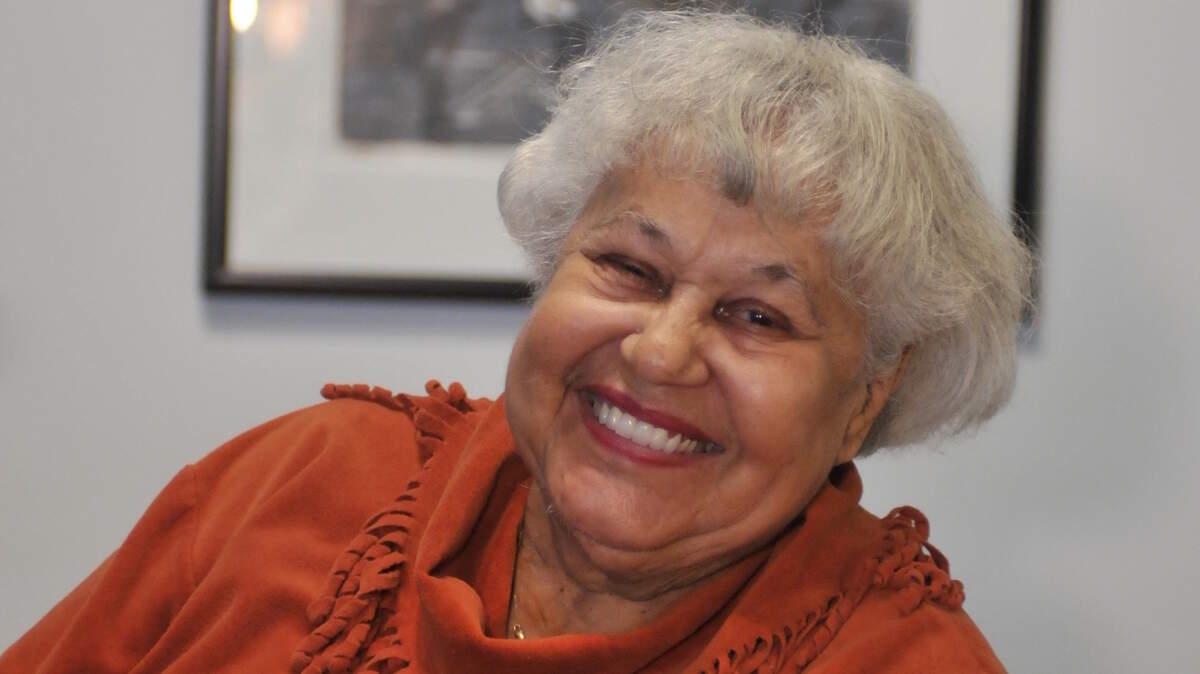
After 102 years of celebrating Black American art and establishing a capsule of pieces in Charlotte, one of the nation’s most influential art collectors has died.
Vivian Hewitt died in her sleep on May 29. Hewitt and her husband John amassed dozens of pieces by Black artists, buying each other new art to celebrate life milestones. Instead of birthday gifts, she asked her friends and colleagues to donate to the Gantt Center’s Hewitt Education Fund.
He was a writer; she, a librarian. But their paychecks supported a generation of artists who revolutionized painting and the recognition of Black art in America.
Now, their collection lives at the Harvey B. Gantt Center for African-American Arts + Culture on Tryon Street, where director David Taylor credits Hewitt with supporting the spirit of much of Charlotte’s — and America’s — art community.
Roots and wings
In a mid-life interview, Hewitt shared her philosophy on art: her art collection was her child, and she’d treat it as such.
“There are two legacies you can give your children,” Hewitt said in a video archived on the Gantt Center’s website. “You give them wings, and you give them roots.”
Their collection, now housed at the Gantt Center, included over 50 2D pieces from Black artists, including Romare Bearden and Hewitt’s late cousin J. Eugene Grigsby.
Bank of America bought the collection and pledged it to the Gantt center in 1998.
The company put the paintings on tour, letting them take flight across the country, Hewitt said. And it seemed only appropriate that, at the end of their journey, the collection would be grounded in the place where her own family traced their ancestry.
“It will have roots in North Carolina, where my roots are, and I think it’s just exactly right,” she said, beaming to the side of the camera.
She and her husband had focused their 1990s search for buyers on small museums and nonprofits, eager to find an custodian who would keep the collection in one piece as a way of inspiring other art lovers to build up their own troves.
So when Bank of America asked to buy the art and feature it in the company’s gallery at The Mint Museum, Hewitt said it was an easy decision for the couple.
Charlotte is ‘just exactly right’
And Charlotte was the perfect place to house her beloved collection, Hewitt thought.
Hewitt was born in Pennsylvania and died in New York but she visited every year for her family’s enormous reunion. It started as a gathering of families who’d been enslaved at in North Carolina at three Cleveland County plantations, and swelled to include hundreds of relatives from across the country. Though coronavirus numbers have prompted the family to hold the gathering online in recent years, Hewitt’s cousin Pat Bates said, “Aunt Vivian” never missed it.
For the upcoming reunion in August — the 117th edition — survivors will remember Hewitt alongside the other relatives they’ve lost over the past year. But Bates says they won’t be mourning a long life and peaceful passing.
“We kind of can’t be sad about that,” Bates said. “I’m sad that she won’t be on the planet and that I won’t see her anymore, once a year or whenever. But I think we’re celebrating.”
And it’s what Hewitt would’ve wanted, those who knew her say.
She kept the humidifier drawers in her refrigerator stocked with champagne, Bates recalled, ready to pull out for last-minute parties or just to spruce up intimate celebrations.
One of Hewitt’s relatives, a writer, even modeled a character after the New York socialite. Thereafter, Hewitt often signed her letters to family as her alter ego “Aunt Edith,” Bates said.
“She was delighted she’d been immortalized,” Bates said.
Taylor recalled her lighting up the Gantt’s grand opening: around midnight he spotted Hewitt on the elevator, headed to deal with the tab.
Named a hero
Hewitt, born in February 1920 to a Pennsylvania family, grew up during the Great Depression and World War II.
She was the first African American to serve as a librarian in Pittsburgh, then became the first Black president of the Special Libraries Association. The Pittsburgh Urban Heroes recognized her as a hero in 2012, and the Queen of England named her an honorary dame in 2016.
She told a Pittsburg Heroes interviewer that she recalled little outright racism from her childhood, but described fighting for equality in her early career.
Once, she said, a restaurant turned her away.
“I blasted off, I said, ‘How dare you ask me not to come in here. Men of my race are fighting and giving their lives for the likes of you,’” Hewitt recounted. They did let her in, but one of the restaurant’s co-owners later propositioned her as she left to return to work.
Hewitt never swore, she said, but had kept a mental catalog of expletives she’d learned from her brothers and cousins.
“I blasted out every swear word that I knew,” she said.
This story was originally published July 1, 2022 at 6:00 AM.