Between county line, Charlotte limits, ‘disenfranchised’ have few options for change

David Hannes has a Charlotte address and tells people he’s from the Queen City. But when it comes to getting answers from the city, he feels like his home has become an afterthought to those in charge.
The community in southwest Mecklenburg County where Hannes lives consists of about 50 homes shaded by a thick tree canopy. It dead ends at Lake Wylie.
Hannes purchased his property in the community on Woody Point Road 40 years ago and said it’s always been a quiet street where people commute to and from work weekday mornings and evenings. Those with docks along the water enjoy boat rides on warm days in the lake.
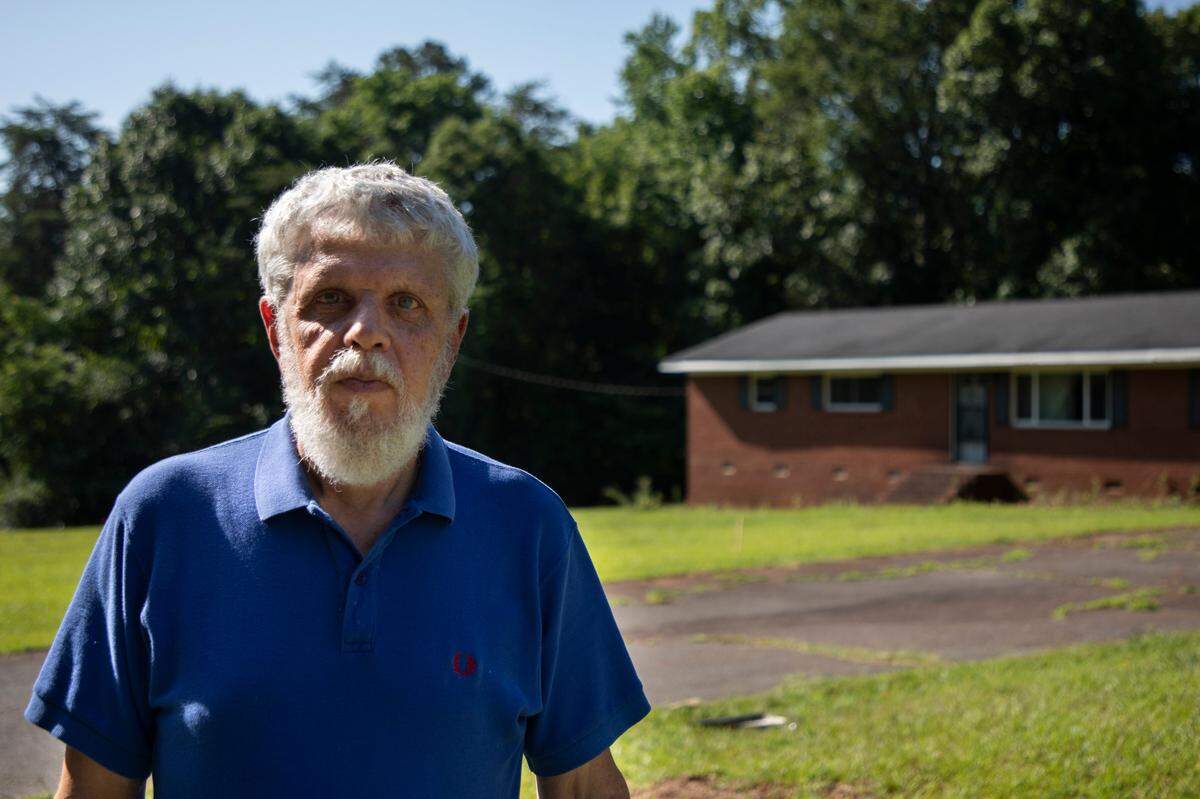
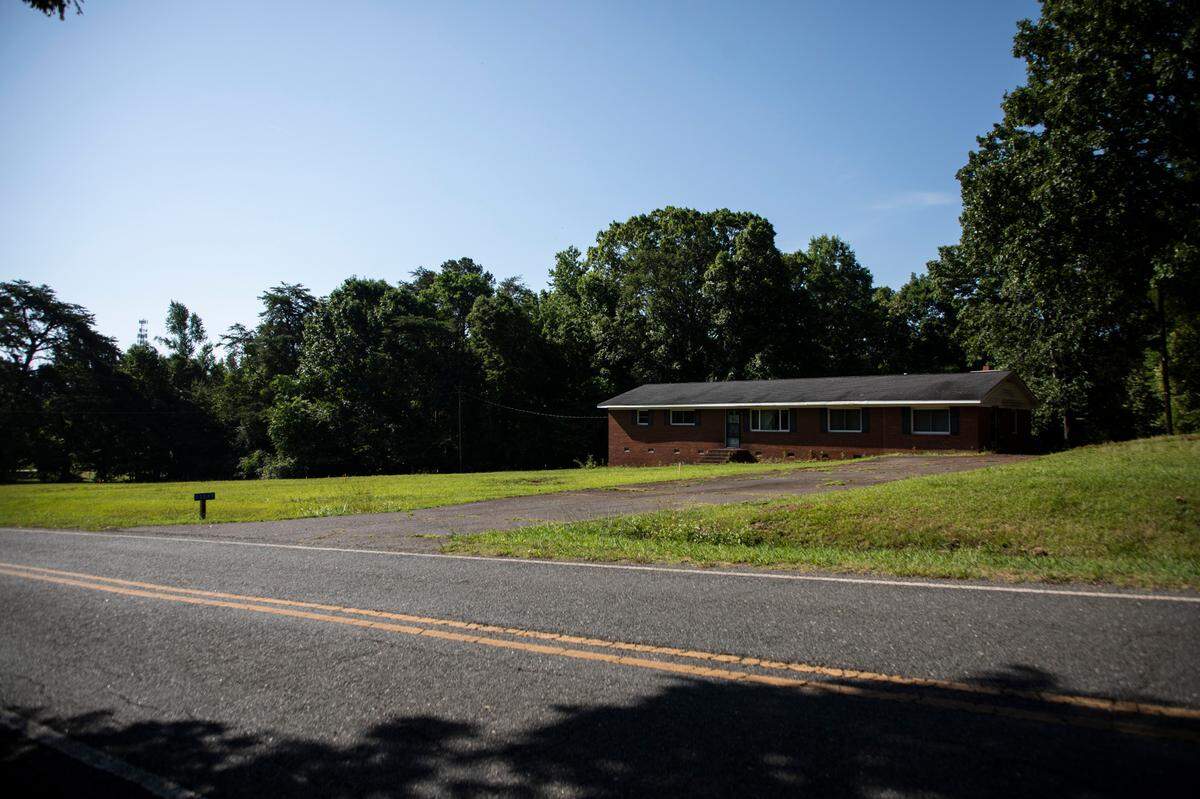
Now, Steele Creek Volunteer Fire Department could build on the street, and Hannes and his neighbors say they’ve had no voice in the changes to the road they’ve called home for decades.
Woody Point Road is part of the city’s extra-territorial jurisdiction — or ETJ. That means the Charlotte Department of Transportation doesn’t maintain the road, but city planning and development regulations decide rules for what and where things are built.
Hannes emailed back and forth with the city, spoke at Unified Development Ordinance public comment sessions and asked repeatedly why his road has shown up on maps with different street classifications. He hasn’t gotten a clear answer. His neighbors also say they have no representation in the changes coming to their neighborhood.
Sixteen Woody Point Road residents added comments to the second draft of the proposed Charlotte Streets Map, all disagreeing with the map’s recommendation to keep the road a collector street. The map’s purpose is to determine street types and their future uses.
“I wasn’t aware that they were doing this,” said Bryan Porter, who lives directly behind the proposed fire station lot. “Nobody advised us that the zoning on our street had changed. So it was a complete surprise to us that you could build a fire station here.”
This is the case for thousands of residents who live within Charlotte’s ETJ, which stretches up to 3.5 miles away from the city limits.
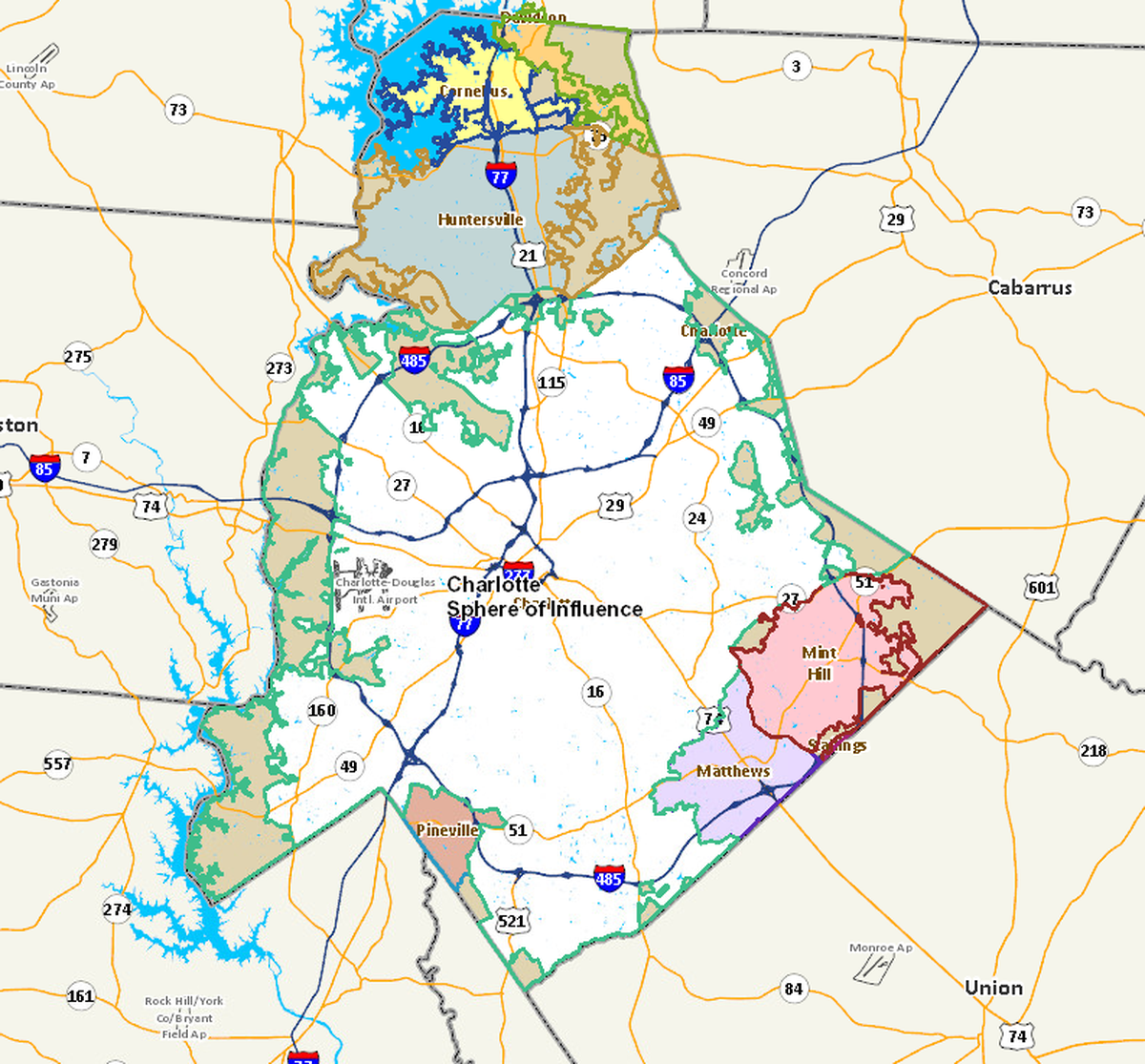
Residents say they don’t feel represented when change comes and that the road repair burden falls on HOAs and neighborhood associations when Charlotte or state departments of transportation don’t claim them.
Some ETJ residents feel ‘disenfranchised’
Property records show the Steele Creek Volunteer Fire Department in 2021 purchased a lot on Woody Point Road, which does not connect any residential streets, leaving residents to believe the road was misidentified in 2000 as a “collector” road — “a road which serves as the connecting street between local residential roads and the thoroughfare system.”
This is one of the reasons neighbors of the proposed fire station lot believe it would be inappropriate for the area. Woody Point is a dead-end road and residents are also concerned about noise pollution.
“If the city allows the building of a fire station on what is unequivocally a residential local street, then the city will be violating the intent of the ETJ by its inaction and will do irreparable harm to the disenfranchised residents of Woody Point Rd,” Hannes wrote in an email to Charlotte’s zoning administrator, threatening legal action if the city allows the street’s collector status to stand.
A representative from the Steele Creek Volunteer Fire Department said the department is following all rules and regulations and declined to comment further. Steele Creek has an existing station on South Tryon Street.
People who live within Charlotte’s ETJ don’t pay city taxes, vote for City Council members at-large or sit within a City Council district. The city still determines planning and development regulations for land within the ETJ.
However, municipalities have been required by law since 1959 to make sure planning and development boards have representation of ETJ residents proportional to its population. Members of the boards that have jurisdiction over ETJs, including planning and zoning committees, can be appointed by Charlotte’s Mayor, City Council and Mecklenburg Board of County Commissioners. The school board can nominate candidates to sit on the board.
Three longtime Woody Point Road residents told The Charlotte Observer they were unaware they lived in an ETJ when they moved in and don’t recall receiving any mailed notice about changes on their street as required by state law.
UNC Chapel Hill School of Government Professor David Owens said the issues within ETJs typically arise when independent controversies occur.
“One of the challenges that North Carolina has is we, as a state, haven’t looked at growth and development and how we manage that,” said Owens, who teaches public law and government. “It’s a lot easier to deal with the immediate controversy of the moment.”
Who pays for road maintenance?
Woody Point Road is maintained by the N.C. Department of Transportation, but maintenance for some roads in Charlotte’s ETJ is up in the air, Owens said. The result is confusion for North Carolinians living in ETJs because the state doesn’t have county-owned or -maintained roads — only city, state or privately maintained streets.
A half-million people live in North Carolina ETJs, according to a 2012 report by the School of Government, and the state’s population has boomed since then, growing by a million residents from 2010 to 2020, U.S. Census data show.
“If it’s in the ETJ, it’s built into city standards, meaning maintenance is up to the city,” Owens said. “However the city can’t do stuff outside of city limits.”
This leaves the task of road maintenance for some ETJ residents’ neighborhoods up to the developer, HOAs and neighborhood associations, presenting an equity issue.
“The cost (for road maintenance) is such that it’s often difficult for the HOA to collect that to cover it,” Owens said.
Public comment for the Charlotte Streets Map closed at the end of June, and residents were able to share thoughts with policymakers at public meetings and online. The map is expected to be adopted in August along with the city’s Unified Development Ordinance.
This story was originally published July 5, 2022 at 6:00 AM.