Corporate landlords use exclusionary language in rental listings, UNCC study finds
As institutional investors continue buying homes in Charlotte and converting them to rentals, new research suggests that these corporate landlords may be contributing to housing discrimination in a city failing to meet its housing needs.
A study, published in June by researchers at the University of North Carolina at Charlotte, found that nearly all rental listings posted by corporate landlords contain language that can disproportionately exclude minorities and the poor.
“We found that corporate landlords ... systematically included restrictions on minimum credit scores, incomes, criminal backgrounds, and prior evictions,” the researchers wrote in their paper. “The reliance on these legally observable and seemingly objective traits for screening potential tenants enables larger, often out-of-state landlords to skirt fair housing laws, but by using criteria that are largely correlated with race, they ultimately perpetuate long-standing patterns of inequity and segregation.”
While many landlords — large and small — conduct background checks, and have credit and income requirements, the researchers found that corporate landlords mention these restrictions in their rental listings more often than smaller operators.
“This criteria in the housing market, although they are not illegal for landlords to use, they still represent a barrier,” said Providence Adu, one of the researchers on the study. “When we talk about crime, for example, we know that Hispanics or Blacks are two to three times more likely to have an incarceration records.”
These findings come just two months after an investigation by The Charlotte Observer and The News & Observer revealed that in the past decade a small number of huge corporations had bought more than 40,000 single-family homes in North Carolina’s three biggest metro areas and converted them to rentals. In Mecklenburg County, one-quarter of all rental homes are owned by about 20 corporate landlords.
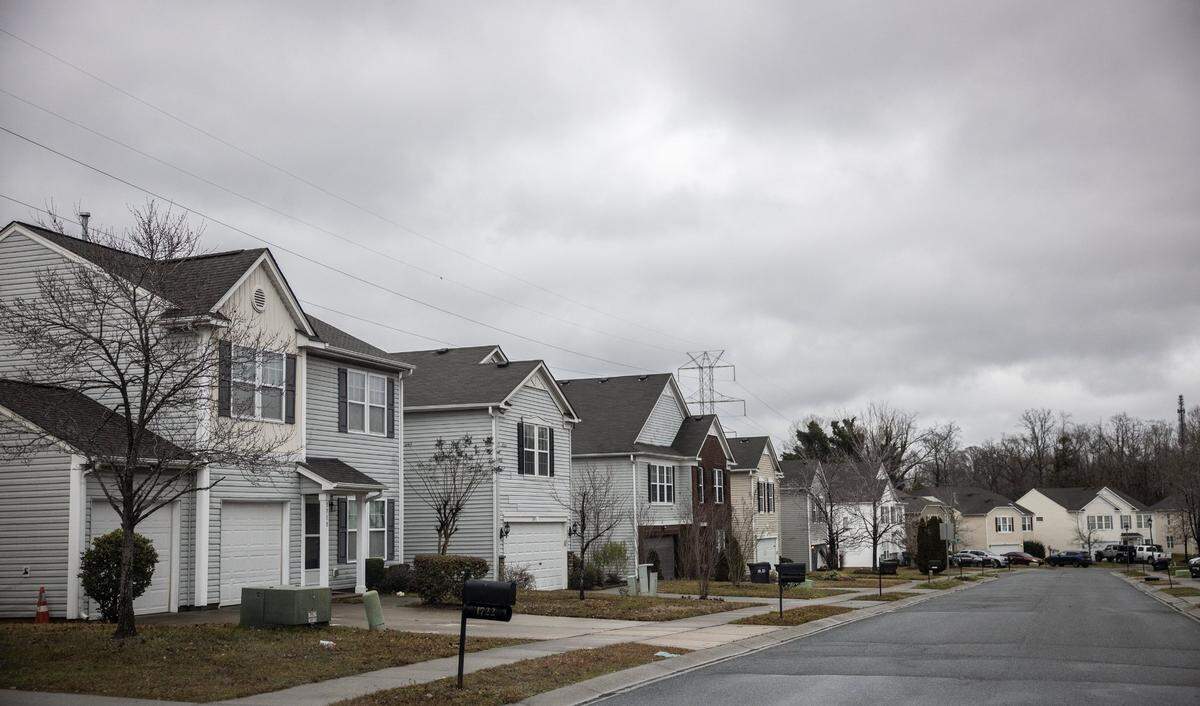
The investigation also found that corporate landlords are optimized to squeeze profit out of their houses in ways that can often hurt tenants, like charging excessive fees and fines.
The UNC Charlotte study examined 8,616 rental house listings in Charlotte on Zillow and Craigslist. Researchers found that corporate landlords did not list their properties on Craigslist, instead disproportionately listing them on Zillow. The study found that 60% of rental houses listed on Zillow were owned by corporate landlords, even though corporate landlords own 25% of rental houses in Mecklenburg County.
“Research has demonstrated that discrimination, or the unequal treatment of otherwise equally qualified individuals because of their association with some group, remains a widespread practice by landlords,” the researchers wrote. “Many of these restrictions, or exclusionary criteria, are aimed at predominantly low-income and minority renters with discredited backgrounds such as criminal backgrounds, prior evictions, and poor or no credit history; those possessing housing vouchers; or those not meeting a minimum income requirement.”
David Howard, executive director of the National Rental Home Council, a trade group that represents corporate landlords, rejected the idea that his member companies are exclusionary in their rental practices.
“Companies review resident applications in a manner that is fair, ethical, and objective, employing a ‘blind’ screening process not dissimilar from procedures used to review applicants for mortgages, apartment rentals, car leases, and credit cards,” Howard said in an emailed statement on Friday afternoon. “It should not be an unreasonable expectation that owners of single-family rental homes be able to adequately verify a potential resident’s identity and basic economic circumstances.
“However, it is patently false and, quite frankly, irresponsible to suggest that this process of verification is conducted in any way not in full compliance with fair housing laws.”
The UNCC study also found that corporate-owned rental houses were also more likely to be in minority neighborhoods with lower income, adding to a growing body of evidence that corporate landlords have an outsize impact on poor and minority communities. The Washington Post reported in March that corporate landlords in Charlotte own a greater share of homes in communities of color than in communities that are majority-white.
Corporate landlords own more homes in these communities largely because of how the industry came to be. Prior to 2012, institutional investors were not heavily involved in the single-family rental market, the Observer reported in its May investigation. But after the housing bust that started in 2008, hedge funds and other large investors began buying up packages of homes in neighborhoods hit hardest by the foreclosure crisis that precipitated the Great Recession.
In the years since 2012, Observer reporting shows that institutional investors targeted moderately priced homes built after 1980. In Charlotte, that’s often meant the starter-home neighborhoods in the northern part of the city, though corporate buying has not been limited to that area.
But with corporate landlords owning so many homes in communities of color, the UNC Charlotte study suggests that these landlords are listing homes with exclusionary policies in many of the neighborhoods where these policies could have the greatest impact.
“With respect to the rental housing market, landlords might be motivated to be ‘discriminant’ when seeking out tenants for their properties,” the researchers wrote. “They would ideally prefer to rent to an individual or household that appears least likely to miss a rent payment, to be disruptive, to cause damage to their property, or to break a lease.
“The restriction of housing options among those with discredited backgrounds has been shown to induce significant mental and monetary costs with respect to the housing search process. As a result, these individuals are often relegated to substandard housing in disadvantaged neighborhoods, thus perpetuating their cycle of disadvantage.”
The federal government has acknowledged that rental restrictions, like criminal background checks, don’t affect all renters evenly. In a 2016 memo, the U.S. Department of Housing and Urban Development said, “criminal records-based barriers to housing are likely to have a disproportionate impact on minority home seekers.”
The Observer sent emails to six of the largest corporate landlords operating in Charlotte, seeking comment on the findings of this study. At the time of publication, none of those companies commented for this story.
This story was originally published July 11, 2022 at 6:00 AM.