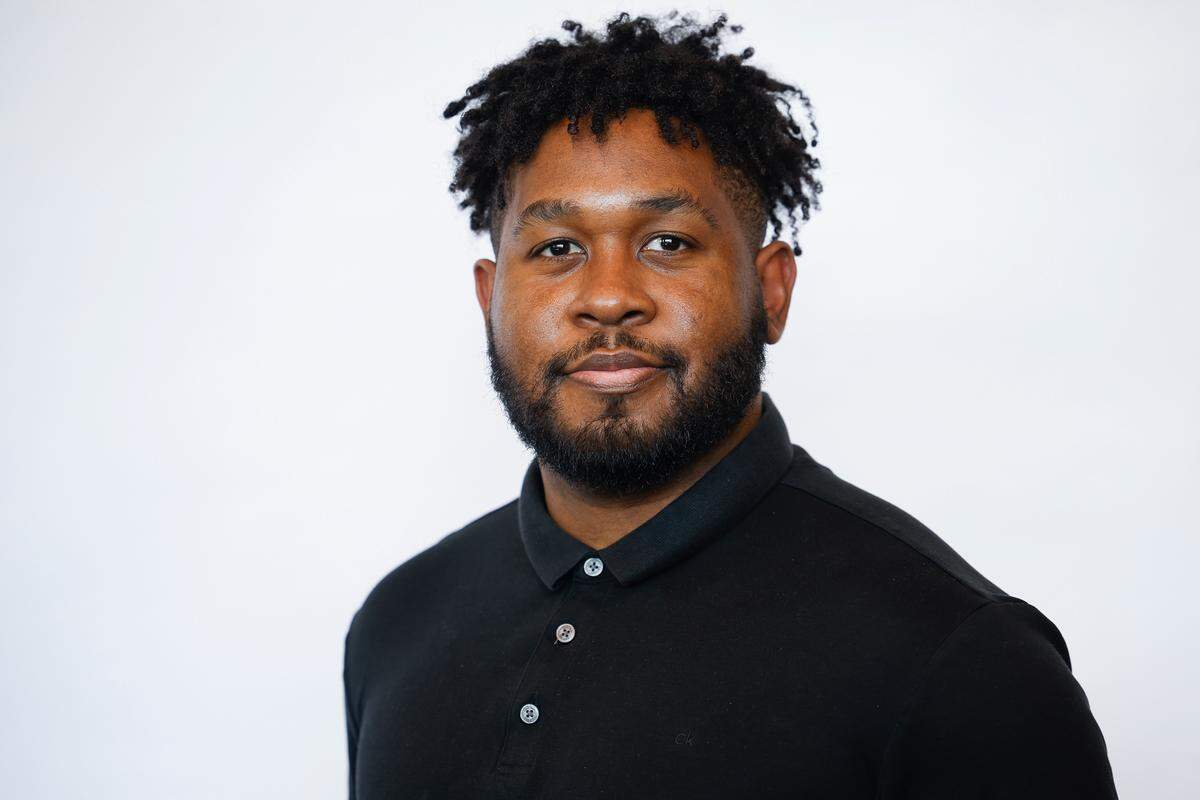
Former Monroe swimming pool receives historic marker after fight for racial integration
Underneath a putting green at the Monroe Country Club lies an unlikely piece of civil rights history — a former public swimming pool.
On Thursday, A Few Good Men, Inc. , a Monroe-based nonprofit, placed at the pool site a marker awarded to them by the North Carolina African American Commission, where Black youth were denied access to swim 65 years ago.
“That was a seminal event that brought about positive and constructive change,” Jonathan Blount, Monroe native and co-founder of Essence Magazine, told The Charlotte Observer. “That was a time when we sought change.”
On July 25, 1957, eight Black youth went to Lake Lee Park — now known as the Monroe Country Club — and asked to swim in the city-owned public pool, Patricia Poland, retired genealogist and local historian with the Union County Library, said. The youth, students from Winchester High School, were refused admission, she said.
Former NAACP President Robert F. Williams left the pool with the youth, but the fight for integration did not stop there, according to Poland.
“Robert Williams was one of the most courageous individuals that I’ve ever seen, heard of or read about,” Blount said about his late cousin who died in 1996. “He operated in the face of great danger.”
Poland said Williams and other prominent local Black figures received numerous threats after the pool incident — including physician and NAACP Vice President Albert Perry.
“We aroused the wrath of the Ku Klux Klan, and a showdown developed over the integration of the swimming pool,” Williams said in the excerpt “1957: The Swimming Pool Showdown,” from his book “Negroes with Guns.”
Threats did not stop the local NAACP from bringing their concerns at a Monroe city council meeting. They raised the point about not being allowed to swim in a public pool mostly paid for by the federal government through its Works Progress Administration, Poland said. The WPA sponsored public works and arts projects — including $106,000 for the pool, she said.
The council considered it, but warned the group of the pool’s closure if integration was insisted upon, according to Poland. The NAACP did recommend the city build a segregated pool in a Black community, but the council told them it was too expensive and they didn’t have the money, according to Williams’ excerpt.
Denied again, again
During the summer of 1961, another group of Black youth led by Williams made multiple attempts to try to access the swimming pool but were denied each time, Poland said. On June 23, they went to the pool and saw a “closed for repairs” sign which led to them picketing out front, she said.
Gunshots and Williams’ car being “pushed at a high rate of speed” happened as a result of the picketing, according to Poland. On June 25, Williams’ car was run off the road by counter protesters as nine picketers stood in front of the swimming pool, said. Williams believed the Ku Klux Klan were the culprits of the violence.
“After their rallies, they would drive through our community in motorcades and they would honk their horns and fire pistols from the car windows,” Williams said, quoting from his excerpt. “On one occasion, they caught a colored woman on an isolated street corner and they made her dance at pistol point.”
According to Williams’ account, he and other NAACP members — including a 15-year-old Blount — armed themselves with rifles and fought back the Klan and other protesters’ violent acts. Some armed Klan members attempted to attack Perry’s home too, but the NAACP was able to repel them.
“The Klan didn’t have any more stomach for this type of fight,” Williams said. “They stopped raiding our community.”
The Klan was banned from Monroe after city officials passed an ordinance, Williams added.
The pool eventually closed and remained dormant for over 20 years, Poland said. On July 5, 1971, Monroe opened a public pool in the Winchester neighborhood for all residents, she said.
The integration efforts at the original pool “needed to be memorialized”and “celebrated” because it helped give the next generations a sense of peace, Blount said.
“All the things that you now enjoy did not come about haphazardly or accidentally, it was because there were people who were committed and risked in order to make it happen,” he said. “That is what today symbolizes.”
This story was originally published July 29, 2022 at 9:00 AM.