Russell Robinson, lawyer, philanthropist, ‘iconic pillar’ of Charlotte, dies at 93
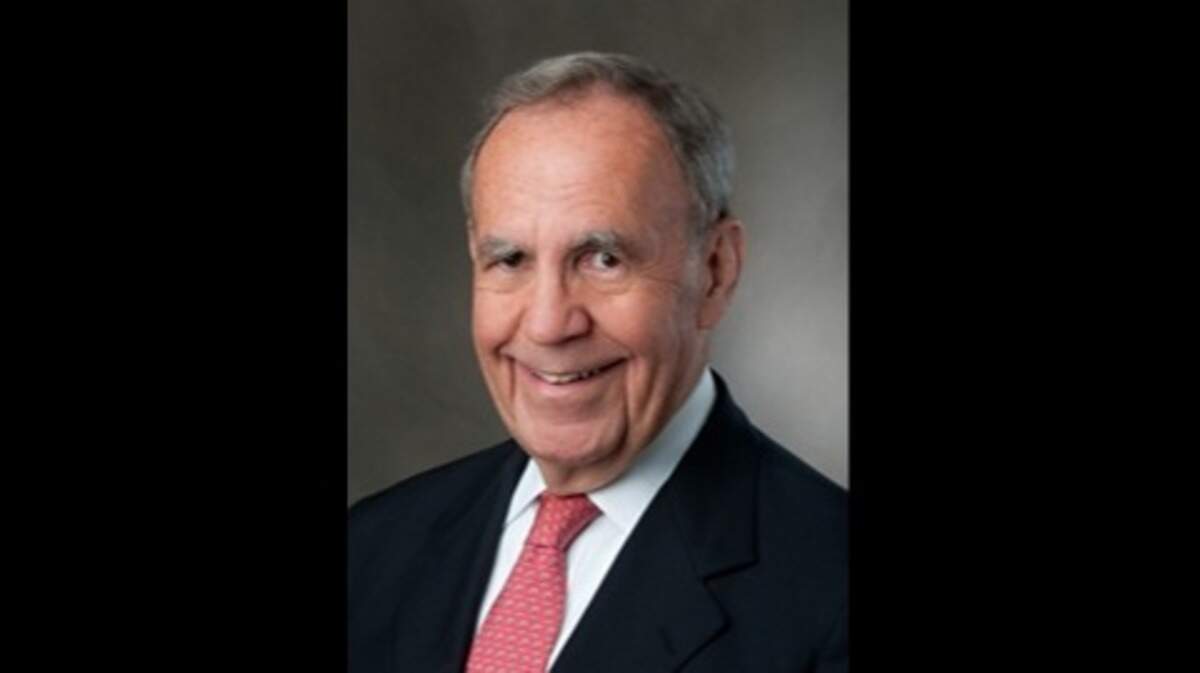
Russell Robinson, whose enduring prominence in Charlotte’s legal community was matched only by his civic contributions to the hometown he loved, died Friday, his family said. He was 93.
Robinson, a Charlotte native, was the founding partner of the firm now known as Robinson Bradshaw, one of the largest and most respected legal brands in Mecklenburg County and around the state.
What started in 1960 as a group of a half dozen Duke University law school-affiliated lawyers has grown into a firm of more than 150 attorneys still operating under Robinson’s original mandate of competing fiercely for clients without competing among themselves.
For decades, Robinson also served as perhaps North Carolina’s preeminent expert on corporate law. His book, “Robinson on North Carolina Corporation Law,” is now in its seventh edition.
Outside the courtroom, Robinson and his wife Sally operated for decades as one of the city’s power couples, both heavily active in an array of charitable and philanthropic endeavors in which they invested their time, their money and their leadership.
“Sometimes it was all those things. They were ever present, and they remain iconic pillars of this community. It’s like Sally and Russell is one word,” said Michael Marsicano, retired president and CEO of Foundation for the Carolinas, whose friendship with the couple dates back more than 30 years.
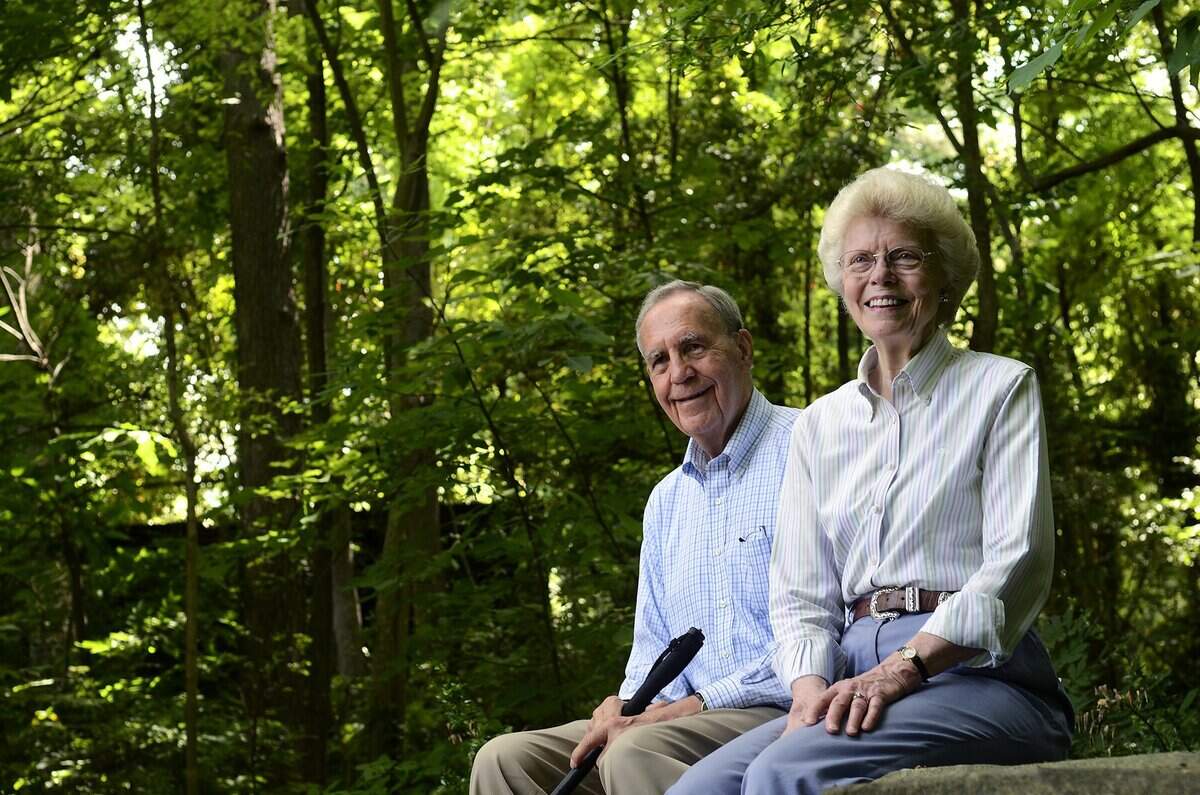
Russell Robinson chaired the campaigns for the United Way and the Arts & Science Council. He served as longtime chairman of the board for the Duke Endowment. He also was former chair of the UNC Charlotte Board of Trustees and the school’s foundation, and was a past board member at Duke University.
In 2014, the Robinsons chaired The Charlotte Observer’s annual effort to send needy children to summer camps, after years of donating money and time to the cause.
“It’s a scientifically established fact that a connection with Mother Earth is necessary for the emotional and behavioral well-being of people,” he said in an Observer interview that year. “Young people who grow up in the concrete of the city, that’s a gap in their development.”
Robinson himself was a lifelong outdoor enthusiast, leading an annual backpacking trip for close male friends for 25 years, well into his 70s.
A political moderate, Robinson epitomized what was once known as a “Charlotte Republican.” Friends and colleagues say he was a natural consensus builder who was also willing to take public stands on the progressive causes he supported, from civil rights to school integration and LGBTQ issues to voicing his opposition to the growing politicization of judicial elections. He also spoke out strongly against Amendment One, a constitutional ban of same-sex marriage passed by N.C. voters in 2012 that was later overturned by the courts.
In a March 2012 guest column for the Observer, Robinson wrote that the marriage amendment was “motivated at least in part by the desire to write into our constitution the religious belief that the Bible prohibits same-sex marriage,” which Robinson felt was a serious mistake. But he added a trademark call for decency:
“Those who devoutly hold that belief are entitled to great respect and full protection, as are the many Christians and those of other faiths who deeply disagree,” he wrote.
Robinson was regularly sought out by other community leaders for his counsel. The Foundation for the Carolinas renamed its flagship program in Sally and Russell Robinson’s honor. Today, “The Robinson Center for Civic Leadership,” partners with local officials to address the Charlotte area’s most pressing needs.
“He’s the best lawyer I’ve ever been around, but he saw the community as a place we needed to serve,” said longtime law partner Richard Vinroot, a former Charlotte mayor who twice ran for governor with Robinson’s backing.
“Just as many people think of Russell as a great humanitarian, and they’d be right, too. I don’t know which world consumes the other. He looms so large in both.”
Sally Robinson, according to the couple’s friends, was always her husband’s intellectual and philosophical match as well as his lifelong partner.
“They are both titans,” Vinroot said. “If something great happened in our community, you could almost always count on Russell’s and Sally’s hands being on it at some point.”
‘Could have done anything.’
As longtime friend and law partner John Wester put it, Russell Marable Robinson II came from “good genes.”
He was an heir to a family legacy that included a great-grandfather who helped write the N.C. Constitution of 1868 and an uncle who was chairman of the board at Duke Power. His daughter, Cammie, also a lawyer, clerked for U.S. Supreme Court Justice Lewis Powell.
“Russell could have done anything, but he decided he wanted to be a lawyer. Thank goodness,” Wester said. “He had a devotion to what he decided were the most worthwhile causes, a very natural devotion that came out of him like perspiration for us ordinary people. He was committed to finding the best things, and it just kept going.”
Under Robinson’s leadership, a team of his firm’s attorneys fought and won an 18-year court battle on behalf of the state’s victims of brown lung, a disease that strikes textile workers who inhale particles from raw cotton. The firm donated its services. At the end of the case, when Robinson Bradshaw unexpectedly received almost $500,00 in legal fees, according to Wester, it donated them to the Mecklenburg Bar Foundation at Robinson’s urging.
Robinson was particularly attached to the United Way.
“I can’t emphasize too strongly my conviction that the fundamental strength of the United Way is the voluntary nature of services given and money raised,” he told The Observer in 1976 when he chaired that year’s successful campaign.
“The real essence of a free society is that the basic needs of its people are met, and in this way we are trying to meet them through voluntary contributions rather than taxes.”
In 2008-09, when the agency’s board and executive leadership became embroiled in a scandal over President Gloria Pace King’s pay and benefits, Robinson, who had hired King, credited her with building what he described as the best United Way in the country.
Yet, when it came time for the community to determine what had gone wrong and why, the board chose Robinson’s firm — and his longtime friend and law partner Bob Sink — to lead the investigation.
Sink’s highly critical report of King and the United Way board eventually led to an overhaul of the agency’s leadership and oversight.
From Princeton to Duke
Robinson attended high school at Woodbury Forest, a Virginia prep school, and attended college at Princeton where he also played catcher on the baseball team — a position that basically controls the game.
Friends say he turned down a possible Rhodes Scholarship at Oxford to begin law school at Duke where his future wife was an undergrad. Robinson, already sounding like a lawyer, told friends he was relocating to Durham “to protect my interests.”
He left for Duke before getting his Princeton degree. For years, Robinson delighted in boasting that he was the only lawyer in Charlotte without an undergraduate diploma.
Nonetheless, he excelled at Duke, where he served as editor-in-chief of the Duke law journal. After graduating in 1956, he returned to Charlotte to begin his legal career.
Four years later, Robinson, along with Bob Bradshaw and Carlton Fleming opened their law firm. From the start, the partners wanted to build a different kind of practice. Robinson recruited younger versions of himself — law review editors who would continue being good students of the law, and who would support each other instead of fighting to get to the top.
“He didn’t want pretentiousness. He wanted brains,” Wester said. “We needed really smart people because the clients deserve that. But he also wanted solid citizens, folks with a solid sense of themselves who would take care of each other as they took care of the clients. Russell knew that trouble would come into everybody’s life.”
A quarter of a century later, trouble came from within. Fleming, one of the founding partners, left to open the Charlotte office of Womble Carlyle, a Winston-Salem firm expanding its footprint across the state. After his departure, Fleming tried to persuade some of the Robinson Bradshaw attorneys to leave with him. None did. Not even Fleming’s secretary.
“The hold and culture of the place, the sense of loyalty ... those things were so powerful then and they held people. They held everybody. Few if any clients followed,” Wester said.
One of the employees who stayed was Janice Mauney, who grew up on a cotton farm in Pineville and whom Robinson hired as an 18-year-old legal assistant. She was at Robinson’s side in the office for almost 50 years and worked for the firm in to her 70s.
“He taught me so much,” Mauney said. “You know when you’re 18, you really don’t know anything. Well, I learned a lot being around him. He and Sally always were so interested in your life and would help you any way they could and always have. All these people who worked with Russell Robinson, they mirror him. We all try to do that now.”
Vinroot, a UNC Chapel Hill law school grad, joined the firm in the late 1960s after volunteering to fight in Vietnam. He was struck by two things: how many of his new law partners were Duke grads — “I was a Carolina guy. I qualified as a diversity hire!” — and how messy most of them left their desks.
Robinson was the exception. His desk was always clear except for the one case, the one legal argument, the one file folder he needed at that moment. “I can only work on one thing at a time,” he once explained.
“That’s the way he lived his life,” Vinroot said. “He was always in charge and always in control, of his emotions, his intellect and his decision-making,” Vinroot said. “He was a gentleman, a scholar, a husband, a father and a true citizen of his community.”