
Afghan refugees find ‘different world’ in Charlotte — and a new set of challenges
A year after they fled their homeland, some narrowly avoiding death or capture, Afghan families living in Charlotte are creating new lives.
Their experiences and challenges vary, according to interviews with The Charlotte Observer. Some are still struggling to get documents such as driver’s licenses.
Others find it hard to pay rent and build careers while working low-wage jobs. Despite financial uncertainties, they’re hopeful when asked about their lives that lie ahead — futures where their girls can attend school and they can live without fear of violent persecution.
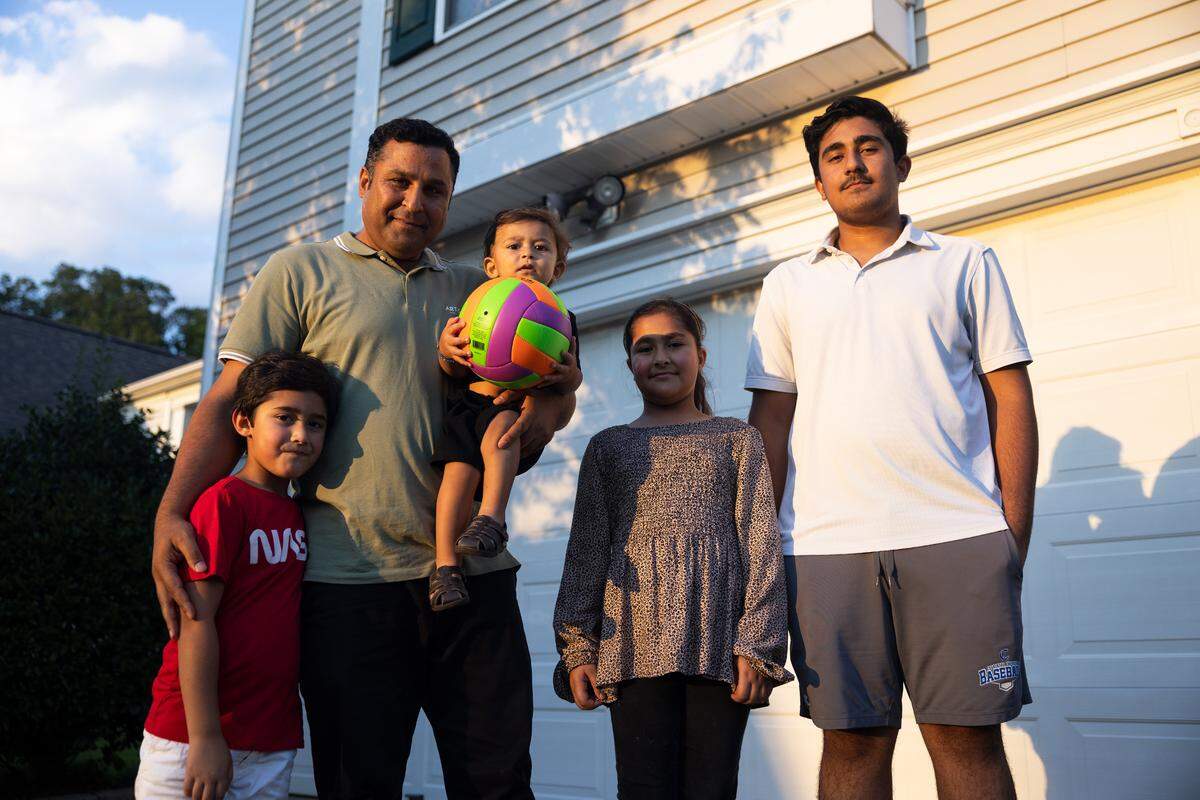
On Monday evening, Mohammad Ihsan Kamran played in the yard with his family. Just before he went outside, Kamran recalled his family’s harrowing escape as the Taliban swept to power last August.
Close calls in a chaotic escape
Taliban fighters patrolled near the airport. Had they stopped him and asked for his documents, Kamran, who worked for years with U.S. coalition forces in Afghanistan, said he would have been captured.
“We were so scared,” he said.
Thankfully, Kamran slipped by without being questioned. He and his family boarded a plane and, after stopping in Qatar, they touched down in the U.S.
For the first few months they lived in a hotel. Kamran eventually got a job with the Independence Fund. It’s a veterans support group that also has a program assisting dozens of Afghan families who settled in Charlotte after fleeing the Taliban. He now works as an interpreter and recruiter for a construction firm.
Though his long-term financial stability is still somewhat uncertain — for example, increased rent payments would really complicate things — Kamran said living in the U.S. was always a dream.
Here, his three girls can attend school without fear of terrorist reprisals. When his eldest boy goes to the store, he can take a few extra minutes without his parents worrying that something terrible happened. As Kamran put it, his family can chase their “American dream.”
That dream is already being realized through his children. It’s come as he put his daughters on a school bus; watched his son go to school knowing he can pursue whatever career he wants; taken them on trips to Myrtle Beach, S.C. and Washington, D.C.
“It is a different world,” he said. “They are happy now.”
Financial and emotional hardships
Other families are not as fortunate as Kamran’s. Like him, most have family back in Afghanistan. Their safety is always a daily concern.
Afghanistan also faces extreme economic turmoil, including food shortages in some areas, according to the humanitarian group Human Rights Watch.
When he can, Kamran sends money to his mother still living in Afghanistan. He misses her greatly, he said.
But families here have immediate needs, says Zabiullah “Johnny” Rassoly, an Afghan who also fled last August. He joins Kamran, working with the Independence Fund. They and other Afghans with the nonprofit deliver food, provide rides to doctor appointments and help as interpreters for many Afghan families in Charlotte.
Families face similar economic hardships, Rassoly added. For the families they help, working for about $15 an hour is not enough to provide for their kids and pay rent, let alone save up for a car.
There are also the less visible hardships — emotional scars left from the fright of the evacuation. Some children have trouble sleeping, even a year later, Rassoly said.
Rassoly worked for the U.S. Army and looks back on Afghanistan with a sour feeling.
“I did all these things for the U.S.A., for Afghanistan, and (now) the Taliban have come back,” he said.
Another Afghan now working with the Independence fund, Zia Ghafoori, who fought alongside U.S. Special Forces troops, put it another way: “We handed the country over to the devils.”
Earlier this month, on a hot Tuesday afternoon, Ghafoori drove to a group of apartments off Albemarle Road to deliver food to families. He was greeted in the parking lot by about a half-dozen men and a few boys. They embraced and talked as the men brought the food up to their apartments.
Rassoly, standing nearby, recalled the chaos at the airport in Kabul last August. He heard shooting, saw flashbangs. Some of the children now in Charlotte are still coping with the psychological effects, he said.
An uncertain future
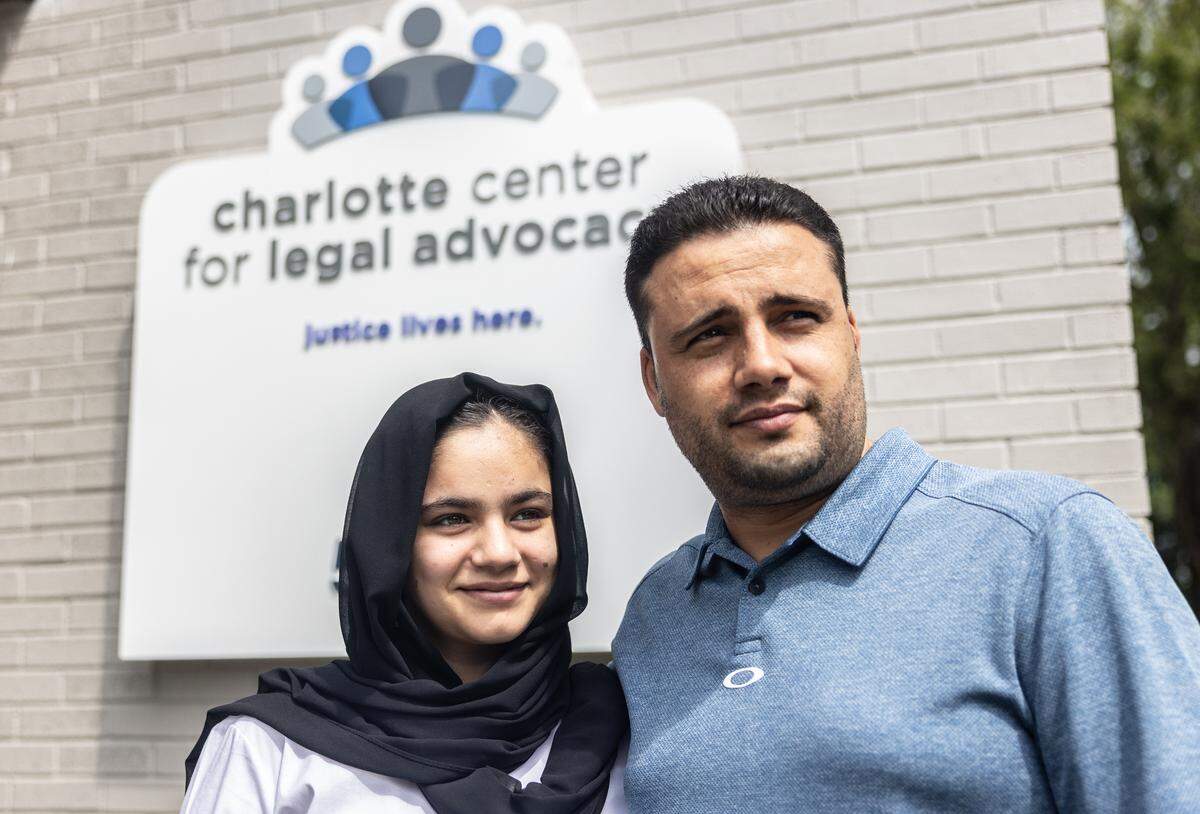
Americans watched the Afghan government fall from afar. But for Bahroz Mohmand, the moment marked the high-stakes culmination of a plan two years in the making to relocate his family.
“Because of me my whole family — my brothers, my sisters, my parents, my in-laws — most of them were at risk,” said Mohmand, who worked as a translator for U.S. Special Forces. “Working for the army in Afghanistan was not easy. You’re basically putting your family and their life in jeopardy by working for them.”
Now, safely in Charlotte, Mohmand fears for his family’s future. Their work permits are set to expire in 2023, and the uncertainty of that leaves him wondering what will happen.
“If their work permits expire, they’re, of course, not going to let them work anymore, and then they’ll have no income and (will) be put on the street,” he said.
Tahira Askira, Mohmand’s niece, recalled the tense days in Afghanistan before she was evacuated last year.
Askira said she was out grabbing groceries with her mother and sister when they heard the Taliban took over the country. Soon, the day descended into chaos.
“People were shouting,” she said. “Everybody was looking for a way to get back home.”
Askira was fearful. She heard from adults what life was like under Taliban rule. For two days, they were stuck at home as Taliban fighters surveyed the streets, looking for people.
Mohmand feared the worst. Through his job as a translator, he was given a pathway to citizenship and emigrated to America in 2012 through the Special Immigration Visa program for Afghans.
The program, however, didn’t guarantee their families similar avenues. And interpreters’ jobs often placed targets on their backs, as well as their families, Mohmand said.
Mohmand also garnered a higher profile after being invited to the White House in 2018 for a Medal of Honor ceremony for a soldier he worked with. During the ceremony, he was individually recognized by then-President Donald Trump.
While the moment was one of his proudest, it also placed his family directly in danger.
As Askira fled the airport with her family, all she was able to grab was a backpack full of a few belongings. Meanwhile, Mohmand stayed on the phone with the family and used Google Maps from his home in Charlotte to help them navigate to and through the Kabul airport. Askira spent almost two nights sleeping outside the airport before they were able to get inside.
“I was running the operation basically,” Mohmand recalled. “I was telling them where to go.”
Now in America, they face hurdles applying for asylum.
Getting settled
Rebekah Niblock, a staff attorney at Charlotte Center for Legal Advocacy, said applying for asylum is one of the more complex areas of immigration law.
Refugee resettlement centers such as the Carolina Refugee Resettlement Agency contacted the Charlotte Center for Legal Advocacy to assist the influx of Afghan families. The center soon undertook the task of creating a program to link Afghan families to pro-bono attorneys who could help them with their asylum cases.
For Niblock, the case with Mohmand’s family is even more personal. Her father, a builder in Concord, has helped to house members of Mohmand’s family and is Askira’s neighbor.
”I feel the family is meant to be here,” Niblock said.
Niblock said a bill in Congress called the Afghan Adjustment Act could be key in helping these families have a direct path to citizenship. The bipartisan legislation was introduced in Congress in August and would allow Afghans with temporary status to apply for lawful permanent residence.
“There’s precedent for the bill,” Niblock said. “If you think about the Vietnamese coming to our shores, we passed similar legislation to allow them to have more of a direct path to residency and citizenship status.”
Asylum cases could take years, Niblock said. Currently a special provision allows Afghan refugees to have their cases heard within 45 days of filing.
“But that means you need to have everything ready,” Niblock said. “That entails a detailed statement, corroborating evidence, sitting down the client and asking very difficult and traumatizing questions.”
‘Nothing is impossible’
Mohmand said some of his family members, like Askira, are young and have dreams of going to college.
“Because of their immigration, if they’re not a permanent resident here they may not be able to go to college,” he said. “There’s a lot of obstacles.”
He said he’s hopeful the Afghan Adjustment Act will pass to help his family and the thousands of other Afghans trying to become American citizens.
Though Askira is unsure of how her immigration status may affect her future, she’s still hard at work. She’s been studying and working diligently in school to fulfill her own dreams.
While her parents want her to be a doctor, she said she always had a passion for writing and has long wanted to be a journalist.
“Nothing is impossible,” Askira said.
This story was originally published August 25, 2022 at 6:00 AM.
.jpg)