As more people come to Indian Land, what can the county do to slow down its drivers?
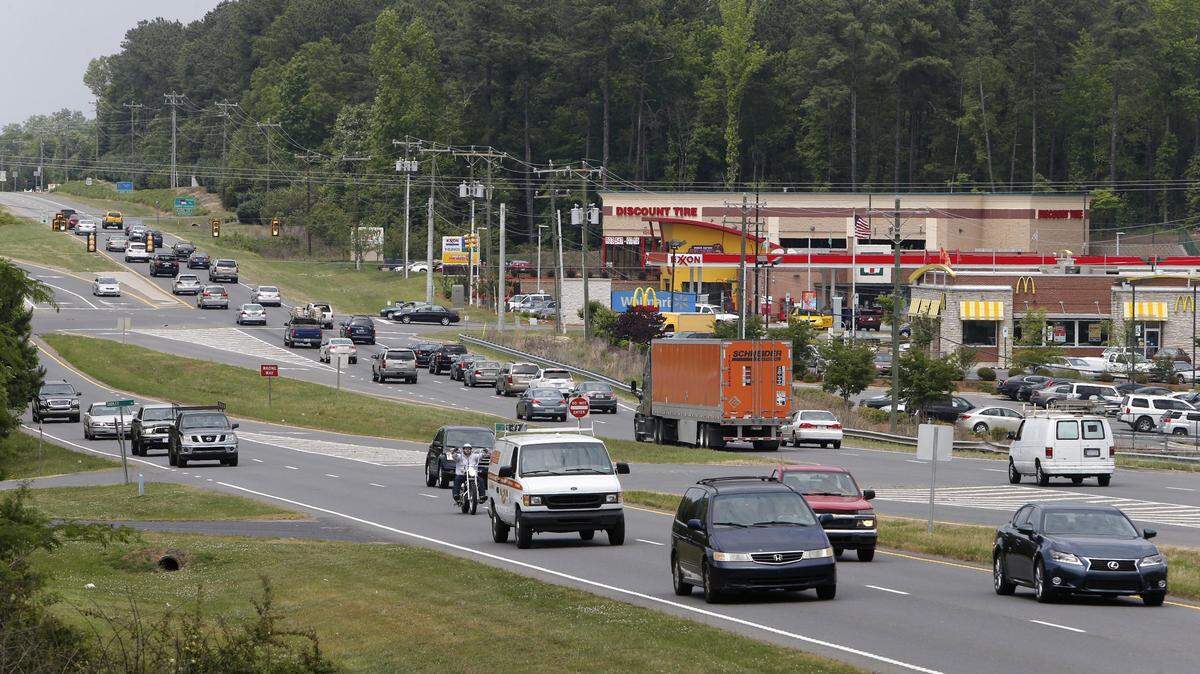
The pace of new people relocating to Indian Land hasn’t slowed in recent years. Now the task is to slow down those new people as they come and go.
Lancaster County has a new traffic calming program that’s now ready for implementation. County public works director Jeff Catoe and KCI Technologies engineer Phil Leazer updated county council on Monday night. The program aims to engineer ways to slow down traffic in problem areas.
“For many years now we’ve had problems, mainly due to our growth, with speeding in developments or along roads,” Catoe said.
Specifically, the program targets problem residential subdivision roads with a typical speed limit of 25 mph.
“The policy was probably geared 90% more toward a (subdivision) development, because that’s where most of the complaints come from,” Catoe said.
What is traffic calming?
More residential development and more drivers on the road can increase speeding, Leazer said, but there also are societal causes.
“Unfortunately society has gotten to the point where we’re in a hurry all the time, no matter what,” Leazer said.
The pace of schedules, land developed in places where hundreds of homes may funnel to a single access point, cut-through routes and ignoring posted speed limits all can play a role in speeding.
“We do it every day,” Leazer said. “Most of the time we go through the same routes and we know it very well, so we’re not really paying attention. It’s just reflex.”
Speed calming aims to make drivers think.
Options include three-inch tables with a flat top or speed humps, which can be designed to accommodate speed-limit traffic but not higher speeds. Leazer said three speed tables spaced apart typically is the best option.
Education, enforcement and engineering are all part of the solution, Leazer said. Traffic calming brings the engineering piece as a step beyond education of posted speed limits and warning signs.
“In some of these subdivision roads,” Leazer said, “they’re not working.”
Which roads will be fixed?
The county pilot program studied five roads. One came back eligible for speed tables. Three didn’t. Another should have results this week.
Niven Road near the new Indian Land High School is a county road at more than 1,000 feet. A February study of about 9,000 vehicle trips found speeds at 7-77 mph. The speed limit is 35 mph. The average speed registered in the week-long study was 41 mph. Critical for plans to slow traffic, the road registered at least 15% of speeds exceeding the posted limit by at least 10 mph.
Catoe said Niven was part of a recent capital improvement tax resurfacing project, similar to the Pennies for Progress cent sales tax in York County, and the new pavement could have impacted the traffic numbers.
“You got the road smoother again, so that probably increased the count a little bit,” Catoe said.
Three other roads just missed the cutoff for speeding issues that would warrant attention. Gilroy, Rosemont and Yellow Springs drives registered speeding, but not at levels defined in the county program. Results are pending for Bridgehampton Club Drive.
Leazer said his company tested Yellow Springs twice due to contact from people who live in the area, including homeowner association officials.
“We got bombarded,” Leazer said. “Everybody who was in that area, in the general area we were putting in, they all came out and talked to us.”
Despite a recording as high as 76 mph, the average speed for the length of the study was just 3 mph above the posted speed limit. Rosemont and Gilroy were much closer to the target mark for increased traffic measures.
More neighborhood speeding
The county can perform about five road studies per year.
Catoe said there is one application in for study now and more than a dozen copies of the new county policy sent out to area homeowner groups. Once the county studies an area that hits the speeding threshold for traffic tables, the homeowner association served by the road would pay for installation, upkeep and maintenance of the traffic feature.
Catoe said costs range from $2,000 to a fancier raised sidewalk concept at perhaps $20,000. The county wouldn’t recommend the more expensive, Catoe said.
County emergency response has been part of the new program and departments are on board with traffic safety measures, Catoe said. Roads that came into the county system with speed bumps that aren’t up to standard could be incorporated into the new program.
“Those are things we will go back and revisit,” Catoe said.
Three-quarters of the property owners along a road would have to petition for the traffic changes. Leazer suggests the county recheck traffic data a year after a speed table goes in, like at Niven where installation should come this fall, to determine impact. Leazer said the top end speeds will be impacted.
“They’ll do it once, but then they’ll have to get their car fixed,” Leazer said. “You can’t go that fast over some of these speed humps.”
For areas like Gilroy, Rosemont and Yellow Springs where the county gets speeding complaints but the data doesn’t reflect a significant issue, the study could play a role in stricter law enforcement. Leazer said his study shows, for instance, exact hours in the day when speeding is highest in mph or most prevalent overall. It can show details, like recent ones where school buses didn’t speed at all but delivery trucks often did.
Based on input already, county administrator Dennis Marstall expects the program to receive plenty of attention from neighborhoods concerned with speeding.
“Four or five a year going forward,” Marstall said, “but there are probably a lot of requests.”
This story was originally published August 23, 2022 at 2:23 PM with the headline "As more people come to Indian Land, what can the county do to slow down its drivers?."