What are the strengths, needs of Latinos in Meck County? New study results are out.
Some of the biggest factors affecting upward mobility for Latinos living in Mecklenburg Country are access in education, healthcare services and language barriers.
That’s per the results of an assessment study released Thursday by Camino Research Institute. While health services are most needed in the Latino community, fees, having bilingual doctors and insurance remain some of the top barriers.
There are more than 170,000 Latinos residing in Mecklenburg County, but the institute only gathered responses from 458 in that population who are 18 and older. The institute also held focus groups to assess the strengths and needs of the community.
One of the things to highlight in the study was the high credentials and education levels of those who completed the survey, says Keri Revens, director of Camino Research Institute. Over 80% of those surveyed were immigrants but only 1% reported having no education at all.
“A lot of people had these educational credentials but they don’t always transfer here,” Revens said. “I think some of the perception in the broader community is that a lot of Latinos are just cleaning houses or working in restaurants and that is all they can do. But that is really not the case.”
Revens said people who completed the survey had professional careers in their countries of origin ranging from medical doctors and lawyers, to business administrators and engineers. But the study found only 54% held professional careers after moving to the United States, down from 79% in their country of origin.
“For a lot of people it’s because it may be a very long process or really extensive to try to re-certify your degree or education,” Revens said. “For some people we hear that barriers were language or documentation status.”
Barriers and needs
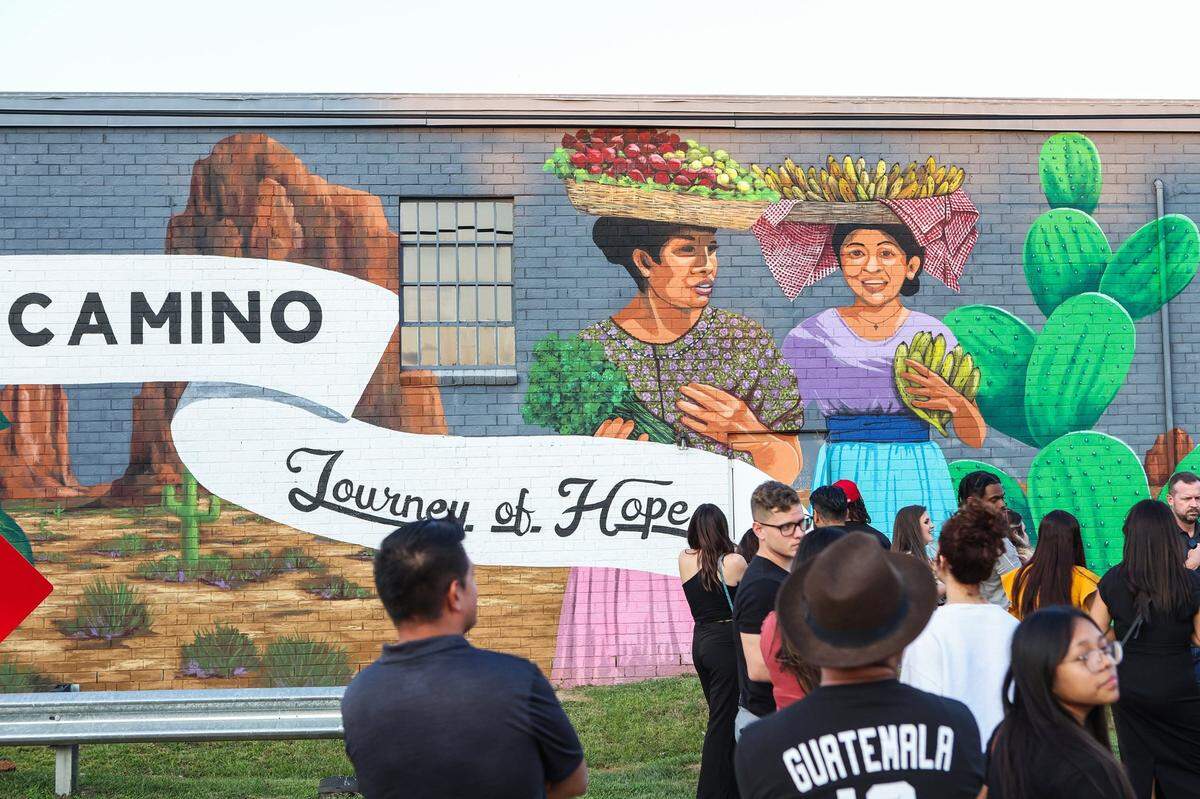
The institute, the research arm of the Camino Center, presented the study’s results during the Celebra Arte & Cultura event, which marked the start of Hispanic Heritage Month.
Milena Hernández, an audience member, said she enjoyed the study because there is not a lot of information about Latinos in North Carolina. She added she wondered why at times it felt like the state was not as friendly to the growing community.
“Many Latinos live here,” Hernández said. “It’s sad to me that having a million of us here, it’s still difficult to access things like a driver’s license.”
Language barriers were one of the consistent themes seen in areas of need, according to the report. This not only affected healthcare disparities or access to a license, but also education.
According to the study, 39% of parents reported experiencing barriers due to language and 4% reported experiencing a barrier due to immigration status.
A consistent theme heard were parents not feeling comfortable in navigating the education system, said Lennin Caro, a community research assistant. This included difficulties communicating with staff, but also touched on the future of their children’s education.
Caro said parents expressed worry in helping their kids find scholarships, learning the enrollment process and how to best fill a resume for a college application. One participant in a focus group had a daughter graduating high school who was worried that in not knowing the importance of extracurricular activities she may have impacted her daughter’s future, he recalled.
“I think that needs to be addressed in helping Latino immigrants,” Caro said “Make them feel more comfortable navigating the system and also make the system more adaptable for Latino immigrants who want the best for their children.”
The study further showed health care as a top need with dental, vision and preventative healthcare being ranked first, second and third as the most important need. Health insurance and costs were some of the major contributing factors.
Being able to access a doctor who speaks Spanish is also another hurdle, according to Revens. The survey reported 75% preferred to speak Spanish, but only 25% reported their doctors spoke Spanish.
“That’s a big difference,” Revens said. “So that’s another issue. I think it always boils down to health insurance, costs and language.”
Strengths of the Latino community
This was the first strength and needs based assessment for the Latino community in Mecklenburg County, said Camino Center spokeswoman Paola Garcia. The study also highlighted the community’s strength and resilience.
“What surprised us the most is that there hasn’t been any data to show how strong and powerful the Latino community is,” Garcia said. “That’s why the work Camino Research Institute is doing is important because we’re not just showing the needs, but also the strengths.”
A strong social network was one of the major areas of strength that stood out, according to Sarai Ordonez, community research assistant.
Some 72% of respondents reported having a person they could rely on for help, and 70% said they had someone to talk to about their problems. Nearly half said they would turn to church, a pastor or faith leader if they had a problem. And 36% reported doing volunteer or community work.
“We saw that consistently in focus groups,” Ordonez said. “I think it’s really great at Camino that we have the church to utilize those networks of trust, and to help the community.”
Researchers said they plan to expand it across North Carolina to continue to capture the diverse Latino population.
“We’re hoping this will light a fire in other organizations around North Carolina, seeing that what we could do we could replicate in other places in the state,” Caro said.
This story was originally published September 16, 2022 at 3:28 PM.