Her son overdosed. Why did the state give his mom the illegal drug that killed him?
Kelly Kennedy didn’t believe she could be any more devastated after her only child died of an overdose. But a few days after his death — and again just last week — she learned she was wrong.
Logan McAdams was found dead in his Charlotte apartment on April 30 and at the time, his mother had a suspicion but no confirmation he’d died from using drugs.
A few days later, at Carolina Cremation in Salisbury — accompanied by her husband, brother, sister-in-law, and Logan’s father — Kennedy received a bag of her son’s belongings, sent back from the office where Logan’s autopsy had been done.
Inside, she found a lighter, his wallet, and a Camel cigarette box with two packets covered in smiley faces and filled with white powder.
Her stomach dropped when she realized it was fentanyl, the drug that killed Logan.
The drugs had been mistakenly released from the Office of the Chief Medical Examiner (ME).
“When would it ever be acceptable for a family to receive pure fentanyl at the funeral home,” Kennedy says. “(It) never should have left police possession or ME possession, never should have made it to the funeral home.”
For Kennedy, her shock turned into confusion and anger. She considers the drug a key piece of evidence in the police investigation into her son’s death.
She’s since learned how rare it is for police to criminally charge drug dealers connected to overdose deaths, even with changes under a new law that gives law enforcement and courts broader authority to prosecute them.
Through texts she found in Logan’s phone and by speaking with his friends and co-workers, she’s discovered who she thinks Logan most likely bought cocaine and fentanyl from and she’s shared that with police. But no one has been charged in Logan’s death. Last week, Charlotte-Mecklenburg Police told The Charlotte Observer the case has been closed.
She doesn’t want this to happen to another family, Kennedy said in one of a series of interviews with the Observer over recent weeks.
“When they are given names of people that are known to be distributing this stuff, something needs to be done,” Kennedy said.
“I want this murderer held accountable.”
The Observer confirmed with the Medical Examiner’s Office that they investigated the release of illegal drugs after Kennedy called them repeatedly. It’s against the state agency’s policy to release drugs or medications back into the community. A spokesperson blamed the inventory list of Logan’s personal effects at the time he died, which mistakenly did not list fentanyl. They said it is the responsibility of each medical examiner to list a person’s effects.
At the funeral home, Kennedy and her brother called CMPD to tell them about the fentanyl. The person she spoke with, she said, told her they didn’t want it back as evidence and recommended she contact police in Salisbury, where the funeral home is.
Her brother, retired police officer Neil Menius, asked the funeral home for gloves and took the drugs outside. He called the Salisbury Police Department to ask what to do with the drug. The operator told him to scatter it in the wind, he told the Observer.
Menius was surprised and knew this would be dangerous, he said. So he called a friend who worked at the North Carolina State Bureau of Investigation who sent someone to test the drug. With confirmation it was fentanyl, local police took possession of it.
Death by distribution
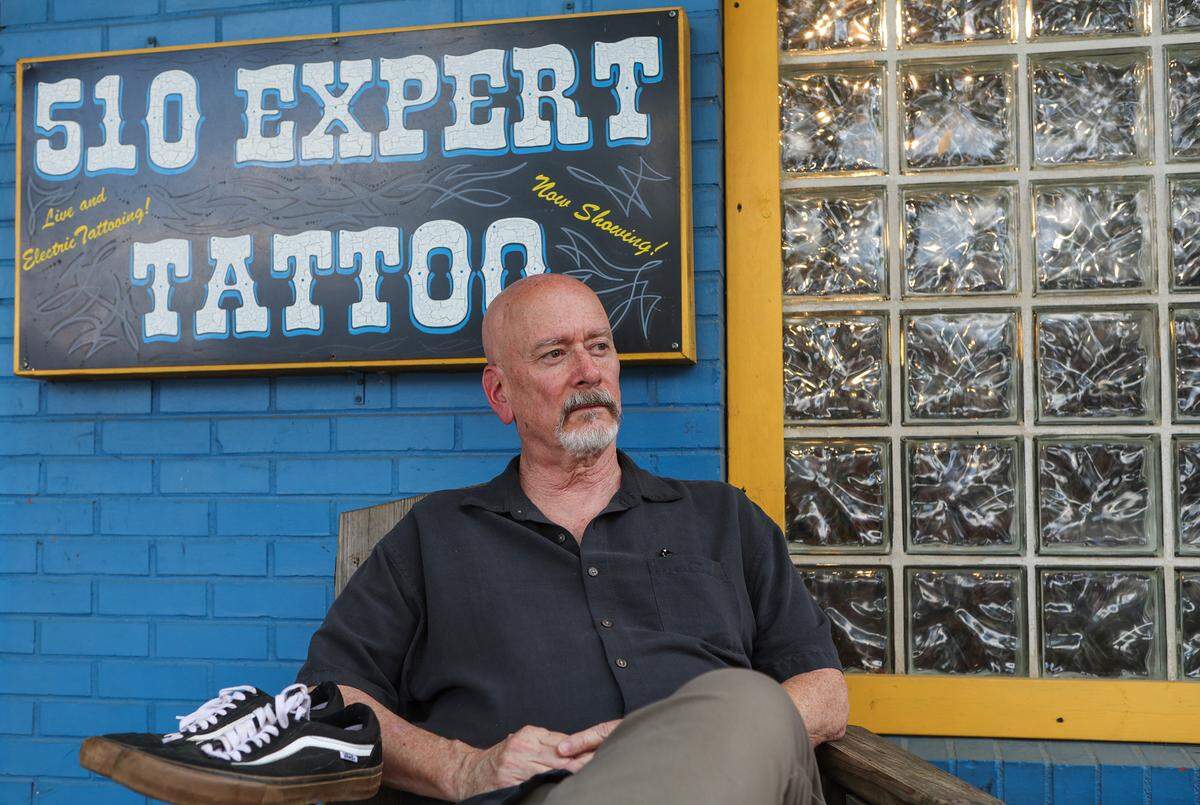
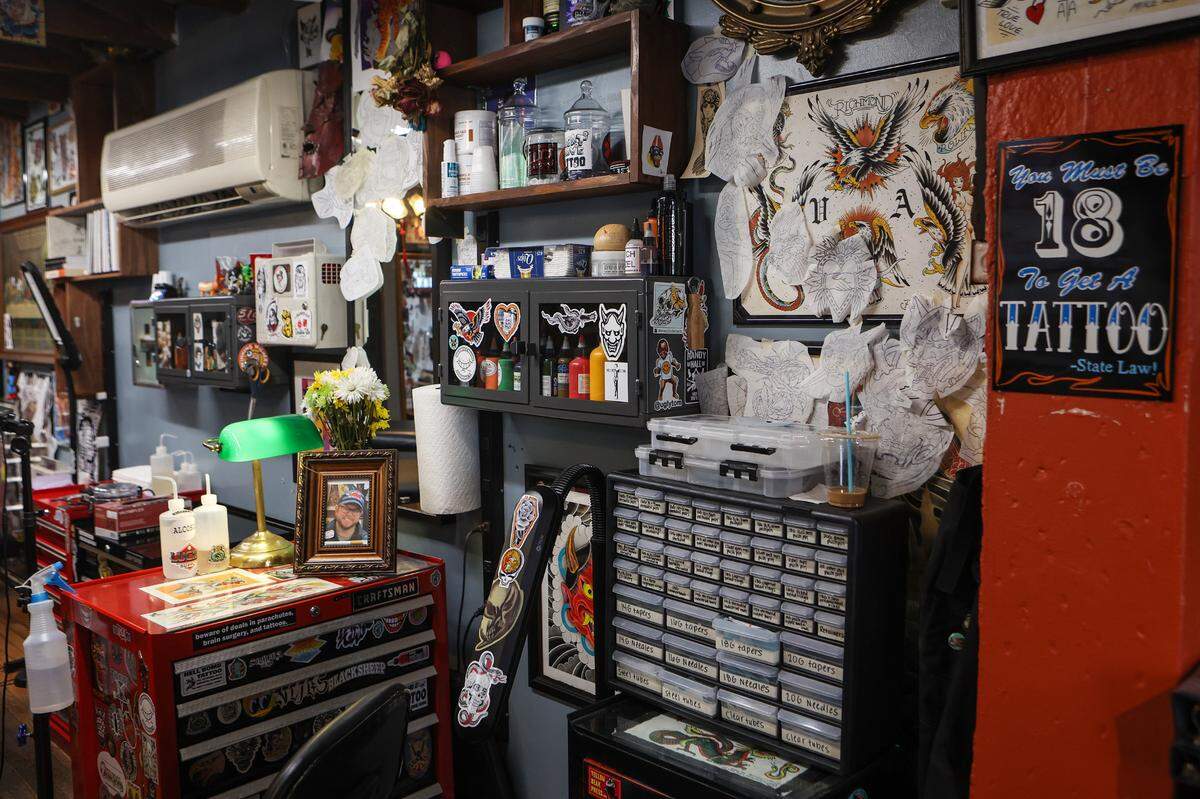
Logan lived in an apartment near the Elizabeth neighborhood and worked as a tattoo artist at 510 Expert Tattoo. He would have been 31 next week.
Before he died, he was trying to quit cocaine, according to two of his friends and co-workers who talked to the Observer in recent weeks. They and his mom believe he was persuaded to do it one last time and bought cocaine the day before his death.
The Medical Examiner’s Office report later would confirm that the drug in Logan’s body was pure fentanyl. Minutes before he died, according to the report, he’d “called a friend requesting Narcan due to cocaine use and feeling strange.”
Fentanyl overdose is becoming increasingly common in North Carolina, and fentanyl itself is the most common drug distributed in Charlotte because other drugs are laced with it, Charlotte-Mecklenburg Police officials say. Fentanyl-related overdoses increased 30% from 2020 to 2021 in North Carolina, according to the Office of the Chief Medical Examiner.
Kennedy never imagined someone in her family would be impacted by fentanyl. She didn’t even know Logan used cocaine and had sent him an article the evening before his death about the dangers of vaping.
Logan’s loved ones and the outpouring of condolences for the popular local artist were featured in the Observer eight days after he died.
At the time, the Observer did not report Logan had overdosed. It was not clear then that there was an active police investigation and Kennedy chose not to reveal suspicions about how Logan died because the autopsy was pending and she was hopeful CMPD would make an arrest.
After hearing last week the investigation into his death is officially closed, she said she is disappointed but not surprised. She just wishes someone from CMPD would have told her.
CMPD looks into every overdose case as a possible crime, according to spokesperson Amanda Aycock.
However, she reiterated that these crimes are difficult to prove.
“In cases like the one with Mr. McAdams, we must prove beyond a reasonable doubt that a particular person provided the specific drug which was the proximate cause of the victim’s death,” Aycock said in an email to the Observer. “Unfortunately, there are significant challenges to meeting the state’s burden of proof in these cases.”
Editor’s note: After this article was published on CharlotteObserver.com on Monday afternoon, CMPD added that “if further information comes to light, the investigation will continue” into Logan’s death.
Death by distribution is a felony charge in North Carolina in cases where someone sells an illegal drug to someone who dies in an overdose. It was signed into law by the North Carolina legislature in 2019 and carries a maximum sentence of nearly 20 years in prison.
Police and court leaders say death by distribution cases are difficult to prosecute.
Only six cases out of 86 people charged with death by distribution in North Carolina in the last three years have reached a verdict, with the rest pending. Five of the six saw guilty verdicts. In the sixth case, the person charged pleaded guilty to a lesser crime. The only charges filed in Charlotte-Mecklenburg so far — three — are pending, according to an Observer analysis of state criminal court records.
Assistant District Attorney Bill Bunting, who supervises the Mecklenburg District Attorney’s homicide team, said death by distribution cases face particular challenges, but it isn’t a “complex” charge.
“The challenges usually come in the fact that there usually aren’t a lot of witnesses that can show you that the victim took the drugs that were distributed to them by the suspect,” Bunting said.
When the North Carolina legislature passed the law to make death by distribution a crime, their hearts were in the right place but the crime is difficult to prove, Lt. Sean Mitchell of the CMPD vice and narcotics unit told the Observer in a July interview.
“They are very, very hard to prosecute because we would need to prove that if you died from a drug overdose, that you didn’t get those drugs from anyone but (the suspect),” Mitchell said.
To prove someone is responsible for death by distribution, police and prosecutors must show they sold the victim the illegal drug that killed them; the drug was responsible for the victim’s death; and, the victim didn’t have an underlying medical condition triggered by the drug, according to the law.
Death by distribution differs from a murder charge. With murder, there has to be actual malice — meaning someone wanted to kill someone. With death by distribution, the lesser charge, prosecutors need to show there was no malice.
‘I need answers please’
Kennedy says she tried to be hopeful CMPD would charge the person who sold Logan fentanyl but began feeling skeptical early on that the investigation was focused more on what — not who — caused his death.
Logan’s friends and co-workers knew something was wrong when he was late for work that Saturday in April. Usually, he was the first to arrive. Jill Fraser and Erin Powers from 510 drove to his apartment to check on him. His door was locked, his car was in the lot, and his phone was ringing. With a sinking feeling they called 911 and firefighters forced his door open.
In the first call she got from police after Logan’s body was found, Kennedy asked if there were any signs pointing to his cause of death. She specifically asked if there was any drug paraphernalia. The police officer told her no.
She rushed to his apartment from Kannapolis, but his body was gone. Because Logan was a healthy 30-year-old who died suddenly, the local medical examiner took his body to perform an autopsy.
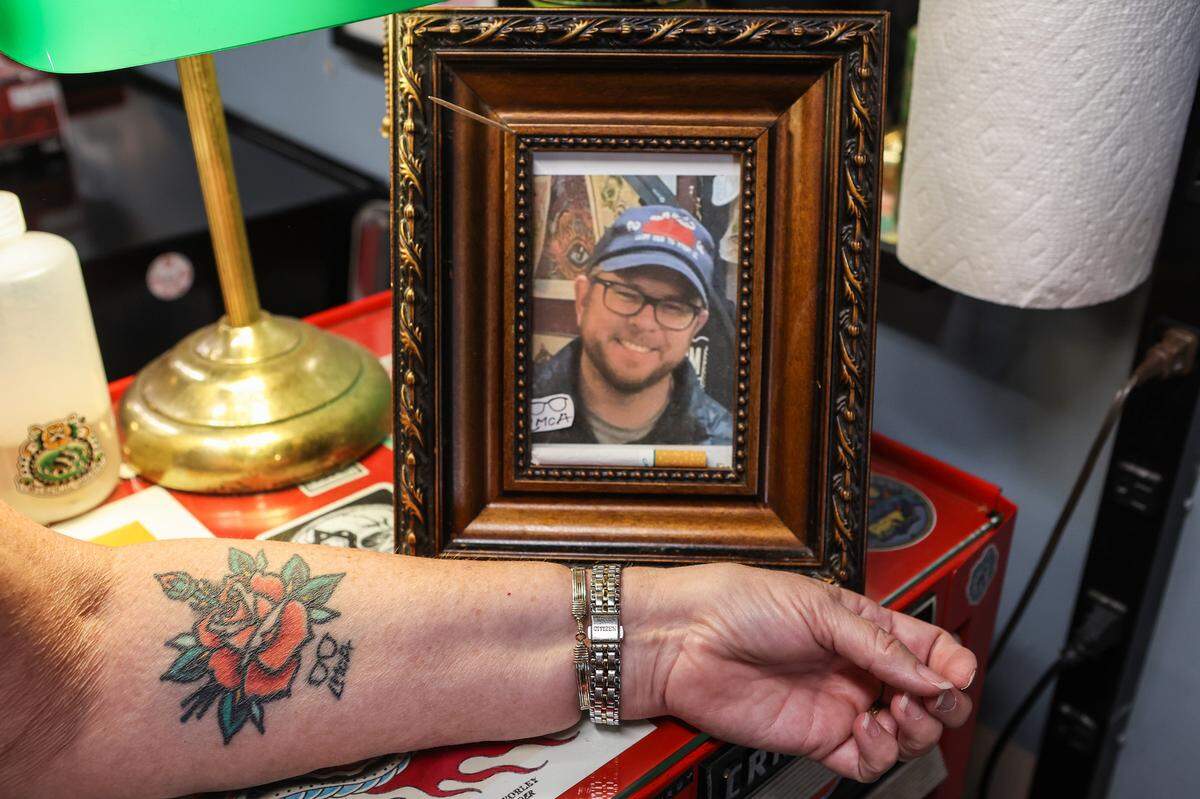
She needed answers, so she drove to the tattoo shop. To her surprise, she walked into a room full of people dressed up like Logan. His friends donned his trademark glasses, backwards hat, and Vans shoes to surprise him. They called it “Logan Day.”
The sight brought Kennedy a moment of joy on the hardest day of her life.
Parts of Logan remain embedded in the lives of his co-workers and family. Logan’s mother, two aunts, uncle, and close friends have gotten tattoos of his glasses and initials. And, Kennedy regularly visits his tattoo shop to chat with his friends and sit in his chair. His co-workers have set up a small memorial for him at each of the 510 shops in NoDa and Villa Heights. They bring him new flowers weekly and always leave the lamp at his station turned on.
After his apartment was cleared by police, Kennedy went to clean it. While there she found a tray used for cutting cocaine.
She spent the coming days and weeks trying to get CMPD to keep the investigation alive with leads. She sent them his phone and information she found. Emails between her and CMPD detectives show her pleading with them to do something.
“I need answers, please.”
“You would have liked him & I bet would have fought for him.”
In one email exchange, from July, which she sent to the Observer, she begs an officer to tell her why and how fentanyl was released to her.
Most of Kennedy’s questions in these email exchanges went unanswered, except for one. She asked a detective if it is normal for a drug like this to be given back to the family.
“No ma’am, we do not release fentanyl from active investigations,” he responded.
‘I won’t have closure.’
When Mel McAdams, Logan’s father, went to visit his apartment the day after he died, he felt a fresh wave of grief at seeing Logan’s hat and glasses on the counter in the same area where he died.
One of the hardest parts about Logan’s death for his father, like his mother, is that he may never have answers to some of his questions about how this happened to his son. He wants to know who his son talked to the night he died, and anything else that happened in his final moments.
“I feel like as long as I don’t know, I won’t have closure,” McAdams said.
Observer reporter Gavin Off contributed.
This story was originally published October 3, 2022 at 12:00 PM.