The streets vs. abusers: Housing choices bleak for Charlotte domestic violence survivors
The woman’s voice quivered as she bravely and carefully chose her words. A single thought raced through her mind: Can she keep her children safe?
She was among a group of domestic violence survivors who told Charlotte City Council members at a Sept. 26 meeting that abuse victims in the city are in dire need of more housing options and emergency services.
The city’s only emergency shelter, Clyde & Ethel Dickson Domestic Violence Shelter, has a firm 90-day stay policy. After that, occupants must vacate to make room for others. The problem is some don’t have any place to go.
They say that leaves them with only two options: living on the streets or returning to their abusers.
The women have proposed solutions to what they describe as a crisis that can leave them in imminent danger. They’re pleading for better funding for Safe Alliance, a nonprofit that runs the shelter. They say doing that would allow for longer stays and more support for programs like childcare and job training.
More funding could possibly establish a new long-term shelter solely for domestic violence survivors, the women told The Charlotte Observer in the days following their appearance before the City Council. The Observer generally does not name survivors of domestic violence.
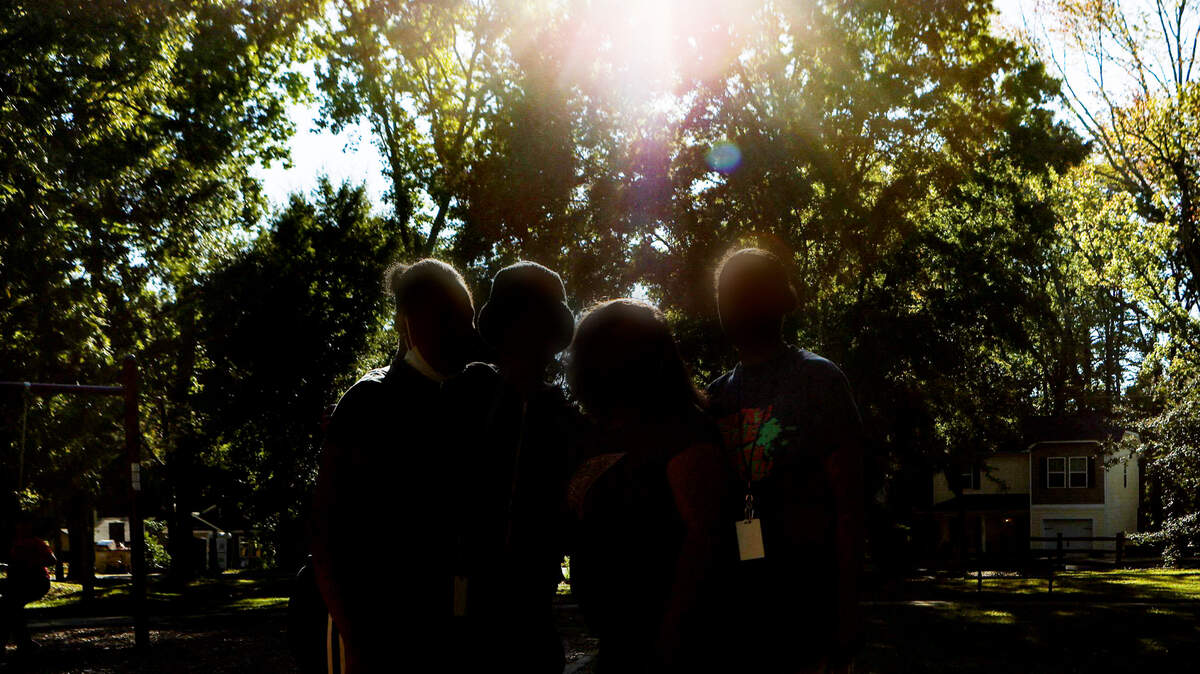
Council members listened patiently, and understanding the need for anonymity, the city took great care to protect their identities as they spoke — including keeping their faces and names hidden on the city’s live streaming platforms.
“I just feel like we’re not getting any type of resources,” one survivor said. “We’re not getting any type of help.”
Safe Alliance, which opened its emergency shelter in 2013, runs the only facility of its kind in Charlotte for people facing imminent danger. One in four women and one in nine men experience severe intimate partner physical violence, according to the National Coalition Against Domestic Violence, a national organization dedicated to supporting survivors.
Still, with only 80 beds available, to ensure others are helped the nonprofit has to be firm on its 90-day stay policy, or a bottleneck could occur, says Karen Parker, Safe Alliance CEO.
“Then we could have people who are really in high levels of danger who can’t get into our shelter if there’s not a bed,” Parker said. “We do try to be upfront with people when they first come in the shelter that it is a 90-day facility.”
The nonprofit has operated for more than 100 years and provides services for more than 8,000 people annually, according to its website. It is funded through grants, fundraising, and city and county allocations.
Other options for survivors are the Salvation Army Center of Hope, which provides shelter for the general community experiencing homelessness, and My Sister’s House, a transitional living program for women experiencing homelessness. Beyond that, choices are bleak.
Charlotte has multiple housing programs, but none that specifically addresses the needs of domestic abuse survivors.
The city of Charlotte provides funding for Safe Alliance programs and has budgeted $397,000 for Safe Alliance in its current fiscal 2023 budget. Beyond being a financial partner, the city does not have a further role, city spokesman Lawrence Corley told the Observer in an email.
The City Council voted in August to set aside $5 million toward the Umbrella Center, a proposed family justice center that will serve victims of interpersonal violence. By 2024, the city’s funding would add to $10 million from Mecklenburg County and $20 million from private sector contributors. Safe Alliance is expected to manage the facility’s operations.
Earlier in the month, the Mecklenburg Board of County Commissioners passed a joint proclamation with the city naming October as Domestic Violence Awareness Month. Officials also designated Saturday as Domestic Violence Survivors Day.
“I don’t have family to stay with”
Months ago, a mother sought refuge with her children at Safe Alliance to escape an abuser. She dealt with abusive relationships in the past and for the sake of her kids, decided to leave, she told the Observer.
She has been at Safe Alliance for two months and says her children are her driving force. Attentive to their needs, the mother accompanies her older children in the mornings to public transit. A younger child remains with her as she looks for work and childcare.
“It’s hard to look for a job with (a child) on my hip,” she said. Having paycheck stubs to show income is necessary to secure a spot in childcare, she added.
A program to help survivors acclimate and transition after separating from an abusive partner would help her, she said. Her advocate at the emergency shelter connected her with a workforce program two weeks ago, despite having been at the shelter for two months. She said still hasn’t heard anything back since signing up.
In a week or two, the mother will need to leave the shelter and may be homeless — something her children have not taken well, she said.
“I don’t have family to stay with,” she said. “If I did I wouldn’t be here.”
Housing crunch worsens situations
As the housing crisis worsened, the shelter extended its stay from 30 days to 90 days. Last year, the average length of stay at the shelter was about a month and a half.
Extensions are given in certain cases. Exceptions include if a survivor is still actively in danger, or in the process of moving into permanent housing and just needs a little more time.
“As the city grows, we’re definitely going to need more resources,” Parker said.
The challenge is there is not enough affordable housing in the community — a problem faced by many nonprofits. One solution is adding more emergency beds, Parker said.
“But that’s a Band-Aid,” Parker said. “If you want to get to the core issue it’s more looking at longer term housing and that availability.”
With more people affected, the housing crisis puts North Carolina-based shelters over capacity, says Nisha Williams, legal director with North Carolina Coalition Against Domestic Violence.
The rising cost of living also makes it increasingly difficult for shelters to connect people with secure housing in such a short period of time, she said. Housing continues to be a barrier for many survivors to restart their lives.
“You have so many people coming in with a similar issue and not enough people being able to come out of an emergency shelter to access affordable housing,” Williams said. “That’s really at the crux of the issue.”
‘Where do we go from here?’
Charlotte’s Domestic Violence Awareness Month proclamation is a regular occurrence to recognize the issue and the resources available, Alex Burnett, a county spokesman said. Charlotte and the county have done it jointly for at least the last three years, he said.
“I don’t know what they’re making people aware of because they’re not giving us much help,” said a second woman and a domestic abuse survivor who addressed the council.
The group who spoke at a council meeting said they didn’t know how much more the city could do to address their concerns, but they wanted to use the platform to bring attention to the issues.
The second woman told the Observer that in the brief period she’s been at Safe Alliance, there hasn’t been enough time to receive all the support she needs. She too is expected to leave in the coming month.
Parker said it’s often a heart-wrenching decision when they have to transition someone out of the shelter.
Especially for the survivors.
There is a glimmer of hope for one survivor: Since speaking at the City Council meeting, she has been able to get a Section 8 voucher for housing. She still worries about finding a place that will accept her voucher and about other women who may be in tougher situations.
“Because where do we go from here?” she said.
This story was originally published October 12, 2022 at 6:00 AM.