
Former Catawba College president loved deeply, from students to family to wine
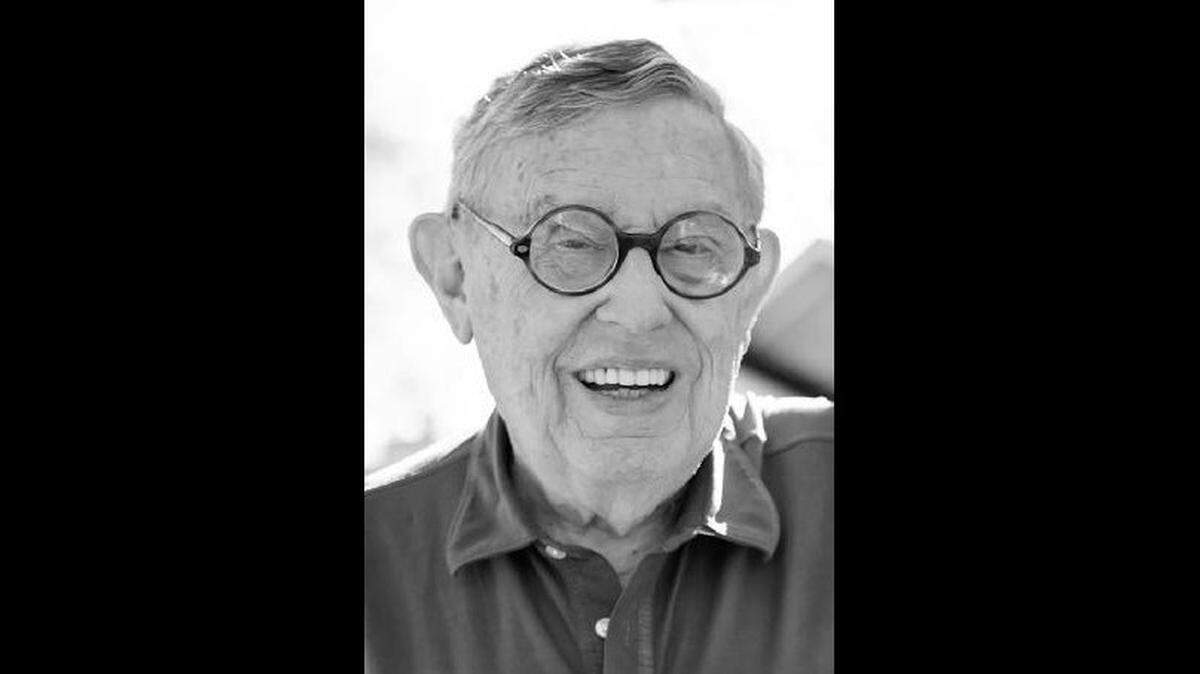
On plaques and in pictures around Catawba College, Joseph Frederick Corriher Jr. is remembered as the school’s 19th president, a title he held for a decade ending in 2002.
What those honors can’t show, however, is how much Corriher loved the college — and its students. Fred Corriher bled Catawba blue, friends and family members said.
“He would have worked for nothing if they just told him, ‘We want you to be president, but we can’t pay you,’” said Tom Childress, who worked with Corriher for eight years as Catawba’s senior vice president with responsibilities in development and athletics.
Corriher died at his home Oct. 31 after battling bladder cancer. He was 84.
Services are scheduled for Nov. 19 at the college.
A love for Catawba College
Catawba College, with its brick buildings and manicured lawns, has educated students since 1851. It moved from Newton to Salisbury in the early 1920s.
Corriher’s father went there, as did his grandfather. Corriher himself graduated from Catawba in 1960 as president of the Student Government Association.
He went on to join the U.S. Army Reserve and the family textile mill where he became chief executive officer and later founded the management consulting firm Corriher and Associates.
But Corriher never strayed far from Catawba. He worked as Director of Alumni Affairs in the early 1960s, served on the Alumni Association Board of Directors, was a member of the Board of Trustees and later worked as interim president.
He became president in 1993.
“It was a dream job for him,” said Frederick Corriher III, Corriher’s son, who graduated from Catawba in 1999.
At Catawba, Corriher built buildings and relationships, former colleagues said.
The $56.5 million capital campaign he helped start in 1997 funded the renovation of 12 campus buildings and the construction of seven others — five residential halls, the Hayes Athletic Field House and the Center for the Environment.
But it was being around students that fueled him, Childress said.
Corriher went to plays and performances and athletic competitions, sometimes arriving in the second half of one game so he could stay for the first half of another.
“I know he would be interested in the performance, but he wanted to see the students,” Childress said.
Childress said Corriher loved seeing students around campus, calling them by name or congratulating them on a recent accomplishment — not an easy task at a school of some 1,400 enrollees.
But his care for them went even further.
Time and again, Corriher would pop into Childress’ office and describe a student who had a family tragedy and needed to get home or who was having financial problems and needed aid to continue as a student, Childress said.
The question was always the same: How can we help?
That’s part of the reason why 2001, Corriher’s last year as president, was so difficult for him, said Amy Williams, former executive assistant to the president. Some events were beyond his control.
Not only was the nation grieving over the attacks of 9-11, but Catawba College was mourning the loss of two students, one who died in a dorm fire and another who was shot and killed on campus.
“His heart was broken for those families and our community,” Williams said.
“He was devastated,” added Childress.
Passions outside Catawba
Corriher carried that compassion and passion for life off the Catawba campus.
He loved his church (Mt. Zion United Church of Christ in China Grove), wine (at one point his cellar had more than 1,400 bottles) and the Democratic Party (he was a delegate to the 1968 Democratic Convention in Chicago).
And he loved trains, particularly steam-engine locomotives, Frederick said. He even owned a rail car at one point, taking it to President Jimmy Carter’s inauguration in 1977.
He also took a rail car to President Bill Clinton’s inauguration in 1993.
It wasn’t just an interest he kept to himself. Corriher started Rowan County’s first railroad museum, located in his hometown of Landis and later sat on the N.C. Transportation History Corporation board of directors.
“Dad was somebody who never did anything halfway,” Frederick said. “And that included his hobbies.”
In 2002, the state awarded Corriher the Order of the Long Leaf Pine, North Carolina’s highest civilian honor. The award recognized his service to Catawba College and the community.
And then there was his family.
As Corriher was fighting cancer he told his oncologist that he needed to live to see May 2021. His granddaughter Ambria Barbee was graduating from Catawba College, and the former president wanted to present her with her diploma.
He talked for months about being on stage with Ambria, said Williams, who helped dress a noticeably weak Corriher in his Catawba regalia before the ceremony.
Being there that day meant the world to him, Frederick said.
Corriher also told his oncologist that he needed to live to see January 2023 — when Frederick and his wife, Lindsey, will have their first child, a boy.
His name: Fred IV.
Although Corriher will not be around for the birth, Fred IV will still grow up knowing his grandfather, Frederick said.
“I vowed that my son — named after my dad — would, although not know him in person would know the kind of person he was,” Frederick said. “And if I can pass on 50% of the values upon which dad lived his life, I feel I will have been successful.”
This story was originally published November 11, 2022 at 12:00 PM.