Doula services aren’t regulated in NC. How a change could affect Black maternal health.
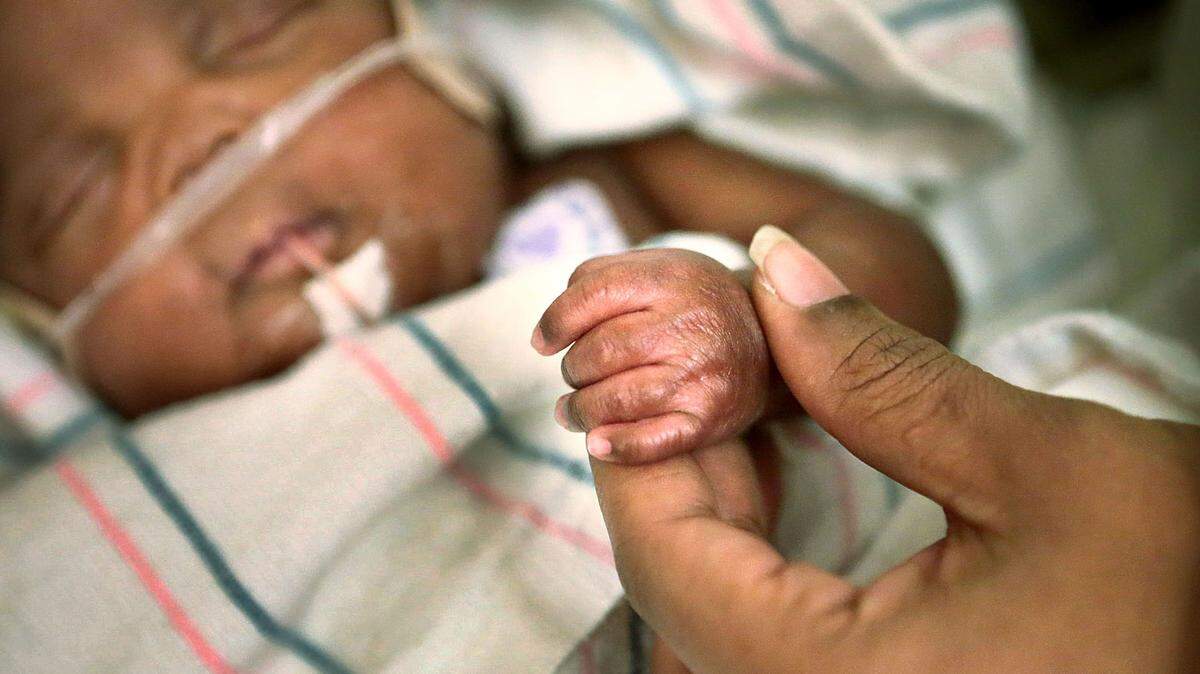
When Kira Kimble gave birth, she expected to be an active participant, but she felt more like a bystander instead.
She recalled not feeling very involved. Her doctor tossed out a birth plan she tediously put together. It was as though birth was happening to her, not because of her, she said.
“It was in that moment where I said ‘I wish I had a doula,’ ” Kimble said.
Studies show doulas, who are like supportive coaches, increase positive birth outcomes for women, especially those who face negative outcomes because of racial disparities.
While lawmakers have proposed placing doula care under Medicaid to make services more affordable, some say new regulation without careful consideration may do more harm than good.
Kimble is African American and a Charlotte-based doula who founded Mine-R-T Doula Company. New regulations could create additional barriers for Black doulas who are a dire need to their communities, she said.
In Mecklenburg County, Black infants were three times more likely to die than white infants in 2021, according to the latest statistics from N.C. State Center for Health.
Ongoing disparities are among the reasons why tailored care is important, she said. State certifications could lead to a one-size fits all approach.
It could also mean certifications by larger, white-owned doula organizations will be recognized instead of local, minority-owned organizations, Kimble said.
“Doulas need the freedom to go into their communities, assess family’s needs and then create the support needed,” she said.
It could also lead to doulas with lenghty experience deciding to forego serving a group in need, says Tonya Daniels, a certified doula who teaches a birth doula course at Johnson C. Smith University.
It’s why any decision by the state will need careful consideration and more input from doulas, she said.
“If not we’re still perpetuating inequities,” Daniels said.
Doulas are birthing professionals
Doulas are professionals trained to provide supportive care before, during and after childbirth, Kimble said. Doulas are birthing professionals, not medical professionals. In comparison, midwives provide medical care during pregnancy, birth and the postpartum period.
Doulas do not perform medical procedures. But a doula can ensure a mother’s voice is heard inside and outside a delivery room, Kimble added
They also can translate medical terms to help give their patients informed consent. Doulas also are support coaches for family members playing an active role in a pregnancy, she said.
“We may not have all the answers,” Kimble said. “But we can guide our clients into asking the right questions.”
Across the United States, as of 2018, more than 100 independent organizations offer some form of doula training and certification. Some of the most experienced doulas have served their communities for decades without being formally certified, according to the National Health Law program.
The doula profession has grown to include a variety of specialties, such as bereavement or abortion support. Birth and postpartum doulas are the most common types, according to verywellhealth.com. The average cost of a doula ranges from $800 to $2,500, according to the website. In some areas community programs provide free or low-cost doulas and some doulas offer a sliding cost scale.
Kimble, whose organization trains and certifies doulas, said she’s had clients contact her when they are trying to conceive. She helps develop a nutritional plan and also works with them to find a suitable medical provider.
“We’re making sure they build a village around them,” Kimble said.
Improving outcomes in NC
In North Carolina, more than 50 mothers died while pregnant or within 42 days of giving birth in 2021 — a rate of 44 maternal deaths per 100,000 live births, MuckRock reported. Nationally, the rate was 32.9 deaths.
Across the state, where roughly 21% of the population is Black, 43% of the state’s 202 pregnancy-related deaths between 2020 and 2022 were Black women, according to the report.
For the past few years, state North Carolina lawmakers have proposed legislation to include doula care in Medicaid as one way to address maternal health. It has not been successful.
Senate bill 294 proposed in March would require the state’s Division of Health Benefits to determine credentialed requirements. Doulas would then need to have approved credentials to assist those with Medicaid.
Hannah Jones, a spokesperson for the department, said doula care is offered sporadically with some health plans for medicaid recipients. Several reports and task forces have recommended doula services be fully covered by medicaid, she said.
“Once doulas can be covered as a Medicaid benefit, we will be able to track claims data and will be able to study the impact on care and outcomes,” Jones said.
Amy Chen, senior attorney with the National Health Law program, said 10 states and Washington D.C. include doula care under Medicaid coverage. But they all take a variety of approaches to certification requirements for doulas to be reimbursed through medicaid, she said.
The National Health Law program’s Doula Medicaid Project aims to improve health outcomes for Medicaid recipients by increasing access to doula care. It outlines each state’s approach to the complex conversation, Chen said. It’s a delicate balancing act to not place new barriers for doulas of color and those with years of experience, she said.
In Nevada, doulas have to be certified by the Nevada Certification Board. California focuses on a doula showing they’re trained in core competencies regardless of certification.
“But a state Medicaid agency is going to have to find some way of assuring the person is who they say they are,” Chen said.
Increasing representation
Daniels, who teaches at JCSU, knows firsthand how an extra advocate in the room makes a difference. During her first pregnancy, Daniels had a midwife — someone who retired by time she planned for a second pregnancy.
When she experienced unfamiliar cramping in her second pregnancy, she tried telling her doctor but was told each pregnancy was different.
Complications ensued with her pregnancy, but Daniels didn’t get the kind of care she received when she had a midwife. Further, she did not know how to advocate for herself, nor did she know about doulas back then.
“I lost my baby,” Daniels said.
More people need to be aware of doulas, lactation consultants and childbirth educators, Daniels said. They aren’t simply hobby jobs.
“I call them in the trenches work,” she said.
In January, JCSU was awarded a $943,000 county grant for its Black Birthing Professionals program. The program prepares students to be certified in one of three professions: childbirth educator, lactation consultant or as a birth doula.
The program started in 2019 to address disparities in maternal and infant mortality rates, said TaHysha McClain, program director for the Lactation Consultant Training program.
The grant allows the school to offer the program tuition free for the next two years, she said. Funds will also go towards promoting the birth doula program, she said. A special emphasis will be placed on recruitment from Charlotte-Mecklenburg County students.
“What we’re trying to do is create more women of color that are in these professions,” McClain said.
Representation has power, she said. McClain has worked at hospitals where she was the only lactation consultant — a health professional who specializes in breastfeeding.
Families have shared they selected her because of they feel comfortable with her and a shared experience, of being African American, she said.
“That representation really matters,” McClain said. “That’s what this program is all about.
Not the sole solution
Kimble said doulas are a great resource, but not the sole solution. It’s important people address racial disparities that occur long before a pregnancy, she said. This includes food deserts and access to health care, she said.
“We’re one thing that can improve birth outcomes,” Kimble said.
It’s why new barriers concerns her. Historically, doulas and midwives were occupations Black women held, Kimble said. Even on plantations, enslaved Black women were heavily involved in child rearing.
New restrictions could lead to a decline in Black doulas just as state restrictions in the 1960s led to a decline in Black midwives.
“Then Black patients who need Black doulas will not be able to access them,” she said. “They will be systematically wiped out through policy, through laws and through regulation.”
This story was originally published April 21, 2023 at 7:00 AM.