In an NC first, this Charlotte 10K will offer a nonbinary division with prize money
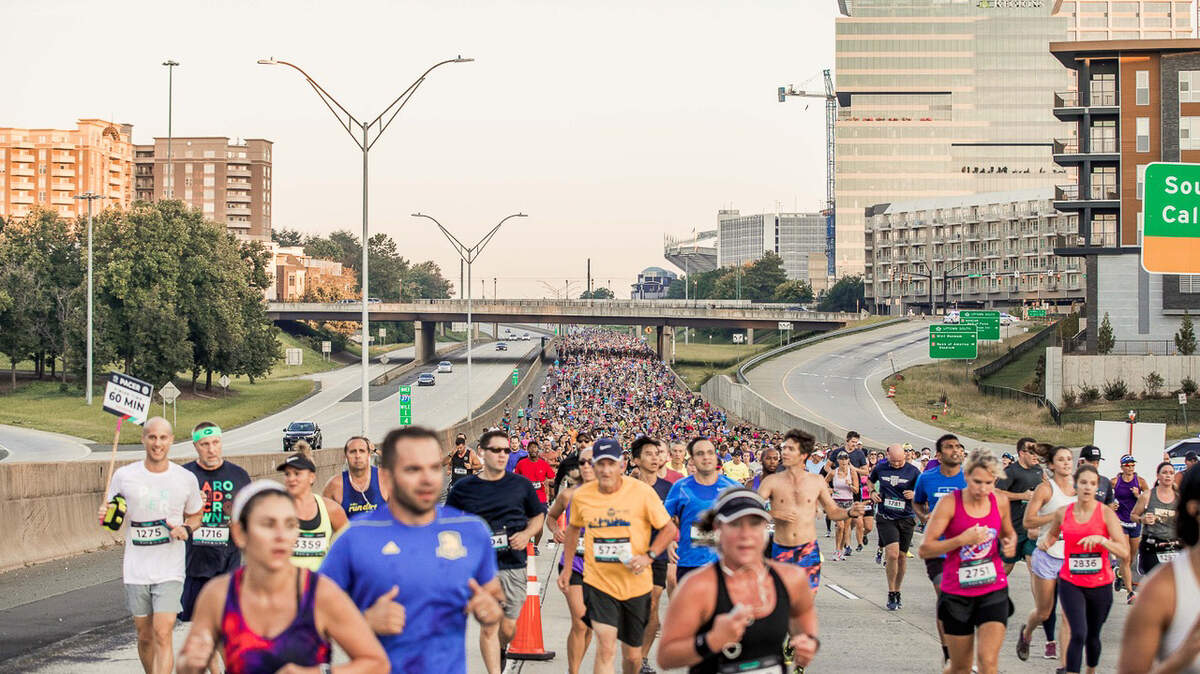
Charlie Raymer doesn’t live in the Charlotte area anymore, but he’s making a special trip back in a couple weeks just to run in the Around the Crown 10K.
The Sept. 3 race is a significant one for both Raymer and North Carolina: For what is believed to be the first time in the state, a major road race will offer a nonbinary division with prize money equal to female and male divisions.
And for the first time, Raymer, who is transgender, says he can run near his Statesville hometown using the gender identity where he feels like he belongs.
“Especially in sports right now, a lot of people are just talking about excluding people and tearing people down, but I feel like in this case, we’re trying to build people up and find solutions,” Raymer said. “I feel like the running community has made actual practical steps to try and have the trans and nonbinary community involved by creating these divisions.”
The move to add nonbinary divisions has taken root in the running world in the past two years, with the Philadelphia Distance Run becoming the first major road race in the United States to offer the option in 2021. More races — including both the Chicago and New York marathons — followed suit the next year. The prestigious Boston Marathon added the division in 2023, and 27 runners participated in the category — but unlike participants in other divisions, nonbinary runners did not receive prize money.
Brian Mister, the Around the Crown 10K race director, said his five-year-old race has always had an option for participants to choose “undisclosed” for gender, and a handful have done so in past races.

A move toward inclusivity
But this year, with transgender rights under attack in legislation across the country, Mister wanted to make an explicit effort to be more inclusive with the Charlotte road race that circles uptown on Interstate 277.
He consulted a nonbinary inclusion guidebook that offers advice on how to make races more accepting — with small changes like using inclusive bathroom signage, and bigger moves such as adding equal prize money. He wrestled with how to set the elite qualifying time for nonbinary runners, settling on a time (38 minutes for 10K; a 6:07-minute mile) that is midway between the 42-minute requirement for females and 34-minute cutoff for males.
And he invited Ryan Montgomery, a decorated nonbinary ultrarunner, to participate and spread the word on the new division and prize money. Montgomery, who started a community for queer runners called Out Trails, said he has long grappled with what to do when he signs up for a race.
“You get to a registration page and then you constantly have to relive this lie in your head where you want to run this race, but then the options are ‘male, female,’” Montgomery said. “And then you have to make that decision of, ‘Well, do I lie to myself and arbitrarily click this gender that was assigned to me at birth because that was how I was assigned at birth, or do I not run the race at all?’
“A lot of people feel this conflict in their head every time they want to run a race. Being able to just have that option of, Oh, this feels great that I get to choose my gender for the first time perhaps in my life running this race — that is huge.”
A growing division
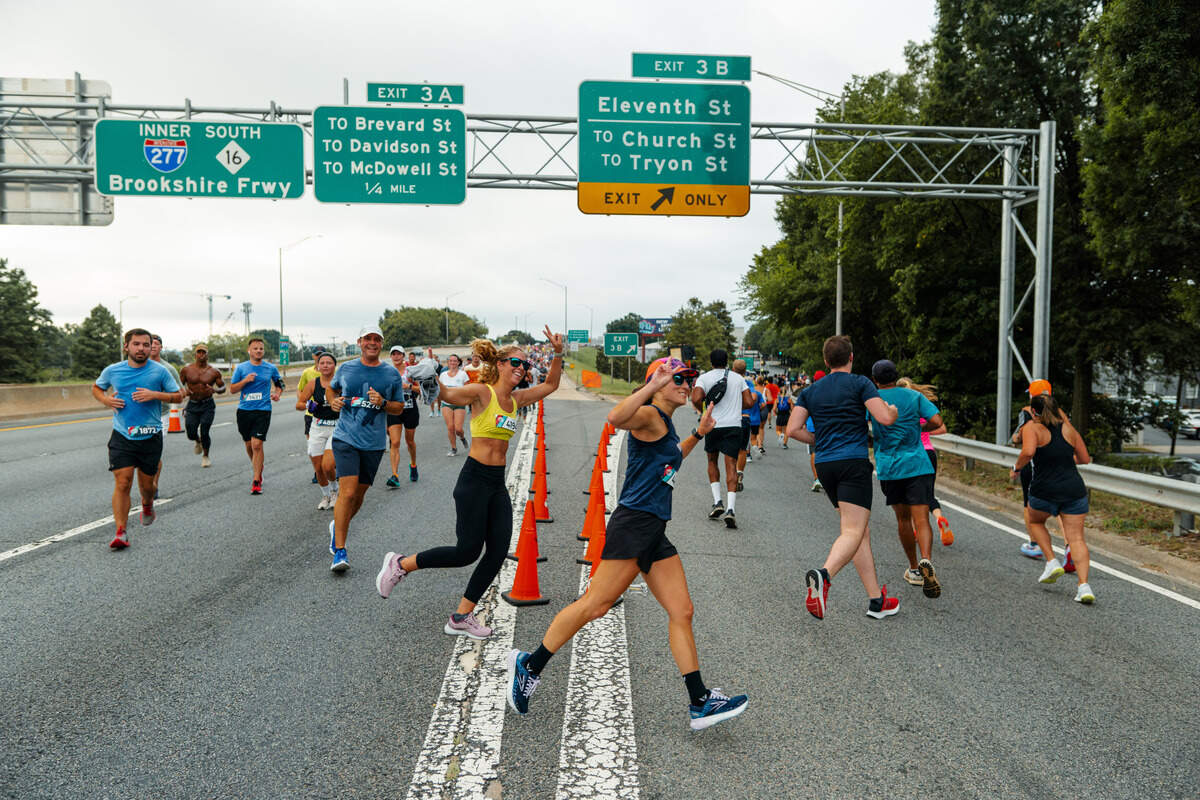
Eight nonbinary runners have registered for the Around the Crown 10K thus far, and six more did not specify a gender, Mister said. About 6,000 runners, in all, are expected to participate in the 10K. As with male and female participants, prize money ranging from $100 to $300 will be awarded to the top five nonbinary finishers.
There are also prizes for male, female and nonbinary runners in wheelchair, stroller and Charlottean (runners with a Charlotte address) divisions, along with a first-place prize for female, male and nonbinary runners who are the first to top the “Queens Climb” — a particularly arduous “half-mile mountain” on the north side of I-277.
”Not only are they creating that category, but they’re providing equal prize money — which I think is just the cherry on top of inclusion and equity,” Montgomery said. “You can’t just create this category and then not give prizes to that category even though there’s probably fewer people in that category. It’s just that commitment to show, ‘We see you and we value you, so that we’re going to create equal prize money.’”
Jake Fedorowski, who wrote the 24-page Guide to Non-Binary Inclusion in Running after seeing a desire from race directors for more guidance, said it’s a slow process for the division to grow. Fedorowski served as a consultant for the Chicago Marathon when it added the nonbinary division in 2022, and noted that the race is on pace to have triple-digit registrants in the division this fall after a field of about 70 runners (of about 40,000 total participants) in the first year.
That’s similar to how the women’s division started in the Boston Marathon. In the first year women were permitted to run in 1972, just eight registered. On the 50th anniversary of women participating in 2022, 12,171 women were a part of the field of 28,600 runners.
“It’s not like they implemented it and then had thousands of people sign up immediately,” Fedorowski said. “It was a slow process of building out that division and making it an equitable experience for those participants. We’re seeing the same thing here with the nonbinary division. These first few years, we’re going to see that growth, we’re going to see those growing pains.”
‘A space in this sport’
Mister, the Around the Crown 10K race director, said inclusivity — and making running accessible to everyone — has been one of the race’s guiding principles since its inception. And at a time when transgender athlete participation in gendered sports has been a hot-button political debate, the sport of running, at least, just might have created a new path forward.
“Is this a solution? Gosh, I have no idea,” Mister said. “I think it’s a really good direction. It’s almost like, why not? What’s the negative here?”
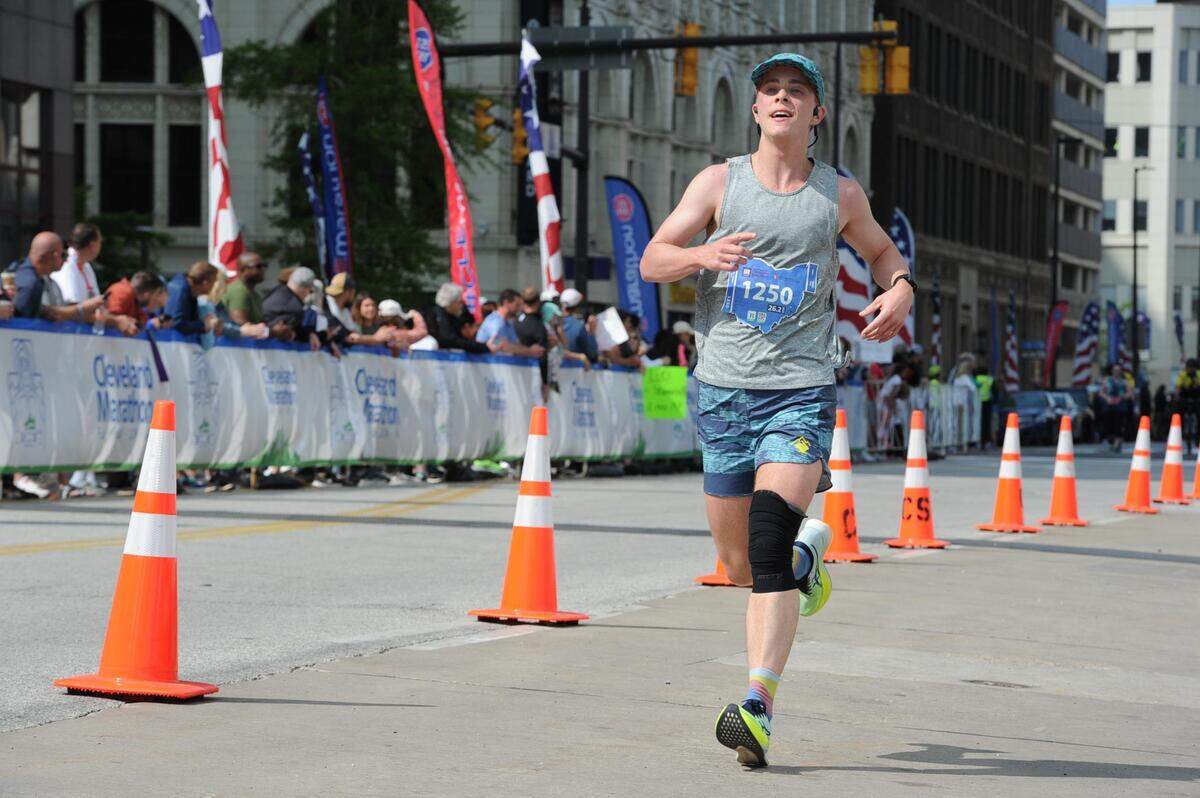
Raymer, who now lives in Boston, said he considers himself a “very middle-of-the-pack runner.” Still, he competed in the nonbinary division of the Cleveland Marathon in May and placed first in the category with a time of 3:17.24 (128th overall). He’s run in the men’s division in several other races — and placed in some, he said — but said he prefers to run in a nonbinary division when it’s an option.
“I don’t mind being out and proud of who I am,” Raymer said. “And to be able to show people that you, too, can find a space in this sport, I think is important. Whereas if I’m running in the men’s division, it’s like, OK, I’m just another dude.”
Raymer said that if he places in the division, he intends to donate his prize money to Charlotte Trans Health, and he’s hoping to encourage other runners to do the same with their winnings.
But Raymer says he would be just as content not to win any prize money.
“I would be happy not to win. I would be happy to just have a ton of people who feel that their identity aligns with this category and race,” he said. “What’s the point of winning if no one else signs up for the race and it’s just me?
“Eventually, I would love for a trans (or) nonbinary person to be toward the front of the pack of the entire race.”