
Metallic green bugs found in rangers’ candy in Smoky Mountains. Hikers, campers, beware
Slimy. green, murderous insects have bored their way into the Halloween candy of rangers in Great Smoky Mountains National Park, park officials said Saturday in a warning to campers and hikers.
On X, the former Twitter, rangers posted a frightening photo illustration of one of the bugs mounting an unidentified brand of candy bar and a second, tinier bug behind it.
“Parents, check your kids’ Halloween candy carefully!” park officials said on the site. “Our rangers found a few invasive emerald ash borers in a candy bar!”
The bugs spread because of “the transport of infested logs and firewood” into the park — a no-no, rangers added.
“Only heat-treated firewood that is certified by the USDA or a state agency may be brought into the park,” officials said. “Campers may also collect dead and down wood found in the park for campfires.”
The metallic green beetle has been spotted in every county in the Charlotte and Raleigh areas and the mountains, according to a N.C. Forest Service bug tracking map.
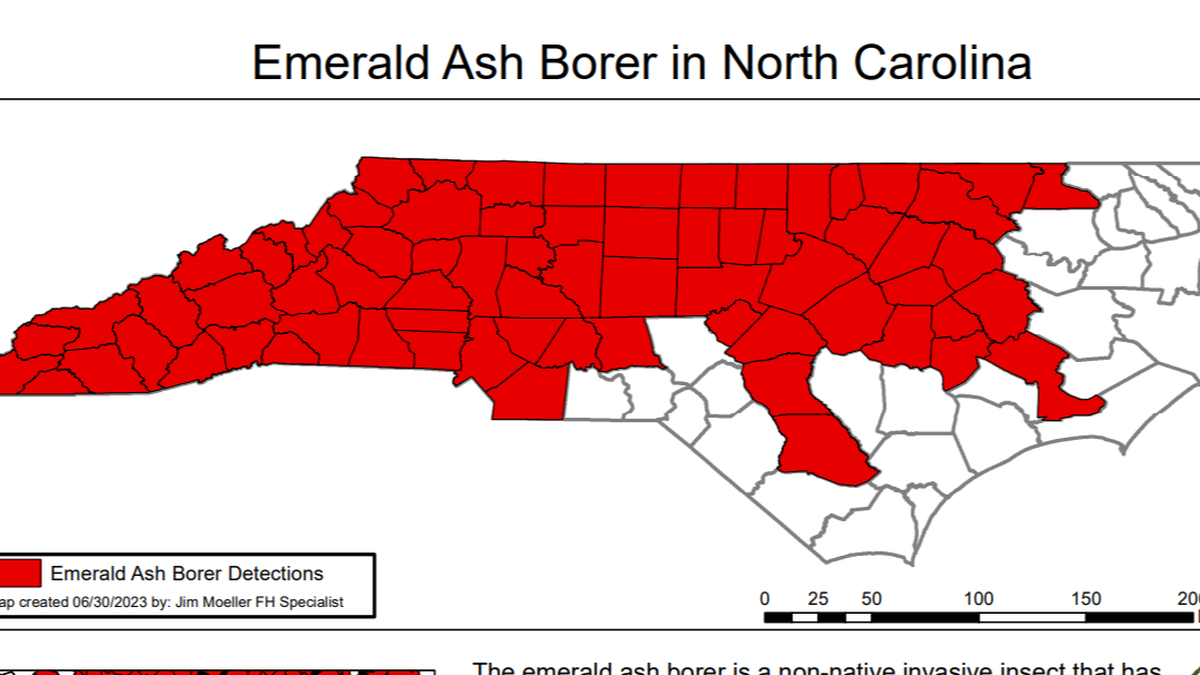
The invasive perpetrator has killed tens of millions of ash trees in the Midwest and Eastern U.S., according to the N.C. Forest Service.
Native to China, Japan, Korea and eastern Russia, the bug is thought to have made it to the U.S. in wood packing materials made of ash, the Forest Service reports. It first showed up in the U.S. in 2002, in Detroit.
Officials didn’t say where in Great Smoky Mountains National Park they found the bugs in a ranger’s candy. The park spans 522,427 acres, almost evenly split between North Carolina and Tennessee.
It’s pretty disgusting to think that you’d be temped to eat one, but the beetles pose no direct threat to humans, according to the U.S. Department of Agriculture.
Still, The Washington Post cited a study in the American Journal of Preventive Medicine that the loss of ash trees from the invaders has led to at least 21,000 deaths from cardiovascular and lower respiratory illnesses.
This story was originally published October 28, 2023 at 1:19 PM.