How to get Narcan, the drug used to reverse opioid overdoses, for free 24/7
It can save your life, and it’s free.
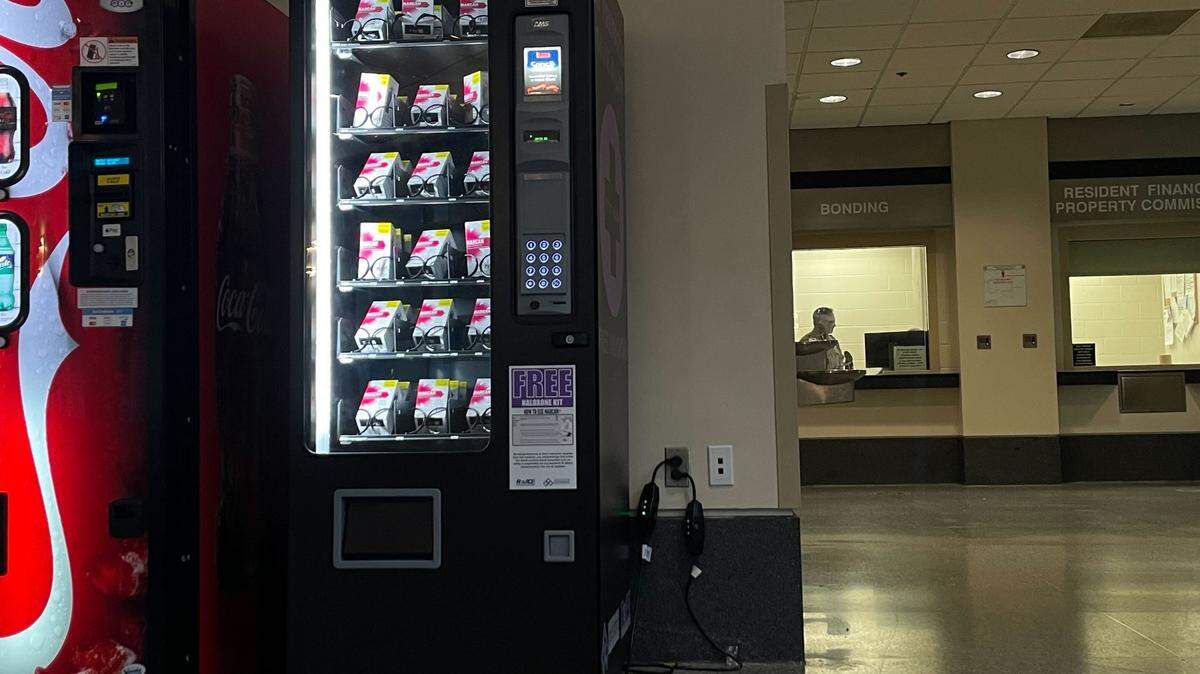
A vending machine stocked with free Narcan — a life-saving opioid reversal nasal spray — will now sit inside the Mecklenburg County Sheriff’s Office, available for use 24/7.
The installment, tucked next to a Coca-Cola vending machine in the Detention Center’s lobby, comes after a 20% increase in fentanyl overdoses reported by the Charlotte-Mecklenburg Police Department.
Fentanyl — an opioid often laced in other drugs, like pain pills, or distributed on its own — is 100 times more potent than morphine, and even a small amount of it can be deadly.
As it becomes easily available — routinely popping up in the detention center, on streets and even in schools — Sheriff Garry McFadden hopes to make access to Narcan as easy as possible.
“We want to encourage all people, whether they personally use substances or not, to carry the life-saving drug,” wrote MCSO Public Information Officer Bradley Smith.
Naloxone, the fast-acting medicine in Narcan that reverses an opioid overdose, is considered safe to use even if drug use is suspected but later found to not be the case. Earlier this year, federal regulators took action to make 4 mg Narcan nasal spray available over-the-counter without a prescription for about $50.
In collaboration with Carolinas CARE Partnership Rx ACE (CCP), McFadden said offering the drug will be “a pivotal step in our efforts to combat the ongoing fentanyl crisis.”
Now, people just need to know where to find it.
“How about we give out Narcan instead of turkeys this year,” McFadden said Tuesday during a news conference.
Narcan in nightclubs, schools
So far this year, deputies have used Narcan to save 27 lives in the detention center. Now, along with the vending machine, he has 50 overdose prevention kits that will stay in deputies’ cars.
“Why stop there?” McFadden said.
“Narcan should be stocked in nightclubs, schools and businesses. It should be as common as having a bottle of Tylenol or Advil on hand,” he said
Kenneth Robinson, the founder and CEO of Freedom Fighting Missionaries, has made that a reality along some Charlotte streets.
Last week, he divided a shipment of Narcan between 10 organizations. They knocked on doors and stocked it in the Sugar Creek corridor’s hotels, gas stations — and even Wendy’s and Burger King.
As the opioid epidemic, now largely fueled by fentanyl, continues to plague communities, McFadden said he is ready to challenge other sheriffs and community leaders across the state and country to make the same effort for tangible change.
In Charlotte, county leaders are ready to stock schools, too.
“We are standing by ready to start,” Raynard Washington, Mecklenburg health director, previously told The Charlotte Observer.
Charlotte-Mecklenburg Schools just has to approve it, but the school board has remained silent on what it wants to do.
Slowing overdose deaths
The anticipated rollout of naloxone follows a lawsuit against major pharmaceutical companies that prescribed opioid drugs blamed for a nation’s addiction epidemic. North Carolina is in line to get $1.5 billion from the funds, most of which will be sent to local governments for planned spending.
County leaders bought the school-bound naloxone with part of the more than $70 million it expects over the next 18 years as pay-outs from legal action against drug companies. So far, at least $1.5 million has been approved to distribute additional naloxone across local jails, communities and schools.
CMPD recently launched a campaign to slow overdose deaths and curb fentanyl drug trafficking locally. It targets young adults and teens.
Already this year, police said, 179 people have died in Charlotte from drug overdoses. The majority were under age 40.
The campaign — titled “No cap, those pills are sus” — uses slang words to target the teens and young adults who are increasingly becoming addicted to the drug.
A recent investigation by the Observer found teens easily buy knock-off prescription pain pills, sometimes deliberately escalate drug use by ingesting pure fentanyl and become addicted after first using drugs to deal with chronic mental health problems.
“We need change, we need something impactful,” said Lt. Kevin Pietrus, with CMPD Public Affairs. “... In our city, in our schools and amongst our friends and our family.”
This story was originally published November 21, 2023 at 11:52 AM.