
Did someone kill The Fort Fisher Hermit? NC filmmaker chases a 50-year-old cold case.
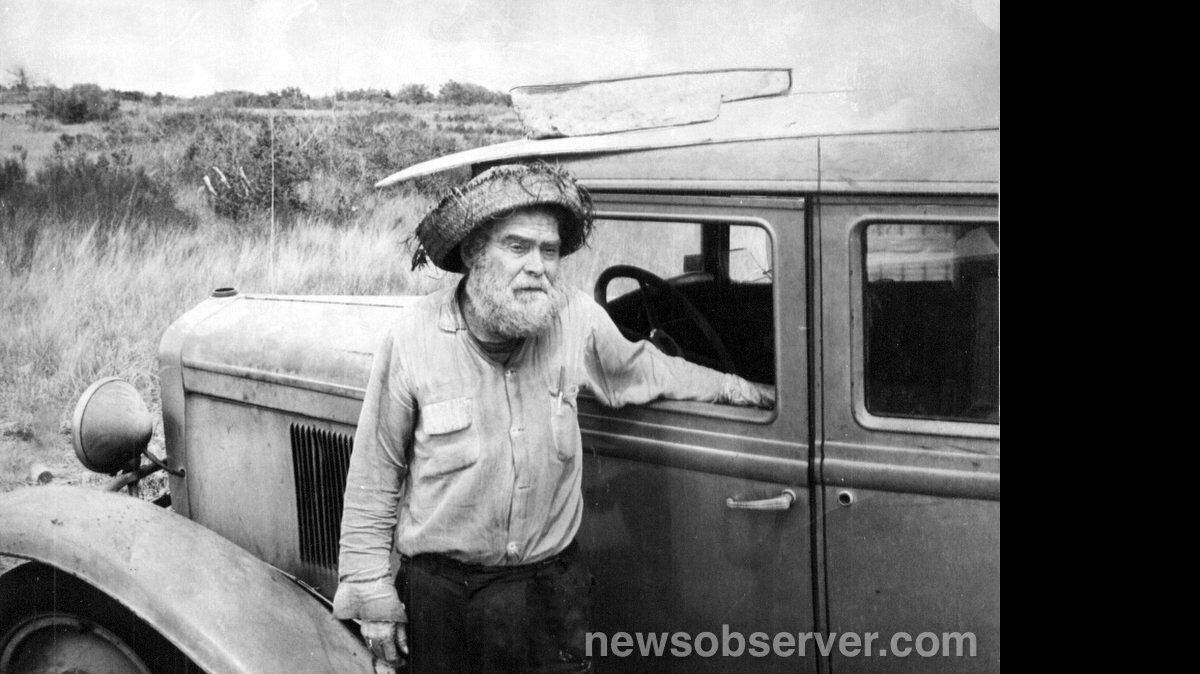
In 1955, an old man named Robert Harrill gathered what remained of his broken life and hitchhiked to Carolina Beach, looking for someplace quiet to nurse the scars life had mercilessly kicked into his backside.
As a child, he’d survived the fever that killed his mother and two brothers, only to fall under the whip of an abusive stepmother. As an adult, he’d failed at a dozen jobs, reduced to hauling his family around in a Model T Ford converted into a wobbly camper, selling trinkets from town to town.
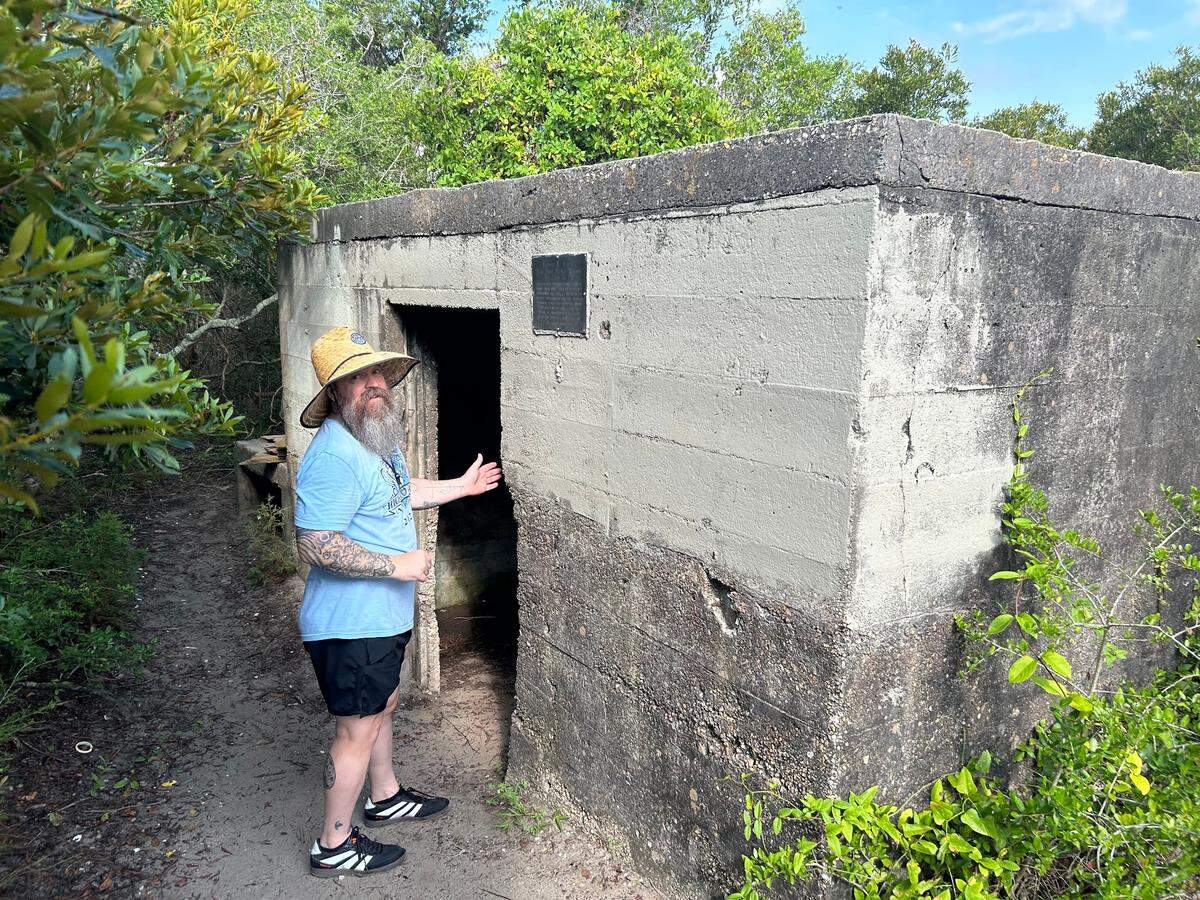
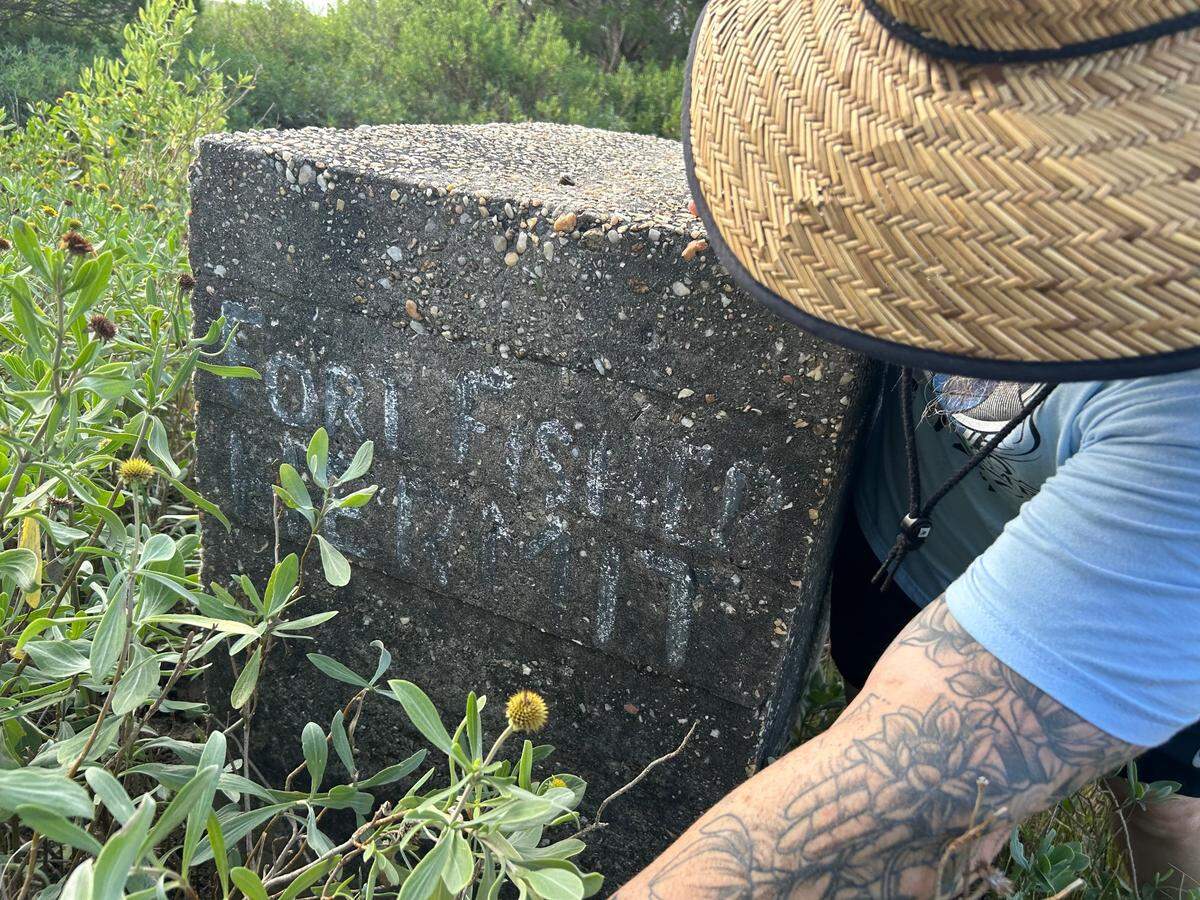
As an old man, he’d lived to see his son jump to his death from a railroad trestle and his wife run off to Pennsylvania with another man. So now, at age 62, he took up residence at Fort Fisher inside a cinder-block bunker left over from World War II — a dark, sweltering, mosquito-infested existence by the sea.
And there, reborn as the Fort Fisher Hermit, his life finally took off.
The hermit’s mysterious death
For the next 17 years, Harrill served as a tourist attraction, drawing thousands of gawkers and admirers down the beach, posing for pictures and dispensing bits of poetry and wisdom he composed inside his trash-strewn shelter.
It became clear that Harrill wasn’t so much a hermit as a semi-reluctant celebrity who enjoyed the attention, living as much on donations as the shellfish and scurrying mammals he scavenged for dinner.
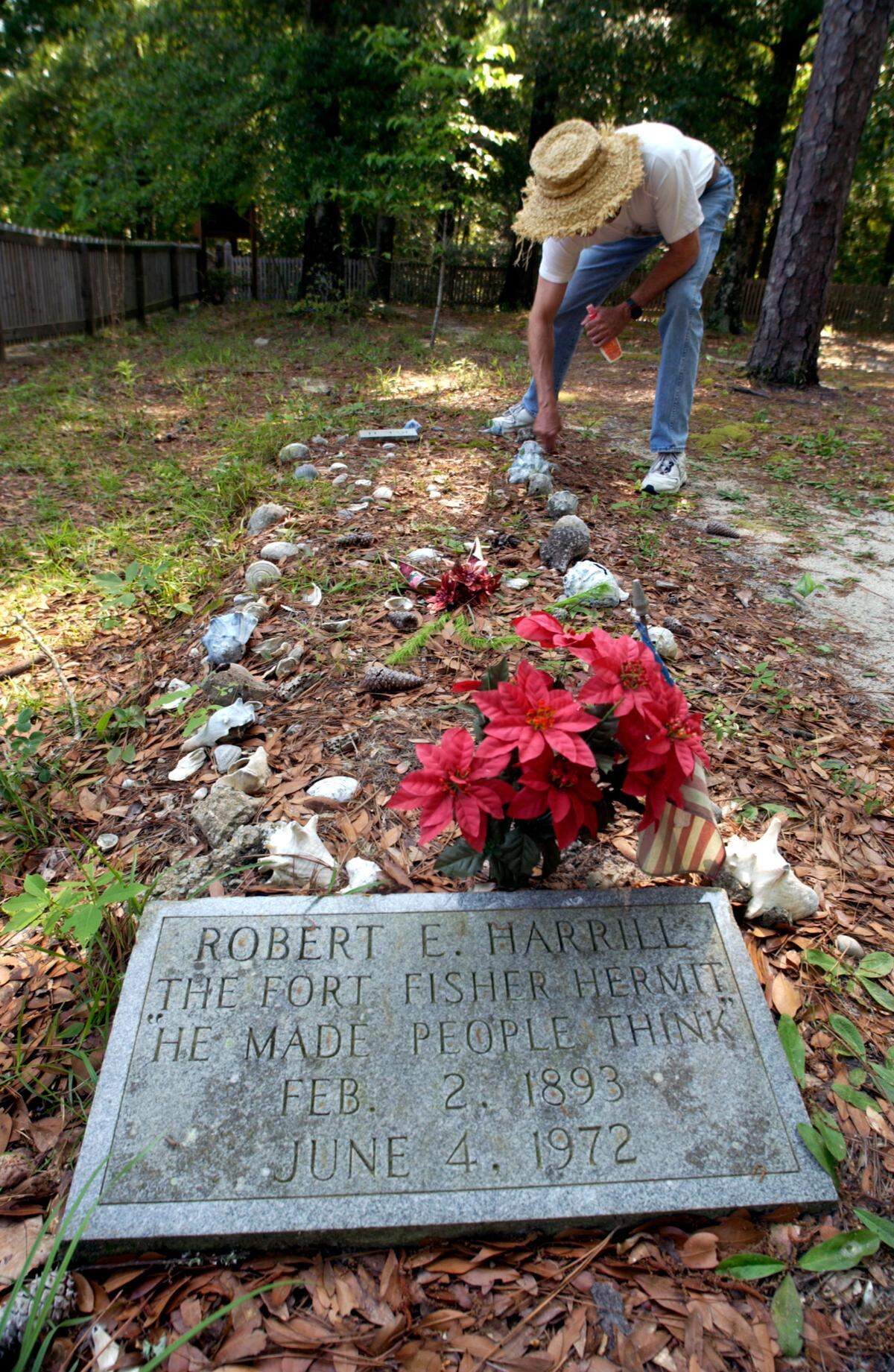
Which made it all the more puzzling when he turned up dead in 1972: flat on his back inside his shelter, cuts on his body, hair matted with sand, a piece of plywood covering the door.
‘The Fort Fisher Hermit II’
The hermit’s mysterious death and a half-century’s worth of rumors swirling around it make up “The Fort Fisher Hermit II: Beyond the Marsh,” a documentary in progress from Wilmington filmmaker Rob Hill.
The follow-up film serves as a sequel to Hill’s first “The Fort Fisher Hermit” film, which won a prize on the film festival circuit, aired on PBS North Carolina and remains highly rated on Amazon.
To get the film going, Hill has organized a crowd-funding campaign, offering donation levels from the $10 hermit support to the $10,000 hermit visionary. He leads daily tours to the hermit’s bunker, which still stands in the marsh within sight of the North Carolina Aquarium.
And on Aug. 10, he plans a Hermit Festival in Carolina Beach, complete with a look-alike contest.
“It’s his uniqueness,” said Hill. “You don’t have a lot of hermits that have worldwide fame.”

A rushed, half-hearted investigation?
To Hill, much of the hermit’s story remains untold, far beyond the would-be philosopher living out a Walden Pond existence in a coastal no-man’s land.
This chapter capitalizes on the appetite for true crime.
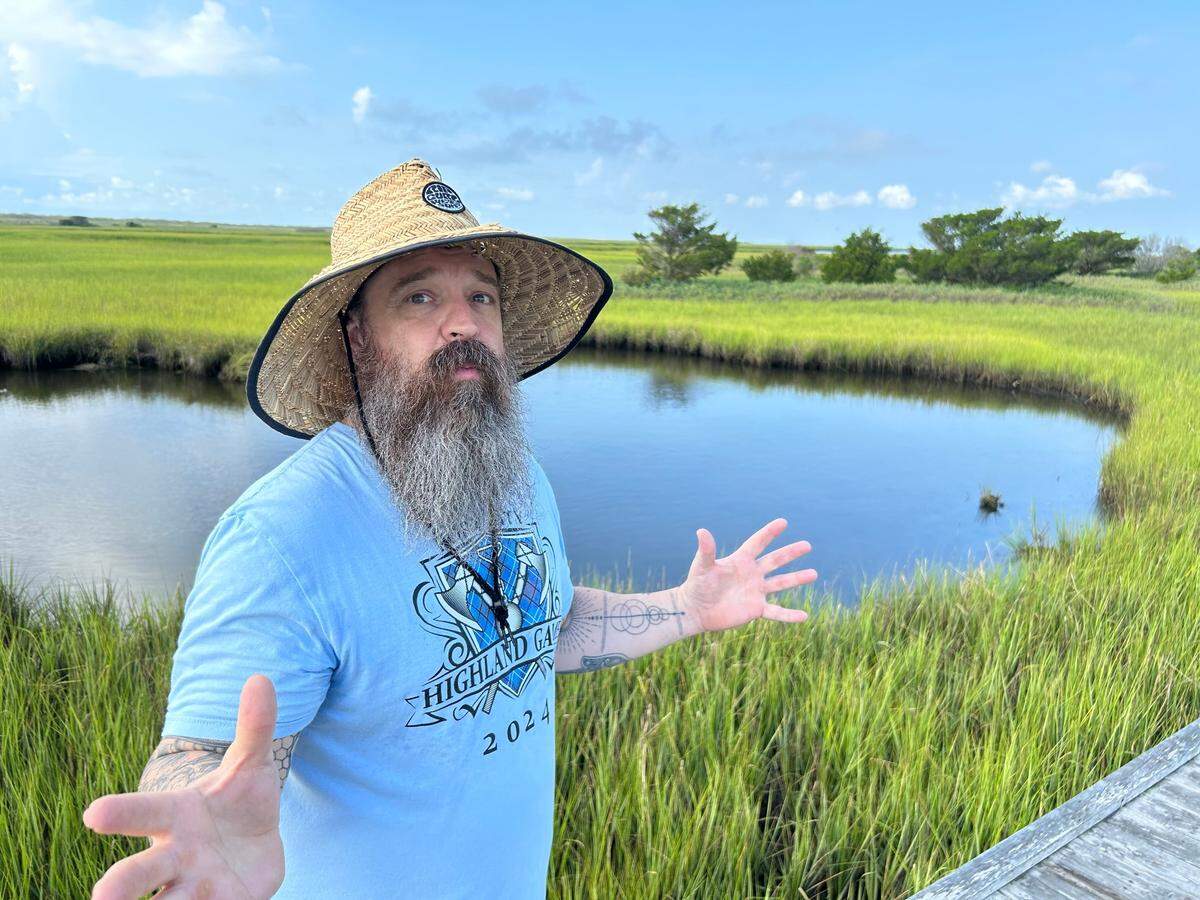
“It was never a whodunit,” said Hill, 49, crossing a boardwalk trail to the hermit’s bunker while fiddler crabs skittered around his feet. “I can’t say there was never an investigation. Somebody gave a name. ... Something popped up. ... You start asking around and you hear, ‘Oh, I heard so-and-so did it, or so-and-so did it. He’s got a bad temperament.’ “
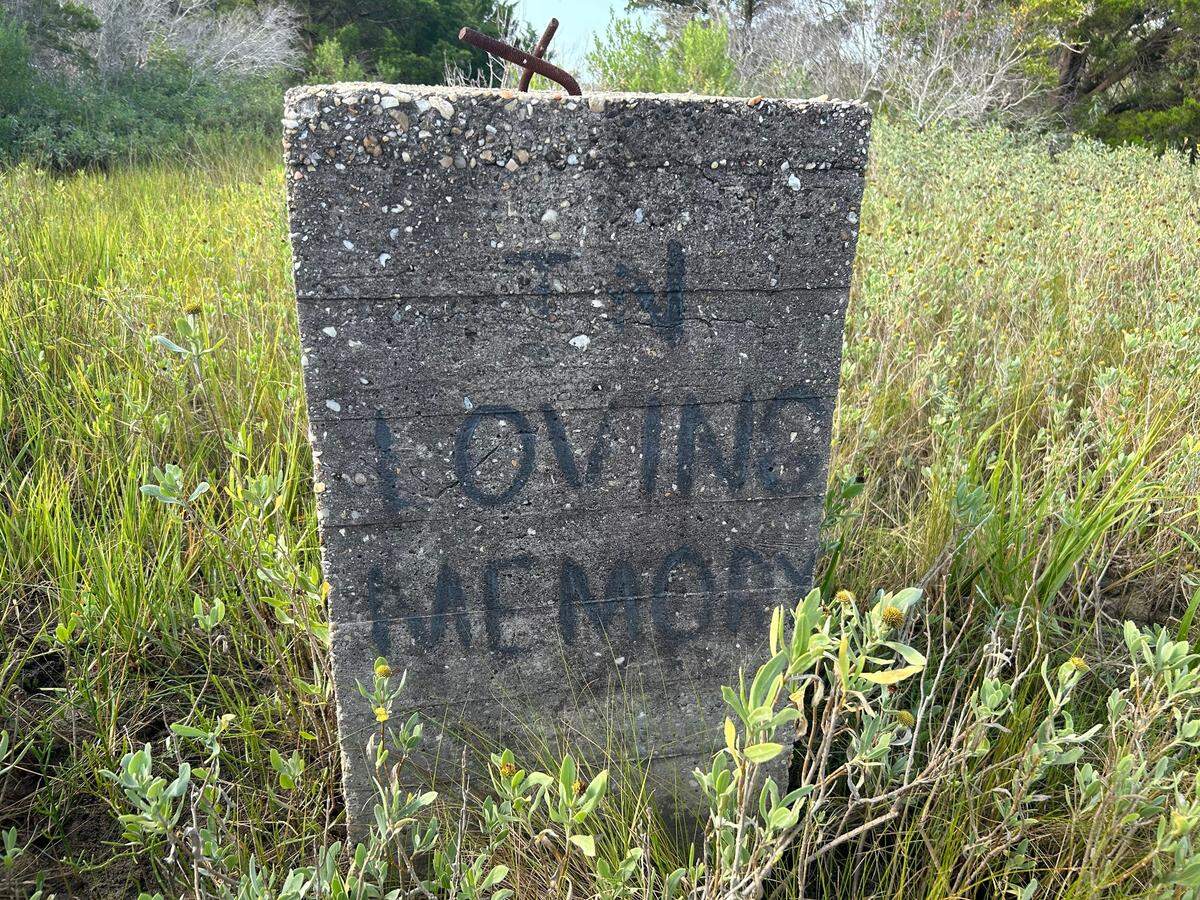
It’s no secret the hermit had as many detractors as fans. Plenty of people bristled at the idea of a grizzled ex-watch repairman and circus hand taking up residence on land he didn’t own — even though ownership of the hermit’s half-acre wasn’t exactly clear at the time.
Officially, Robert Harrill died of a heart attack, plausible for a man of 79 scratching out a hardscrabble life. But for many around Fort Fisher, the investigation felt rushed and half-hearted, as if the authorities were both uninterested in the hermit’s demise and relieved to be finally rid of him.
So if the hermit’s death is recast as a game of Clue, everybody has a motive — most of which Hill plans to dispel.
Many possible motives
Developers wanted to build a subdivision where the hermit was squatting, though their plans got scuttled. Neither the federal nor the state governments enjoyed having him as a neighbor, or a guest, depending on where and when the lines were drawn.
“A lot of people talked about moving him,” Hill said. “Nobody did. The attitude became, ‘Just let him stay.’ “
The hermit reported numerous assaults at the hands of roughnecks and drunks who enjoyed messing with people who couldn’t mess back. But for Hill, robbery-gone-wrong doesn’t work as a motive, especially since the hermit had a gold watch left in his bunker.
“There are rumors that, ‘Oh, he had a lot of money in there,’ “ Hill said. “But you know, that’s a tough one for me.”
With funding in place, Hill plans to investigate a scenario the authorities haven’t considered. In his later years, the hermit kept a small pack of stray dogs as companions, and anyone who approached would have triggered their barking.
So any killer, likely, was someone the hermit knew well.
But mostly, after 52 years, Hill is keeping the story alive for the generations who see high-rise beach development and upscale apartment prices replace the low-key, no-frills, laid-back atmosphere of beaches past — the ambiance that might have attracted a hermit.
This story was originally published July 15, 2024 at 5:55 AM with the headline "Did someone kill The Fort Fisher Hermit? NC filmmaker chases a 50-year-old cold case.."