
‘Rare’ century-old structure of granite and terracotta found under NC road, state says
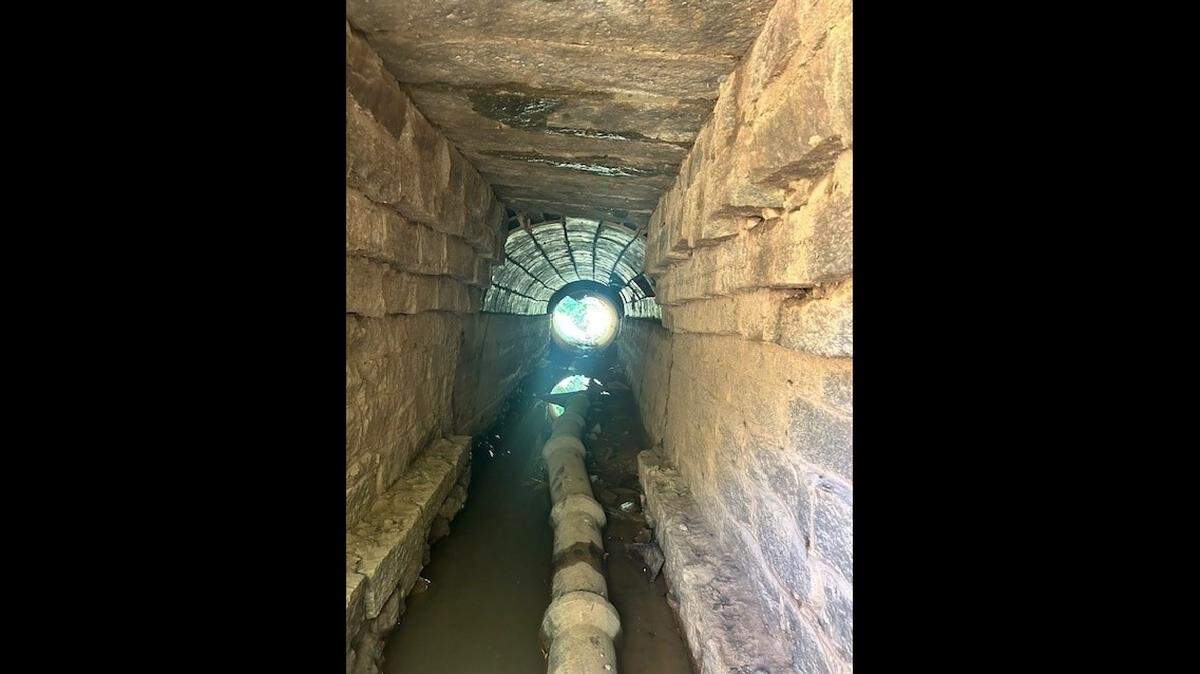
A “remarkable” subterranean passage of granite and terracotta was found under N.C 200 in Cabarrus County in North Carolina and state officials are calling the structure “a treasure.”
Crews with the N.C. Department of Transportation discovered the “extraordinary” culvert within the Bost Mill Historic District, which dates to 1810. The district, which is on National Register of Historic Places, is about a 27-mile drive northeast from Charlotte.
The tunnel-like culvert is believed to be about a century old, with additional materials added over the decades as the highway grew, NCDOT said in an Aug. 29 news release.
“The original structure is terracotta glazed tiles, which is a unique structure,“ NCDOT Bridge Maintenance Engineer Robert Plyler said in the release.
_fitted.jpeg "image2 (2)_fitted.jpeg")
“This one also has a granite extension, so hand-split granite rocks were added in order to widen (N.C.) 200. We knew it was almost this wide in 1937.”
Finally, a more conventional section of corrugated metal pipe was added, and it proved to be the part that deteriorated fastest, officials said.
The oldest portion represents “a short-lived construction method based on hollow structural masonry block,” the state says. The blocks were manufactured by the Pomona Terra-Cotta Company near Greensboro, which operated from 1886 to 1975, officials say.
State archaeologists and architectural historians launched an investigation into “Pomona block culverts” in 2010 and have only found eight.
All are considered historically significant, but “functional and safety concerns” prevented the N.C. 200 culvert from being spared demolition, the state said.
Instead, planners came up with an idea to build a new culvert, while carefully salvaging parts from the old one, Plyler said.
_fitted.jpeg "image1 (1)_fitted.jpeg")
Samples of the terracotta blocks were shared with the Office of State Archaeology’s Research Center “for comparative purposes,” and others were given to the NCDOT historical and engineering divisions for display, he said. Twenty were “saved just for extra.”
The granite blocks will “be used at a more suitable site later,” Plyler told McClatchy News.
“While moving the pieces of granite around, it really put things into perspective for me on how lucky we have it with modern day equipment to build our structures now,” he said.
“The granite blocks are extremely heavy and would have taken a true team of people to make the culvert back then.”
An initial plan to use the granite blocks in a 25-foot-long wall near the highway had to be abandoned when engineers realized there wasn’t enough material, he said. Work on the new culvert was completed at the end of June.
This story was originally published August 31, 2024 at 1:01 PM.