
Lake Norman park battles invasive species to help native trees and animals thrive
Nearly 350,000 hikers, mountain bikers, kayakers, picnickers, pickleball players and other visitors have enjoyed Mountain Creek Park each year since its 2022 debut on the banks of Lake Norman.
Sadly, non-native invaders had already slinked in, smothering the sunlight and ground and choking native hardwoods on 45.6 of its 606 acres. The Catawba County-owned park opened in Sherrills Ford, 35 miles northwest of uptown Charlotte.
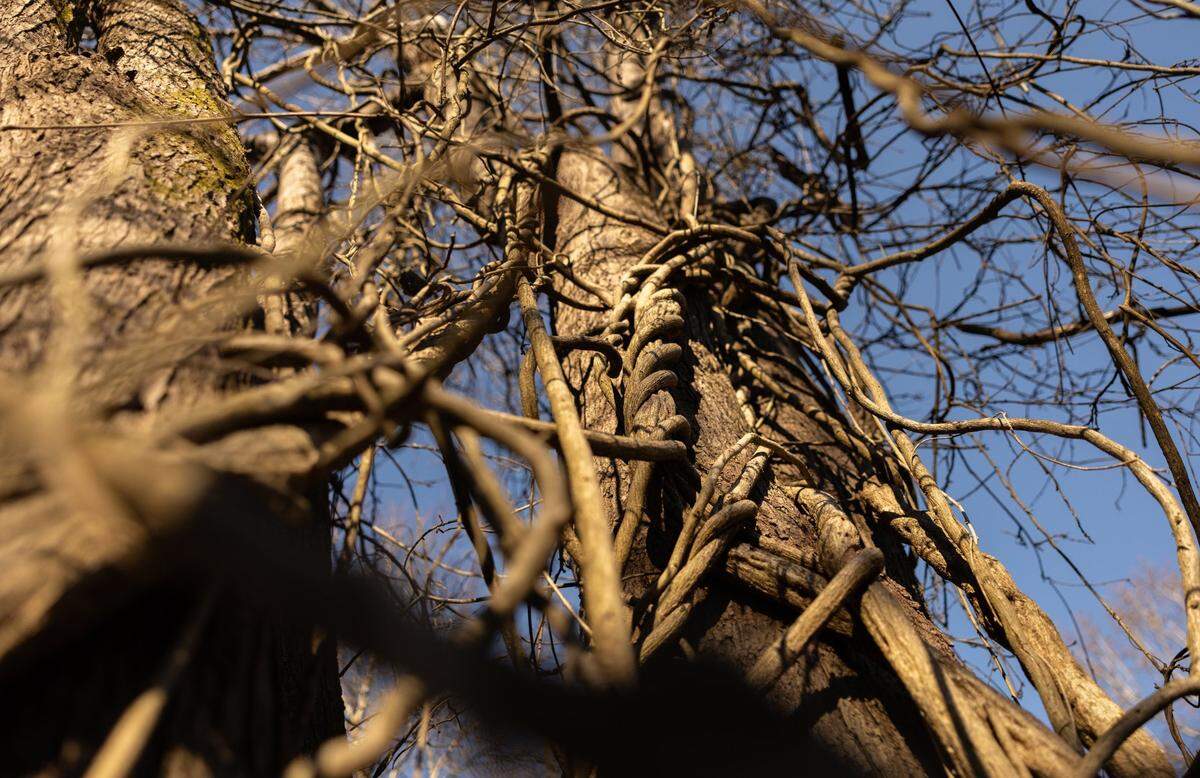
The rapidly spreading wisteria vine and Chinese privet and tree-of-heaven plants are so dense in spots that they block the sun that native tree seedlings need to grow, Will Ruark, natural resources manager for the Charlotte-based Catawba Lands Conservancy, told The Charlotte Observer on a 26-degree, early December morning at the park off Little Mountain Road.
Thanks to a $50,000 Microsoft grant, the conservancy and county parks department are clearing the invasives and restoring the native ecosystem over three years.
By 2027, pawpaw and silky dogwood trees and other larger native species will be planted to restore the habitat, conservancy officials said.
The conservancy and the North Carolina Land and Water Fund hold a conservation easement on most of the park land. The easement restricts what can be built, Ruark said.
The conservancy protects more than 17,000 acres in Mecklenburg, Iredell, Catawba, Gaston, Lincoln and Union counties, and leads the Carolina Thread Trail greenway and trail network that spans 15 counties in the Carolinas.
Battling invasives with “minimal pesticides”
The Microsoft grant came via the Society for Ecological Restoration, which is based in Washington, D.C., and restores ecosystems worldwide.
Last winter, the conservancy hired N.C.-based Native Roots LLC, which specializes in removing non-native invasive plants, to restore the habitat where invasives had taken over, Ruark said.
Native Roots clears unwanted plants with minimal pesticides, he said.
Ruark and park Superintendent Tommy Morrell showed The Charlotte Observer where Native Roots has controlled dense areas of wisteria and other invasives.
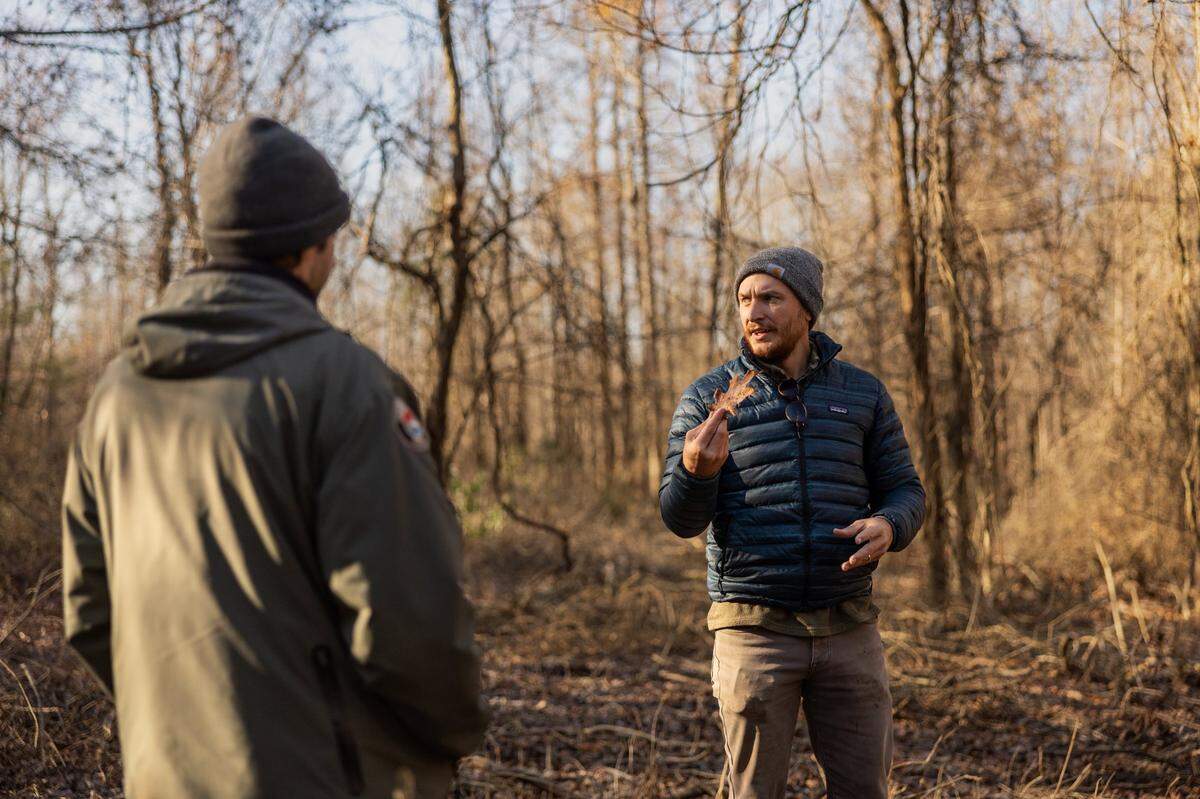
“By removing the wisteria, we hope that in the future, sun penetration will increase the understory growth,” Ruark said at one infested site, referring to native tree seeds that wisteria mask from the sun. “Right now, it just looks like dead vines.
Tree of heaven also threatens the ecosystem, park and conservancy officials said.
“Tree of heaven is a really aggressive non-native species that we see in Charlotte, in urban settings,” Ruark said. “One mature plant can put off 200,000 seedlings. So it takes off.”
Tree of heaven releases a chemical into the soil “that kills everything around it,” he said. “Nothing can grow.”
And tree of heaven hosts the lantern fly, Morrell said. “I’ve seen it come down to Virginia last year, and those are terribly invasive,” he said about the Asian insect causing what Science X Daily reports as hundreds of millions of dollars in damage to U.S. agriculture.
Most of the grant money is being spent this year, Ruark said. The rest of the money will be spent on follow-up control and monitoring over the remaining two years, “knowing that non-natives come back with a vengeance,” he said.
“We don’t want to walk away but continue efforts to make sure that the site is restored,” Ruark said.
Park rangers and the conservancy will monitor the invasives’ possible return.
Clearing destructive Chinese privet
Ruark said many invasives can’t be treated in winter due to their dormancy in the cold. So the removal effort began with Chinese privet, an evergreen that can be controlled in cold months.
After clearing privet from an infested area, workers planted all-native pawpaw and possum haw holly trees and Arrowwood viburnum and spicebush shrubs to compete with non-natives if they return, he said.
The site nears a bridge over Mountain Creek that connects the south and north sides of park trails. The creek is 40 feet to 50 feet at its widest, Morrell said.
Pawpaw was selected because a native colony of the tree already grows there, Ruark said.
“It’s our only tropical fruiting tree that we have here in North Carolina,” he said. “It makes a really big tropical fruit and has butterflies that host on it. It’s a really popular fruit for birds and deer and other animals, and humans. It tastes really good. It’s like a mango and a banana.”
“I hear people describe it as tasting like banana pudding, or butterscotchy, almost,” Jennifer Clark, senior communications and marketing manager for the conservancy, said at the site.
Vines “the size of tree trunks”
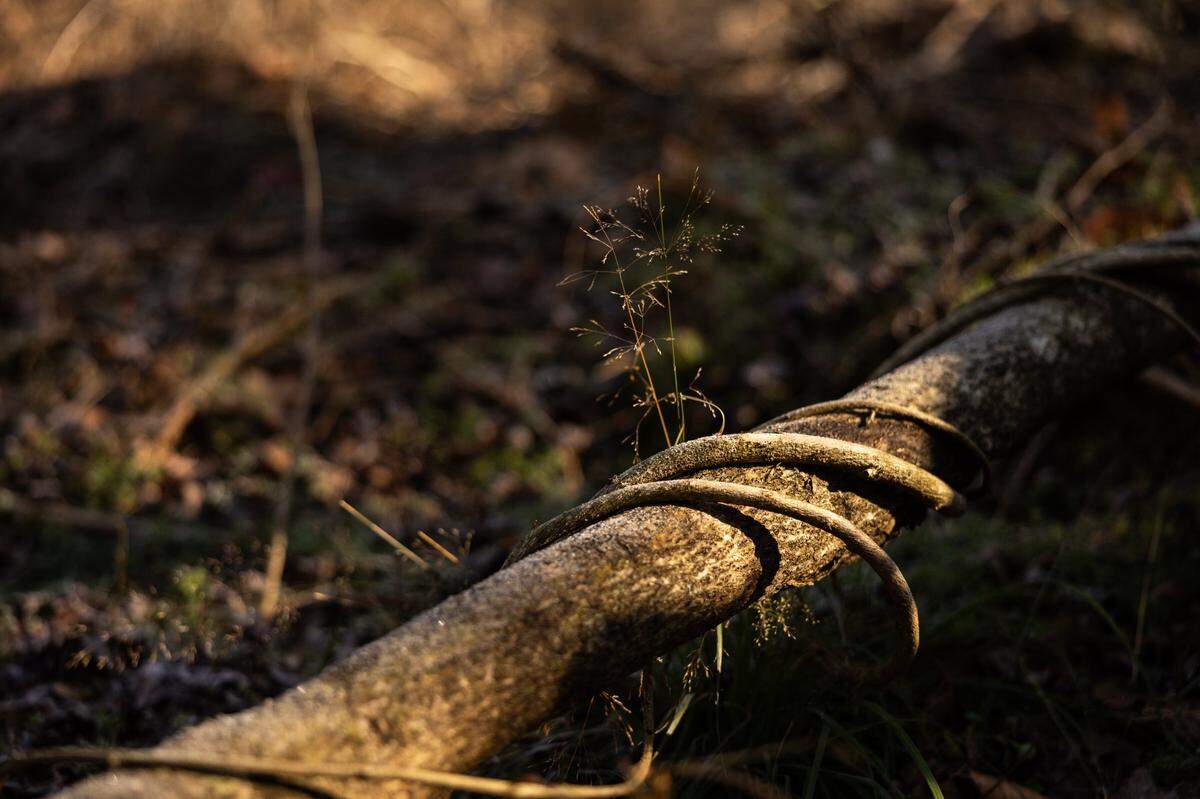
Native Roots also used chainsaws, brush cutters and hand saws to cut a path into dense areas of wisteria this year, Ruark said. That let workers access and control the areas when the dormant wisteria re-emerged in the spring.
“Some of these wisteria vines were the size of tree trunks, 30, 40 years old,” Ruark said. The vines existed before the county owned the property and probably when Duke Energy subsidiary Crescent Resources owned the land, he said.
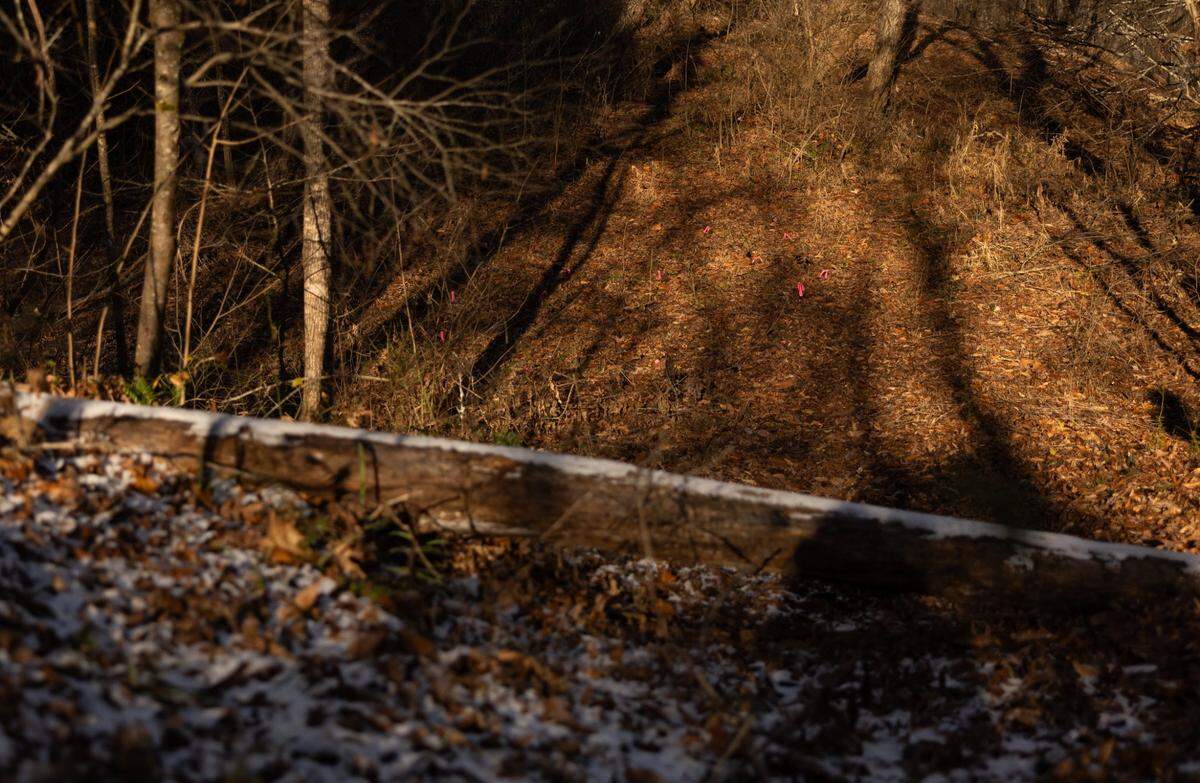
Duke Energy grew loblolly pines in what is now the park because the trees make great telephone power poles, Ruark said.
“By removing the wisteria, we’re going to start seeing the regeneration of our native oaks and our hickories and tulip poplars,” Ruark said. “That would have been what would have been here prior to it being cleared for loblolly.”
Elk and bison roamed here long ago
Ruark stood on a ridge where wisteria was cleared. “This would have been a dry oak forest prior to agriculture,” he said. “You would have had oaks and pines, and the understory would have had grasses.
“Prior to European settlement, Native Americans would have set prescribed fires to maintain that forest structure, because that’s what would have brought in the deer and the bison and the elk. Elk would have been here. And bison would have been in the Piedmont of North Carolina.”
“In the future, as we see more fuel in the ground, (the park) could use prescribed fire to clear this,” Ruark said. “Then we’ll start seeing what’s in the seed bank.”
Prairie trillium, a rare perennial wildflower, grows near the park and could be in its seed bank, Ruark said. “We just don’t know until we remove the non-native invasives, until we try other mechanisms to clear out the biomass that we’re seeing right here, which is all these vines.”
Native seeds “can stay viable in the seed bank for 50 years, up to a century,” Ruark said. “By providing the sunlight to the ground, you will start seeing native vegetation but also, unfortunately, other non-native vegetation.
“We might see the next layer is actually a non-native plant, but you treat that, and you move on until you find the native vegetation.”
Protecting aquatic wildlife, drinking water
Native wildflowers that bloom in Mountain Creek Park include evening primrose, azure bluet, Daisy fleabane, clasping bellflower, Small’s ragwort, ox-eye daisy and goldenrod.
Duke Energy utility poles along power right-of-ways in the park “are full of native flowers and grasses, and they were not just planted,” Ruark said. “They just lived in the seed bank.”
The park has “a lot of goldenrod, clasping Venus,” park Superintendent Morrell said. “But in the spring and summer, it’s really pretty, with various yellow, purple and blue flowers along the power lines.”
Native river cane also graces the park. “It’s almost like a native bamboo,” Ruark said. “It’s really dense, it colonizes. It’s very culturally significant to the Catawba people. They used it to make baskets.”
In early summer, workers also seeded eroded banks in the park with native grasses to stabilize the soil, Ruark said.
In October, six Microsoft volunteers planted native shrubs in an area previously infected by invasives.
Native Roots, the conservancy and parks department will handle remaining work involved in the grant, Ruark said.
“We just saw a blue jay going through the area,” Ruark said. “By starting from the ground floor and trying to bring back the plants, you bring back the native insects, which bring back the native birds. And then you bring back the native predators. You have to start with the plants.”
Predators?
Think bobcats, coyotes, black bears, fox, Morrell said. “We’ve seen bobcat tracks.”
Restoring the “resilient, native hardwood forest” with oak, poplar, dogwood and other trees will support bird and insect populations, “which have been experiencing significant declines in the North Carolina Piedmont region,” Ruark said.
Lake Norman water quality will improve, “because native plant species have robust root systems that slow down stormwater run-off,” he said.
“These efforts contribute to the overall health of the larger Catawba-Wateree Basin, which provides habitat for aquatic wildlife and drinking water for over 2.5 million people,” Ruark said.
Catawba County Parks Director David Wagg said his department’s partnership with the conservancy will ensure controlling invasive species “in a quick manner.”
And that means “we can keep (the park ecosystem) pristine for years to come,” he said.