Charlotte Latino groups hold know-your-rights events ahead of Trump mass deportation plans
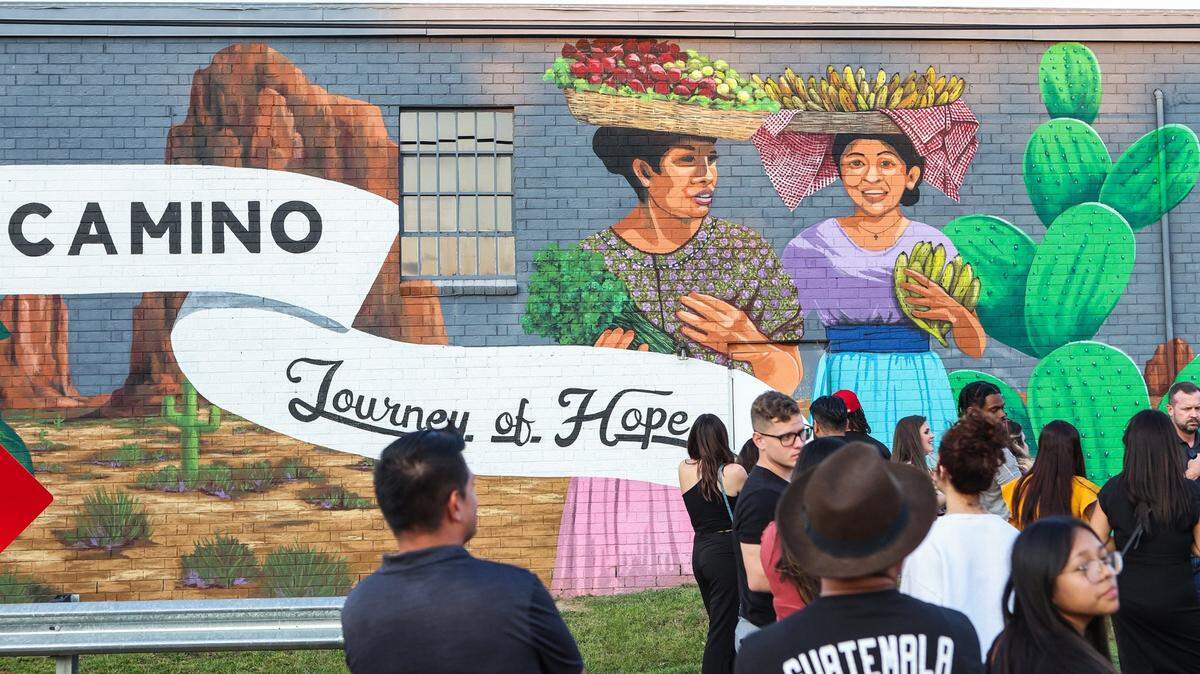
“Conoce tus derechos.” Know your rights.
That’s the sentiment spreading throughout the immigrant and native-born communities in the Charlotte region as organizations prepare for President-elect Donald Trump’s return to office.
Trump has said his Day One agenda will involve mass deportations of undocumented immigrants. In Charlotte, that may include about 110,000 people, according to data from the nonprofit advocacy group American Immigration Council.
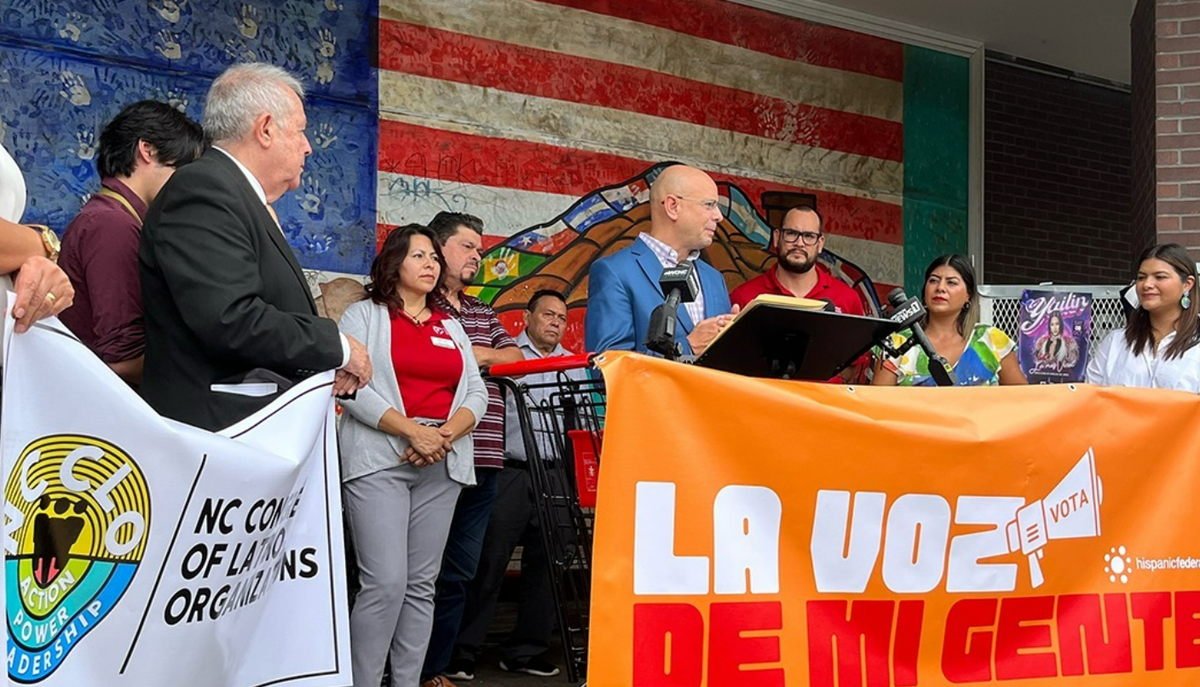
Nonprofit organizations, including the Hispanic Federation, the Carolina Migrant Network, the Latin American Coalition and the Freedom Center for Social Justice, are beginning to host workshops informing the community of their rights and options if they are approached by Immigration and Customs Enforcement (ICE) officers.
A workshop was held by these groups in early December, as reported by WFAE, and more are set to come. Anyone interested should reach out to those organizations.
International House, another nonprofit that works with the immigrant community, has hosted similar workshops, focusing on welcoming newcomers to the city and informing them about what their rights entail.
“I think a lot of times even people who are born and raised in the U.S. don’t fully understand their rights,” said Autumn Weil, executive director of International House. “(These workshops) help people understand what their constitutional rights are if they should encounter someone questioning them, or if they get pulled over for something and it turns into them being asked questions that aren’t related to the stop.”
Basic rights for all
The rights explained in these workshops pertain to all residents of the U.S.
The main rights are that everyone has a right to remain silent and can demand a lawyer, according to several groups, including the National Immigration Law Center.
These workshops also go over how to create a safety plan if anything happens. The Law Center said these plans should include memorizing phone numbers, having all documentation in one place, having a safe place for children to go and knowing how to find family members if they are detained through ICE’s locator portal or by calling the local ICE office.
There are no ICE detention centers in North Carolina but there is an ICE field office in Charlotte at 5701 Executive Center Drive, Suite 300.
Weil said some attorneys will go over scenarios and what to do in specific situations, such as during a traffic stop or if an ICE officer visits a person’s home or workplace.
People should report and document raids and arrests, the Law Center added.. They can do so by contacting United We Dream, another national nonprofit focused on immigration rights.
Immigration changes and effects
Besides Trump’s proposed deportation plan, Weil said there’s several other immigration changes that may occur.
The North Carolina Senate recently overrode departing Gov. Roy Cooper’s veto of HB10, which requires county sheriffs to cooperate with ICE by asking detainees about their immigration status and potentially holding detainees for ICE officers.
Then there’s Trump’s proposal of eliminating Temporary Protective Status, which allows people from troubled countries to stay in the U.S. Many people with this status have been in the U.S. legally for decades.
Weil said the effects of Trump’s proposals will ripple through all communities and sectors.
“It’s not just the communities we serve but our community at large,” Weil said. “You start doing mass deportations and you’re losing front-line health care workers. You’re losing service workers. You’re losing people that are the mechanisms in which our community functions.”
‘We don’t want to be alarmist’
Weil said some of the workshops are focused on the Hispanic community. But anyone can reach out to the nonprofits involved for more information.
As Trump’s term draws closer, the workshops and other informational sessions will ramp up and assistance is there, Weil said.
But for now, many things are unknown.
“We don’t want to be alarmist. We do want to wait and see, but we also have to be prepared for multiple scenarios,” Weil said. “The amount of anxiety and fear that is present for the immigrant community right now, regardless of their status, is at an all time high…
“He’s not just saying undocumented people... All we can do is educate those that we can serve right now.”
This story was originally published December 12, 2024 at 1:18 PM.