In wake of deadly DC crash, 3 key differences between CLT airport and Reagan National

Last week’s deadly midair collision between an American Airlines regional passenger jet and a U.S. Army helicopter near Ronald Reagan National Airport in Washington hit Charlotte and the nation hard.
The crash left 67 people dead, including several with ties to the city, like the flight attendant who made flying fun and one of the “sweetest humans.” The flight crew was also based in Charlotte.
The tragedy is still under investigation but concerns have been raised regarding congested airspace and understaffed air traffic control facilities at Reagan National.
Because Charlotte Douglas International Airport is one of the world’s busiest commercial aviation hubs, what happened in D.C. raised questions about whether those issues are a concern here as well.
The Charlotte Observer spoke with Michael McCormick, an associate professor and program coordinator at Embry-Riddle Aeronautical University in Daytona Beach, Florida, to see if there were any similarities between CLT and Reagan National.

McCormick is part of the air traffic management program in one of the largest universities that specialize in aviation and aerospace.
While Charlotte Douglas and Reagan National (DCA) are both considered busy airports and they are both hubs for American Airlines, that’s pretty much where the comparisons end, he said.
“I would not compare Washington National to Charlotte Douglas Airport because they have completely different uses, completely different airspace, completely different configurations,” McCormick said.
Here are some key differences:
Runway length and usage
While both facilities have three runways, and a fourth is coming to Charlotte, Reagan National mainly uses one runway for its passenger flights.
DCA has the single busiest runway in the world with over 800 daily takeoffs and landings, according to the Metropolitan Washington Airports Authority, an independent airport authority that oversees Reagan National and Washington Dulles International Airport.
Charlotte far surpasses that number across its multiple runways. About 1,400 planes land and depart from the airport daily.
Charlotte Douglas ranked seventh in the world in aircraft movement in 2023, the most recent available data, with over 539,066 arrivals and departures, according to Airports Council International.
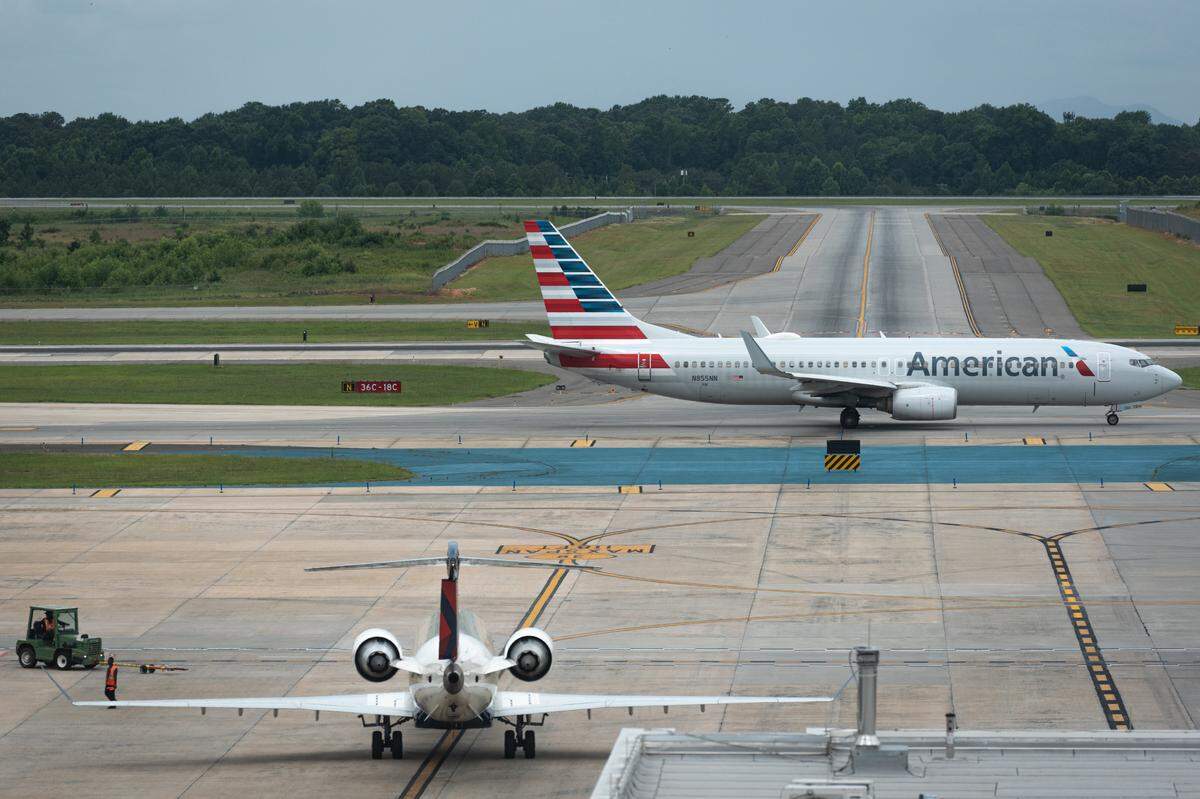
There’s also runway length. Reagan National’s main runway is about 7,100 feet long, according to the facility.
The shortest runway in use at Charlotte Douglas is 8,677 feet long, according to the facility. The new runway will be about 10,000 feet long.
Utilizing additional runways and having longer runways allows for more capacity, McCormick said.
Capacity and expansion
Both airports are over 80 years old and their usage has only continued to grow through the years.
Charlotte Douglas is working on its capacity issues with projects like the $3.1 million Destination CLT, which includes construction of the fourth parallel runway.
But Reagan National can’t expand.
“It’s an older airport. It’s landlocked with no ability to expand its capacity,” McCormick said. “You can’t add additional runways. You can’t lengthen the runways. So, historically, the demand for flights into Washington National has exceeded the capacity of the airport on a regular basis.”
With the limited capacity, Reagan National abides by the Federal Aviation Administration’s “slot rule.” The rule, created in 1969, limits the number of landings and takeoffs, controlling the frequency of movements in a given time.

Reagan National is one of three facilities governed by that rule. The other two are New York’s John F. Kennedy and LaGuardia airports.
In Charlotte’s case, arrivals and departures come in waves, McCormick said. There will be a wave of arrivals, that also allows for connections, then a wave of departures.
Air traffic control staffing
What the two facilities have in common is a shortage of air traffic controllers. Over 90% of the country’s air traffic control facilities are understaffed, according to a recent analysis by The New York Times after the crash. That’s about 285 of the 313 facilities.
Reagan National is about 63% staffed and Charlotte Douglas is about 84% staffed as of September 2023, according to data from the FAA, an Observer analysis of FAA data found.
Reagan National had 19 certified professional controllers out of a targeted amount of 30. Charlotte had 76 certified professional controllers on staff out of a targeted 90.

However, the data also include the number of controllers working at the facilities who were in training. With those numbers, both facilities are getting closer to their targeted staffing number.
But training can take a long time.
“Training can take from one to five years depending upon the facility they’re working at,” McCormick said. “The FAA has embarked upon a significant hiring program in the past three years. Two years ago they hired 1,800 people. Last year they hired 2,000. This year they’re hiring 2,200…
“But you can see it’s going to take several more years before they’re able to completely bridge that gap with certified controllers.”
The FAA also has faced setbacks in hiring with various government shutdowns and the pandemic, McCormick added.
“It’s not that (the FAA) doesn’t have a lot of interested candidates that apply. They do. They have far more people apply for the positions than they can actually hire in a year,” McCormick said. “Every time you hear of a government shutdown due to a lapse in budget that means the FAA cannot hire or train new controllers.”
Dan McCabe echoed the sentiment. He’s the southern regional vice president of the National Air Traffic Controllers Association, which includes the Charlotte airport.
There’s interest in being an air traffic controller in Charlotte, McCabe said. There were 10 trainees at Charlotte Douglas in September 2023, according to the FAA. And, there’s a new traffic control tower, which opened in 2022 as the second tallest tower in the U.S.
The air traffic controller staffing level is expected to rise to 90% of its target numbers in the coming year, McCabe added.
“Charlotte has been getting busier and busier over time and we’ve seen it, we’ve predicted it and we’ve been there all along the way,” McCabe said. “As dissimilar as (Reagan National) is from (Charlotte), they’re all very similar in the way things work.
“It’s numbers in, numbers out. There’s no secret there’s 10,800 certified professional controllers in the United States... That’s about 3,600 short and you don’t have a 3,600-controller shortage without feeling it everywhere across the entire country.”