Ruby-throated hummingbirds are coming back to NC. Here’s when to put out your feeders
It’s nearly time for North Carolina’s most prevalent hummingbird to make its first appearance.
The state’s most common hummingbird, the Ruby-throated hummingbird, is migrating back to North Carolina and slated to arrive by mid-April, which makes now a perfect time to learn more about our avian visitors.
The Charlotte Observer spoke with Steve Matadobra, a Master Gardener and president of the Transylvania County Bird Club, to learn more about the bird’s habits and what they like to eat.
Here’s what to know about the Ruby-throated hummingbird and how to prepare for its arrival.
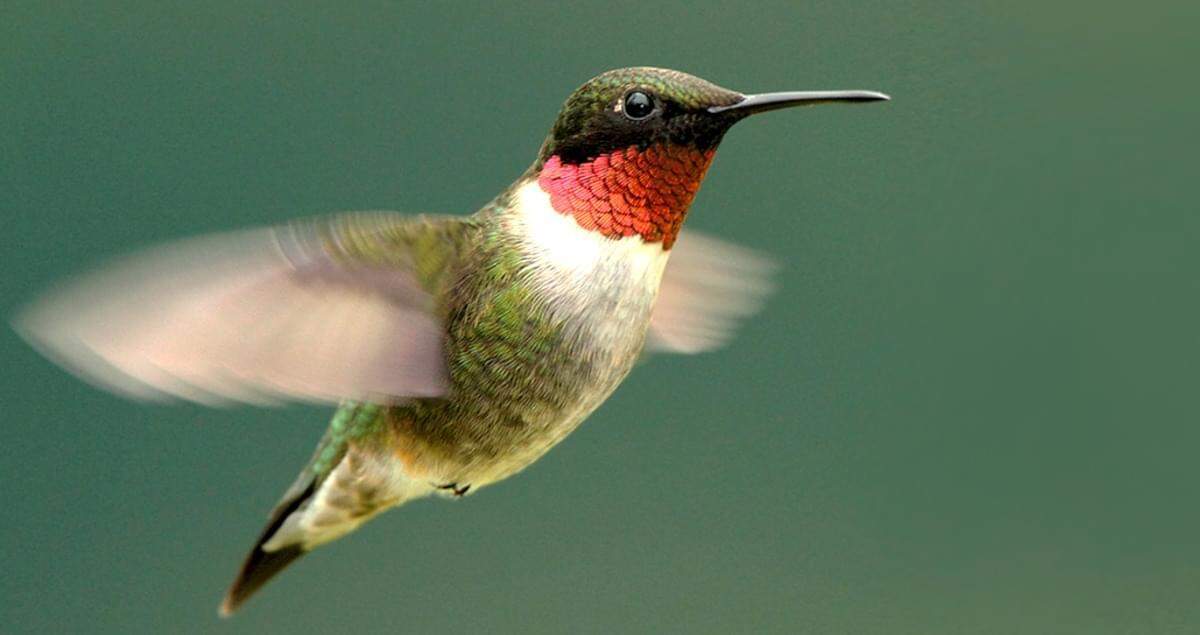
What does the Ruby-throated hummingbird look like?
Ruby-throated hummingbirds are typically the size of an average hummingbird (small, usually weighing two to 20 grams) and bright green in color. Males will have a splash of red.
“The males are the ones that will have a an iridescent, bright ruby-red-colored throat. It’s interesting because lots of times you can’t see that color until they make a turn. It’s more of a display for attracting mates,” Matadobra said.
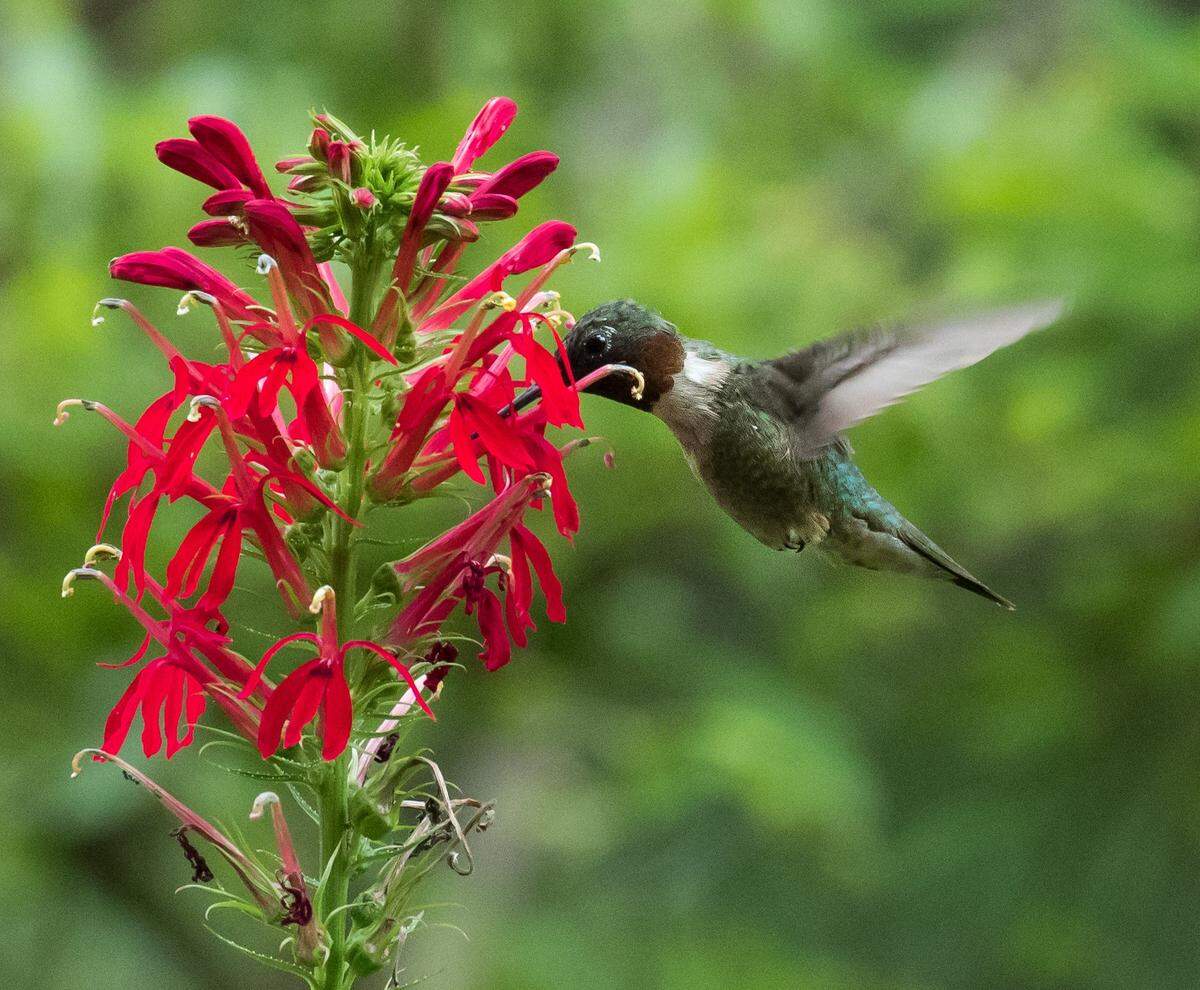
According to The Cornell Lab of Ornithology’s “All About Birds” website, Ruby-throated hummingbirds are known to visit hummingbird feeders and tube-shaped flowers, and pluck tiny insects from the air or from spider webs.
As for their habitat, Ruby-throated hummingbirds generally prefer to live in open woodlands, forest edges, meadows, grasslands, parks, gardens and backyards.
When do we see the Ruby-throated hummingbird in NC?
The Ruby-throated hummingbird should become prevalent this season in North Carolina by mid-April, Matadobra said, adding that sightings are common in the southern part of the state by the end of March.
These hummingbirds migrate to and from Mexico and Central America, Matadobra said.
Ruby-throated hummingbirds typically begin to leave North Carolina in September, but they usually like to load up on food before heading out, Matadobra said.
“You’ll see a large surge of them at your feeders,” he said.
You can find a chart of bird observations in North Carolina by species at eBird.com to see just how many Ruby-throated hummingbirds are in our region during the warmer months.
How to feed hummingbirds using a bird feeder
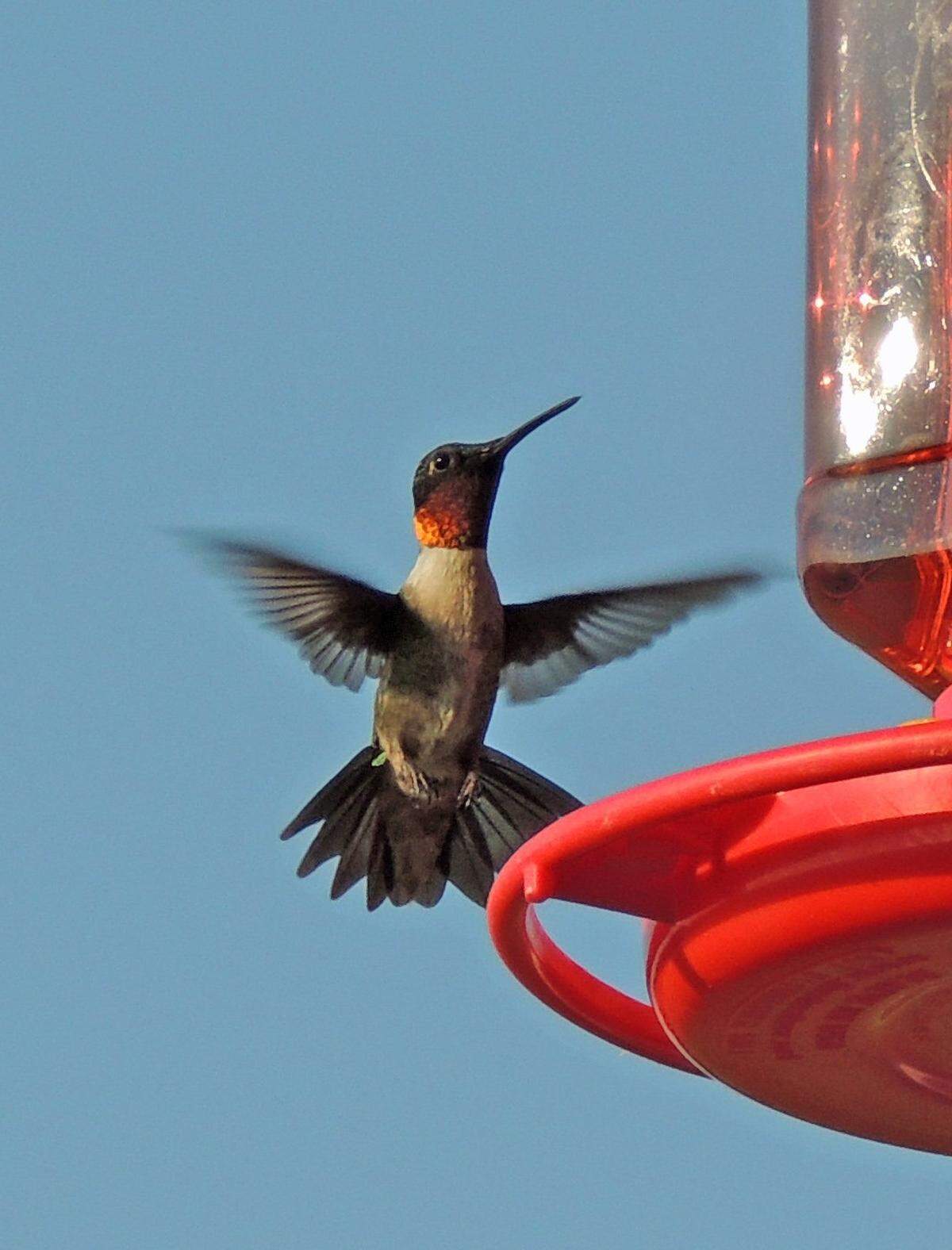
Since hummingbirds migrate north to mate and find food, bird feeders are considered open invitations for those who call the state their temporary home.
“If you want to get some hummingbirds to your patio, by all means, put out a hummingbird feeder with some nectar that is one part sugar and four parts water,” said Matadobra. “They love that kind of stuff.”
Matadobra cautioned against buying “nectar” at retail stores with red food coloring, since the chemicals can be harmful to hummingbirds.
“The reason why people sell the stuff that’s painted red is because hummingbirds generally like red flowers and red colors,” he said. “But that’s not good for them.”
What can you plant to attract hummingbirds?
Nearly all bird species feed their young insects, so planting native greenery that attracts bugs can be enticing to hummingbirds.
“If you want to continually enhance the diversity in your yard, you want to plant ones that facilitate insects, and native plants are going to be your best bet for that,” Matadobra said.
You should also avoid using herbicide and pesticides in your yard, since they could affect the insects the hummingbirds need, Susan Campbell, co-founder of Cape Fear Bird Observatory who’s been studying hummingbirds in North Carolina for nearly 30 years, previously told The News & Observer.
Campbell also recommended some perennials and annuals to plant to attract hummingbirds.
.jpeg "image2 (9).jpeg")
Perennials:
Anise-scented sage (Salvia guaranitica)
Van Houttei’s sage (Salvia splendens)
Pineapple sage (Salvia elegans)
Cherry Chief or Cherry Queen (Salvia greggii)
Turk’s cap (Malvaviscus drummondii)
Cigar plant (Cuphea spp.)
Trumpet creeper (Campsis radicans)
Butterfly bush (Buddleia)
Lantana (Lantana spp.)
Annuals:
Texas sage (Salvia coccinea)
Morning glory (Ipomoea spp.)
Mexican sunflower (Tithonia)
Impatiens (Impatiens)
This story was originally published March 13, 2025 at 5:30 AM.