
Unclaimed: with no owner, historic Black Charlotte cemetery faces obscurity
Jason Tapp peers into the leafy, shin-high overgrowth and points to headstones concealed by green weeds in the back of the cemetery.
These weren’t here a few months ago, Tapp said. He and a group of volunteers had whacked the weeds down back in February as part of a clean up he organized of the Biddleville Cemetery.
“But stuff like this grows quick if no one’s mowing it,” he said.
The historic Black cemetery, one of the oldest post-emancipation burial grounds in Mecklenburg County, has been forgotten more than once. Only a handful of headstones are sprinkled throughout the 1-acre tract at the front of Five Points Park near Johnson C. Smith University. But the land is believed to be the resting place for more than 300 people — a shocking fact even to some residents who’ve lived in the neighborhood for years.
Little is known about the land’s owner, tied to a long-defunct civic organization. In lieu of a designated steward, the cemetery has relied on volunteers and good Samaritans like Tapp to bring it out of cycles of neglect and obscurity.
The county took over the cemetery’s maintenance in 2015. And a year later, the Charlotte-Mecklenburg Historic Landmarks Commission designated the cemetery as a historic landmark.
But nearly a decade after those efforts, the cemetery still faces challenges of being unclaimed — threats of pesky overgrowth enveloping headstones and a history known only by those who know what to look for.
Peter Cook, deputy director of Mecklenburg County Parks and Recreation, said the county contracts with someone to mow the grounds an allotted amount of times throughout the year. But since Biddleville Cemetery has been under the county’s care, he said, they’ve avoided maintenance around headstones to ensure they aren’t damaged.
And while a report for the historic cemetery can be found online, there is no signage at the cemetery itself letting anyone who passes by know of its existence or significance.
Without a steward or an organization championing the cemetery’s history, Tapp has worked to clear overgrowth and share the story of the Biddleville Cemetery.
“We have a responsibility to hold on to the bits of history that we didn’t destroy when (Charlotte was) really growing,” he said.
‘The connections are lost’
The Biddleville Cemetery was the neighborhood burial ground for the African American community that grew around the Biddle Institute, now known as Johnson C. Smith University, starting in the 1870s.
It was not a slave cemetery. Founded in 1873, all burials were of free African Americans, the historical landmark designation report said.
Several prominent figures such as veterans of both World Wars, the Spanish-American War and ministers tied to A.M.E Zion churches are laid to rest there. Some of the headstones have legible names, others are illegible or are just horizontal blocks indicating a grave.
The Society of the Minute Men, believed to be a former African American civic organization, signed the deed to the property in 1873. Outside of this, there is no paper trail or evidence of their involvement with the cemetery.
This isn’t totally surprising, said Stewart Gray, director of the Charlotte-Mecklenburg Landmarks Commission.
At the turn of the 20th century, centralized graveyards at churches became a popular phenomenon. The Biddleville Cemetery, which had no ties to a church, didn’t fit the new trend. As the Biddleville neighborhood evolved and members of the community moved away, the connection with the cemetery wavered. The last known burial was in 1982.
“The families that were associated with the people that are interred, so many generations have passed,” he said. “The connections are lost.”
Dorothy Green’s backyard of nearly 50 years abuts the cemetery. While she’s aware of it and the fact that some veterans were buried there, she said she never learned much about its history.
“Most people don’t really pay it attention because they don’t have relatives or nothing that (are) there,” she said.
A designation that means something
If they aren’t looking, drivers who travel near the intersection of French and Cemetery street would have no idea about the burial ground unless their eyes caught the few visible headstones from the street.
Neighborhood residents have a general awareness of the cemetery, Zach Gulsby, a board member of the Biddleville-Smallwood neighborhood association said, but more can be done. He’s seen the cemetery used knowingly or unknowingly as a dog park. And he’s unsure if students at nearby Johnson C. Smith University are aware that a historic cemetery is a short walk from campus.
It’s an honor to be designated as a historic landmark, Gray said. Mecklenburg County is home to many cemeteries that deserve to be preserved. But the threshold to become a landmark is high.
“To become a landmark, we’re looking to highlight the ones that really have a story to tell that’s more unique,” he said.
But nearly a decade after its designation, Gray said the Landmarks Commission, to his knowledge, hasn’t organized any clean ups or education events for the cemetery. The commission hosts a series called Adventure Club which hosts visits and events centered around historic preservation While some of the county’s nearly 380 historic landmarks are highlighted through these events, all aren’t able to.
The lack of signage and educational opportunities around the cemetery have left some people who’ve lived in the neighborhood for years without key details about the cemetery’s history.
Myra Johnson has lived in her home on Mattoon Street since 1999. From her front porch she can see the cemetery’s edge.
Johnson knew of the cemetery and recalls going to the park to occasionally read headstones. But she had no idea that the cemetery was all Black or that beneath the ground hundreds of people were laid to rest.
“What?” she exclaimed. “... It needs to be a sign letting people know that this is a historic cemetery.”
Gulsby said the lack of involvement with the cemetery makes him wonder if the designation was just a punch on a list rather than an intentional effort.
“I’ve always been curious about what that designation meant, but as far as I can tell, it doesn’t mean anything,” he said. “Because nobody’s ever done anything to make me think that it means something,”
The neighborhood association has talked about putting signage up themselves. But he said cost is a major deterring factor. The group also recently became a member of the North Carolina African American Cemeteries Network which provides support and guidance to communities looking to preserve historic cemeteries in their communities.
Designating the cemetery as a historic landmark was the right thing to do, Gray said. It not only honored the land, but further protected it from Charlotte’s rapid growth.
But maybe, he said, the next logical step is to get the cemetery some sort of sign. Because of the Observer’s reporting, he and the director of Mecklenburg County Parks and Recreation are in early talks about getting some sort of infographic on the property.
Gulsby hopes whatever is eventually put up not only shares the history, but is able to humanize the people laid to rest there.
“I think we could do that by telling stories of those folks and helping people realize that at one point this cemetery was a massive, important part of the neighborhood and of the lives of the people who lived there, and just because it isn’t that today doesn’t mean that we shouldn’t respect it like it wasn’t.”
Keep coming back
Tapp had no idea the Biddleville Cemetery existed before he received an Instagram direct message about it last year. Through his popular Instagram page, Spooky CLT, he’s organized a few cemetery clean ups around the city.
Someone reached out to him concerned about construction residue near a cemetery in Biddleville.
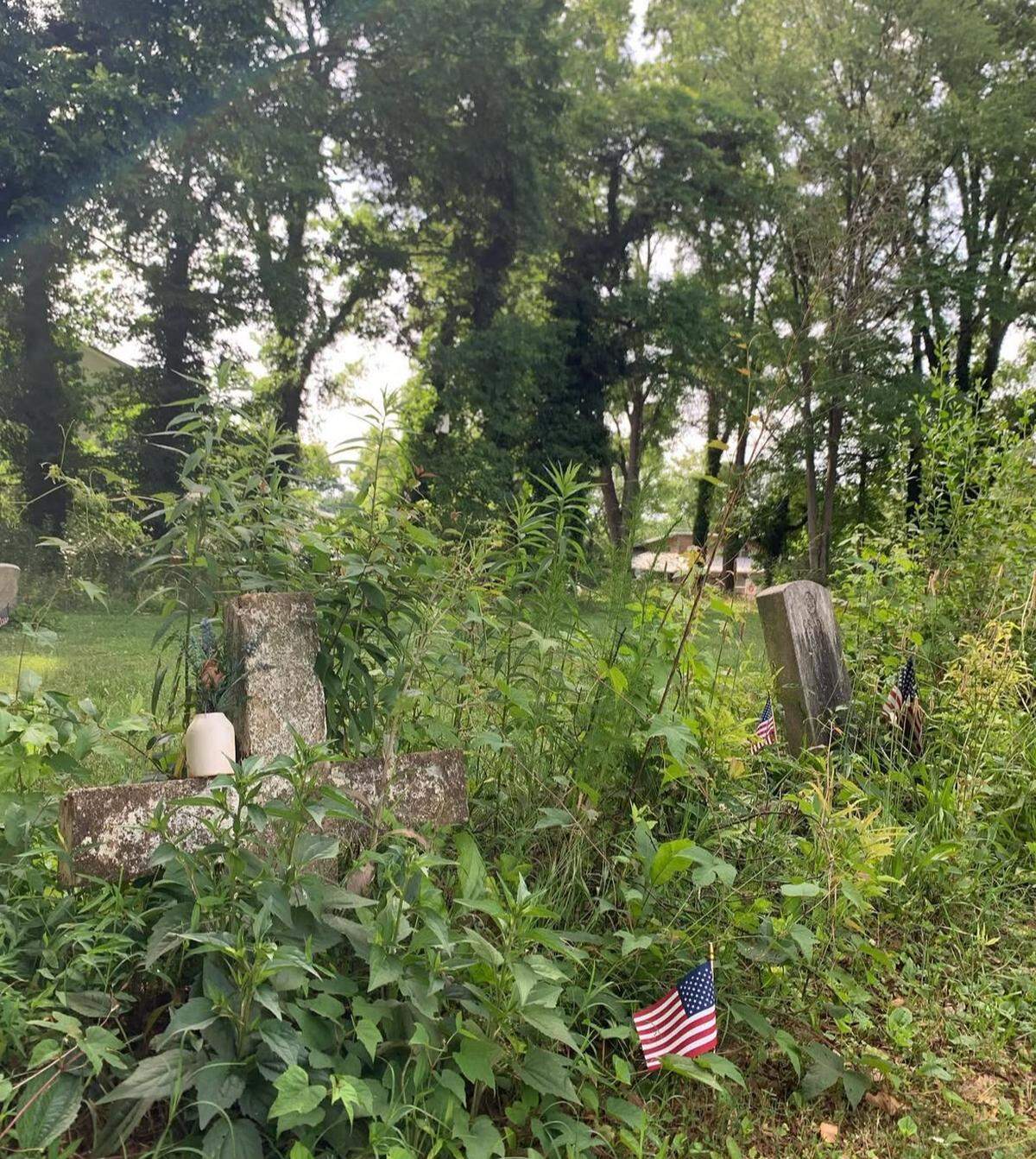
While he didn’t find any residue, he did find a cemetery in need of much care. Overgrown weeds enveloped headstones and a large fallen branch prevented a portion of the cemetery from being mowed properly, he said.
Tapp and Gulsby said the most consistent upkeep they’re aware of is done by a neighborhood resident who mows the lawn about once a week. In the 2 1/2 years he’s lived in Biddleville, Gulsby said he hasn’t seen the county doing much of anything on the property.
Cook, deputy director of Parks and Recreation for Mecklenburg County, said the county uses a contractor to mow the cemetery about 26 times a year. Many of the county’s locations aren’t mowed from November to March due to it not being a grass growing season, he said.
As Tapp looks at the weeds he whacked a few months ago taking root again in the back of the cemetery, he contemplates what to do.
Maybe he’ll need to organize another clean up. Or maybe he’ll come out with his trimmer and let the covered headstones see the light of day again.
But what he knows for sure is that he won’t let the place be forgotten.
“I told myself I was gonna do what I could and then be like ‘All right, someone else, take care of it.’ But now that I’m in it, knowing myself, I’m not gonna let it get overgrown again. I’ll do what I can.”
This story was originally published May 8, 2025 at 5:00 AM.