What does a Charlotte agency made for community relations in 1961 do now?
In 1963, members of a special Charlotte committee collaborated with the community to end restaurant segregation.
They asked prominent white leaders to take Black leaders to lunch at segregated restaurants in Charlotte. Their idea: If a white person of influence took a Black person to a segregated lunch counter, the restaurant would not want to say no to the white person.
The committee was called the Mayor’s Friendly Relations Committee, and it was created in 1961 under former Mayor Stanford R. Brookshire. Known today as the Charlotte-Mecklenburg Community Relations Committee, The Charlotte Observer reported last month that it was suing an apartment complex over discrimination allegations.
That’s part of the agency’s role, but 64 years after it was founded, the executive director says it is still committed to promoting community harmony.
Willie Ratchford, the longtime executive director, said he believes that the Charlotte-Mecklenburg area has better race relations compared to other communities across the country.
“And I think that is due in part to the efforts of the Community Relations Committee to take racism and discrimination head on, and to allow folk opportunities to talk about this difficult issue.”
How it works
The committee is made up of 19 staffers and a 45-member board appointed by the city council and county commissioners.
Within the committee there are divisions dedicated to Americans with Disabilities Act programs, community affairs, fair housing and dispute settlement.
One of its main duties is to enforce fair housing and non-discrimination ordinances. But the committee also does mediation, appeals and training.
Mark Jerrell, the Mecklenburg County commissioners chair, says he appreciates the committee.
“I think they add the components of a citizen’s voice, a trusted voice, that can address the concerns of the community,” he said in an interview. “I think when it was formed there was a need for it and I think there continues to be a need for citizens to react to and address the concerns of fellow citizens.”
If a citizen files a complaint against the Charlotte-Mecklenburg Police Department and disagrees with the department’s decision, they can go to the committee for an appeal. The committee has staff who sit in on police complaint cases as a voting member in an effort to hold the department accountable.
They are responsible for Charlotte’s annual Martin Luther King Jr. birthday celebration.
And the committee recognizes police officers who build connections with residents and communities with police-community relations awards.
“My main goal and the priority for the committee is to make sure that we as a community are treating each other with dignity and respect…We are about advocating for civility,” Ratchford said in an interview with The Charlotte Observer.
Providing space for conversations is important, he continued, especially when it comes to race relations.
Ratchford thought back to the impact of knee-to-knee dialogues the committee held in the past. Up to eight community members would sit in a circle close enough for their knees to touch.
“When you’re sitting that close — even though you may look different than the other person, you feel different than the other person, you’ve experienced the world differently than the other person — ... what you see is another human being standing there.
“And it creates a dynamic where it’s just easier to have a conversation,” he said.
“If you started off a relationship and you like the person as a person, you begin to realize that those other things really don’t make that much of a difference. A person is a person and a human is a human,” he said.
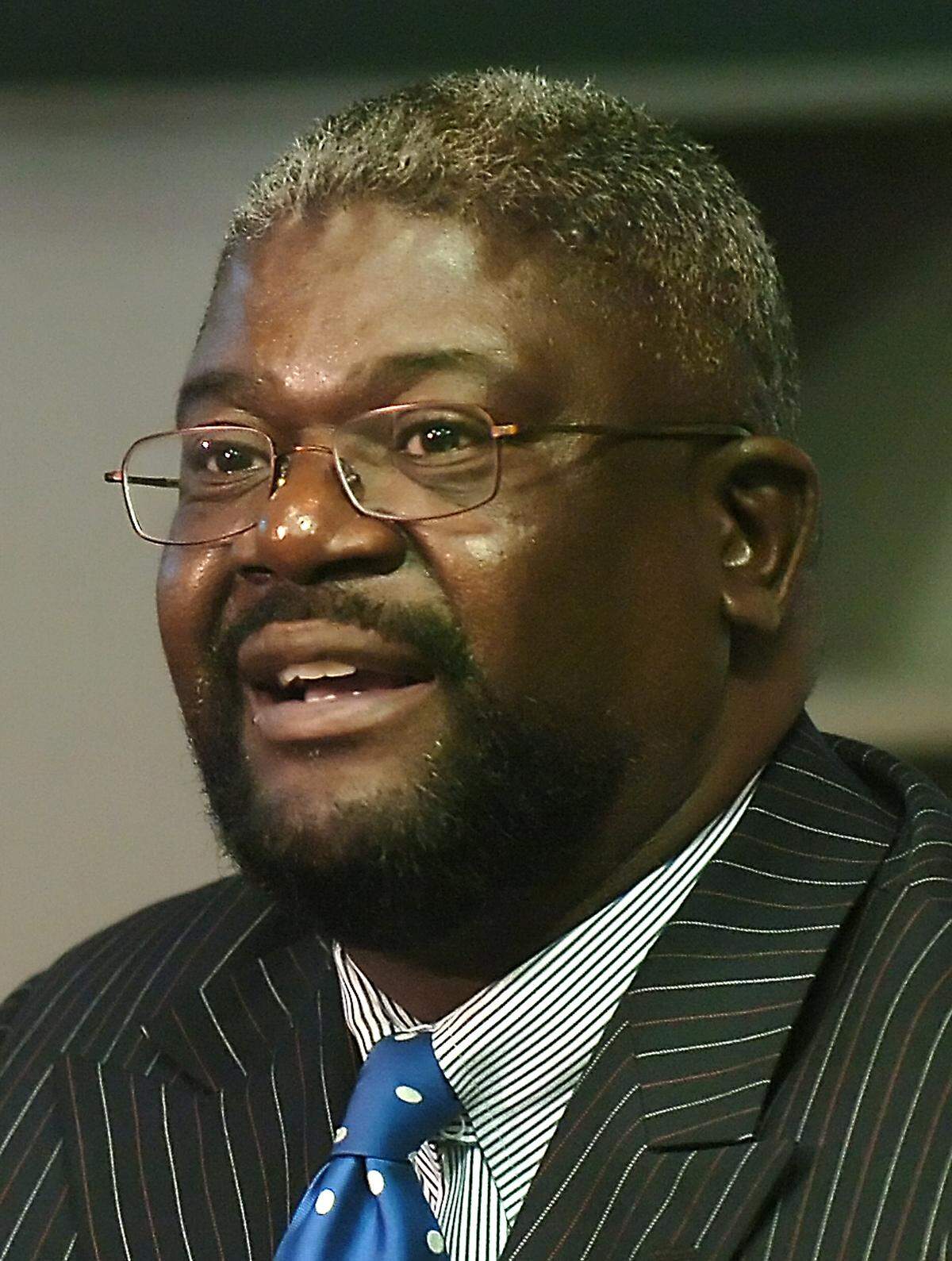
Ratchford has worked with the committee for 45 years and has been the executive director since 1994.
Housing law enforcement
The community relations committee enforces Charlotte and Mecklenburg County’s fair housing laws and non-discrimination ordinances. These fair housing laws prohibit discrimination in housing practices and the ordinances prohibit discrimination regarding public accommodations and employment.
“If you are a citizen in Charlotte-Mecklenburg, and a victim of discrimination, you can file a complaint with us,” Ratchford said. “Where we have legal authority, we will work with you to see to it that your rights under law are protected.”
The committee received 33 discrimination reports and opened seven cases from July 1, 2024, to June 30 of this year. Of those, one case was filed alleging discrimination based on each of these protected groups: sex, gender identity, gender expression, sexual orientation, disability, race and religion.
Two cases involved public accommodations and five involved employment, according to the committee’s annual report.
Each of the opened complaints were resolved through the committee. In total the committee attained monetary relief of $32,344 for clients.
Hundreds of people file fair housing complaints with the committee, Ratchford said. It opens around 40 of these cases a year and it takes about 100 hours to investigate each complaint, he said.
When the committee receives a fair housing complaint, it conducts an investigation determining if there is reason to believe discrimination occurred. If the investigation finds evidence of discrimination, the committee attempts conciliation between the parties asking the complainant ‘what would it take to make you whole again or to address your discrimination?’
“If the two parties are successful in conciliation, then that’ll give us a chance to close that complaint down,” Ratchford said. “If they’re not successful, then we can by law have a public hearing in which a panel of five persons appointed from the Community Relations Committee volunteers will actually hear the case and make a decision as to whether our investigation was correct in determining that discrimination occurred or that it was not.”
If the panel disagrees with the investigation the case closes. If they agree, the committee must attempt conciliation again. Here, the parties come to an agreement or the committee will then refer the case to the city attorney’s office to file a lawsuit representing the committee.
Within its last fiscal year, the committee closed 34 fair housing complaints and negotiated $23,124 in conciliation funds for complainants, according to a yearly report given to the U.S. Department of Housing and Urban Development.
The committee is expecting to receive $102,800 from HUD for its fair housing cases. It will also hire staff to investigate fair housing complaints, Ratchford said.
This story was originally published July 25, 2025 at 5:00 AM.