
She was left alone too long in Rowan jail. It took a tipster to unlock the truth.
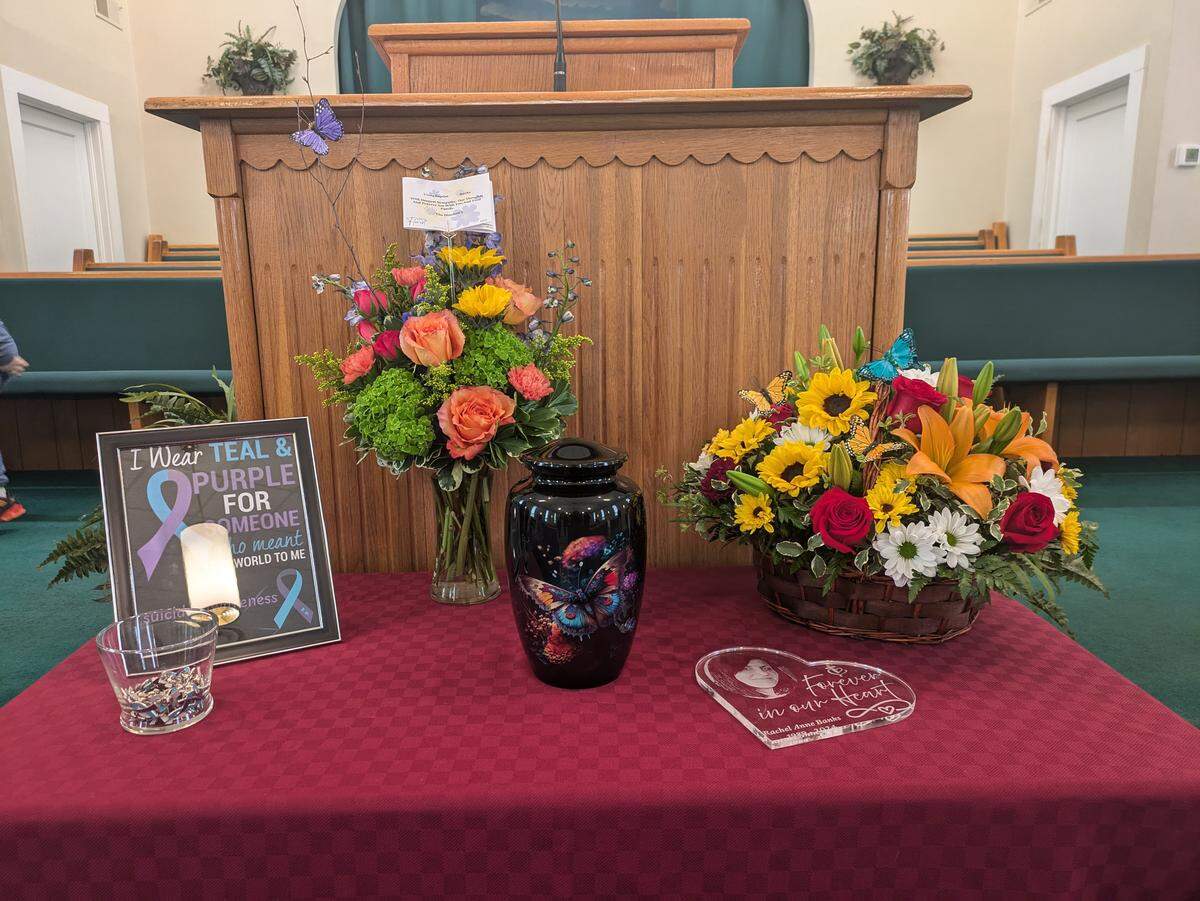
Rachel Anne Banks was held in Rowan County jail for less than a week when deputies arrived at her mother’s house on the outskirts of Salisbury to deliver devastating news.
Officers found her daughter “critical and unresponsive” inside the jail and she was taken to a hospital, Terri Banks said she was told. But little else.
A doctor at the hospital the next evening filled in some blanks: Banks, 34, a mother of two who struggled with drug addiction, had hanged herself inside the jail on June 12, 2024. She died three weeks later, never regaining consciousness.
But it wasn’t until a year later that Rachel Anne Banks’ family learned state inspectors had cited Rowan County jail staff for not adequately supervising her as is required, increasing the risk that she could harm herself. Or that those inspectors wouldn’t have investigated if a tipster hadn’t informed them of her death.
Just weeks after Banks succumbed, another woman who had been locked inside Rowan County jail died, from a drug overdose. The state found supervision failures in that case as well.
Jail detention officers are required to check inmates a minimum of twice an hour with gaps no longer than 40 minutes for many safety reasons, including discouraging and interrupting suicide attempts. But Rowan County jailers failed to meet that requirement 14 times with Banks, with the longest gap reaching 98 minutes, inspectors found.
Jails are also required to report deaths of inmates in their custody to the state Department of Health and Human Services within five days.
But District Court Judge Chris Sease in Rowan County released Banks from the jail’s custody the day after she was taken to the hospital, unresponsive but alive. That meant the jail was not legally obliged to report the death to DHHS.
Other inmate deaths have escaped DHHS scrutiny over the years because people were released from custody before they died, something The News & Observer first reported in its Jailed to Death investigative series published in 2017.
A dead woman’s family left in the dark
Banks’ family learned of the supervision failures and lack of state notification only last month, from an N&O reporter who obtained DHHS investigation records about jail inmate deaths across North Carolina in 2024.
The information shocked a family that is still grappling with her death, they said.
“She might have been alive if they had done what they were supposed to do, and maybe she could have gotten her life straightened out,” her mother said during an interview, her voice choked with grief.

The family is considering legal action against the sheriff’s office. Typically, state law gives families up to two years to file a lawsuit in a wrongful death case.
Lax supervision has long been a problem in the county jails that local sheriffs run. Medical examiner and state inspection records of people held in county jails dating back to 2012 show each year roughly a third of the deaths involved missed checks and other supervision issues, The N&O found.
Rowan County Sheriff Travis Allen and a spokesman did not respond to email and phone requests for information about Banks’ death or the state findings against his facility.
In a written response to the DHHS dated July 22, 2025, Allen accepted the state’s deficiency findings and said the jail had performed a “detailed after-action review, identifying areas for improvement” after Banks’ death.
“Inmate supervision remains our highest priority, and all detention officers are required to conduct thorough rounds,” Allen wrote.
DHHS officials, whose Division of Health Service Regulation staff declined to be interviewed, accepted the jail’s response and took no further action, records show.
Required jail death reports
The two-page death reports that jails are required to file include details such as when the inmate was seen in distress and whether a cause of death was identified. State inspectors use it to help decide whether to investigate.
In 2017, the N&O began tracking cases of inmates whose deaths were not reported by jail officials, and found more than two dozen over the previous decade. The N&O’s reporting prompted state lawmakers to tighten what critics called a loophole in the law, but they didn’t entirely close it.
The reform in Senate Bill 750, passed by Democrat and Republican lawmakers in 2018, required sheriffs to report all “in-custody” deaths, not just those that occur inside a jail. That meant inmates who were still in the sheriff’s custody when they died in a hospital would have to be reported.
But if an inmate is released from custody before they die, jails still do not have to report.
Many jails have since gone above what the law requires by reporting out-of-custody deaths to DHHS’s Division of Health Services Regulation. Many of those deaths are of infirm inmates who were transferred to the state’s prison hospital in Raleigh for care and died there, records show.
Others are not, which was the case in the Alamance County jail last year, where an incarcerated man hung himself but died in a hospital. Alamance reported the death as a suicide, and DHSR officials investigated. They found the jail had properly checked on the inmate.
But in at least one-high profile case, a jail sent a courtesy “out-of-custody” death report to the DHHS in 2019 that gave no indication of the treatment an inmate received behind bars. The DHHS did not investigate the death.
A subsequent criminal investigation and state autopsy found Forsyth County jail staff had placed inmate John Neville in a prone position with his hands cuffed behind him. He couldn’t breathe, suffered a cardiac arrest and died in a hospital.
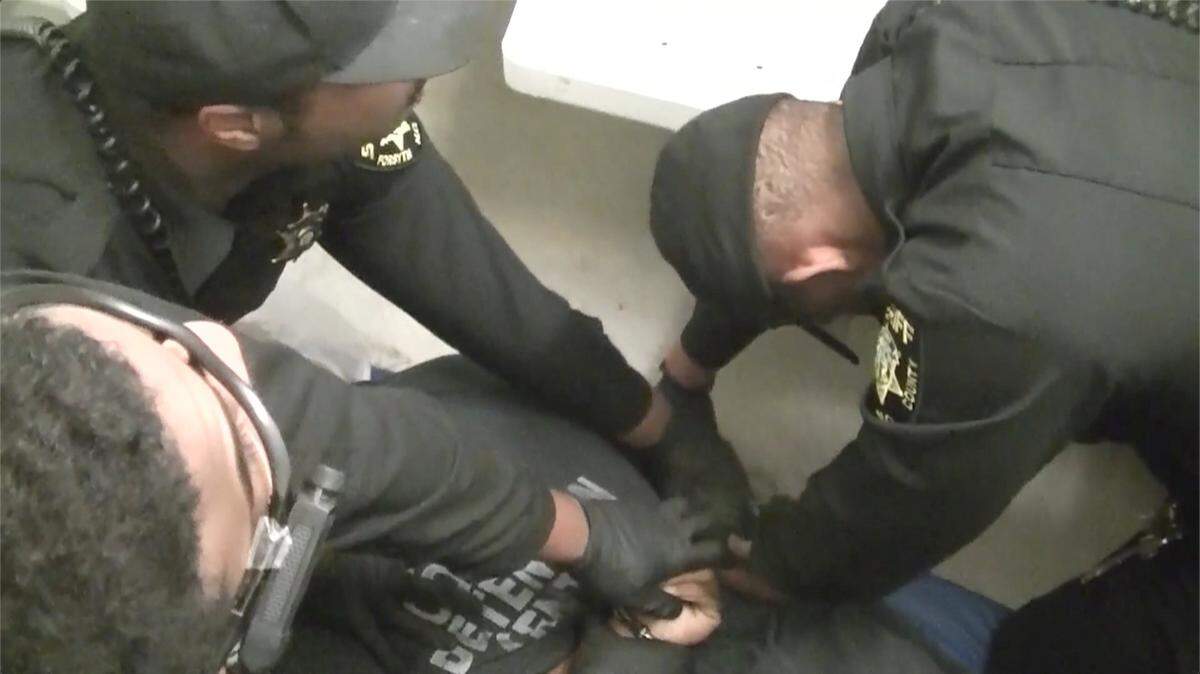
Five deputies and a nurse involved in the death were charged criminally, but not convicted. The sheriff’s office paid a $3 million settlement to Neville’s family.
After the death, Rep. Donny Lambeth, a Forsyth County Republican, said the jail death reporting requirements needed to be improved to capture cases such as Neville’s. But lawmakers have yet to pass legislation tightening reporting requirements.
The second death, inside Rowan jail
A second Rowan County jail inmate died two months after Banks did. Sharon Robbins, 36, of Kannapolis, died from an overdose of a combination of fentanyl, methamphetamine and methadone several hours after being admitted.
The DHHS investigated her death, unaware that Banks had died earlier, and found Robbins lacked required supervision.
No one had checked on her during the three and a half hours she was in a group holding area, state documents say. She was then transferred into a padded cell where she was to be checked four times an hour. Such heightened observations are required when inmates are suspected of being on drugs.
One check was missed in the subsequent five hours before she was found in distress, the DHHS investigator reported.
The investigation also found that the jail, which can house up to 208 inmates, had 12 vacancies in its detention staff at the time.
The jail did not mention staffing issues in its response to the investigation, but a Facebook post from the Rowan Sheriff’s Office in February suggested some difficulty in filling positions. It included a picture of five detention employees and praised them for their dedication. “They work countless hours of overtime at a tough and demanding job!” the post said.
Robbins was a stay-at-home mother survived by six children, her obituary states. Court records show a history of drug-related arrests that went back over 15 years.
Her death raises a troubling question: If Banks’ death had been investigated and flagged shortly after it happened, might the jail’s supervision have been improved enough to prevent Robbins’?
“Had DHHS gone in and done their investigation a few months earlier, they would have at least had a chance to identify and help the jail fix those issues,” said Luke Woollard, an attorney with Disability Rights North Carolina, a nonprofit that looks out for people with mental and physical disabilities.
In the grip of addiction
Banks grew up in the Salisbury area, the second of three children. She liked to draw, enjoyed cooking with her mom and could swim like a fish, her family said.
She was slim with dark brown hair and deep brown eyes. But behind her pretty face and friendly demeanor, Banks struggled with depression, her family said. Drug abuse became a way to “self-medicate,” said a sister-in-law, Shayna Banks.
By the time Rachel landed in the Rowan County jail, years of abusing methamphetamine, fentanyl and other drugs had taken their toll. Relatives were caring for her two young children and their mother was often homeless, family members said. Many of her teeth were gone.
Three times Rachel agreed to be checked into a drug rehab facility only to bow out at the last minute, Shayna said. She had tried suboxone, a drug that can help shut off narcotic cravings.
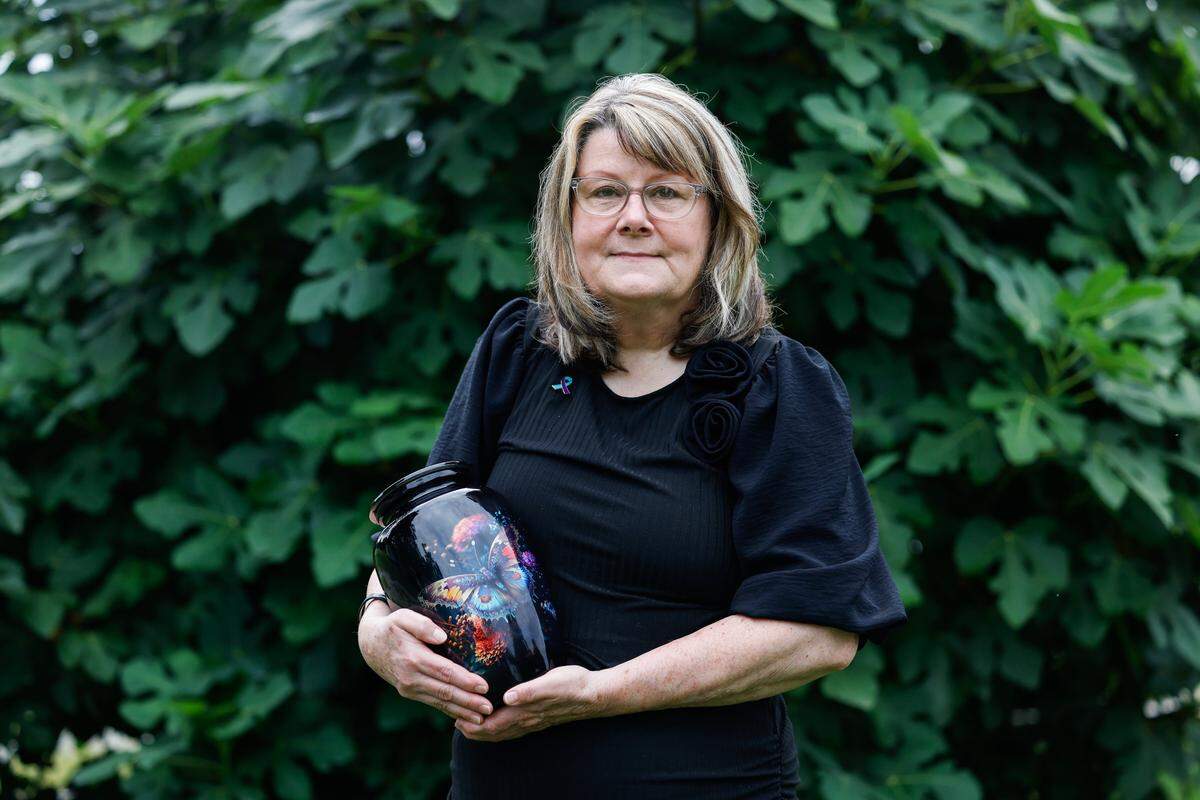
Her arrest brought family members some hope that she could turn her life around.
“It was honestly kind of a relief when she got arrested because we were like, ‘Oh wow, you know, she’ll be locked up,’” Shayna said. “Hopefully she could have a straight mind and we could go and talk to her and get her into a rehab. But I mean, six days is all it took in a jail to blow that out of the water.”
She, her husband Sam, and his mother said the jail should have reported Rachel’s death to the DHHS and faced the consequences. Lawmakers, they said, should change the law so other jails can’t hide their culpability.
“Maybe they could prevent another family from having to go through the same situation and heartache,” Sam said.
Banks’ and Robbins’ deaths were two of 62 among jail inmates during 2024 that state officials were made aware of. That’s a slight drop from the 63 inmate deaths reported the previous year, which was the first decrease after six years of rising death tolls in this state’s county jails.
The state found supervision failures in 18 of those deaths, including one in the Sampson County jail where a detention officer lied about making inmate checks, state reports say.
That’s more than a third of the deaths last year, the percentage that jails have repeatedly reached or exceeded over the past decade.
EDITOR’S NOTES: If you believe that a death of someone held in a North Carolina county jail was not reported to the Department of Health and Human Services, that information can be submitted to state officials here.
If you or someone you are concerned about is at risk of suicide, contact the National Suicide Prevention Lifeline by texting or dialing 988. Or call 1-800-273-TALK. The National Alliance on Mental Illness North Carolina also offers virtual support groups and programming across the state.
This story was originally published August 4, 2025 at 5:30 AM.