
‘We failed the most vulnerable.’ Gaston cooling station flop exposes bigger problems
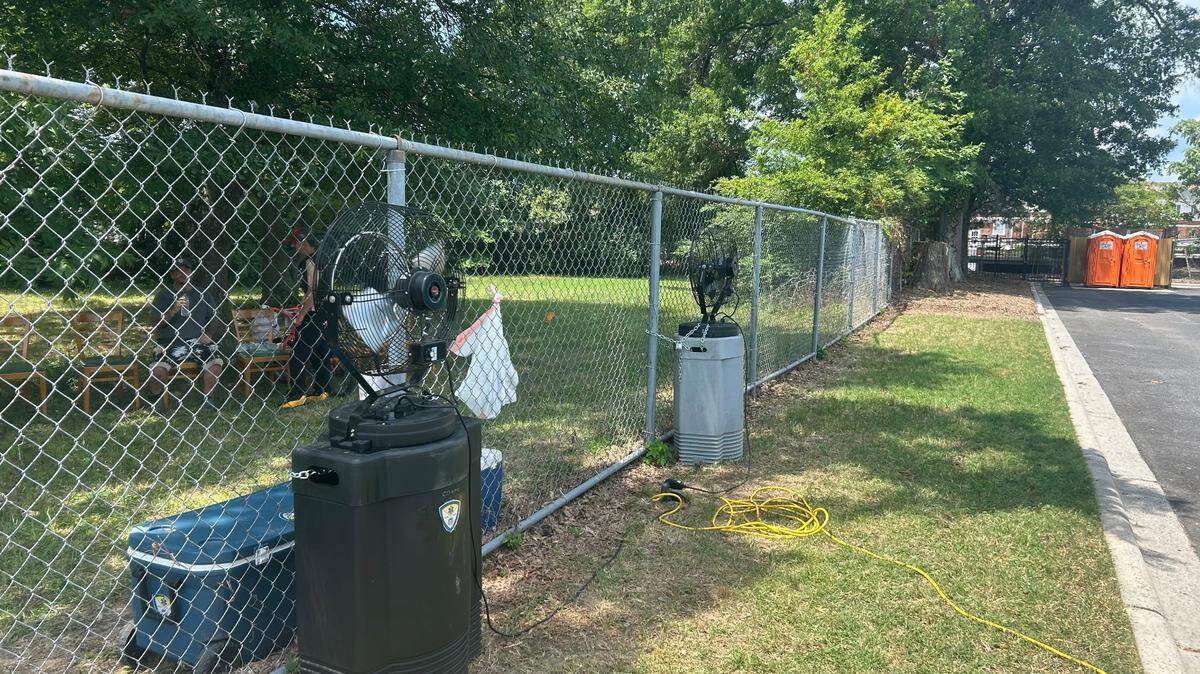
The image of two fans, a cooler of water bottles and 10 chairs resting beneath a tall tree has been cemented into the minds of Gaston County residents and public officials alike over the past few weeks.
This outdoor cooling station, intended to provide a space for the homeless and others without adequate air conditioning to beat the heat, was condemned almost immediately by residents, a council member and the mayor as unacceptable.
In the wake of the backlash, Gastonia opened a cooling station inside the former Salvation Army building that is now owned by the city. But the next day, at the direction of city staff, volunteers were told they could no longer be in the building. That sparked more outrage and confusion.
The dispute led to heated Facebook Live videos from Councilwoman Cheryl Littlejohn denouncing the set up, tense City Council meetings and finger pointing from Gastonia Mayor Richard Franks at the lead agency of the continuum of care, HealthNet Gaston.
On July 15, the City Council voted to open the indoor cooling station only when the temperature reaches 95 degrees or higher, a decision Littlejohn said is insufficient.
The contention over the past few weeks has exposed that there is no clear leader providing support for Gaston County’s unhoused. The county, city and HealthNet Gaston all play a role, but some acknowledge they aren’t communicating well. This leads to half-baked plans, dysfunction and the unhoused community paying the price.
“We failed the most vulnerable,” Littlejohn, the Gastonia Ward 4 council member, said. “We did not have a plan. We were ill prepared.”
Where is HealthNet Gaston?
As scrutiny about the outdoor cooling station flared online, Franks partially shifted the blame onto the nonprofit HealthNet Gaston.
During a July 3 emergency City Council meeting called by Franks, the mayor referenced a January meeting where he instructed HealthNet Gaston to have a plan to support the unhoused in the summer.
“People aren’t doing their jobs, [yet] they get paid out of our budget to be the lead agency,” Franks said during that meeting. “They have failed the citizens of Gastonia.”
Franks did not return calls and a text from The Charlotte Observer before this story’s publication.
But at the following council meeting on July 15, the mayor took back his words and admitted his assumption that HealthNet Gaston was supposed to be in charge of organizing the cooling station was ill informed.
“It is a collaborative effort,” he said. “We need to have more than one meeting a quarter… so this doesn’t happen again.”
According to the organization’s website, the goal of the continuum of care is to prevent, address and end homelessness in Gaston, Lincoln and Cleveland counties.
While HealthNet Gaston does receive money from the City of Gastonia, it does not receive taxpayer dollars, city spokesperson Dandria Bradley and City Council members said. The money HealthNet Gaston receives is earmarked federal Community Development Block Grant funds that are required to go to the organization the city selects as the lead agency. Last year the city gave HealthNet Gaston $65,000.
The Observer reached out to HealthNet Gaston’s executive director, Crystal Walls, and the organization’s tech advisor, Carson Dean, but received no response.
Councilwoman Littlejohn, however, still wants to see HealthNet Gaston take some responsibility.
“If they were the lead, I want to see them leading,” she said of HealthNet Gaston. “Because they received money from the city. Now I know that they have other municipalities than the city of Gastonia, but we don’t have to be in this position. We chose to be in this position... Make people be accountable for what they are paid to do.”
Who is the lead?
Reflecting on the confusion of the past few weeks, public officials agree on one central point: they have to find ways to better work together.
Gaston County is happy to provide support and resources, county Chairman Chad Brown said, but it can’t take the lead because the county doesn’t have the authority to tell municipalities what to do in their jurisdictions.
Because of the complexities of jurisdictional lines and potential liabilities, it would be difficult for one entity to take the lead on efforts like a cooling station or warming shelter in the winter, council member Koutsoupias said.
“It’s very complex to say, ‘Hey, we should be the lead.’ Or the county should be the lead. I think there’s multiple players, and I think they all should be chipping in to the best of their ability. And legally, as far as the liability, because the last thing you want … is something negative happens, and then who’s responsible? Is it that nonprofit? Is it the city? Is it the county? Is it who was inside (the building). You know, there’s so many pieces of it.”
Ward 5 council member Jennifer Stepp said she wants the city and county to meet more regularly to hash out details on how to support the most vulnerable before summer and winter arrive. Right now, the city and county don’t have scheduled times to meet throughout the year, she said.
While conversations get heated, Stepp says that at the heart of it is a passion for the community.
“I just don’t want anybody in the community to think that because somebody might not be as vocal publicly on social media that doesn’t mean they don’t care,” she said. “I think it’s very important we don’t let our different ways of solving solutions cause division, because then nobody wants to come to the table and work together.”
More seats at the table
With more discussion between the city and county, Tasha White, director of the nonprofit HELP Carolina, hopes more room is made at the table for organizations like hers.
The current model needs to change, she said. Right now conversations happen with a top down approach. But starting with nonprofits who are on the ground everyday can help ensure the most pressing needs for the vulnerable are met.
“Collectively, we can put our minds together and come up with a viable solution for everybody… so this never happens again,” she said. “If you only have a couple of people from the city, a couple of people from the county, and a couple of people from a broad organizational base, I think it just leaves out some key partners.”
On the first day that the indoor cooling station was open, White said her organization was able to connect with six families. It’s not just providing a cooling station, but ensuring the people who show up have the opportunity to be connected to resources.
“Every community wants people to be sustainable and not dependent. But if you’re only giving me water when I need water, and I could also use a resource… are you promoting dependency, or are you promoting sustainability?” White asked.