
‘This can’t happen again’: NC farm boy dropped atomic bomb on Japan 80 years ago
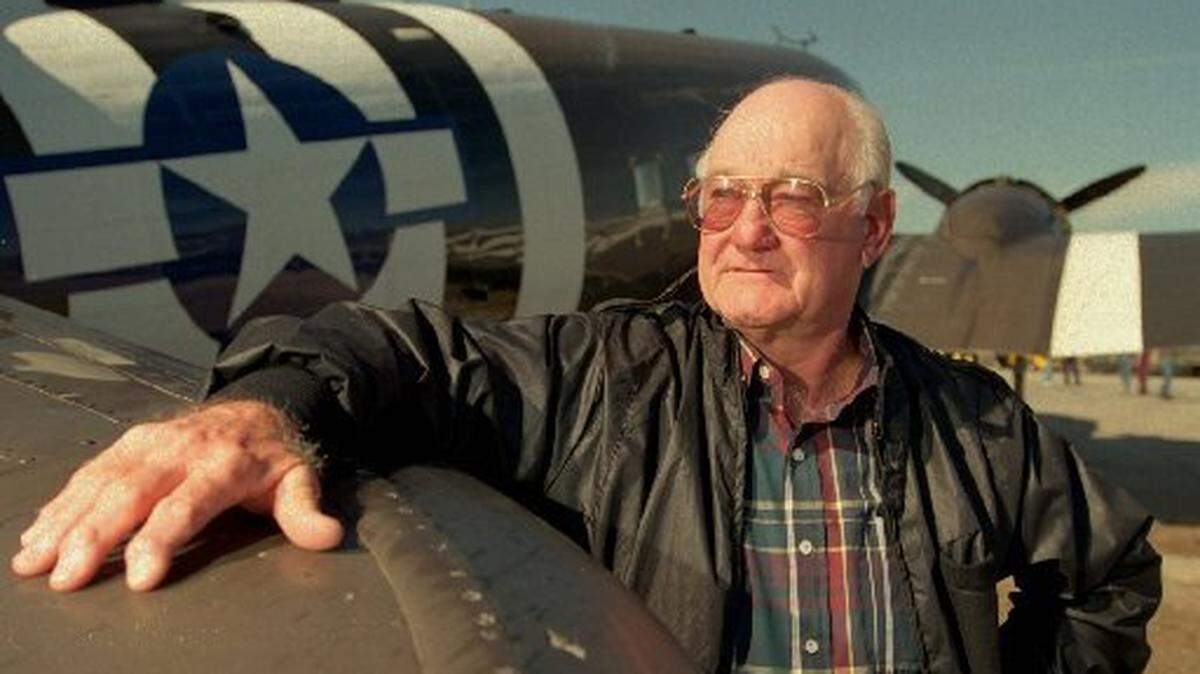
Editor’s note: This story first appeared in The Charlotte Observer on Aug. 6, 1995, the 50th anniversary of the dropping of the first atomic bomb. Wednesday, Aug. 6, 2025, is the 80th anniversary. Ages and references to what people were then doing were accurate when the story first ran in 1995.
Strapped into the nose of the cigar-shaped B-29, Tom Ferebee squirmed in his seat as the drone of the bomber’s four engines untangled his thoughts.
He was only 26, but already an Army Air Corps major and a bombardier with 64 missions. And when he swapped tales of hunting rabbit and raccoons back in North Carolina, it was in a rural Davie County accent so countrified his Army buddies called him “Coon.”
Now here in the early hours of Aug. 6, 1945, with World War II raging in the Pacific, Coon Ferebee and the other 11 on board — most in their 20s — were churning 345 degrees northwest, on a heading to change the course of history.
For 11 months, they’d trained for this one mission, code-named Silverplate. All they’d been told was their plane carried a bomb — dubbed “Little Boy” — that would be more destructive than anybody could imagine.
And it would end the war.
Only Col. Paul Tibbets, the pilot, and two naval officers who’d armed the bomb knew what terrible “top secret” power lay inside the overripe payload shackled securely in the plane’s bomb bay.
But as the Superfortress Enola Gay pushed toward Hiroshima, Japan, Tibbets climbed out of his seat to check on his men and out of a sudden impulse divulged the secret: Little Boy was atomic.
Tom Ferebee, the man who would aim this bomb at Japan, didn’t hear him.
As was his habit on the way to targets, he was sleeping.
Who would have thought it? Thomas Wilson Ferebee, from little Mocksville, a war hero? Sure, he was a star athlete, no argument about it, a local legend, but a history-maker?
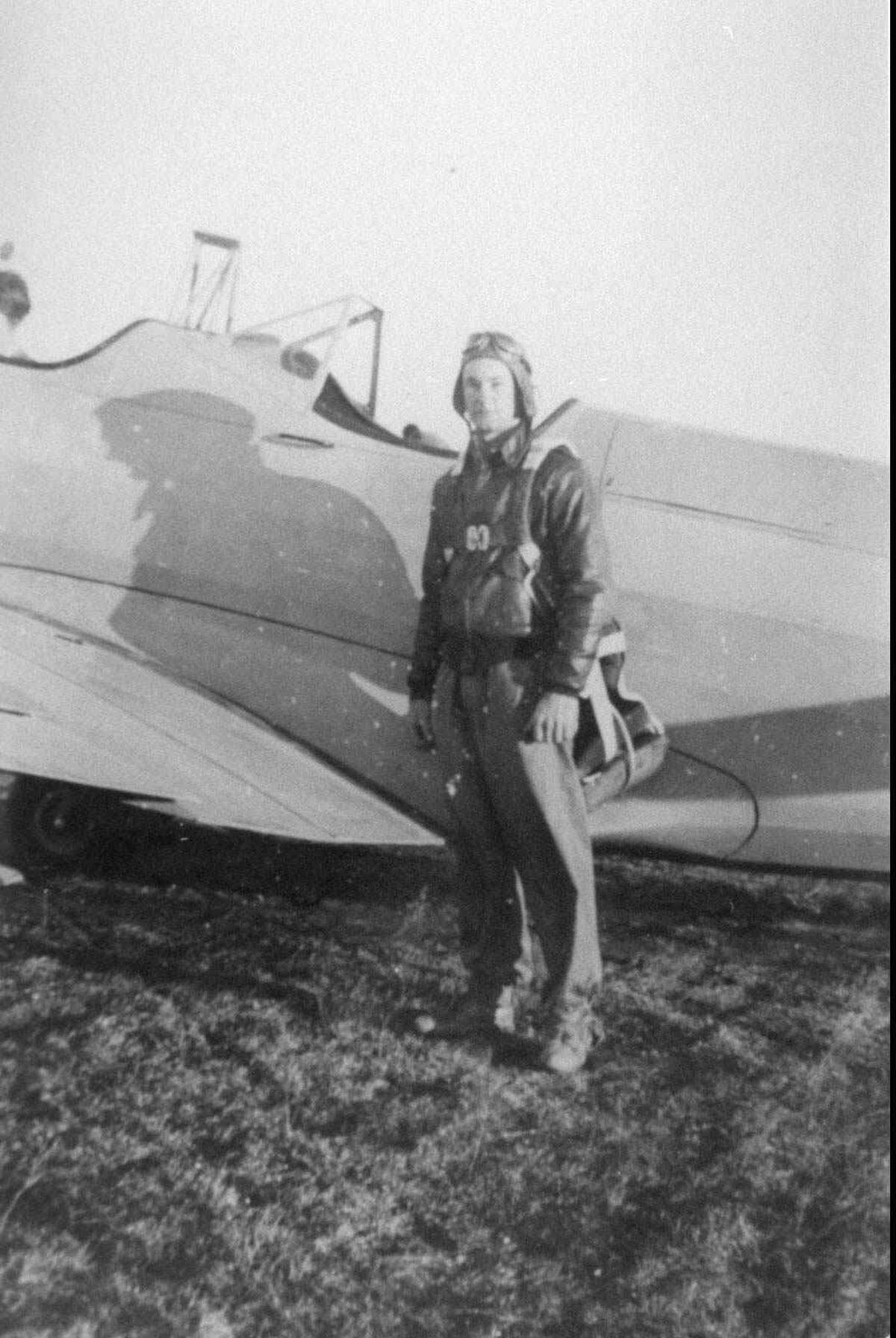
He was just a country boy, the third oldest of Flavious and Zella Ferebee’s 11 children, when he left the family farm to join the Army Air Corps in 1940 — a year before the Japanese attacked Pearl Harbor and drew America into the war.
All he’d known was the farm and sports. With a government loan, his father bought 150 acres outside Mocksville. He grew tobacco, cotton and corn and moved his large family into a farmhouse with a sweeping porch where they could swat at flies and stay cool on summer nights.
Farming gave Tom a chiseled, muscular body and a resolve not to stay behind a plow.
At Mocksville High School, he played several sports: football, basketball, track and baseball. Summers, he’d pitch or play outfield for the mill teams.
On the football team, he was a fullback who ran over tacklers or up the back of his younger brother Bill, a guard, to leap over the goal line.
His senior year, against China Grove High School, two opposing linemen decided to get Ferebee. When Tom leaped for a pass, one hit him high, the other low. As he came down, his left leg twisted under him, tearing knee ligaments. The injury would come back to haunt him.
Deep into the Depression, he left home for Lees-McRae College in Banner Elk, lettering in football, basketball and track. “All that came with a price; I never got much of an education,” says Ferebee, now 76 and retired outside Orlando, Fla.
Didn’t matter then: His dream was to play professional baseball. In the spring of 1939, he caught a bus for Albany, Ga., and a tryout at the St. Louis Cardinals’ camp. The coaches told him to get more experience. So he returned to Lees-McRae and graduated in 1940, but he didn’t return to pro baseball. War loomed. So he caught another bus, this time to Charlotte to join the Army.
He wanted to be a pilot, an officer. He enrolled in aviation cadet school but failed pilot training in Texas. Ferebee’s instructor called him a hot-dogger — trying maneuvers the plane couldn’t perform. Something else happened that sent him to bombardier school: His high school injury flared up. At high altitudes, his knee stiffened, and he had trouble working the plane’s rudder pedals.
So off he went to become a bombardier, first at Maxwell Field in Montgomery, then at Albuquerque, N.M., and soon Tom Ferebee distinguished himself in the nose of a bomber. At 12,000 feet, he could hit his target within 500 feet. He quickly was promoted to instructor. “He was clearly among the top of the class,” says bombardier school classmate Harry Booth, whose father owned the Packard dealership in Charlotte.
“He had the eyes and head for it. He was calm in action.”
The day the two graduated, they left in Booth’s Packard convertible as second lieutenants for Sarasota, Fla., and the newly formed 97th Heavy Bombardment Group. Ferebee was assigned to the 340th Squadron, Booth to the 342nd.
Soon Ferebee met a young captain named Paul Tibbets, his squadron leader. From the start, Ferebee saw in Tibbets a decisive leader who treated his men like brothers. And man, could he work the controls. He was accurate, hard to rattle.
Tibbets, too, admired Ferebee’s knowledge of ballistics and the influences of wind on the flight of bombs. He wasn’t loud or showy, like many of Tibbets’ fliers.
Tibbets assigned Ferebee to a B-17 piloted by James Durwood Rockett, himself a North Carolinian from Conover who was 23 and had flown B-17s a mere 35 hours.
“For most of us, our training was OTJ, on the job,” Ferebee says.
The training had no routine. “We’d get these dummy bombs, and we’d load them and go out and practice,” says Rockett, now of Charlotte. “We’d get up and decide on a target and see how close Tom could get to it. Sometimes they were porpoises or sea turtles in the Gulf of Mexico, but I don’t remember him hitting a one.”
In June 1942, Ferebee, Rockett and Booth shipped out to England, as the 97th reassembled at Polebrook air base, north of London.
Soon Rockett was transferred to Wales. Tibbets took over his plane. And from Polebrook, he led the first daylight bombing of occupied Europe. For 30 missions in Europe and North Africa, Ferebee was his bombardier and Theodore “Dutch” Van Kirk his navigator.
In the B-17, the bombardier and navigator sat together in the nose, a 5- by 7-foot space with two seats, a Norden bombsight and a .50-caliber machine gun. For hours to the target, Ferebee spun tales of home.
“He’d tell me all about the prowess of these people from Davie County, including him and his family, and how they were these great hunters and outdoorspeople,” says Van Kirk, who now lives in California and in the 1970s lived in Charlotte. “And I thought, How lucky could I be? I’ve got this hotshot marksman with me here in the nose of this B-17.’
“As it turned out, we were probably the navigator and bombardier who shot the most gun ammunition in the war without hitting anything.”
After two of its planes came back shot up, the crew traded in for a third B-17, its tail number 924444. Being poker players, they liked the four fours, a poker hand you’d bet the plane on. They named it “Red Gremlin.”
In the Gremlin, they had their share of close calls. One came returning from Le Trait, France, after Ferebee and the other bombardiers had knocked out German war factories.
Suddenly from behind, the 12-plane formation was attacked by a German Messerschmitt 109 “yellow nose.” It ran through shooting — and getting shot at.
In the nose, Ferebee and Van Kirk heard screams. “I’m dying!” shouted a badly wounded gunner. Then this from Tibbets: “Tom, come up and help us!”
Ferebee crawled through a hatch to the cockpit, where he saw that a German shell had ripped through the right window. It tore off much of co-pilot Gene Lockhart’s right hand and wounded Tibbets’ left arm.
Tibbets was flying with his left hand, his right one gripping Lockhart’s hand to stop the bleeding. Suddenly a colonel, joyriding that day, panicked and reached for the controls. Tibbets told him to back off. He didn’t. So Tibbets released Lockhart’s hand and rammed the colonel’s chin with an sharp elbow. Out cold, the colonel fell back to Ferebee, who laid him on the floor.
The next mission, the 97th flew to the Messerschmitts’ home base in Abbeville, France, and “we bombed the hell out of them,” Ferebee says. “It was the most destructive daylight bombing in the history of aviation, and daylight bombing was here to stay.”
For the rest of 1942, the Red Gremlin continued to play a critical role against the Germans. It flew Gen. Mark Clark — who would later head The Citadel — to secretly meet with the French Resistance for their cooperation in the invasion of North Africa.
Then on Nov. 6, it flew another general to command the operation. His name was Dwight Eisenhower, then with three stars.
Next, Tibbets took his squad to Algiers in northern Algeria and, awaiting new orders, grew restless. He offered his services to a British air force officer, who accepted: bomb Bizerte, the Tunisia seaport where German reinforcements were pouring in.
From the docks, they fetched as many 5-gallon cans of fuel as they could and loaded up British bombs. Van Kirk led the planes to the Bizerte targets — using a Standard Oil road map.
At the end of 1942, the Red Gremlin’s crew broke up. Tibbets was transferred to 12th Air Force headquarters in Algiers, then back to the States to test the new B-29 bomber. Van Kirk was sent home in May 1943, after 58 missions and assigned to an Army Air Corps navigation school.
Ferebee continued to fly. In May 1944, after 64 missions, Ferebee, promoted to major, was sent home too, carrying a note recommending him for another shot at pilot school.
He delivered the note to Gen. Hoyt Vandenberg in Washington. The general balked: “You’ve washed out once, and it will take some time. Besides, your name’s been mentioned for something else. But I can’t tell you about it.”
He sent Ferebee to Miami for R&R. There, he and a friend rented a house: “It was a three-bedroomer, and an open house 24 hours a day,” he says. “. . . I was 25, a major, and had just returned from 64 missions overseas. So you can use your imagination about what kind of time we had.”
A month later, the fun ended. He got orders to move again, first to Texas, then Oklahoma — never even sitting in a plane. Then orders came to report to Nebraska and a bombing group going overseas, but an hour later a “top secret” telegram arrived from Washington.
With the highest urgency, Ferebee was to go to Wendover Air Base, a fighter base in the Utah desert. And he was to tell no one.
Before leaving, Ferebee called his parents at the farm: “My work is sacred. I can’t discuss it with you. Some day you’ll maybe hear about it through the newspapers.”
But where are the planes?
In a Buick convertible he’d bought in Mocksville on the way to Miami, Ferebee drove for two days, up from Oklahoma, across the Utah salt flats from Salt Lake City, to a godforsaken patch of desert near the Nevada line. It was early September 1944, and from a distance through the shimmering desert haze, Wendover looked like an ordinary base, with five hangars, a tower, barracks, a chapel, an officers’ club and a gym.
But as hard as Ferebee looked, he couldn’t find a single plane.
He drove on in, and down the flight line, where all the planes should have been parked. Nothing.
“Boy, have I been shafted. Why did they bring me here?’ “ he thought.
He wandered into the base commander’s office and found a lieutenant and secretary pushing papers. “My orders are to report here,” he told the lieutenant. “I’d like to see the base commander.”
“I’m sorry, sir, you can’t right now. They’re all in a briefing. But you can sit and wait.”
After an hour, as Ferebee grew increasingly impatient, a door opened and out peered a familiar face. It was Paul Tibbets.
“What the hell are you doing here?” Tibbets asked gruffly.
“The question is what are you doing here?” Ferebee replied.
Tibbets knew why Ferebee was there. He had spent the last 19 months testing and refining America’s newest fleet of bombers, Boeing’s high-flying, long-range B-29 Superfortress.
And now, as the United States began planning for the invasion of Japan in an all-out effort to end World War II, Tibbets had been given a new assignment.
He was attached to the ultra-secret Manhattan Project, ordered by President Franklin Roosevelt in 1942 with scientists developing two designs of atom bombs that contained explosive power equal to 15,000 to 22,000 tons of TNT. They called the bombs “the gadget” as they raced the Germans for the weapon.
The bombs wouldn’t be ready until summer 1945, and the United States was prepared to drop them on Japan to force its unconditional surrender and save lives.
Until then, they needed an experienced combat pilot who knew the ins and outs of the B-29 to come up with a means to deliver the bomb — and then deliver it without blowing up the crew.
Tibbets fit the job requirements.
He assembled 15 B-29 crews that made up the 509th Composite Group. The 509th was given top-rank authority. Just flash the code-name “Silverplate,” and they’d get what they needed.
Immediately, Tibbets gave Washington a name: Maj. Thomas Ferebee.
On that day in September, Tibbets told Ferebee what he could about the bombs, and this: They would destroy everything within 5 miles.
Ferebee was stunned: “That’s a big bang, Paul!”
Tibbets said he was recruiting crew members and asked for suggestions. How about Dutch?” Ferebee asked, referring to navigator Van Kirk. He also suggested Kermit Beahan, a bombardier they’d known in Europe.
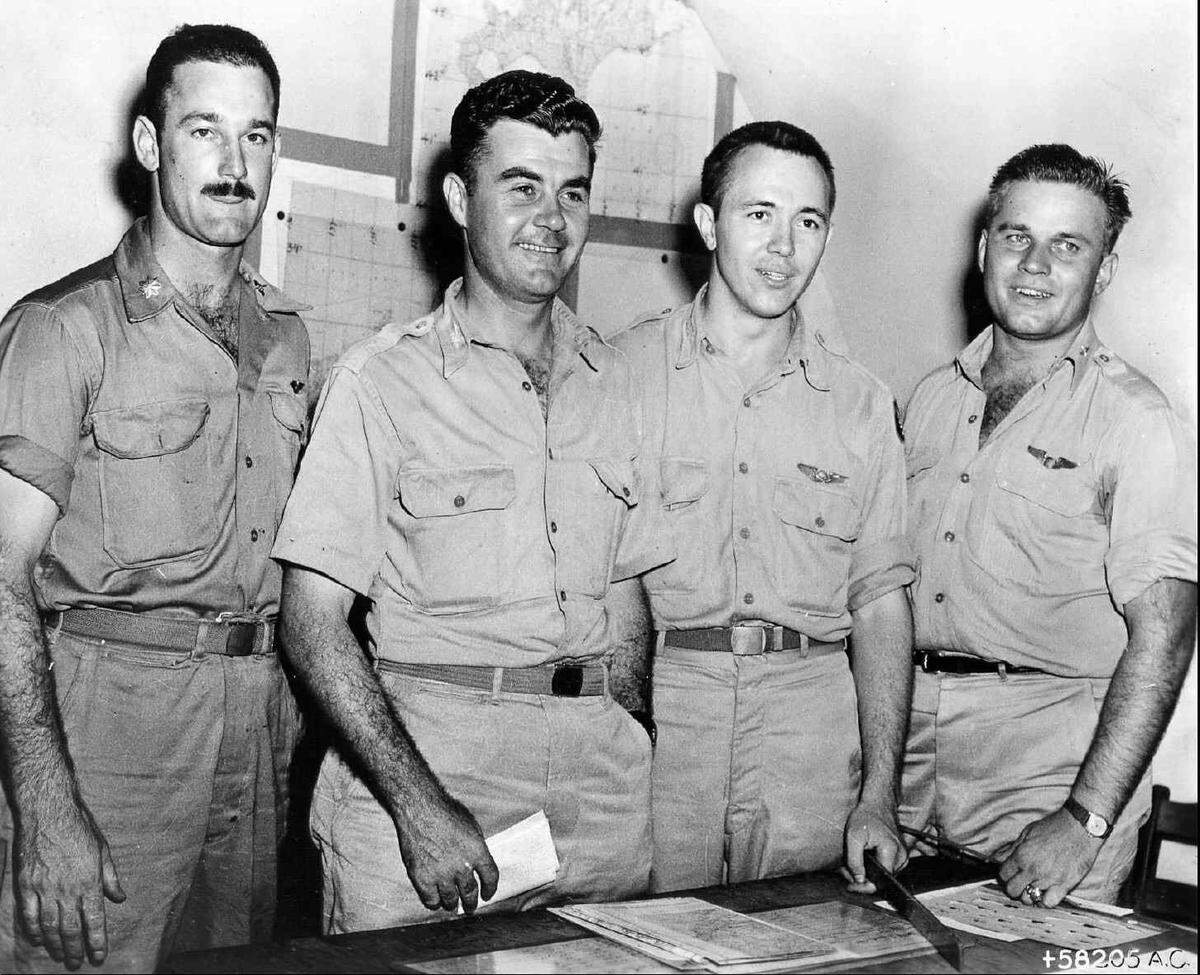
Within days, the crews began arriving. Then came 15 new B-29s. On Dec. 17, 1944, the 509th was activated with 225 officers and 1,500 enlisted men.
Tibbets told them all: Don’t ask questions and don’t talk about the mission. Signs everywhere read: “What You Hear Here, What You See Here, When You Leave Here, Let It Stay Here.”
Bombing practice began quickly — all at 32,000 feet. To gain altitude, Tibbets found ways to trim weight from the B-29, like removing all the guns but two 20mm tail guns.
Ferebee and Van Kirk rarely flew, but stayed on the ground, supervising and analyzing practice runs. Much of the time, they traveled with Tibbets, to Washington or to New Mexico, where in Los Alamos the scientists were figuring out how to bring two spheres of uranium-235 together with enough velocity to produce an atomic explosion.
That ultimately led to a tug-of-war between the atomic experts and ballistics experts. Little Boy’s detonation mechanism was simple. Down a cylinder a uranium particle was shot at a tremendous speed to hit a larger mass of uranium and start a chain reaction. To get that speed, the atomic scientists started with long cylindrical bombs, but Ferebee and ballistics experts found that the length hindered an appropriate nose dive for accurate bombing.
They’d recommend new shapes. With each modification, a new dummy bomb was built by an ordnance squadron commanded by Charlie Begg, whose father was a Charlotte jeweler. Then Ferebee would drop it and help the scientists analyze ballistics.
“The first bomb I dropped looked like a telephone pole,” Ferebee says. “It had no ballistics and fell to the ground end over end. Each time we developed a new bomb, it was shorter.”
Tibbets never let on about the bomb. But there were clues. Throughout the year in Wendover, scientists were in and out to witness tests and modify bomb shapes. Those who’d taken physics or chemistry recognized Robert Oppenheimer, the physicist who led the project’s team of scientists, or physicist Norman Ramsey, then only 29, who’d been on Time magazine’s cover as a promising young scientist.
“You start putting a little information together, and after a while you arrive at an accurate conclusion,” says Van Kirk. “But we all kept our mouths shut.”
Ferebee never knew: “I didn’t have the background.”
After several months in the desert, Tibbets’ men were growing edgy. A weekend leave in Salt Lake City ended in broken windows, traffic tickets and police complaints.
It was time to leave for Tinian, the North Pacific island 1,500 miles south of Japan where the A-bomb mission would be staged. Tinian was one of the Mariana Islands captured with Guam and Saipan during the bloody island-hopping campaign toward Japan. Preparing for the invasion of Japan’s main islands, Navy Seabees had turned it into the world’s largest airport.
The ground staff began leaving May 6, 1945, the day before Germany surrendered, nearly a month after Roosevelt died and a new president was sworn in.
In June, Ferebee flew in with the bomb squads. The day Dutch Van Kirk left the country, June 25, his wife, Mary Jane, delivered their first child.
It was a boy. They named him Tom — after Tom Ferebee.
*
Truman’s choice: No warning
By then, the Manhattan Project’s cost had mounted to $2 billion. Some scientists and members of the intelligence community thought Japan was beaten and would surrender, bomb or no bomb. While he was home in Spartanburg, Secretary of State James Byrnes was visited by three Manhattan Project scientists. They pleaded with Byrnes and other leaders not to drop the bomb. It would surely start a nuclear arms race.
With Byrnes, they were wasting their time.
So, too, with the new president. From his advisers, Harry Truman had heard the options debated: Don’t drop it, or demonstrate the bomb without dropping it on a city, or give prior warning, or do it with no warning.
Like Roosevelt, Truman embraced the A-bomb project. He quickly made his decision: Drop it on Japan — no warning.
The military planned to unleash it between Aug. 5 and 10.
On July 23, Tom Ferebee dropped a Little Boy test bomb off Tinian as the plane rehearsed the gut-wrenching 155-degree right bank necessary to escape the blast.
Three days later, the heavy cruiser USS Indianapolis arrived with the A-bomb’s gun assembly. The uranium would be flown in by transport planes. At the Potsdam Conference in Germany, Truman and other world leaders issued an ultimatum to Japan: Surrender or suffer total destruction.
On the 29th, the day the uranium arrived, Navy Capt. William “Deak” Parsons — who’d overseen the bomb’s production — asked for the OK to drop the bomb the first clear day after Aug. 3.
Just after midnight the next day, 450 miles from Tinian, a Japanese submarine fired on the Indianapolis. It sank in 12 minutes; 880 men died.
If they needed it, the sinking gave Tom Ferebee and the others more resolve.
“There was no way I wasn’t going to do anything that they asked me to do,” Ferebee says. “Whether you kill one or 5,000, you’re trying to end the war.”
*
Finishing the target list
August arrived stormy in Hiroshima. The city of 340,000, on Japan’s southwest coast, became the prime target because it had gone virtually untouched by conventional bombing. Kyoto had been atop the list, but it was a Japanese religious and cultural center, not a war center. It was removed and Nagasaki added.
Weather forecasters predicted clear skies Aug. 6. Parsons set the mission for that day.
On Aug. 4, seven B-29 crews gathered for a briefing. Tibbets announced the target list. Two other B-29s would fly with B-29 No. 82. One would measure the bomb’s shock waves; the other would photograph the explosion.
Next, Parsons said he would be on board for the first strike. He passed out photos fresh from the desert test site near Alamogordo, N.M., where “Fat Man” — which used plutonium instead of uranium — was exploded from a 100-foot tower. The fliers all marveled at the mushroom-shaped cloud from the bomb’s explosion, which rose 40,000 feet.
That explosion was preceded by a flash of light that could be seen 10 miles away. A blind girl in a nearby town saw it. People 50 miles away heard it.
Still, Parsons never mentioned the word “atomic.”
That night, a B-29 loaded with mines crashed taking off from Tinian. Tibbets and Parsons, concerned about Little Boy’s 9,000 pounds, decided Parsons would arm the bomb after takeoff. “If we crashed, there was a concern about radiation,” Ferebee says.
The next day, Aug. 5, the forecast confirmed clear skies.
Early afternoon, Tom Ferebee wandered to a building known as the “tech area” to watch technicians finish Little Boy’s assembly. The bomb would never be tested; they didn’t want to waste precious uranium-235. It was simpler to use, so it was chosen for the first strike.
No one knew if it would work.
The technicians wrapped the bomb in canvas, and Ferebee helped them trailer it to what has become known as Atomic Bomb Pit No. 1. There, No. 82 waited, shielded by a curtain, and at 3 p.m. the blunt-nosed bomb was loaded into the plane.
Technicians scribbled messages on the bomb. One read: “From the Boys of the Indianapolis.”
Shortly after, Tibbets pulled Ferebee and Van Kirk aside. He wanted the plane to have a name and asked them what they thought about naming it for his mother.
“That sounds great as far as we’re concerned,” Ferebee told him. Van Kirk agreed.
So Tibbets called for a sign painter. Minutes later, the painter, pulled away from a softball game, painted E-N-O-L-A G-A-Y, in straight, foot-high letters at a slight angle below the window from where Tibbets would fly the plane.
The decision angered pilot Bob Lewis, who had flown the plane during most of the training. He’d hoped to be the Hiroshima pilot.
“He saw the plane with Enola Gay painted on it and said, Who in the hell painted that on my plane?” Ferebee recalls. “He always considered the plane and crew was his. But for that mission, it wasn’t his.”
Lewis would be co-pilot.
About midnight, Tibbets ran the final preflight briefing. The target in Hiroshima that Ferebee picked was the Aioi Bridge. It was ideal, Tibbets said, approached by a smaller bridge from the south, forming a T, with the Aioi Bridge at the top.
“Our long months of training are about to be put to the test,” Tibbets said. “. . . Upon our efforts tonight it is possible that history will be made.”
At 1:15 a.m., after a breakfast of eggs and sausage and Tibbets’ favorite, pineapple fritters, a truck picked up the Enola Gay’s crew and took it to Tinian’s four runways. When they arrived, all the B-29s but one had been moved to the southern runway. Three runways away, the Enola Gay stood alone. The truck pulled up, and suddenly the crew was surrounded by cameras, lights, photographers and scientists.
The crew assembled next to the Enola Gay’s bomb bay for a photograph, all dressed in green flight coveralls, Tibbets, Ferebee and Van Kirk standing together in the back row.
Afterward, for no particular reason, Ferebee went to check on the bomb. As he did, Ed Doll, one of the Manhattan Project scientists, approached.
“Tom, it hasn’t been tested,” Doll said. “But it will work.”
All this time, Ferebee hadn’t believed that one bomb could cause all that destruction — until he saw the photos of Fat Man. “Ed, I didn’t believe you guys several months ago,” Ferebee said. “But now I’m convinced. Let’s hope it does what it’s supposed to do — and end this damn war.”
With that, Ferebee climbed into the plane with the others and strapped himself into the nose, just in front of Tibbets and Lewis.
At about 2:45 a.m., the plane, 99 feet long with 141 feet of wings, began to roll down the runway, gathering speed. Since the plane was overloaded by 15,000 pounds, Tibbets decided on an unorthodox takeoff, holding the plane on the runway until the last several feet to build speed and to avoid the island if it crashed. He didn’t tell anyone. He didn’t want any argument.
“Lewis kept trying to lift it off,” Ferebee says. “And Paul would shout, Keep your damn hands off (the wheel), I’m flying this plane.’ At the very end, Paul lifted off.”
Tibbets took the Enola Gay up to 5,000 feet. Then Parsons and a young assistant armed the bomb.
It took 20 minutes. “From there on, it was a normal flight,” says Ferebee, who watched the arming. “The easiest one I ever had. It was a beautiful, cloudless day.”
He returned to his seat and took a catnap.
The Enola Gay flew to Iwo Jima, 3-1/2 hours away, circled once and rendezvoused with the photo and gauge B-29s. Then Van Kirk put the three planes on a 345-degree northwesterly heading for Hiroshima. The planes began to climb to bombing altitude, 32,000 feet.
From 60 miles out, Ferebee could see the city in his bomb sight. Van Kirk changed the heading to 270 degrees, a left turn due west. Fifty miles out, Ferebee could see the target: “All I had to do was sit there and wait. Dutch had us going straight for it.”
Forty miles out, two minutes to the target, Tibbets turned the plane over to Ferebee on autopilot. His crosshairs were on the target.
His right eye peered into the viewfinder. He turned knobs and dials to synchronize the crosshairs. He could clearly see the target, in a vast green delta where several brown rivers met. “It was kind of like the wrist of a hand.”
From the ground, the Enola Gay was a speck in the air 6 miles above, streaking at 250 mph.
“We never met any resistance,” Ferebee says. “The Japanese were used to weather planes flying high.”
As the target approached, his left hand rested in a loop of a cable Ferebee had wired from the nose through the plane to the bomb bay’s release. The bombsight’s electrical system was designed so that once the target was square in the crosshairs, the bomb bay doors would automatically open, releasing the bomb. But the instant the system engaged, Ferebee pulled the cable 4 inches straight out to ensure the release. They were 6 miles from the target, as Ferebee and a scientist had decided.
The 15-foot-long doors snapped open, and the plane, having shed 9,000 pounds, lurched up 10 feet. “Bomb away!” Ferebee shouted.
Instantly, Tibbets threw the plane into a 155-degree right turn, just as they’d practiced.
All the crew members but Tibbets and Ferebee lowered smoked goggles. Tibbets had to fly the plane; Ferebee wanted to see the bomb clear the plane.
Through the nose, Ferebee watched the bomb fall. “It porpoised a little bit, then just straightened out. I watched until it was well on its way.”
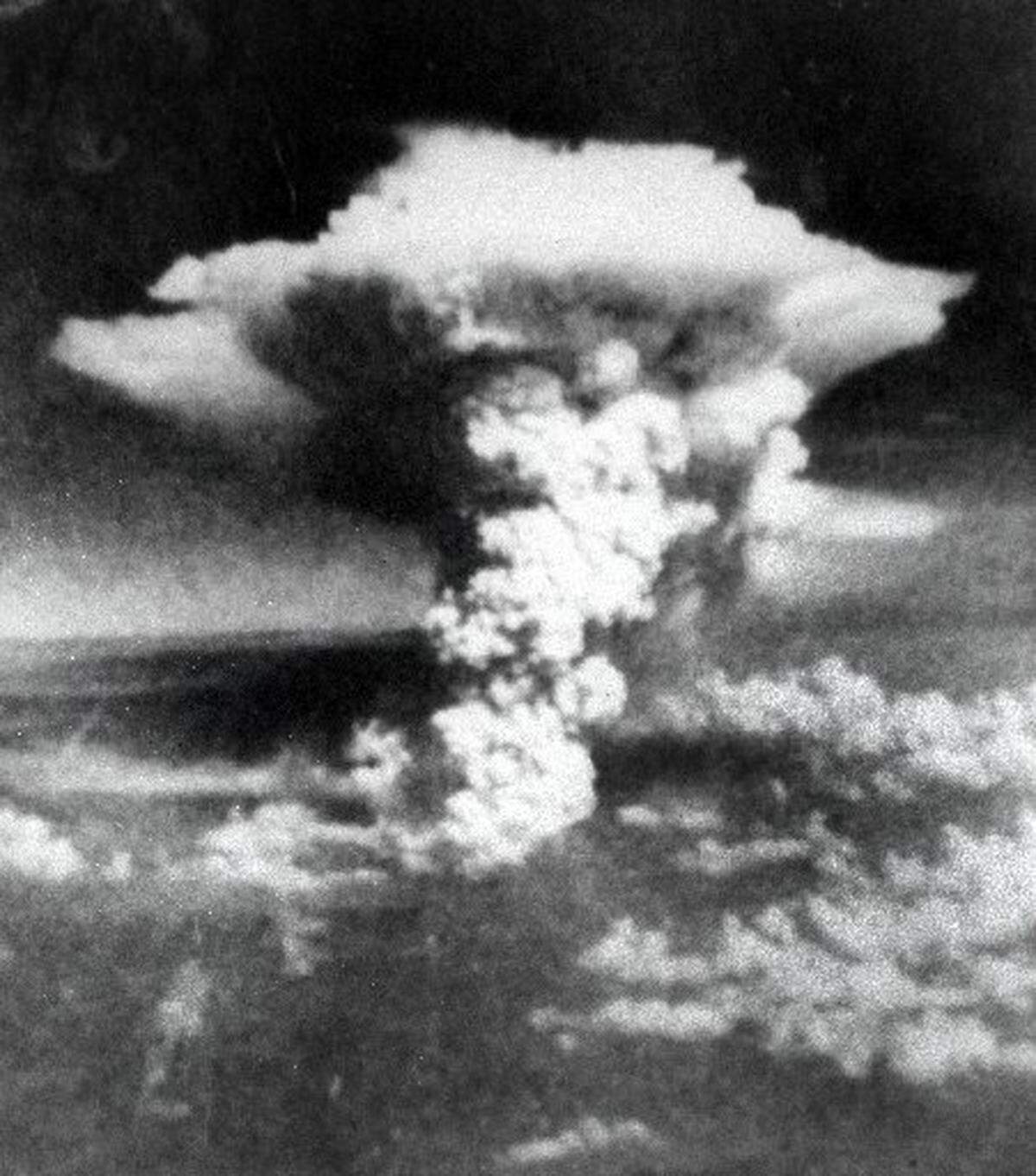
Suddenly, 43 seconds later, the sky cracked open and light came screaming out in a primeval flash of energy. The bomb had worked — exploding 1,890 feet above ground for maximum impact.
It was 8:15 a.m. Hiroshima time. By then, the Enola Gay was 12 miles away, its tail to the explosion. But the incandescent flash brighter than 100 suns lit up the plane’s inside, temporarily blinding Ferebee.
A few seconds later, the plane jerked, like it was hit by flak, then jerked again. “Paul, they’re shooting at us!” Ferebee shouted. No, Parsons told them, they were feeling the bomb’s shock waves. As the Enola Gay retraced the route away from Hiroshima, Tibbets briefly turned the plane slightly south so the crew could see the explosion.
“The ground was like boiling tar, just a mass of rubble flowing in all directions toward the docks and toward the mountains,” Ferebee says. “The stem of the explosion was 25,000 feet high at that time. And there were parts of buildings, all colors — browns, reds, whites — going up that stem. It ran up to about 35,000 feet, and it formed a cloud. The top of the cloud was about 45,000 feet.”
Three hundred and thirty miles later, the explosion disappeared from sight.
In an office on Guam, an island just south of Tinian, Mac Nodine, a 21-year-old pilot for Gen. Tom Power, heard the Enola Gay’s radio message come in: bomb a success.
Nodine, now 71 and a Charlotte builder and retired minister, dropped his head. “Oh my God, what have we done?” he said to the others, pausing, then adding: “No problem, fellows. They bombed Pearl, and they were going next to Washington, and then to Greenville, South Carolina, my hometown.”
On Tinian, waiting for the Enola Gay’s return, a crowd of generals and admirals had gathered. As soon as Tibbets climbed from the plane, a Distinguished Service Cross was pinned to his coveralls. The rest of the crew got Silver Stars.
When Ferebee climbed down, a brigadier general cornered him.
“Major, may I talk to you about the bomb?” he asked Ferebee.
“Sure, you’re my boss,” Ferebee joked. “But I don’t know if we should be.”
“That’s OK, major, you can talk now. The president’s already announced you just dropped the first atomic bomb.”
Ferebee stood wide-eyed: “It was the first time I’d heard that word used.”
Later, the reports came in: 4-1/2 square miles of Hiroshima’s center city was gone. In one cataclysmic moment, 80,000 died. Within a year, another 70,000 would die from the radiation.
Instantly, the world had been propelled into a new and frightening age.
Epilogue
When he came home to Mocksville after the war, Tom Ferebee went to see his old friend Harry Booth — himself just home from the war — at the Booths’ Park Road home in Charlotte.
He was a war hero, but you wouldn’t know it. “He was the same ole Mocksville country boy,” says Booth, a retired developer on Annamaria Island, Fla. “Tom’s never been a talker. He knew what he did. We all did. But he never pushed the fact that he’d done a world-shaping thing.
“Besides, we were all happy to have survived and too busy talking about what we were going to do the rest of our lives.”
Ferebee got married, and the couple had four sons. He stayed in the Air Force, testing B-47s, going to France as a NATO representative, commanding an armament electronics unit. In 1966, he was an observer for the bombing of Vietnam, and in 1969, was sent to McCoy Air Force Base near Orlando.
A year later, 30 years after entering the service, he retired a full colonel. At that time, Walt Disney was beginning to turn Orlando, a backswamp town of 10,000, into a tourist attraction.
Ferebee stayed and sold real estate.
To this day, he says he’s never felt guilt for his part in the Hiroshima bombing. He rarely thinks about it, except on anniversaries.
He and Van Kirk steadfastly believe that Little Boy — and Fat Man, dropped on Nagasaki three days later — helped end the war and saved a significant number of lives on both sides.
Days after the Japanese signed surrender terms Sept. 2, Tibbets, Ferebee and Van Kirk flew first to Hiroshima — they couldn’t land because the airport was still closed — then to Nagasaki to witness for themselves what the bombs had done. “It was in ashes; it was horrible,” Ferebee says.
But in Nagasaki, and then Tokyo, he saw gutted hangars full of kamikaze, or suicide, planes and knew then that the Japanese were poised to defend the homeland. In Tokyo, the harbor was loaded with kamikaze boats “waiting to ram into American boats.”
Now, on today’s 50th anniversary of his epochal event, Tom Ferebee ponders the complicated moral debate over the bomb’s use, and how America should observe the day:
“I’m sorry an awful lot of people died from that bomb, and I hate that something like that had to happen to end the war,” he says. “But it was war. . . . From 32,000 feet in the air, there’s no way you could tell a soldier from a woman or child on the ground.
“Now we should look back and remember what just one bomb did, or two bombs, and think about what just one hydrogen bomb would do. Then I think we should realize that this can’t happen again.”
He thinks about his brother Bill, who was in the Pacific preparing for the invasion. And he thinks about Nagasaki bombardier Kermit Beahan, who died in 1989. “It was easier when Beahan was alive,” he says. “Because there were two of us who had done it.
“Now I’m the only one in the world. It should stay that way.”
*
The Enola Gay crew
1. Maj. Thomas Ferebee
Bombardier; Mocksville, N.C.
2. Col. Paul Tibbets
Pilot; Miami, Fla.
3. Capt. Robert Lewis
Co-pilot; Ridgefield Park, N.J.
4. Capt. Theodore Van Kirk
Navigator; Northumberland, Pa.
5. Tech. Sgt. Wyatt Duzenbury
Flight engineer; Lansing, Mich.
6. Navy Capt. William Parsons
Armed bomb; Sante Fe, N.M.
7. Second Lt. Morris Jeppson
Armed bomb; Carson City, Nev.
8. Pfc. Richard Nelson
Radio operator; Los Angeles
9. Lt. Jacob Beser
Radar officer; Baltimore, Md.
10. Sgt. Joe Stiborik
Radar operator; Taylor, Tex.
11. Sgt. Robert Shumard
Assistant flight engineer; Detroit, Mich.
12. Staff Sgt. George Caron
Tail gunner; Lynbrook, N.Y.
This story was originally published August 6, 2025 at 5:18 AM.