Tommy Tomlinson, out at WFAE, on what’s happening to public media: ‘It’s terrible’
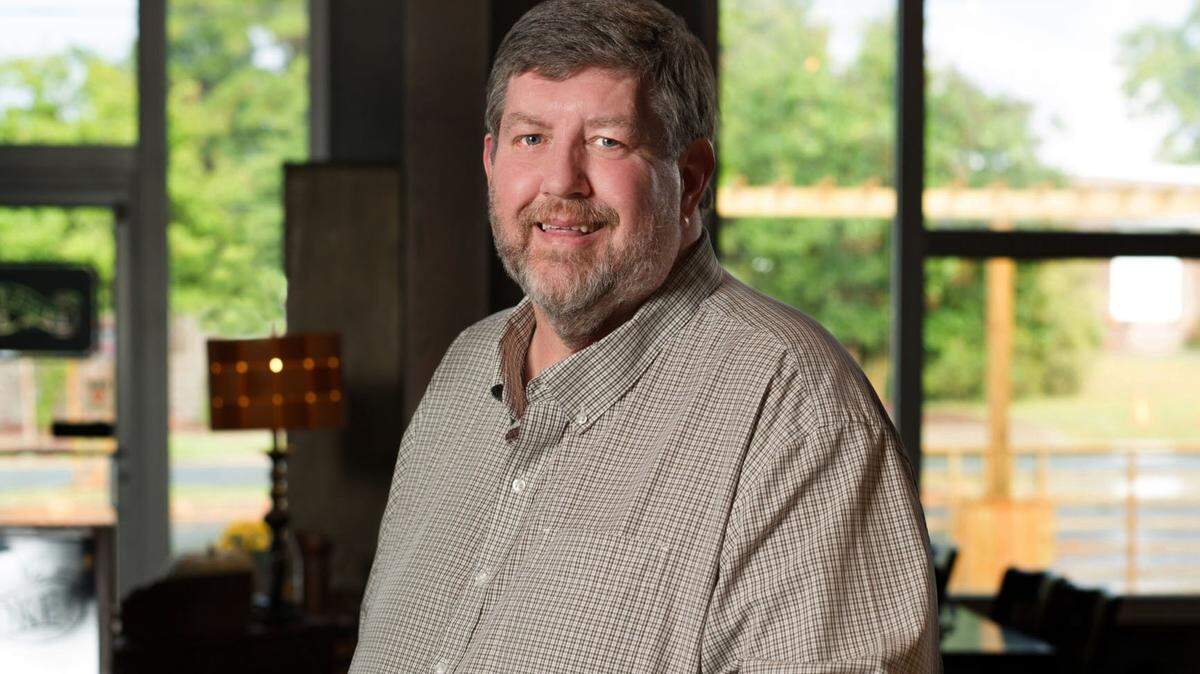
Truth be told, Tommy Tomlinson had been thinking about exiting his role at Charlotte’s NPR affiliate WFAE “for a little while.”
“I’d been kind of wanting to get back to full-time writing,” says the 61-year-old former Charlotte Observer columnist turned broadcaster, who in May hit seven years on staff at the radio station, as host of the “SouthBound” podcast and the “On My Mind” commentary segment.
“While I really enjoyed doing the podcast and working at the station — the people there were great — I had a sense that maybe it had run its course for me creatively. And so when they said they were gonna have to make some cuts, it did feel like that was a signal for me, if I wanted to take a buyout ... that this was a good time to do it.”
So, on a personal level, Tomlinson wasn’t unhappy to be among the half-dozen staff members trimmed last month amid workforce cutbacks by WFAE, and to officially close out his time with the station last Thursday.
But more broadly speaking, when Tomlinson thinks about what those cutbacks represent — the will of a Republican-controlled Congress to pass a recission package defunding the Corporation for Public Broadcasting, under pressure from President Donald Trump (who argued public media is biased and shouldn’t receive taxpayer dollars) — he’s decidedly dismayed.
“I mean, it’s terrible,” Tomlinson told the Observer this week.
“At FAE, and I think in most other public media these days, they’re faced with two things. First of all is the obvious stuff — that the cuts in the federal funding ... even (after Trump) is gone, might be difficult to resurrect. There’s no guarantee that if there’s a different administration three years from now, there’s gonna be a different outcome.” Secondly, he says, “what happened as a result of the Trump administration is that the economy is so uncertain right now, and so unpredictable, that while a lot of the normal sources for funding on a corporate and philanthropic level have not completely dried up, they certainly have been reduced.
“So it’s this double pinch that just put places like WFAE in a real bind financially.”
WFAE CEO Ju-Don Marshall told the Observer last month that the station could lose up to $800,000 in annual support from the Corporation for Public Broadcasting, which last Friday announced it is beginning to wind down its operations as the conduit for federal funds to NPR and PBS.
And for different but loosely related reasons, other local media companies are feeling a fresh pinch, too.
QCity Metro fighting anti-DEI tide
When asked about WFAE’s cuts (which also included reporter Gwendolyn Glenn, a DEI champion who often covered Charlotte’s Black communities) and the current climate around local news and community journalism in general, QCity Metro editor/publisher Glenn Burkins shared Tomlinson’s consternation.
“We’re not in a very good place,” says Burkins, who has run the hyperlocal news site aimed at a Black audience since leaving his post as deputy managing editor at the Observer in 2008.
“This is an extremely challenging environment right now, and it’s happening at a time when ... the ability to get out reported, fact-based, accurate information to your readers — as opposed to some of the un-reported, un-factual content they’re getting in other places — has never been more important.”
Among Burkins’s most daunting challenges right now is one he’s always had, but one that he says is being exacerbated by broad anti-DEI sentiment currently being fostered by the Trump administration:
“Media organizations that serve communities of color struggle all the time. But then when you add this current environment, it just puts us even further in the hole.” He says QCity Metro has lost some advertising contracts this year, which has led to budget cuts that have put his staff “down a couple people” (it’s currently at five).
None of the companies that declined to renew contracts have “come right out and said, ‘We’re responding to the Trump administration,’” Burkins adds. “They say, ‘We’re reevaluating our marketing. Our budgets have been cut.’ ... But it would be a very big coincidence, if that was not a factor at all.”
He says he’s not angry about it. He’s also not surprised. He’s just frustrated. Especially this year, with important local elections ahead.
“For a lot of our readers, we are their primary source for news and information. So, how do you put together an effective election team to give these residents the information they need to make smart decisions in a time when you’re having to make cuts?”
Tomlinson is sad, but also hopeful
Tomlinson, for his part, will continue to drift further afield from the type of news reporting and journalism he cut his teeth on at the Observer in the late ’80s and early ’90s.
Post-WFAE, he plans to pay more attention to “The Writing Shed,” which he started at the Observer as “kind of a blog thing” and became a Substack newsletter a few years ago. He’d also like to try to get back into the magazine-writing world, and tackle another book project as a follow-up to 2019’s “The Elephant in the Room” and last year’s “Dogland.”
“I always have something in mind that I want to do,” Tomlinson says, “and I hope those things together add up to a career ... a way to make a living.”
He might even go back into the audio world someday. “But if I don’t, I will miss that intimacy audio has, that I think no other medium really has, in that it really does feel like a conversation you’re having with one person, even if it’s going out to potentially many thousands of people. When you’re in front of that mic, just speaking into it, it feels like you’re writing a letter to someone you care about, and it’s just for them. And you just want them to hear it and to respond to it.”
Tomlinson adds that he enjoys being on the receiving end of that “conversation” just as much as he likes being on the microphone, and it makes him sad to think about what listeners are losing — WFAE’s, but also those scattered across the country’s entire public media landscape.
At the same time, he’s trying to remain as optimistic as possible.
“I do not currently see a great path forward, and I don’t think anybody else does either, or we’d be doing it,” he says. “But I do have hope for the people who are still around, who are still doing it, who want to make journalism better, who want to make democracy better. I believe there is an audience for that, and I believe there is an audience willing to pay for it.
“I mean, I think the way people — donors — have responded to the fund drives recently at WFAE has shown there is a substantial audience that wants high-quality, nonpartisan journalism and is willing to pay for it.
“So as long as that’s still happening, yeah, I do have hope.”
This story was originally published August 5, 2025 at 1:14 PM.