Charlotte housing activist ran program in Fayetteville but lacked proper permit
A Charlotte housing activist who ran a program in a hotel where a woman and baby died — which he said was the responsibility of a previous manager — housed people in a Fayetteville hotel in the spring that that city’s government later shut down because it didn’t have the correct permit.
Charlotte Code Enforcement has questioned single family homes he operates, alleging they were group homes and ordering them to be vacated, The Charlotte Observer reported in July. It’s unclear what the status of those violations are.
But Cedric Dean says he’s made an earnest effort to provide people with food, shelter, and treatment at all of these places, only to run into bureaucratic roadblocks and people unwilling to help him make it all reality.
“I did every single thing I could possibly do to try to help those people,” Dean said in an interview with The Charlotte Observer.
The Fayetteville property was billed as a place that would provide shelter, substance abuse and mental health treatment to the poor. Some of them ended up in Charlotte, and their current status is unknown.
Leaders in the city of Fayetteville say the venture raised questions about how the operation’s managers billed Medicaid — the nation’s health insurance program for the poor — a Charlotte Observer investigation found.
The Fayetteville fire marshal shut the hotel down after an inspection in May.
An email among city officials in Fayetteville on May 28 updated the city manager on the hotel, which the email said wasn’t permitted to operate as a shelter.
“The City has identified serious and ongoing concerns at the Regency Inn involving high-volume residential occupancy by approximately 80–100 individuals, including families and vulnerable residents,” the email said. “The initial use of the facility stemmed from an unregulated transitional housing operation, reportedly linked to questionable Medicaid billing practices and implemented without permits, oversight, or compliance with applicable codes.”
Dean said he worked with an owner of the Fayetteville hotel to start the program, and said he was investing money in trying to improve the conditions of the hotel and was open to getting the permits when he learned they were needed.
“The owner was not going to change that motel status,” said Dean.
Dean said he ended up moving about 15 people from Fayetteville to north Charlotte on May 5, placing them in rooms at a Baymont Inn where he ran another substance abuse recovery program called Heal, Empower, Love, and Protect. Dean said he’s not received any government funding for his programs.
The Charlotte Observer reported in early June that a woman and baby were found dead in the Baymont Inn. Dean said that woman was not part of his program but had been living in the hotel when he took over the lease from another nonprofit, Heal Charlotte, whose program shut down.
He said safety concerns stemming from drug dealers and a lack of help from Charlotte-Mecklenburg Police pushed him to move people out of the Baymont in June and into single-family homes around Charlotte.
A housing attempt in Fayetteville
People moved into the hotel in Fayetteville, about 130 miles east of Charlotte, “under the appearance of a transitional housing initiative,” the city manager’s email said.
There were concerns of fire and safety risks, the email said.
Over 29 calls about the hotel were made to police between April 1 and May 28. And nine fire-related medical calls were made in the same time. The email said people on probation stayed at the property, as well as two people with sex-related crimes.
The Fayetteville Fire Marshal inspected May 29 after a complaint about the hotel’s condition, said city spokesperson Loren Bymer.
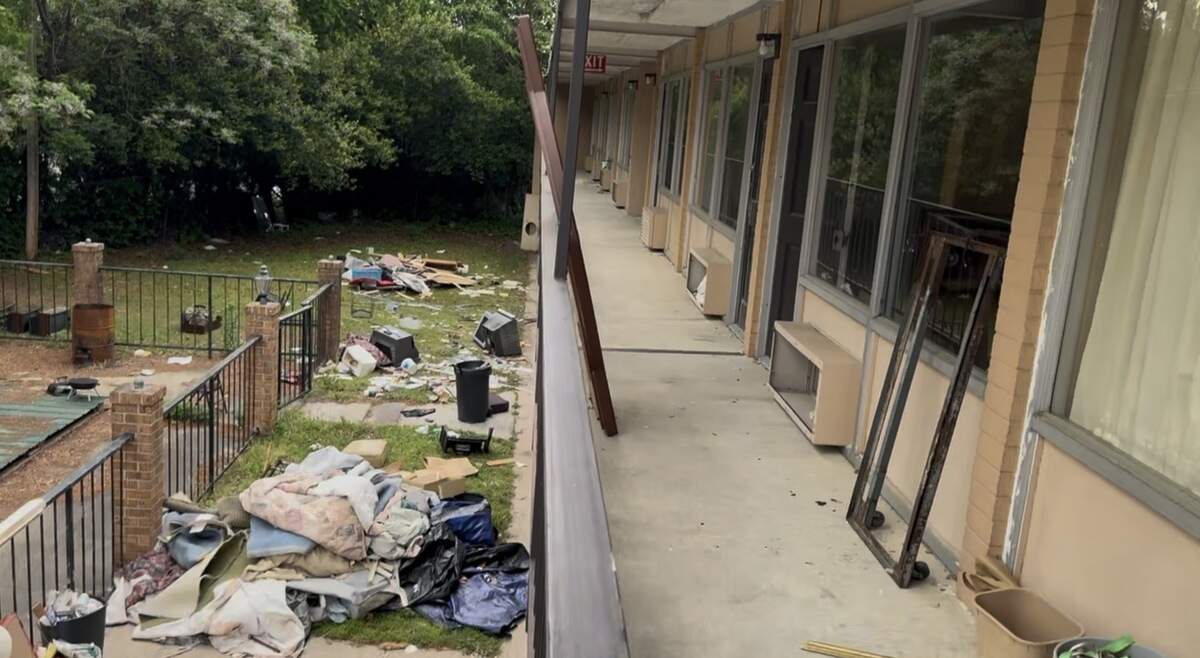
Code violations were noted in a report obtained by The Charlotte Observer, including signs of wall and foundation separation, open electrical boxes and wire splices, and fire hazards such as trash and debris piled in rooms.
The report said 90% of rooms did not have smoke detection alarms or they were broken, no fire extinguishers were found during the inspection, and a burn barrel was used in the “backyard” of the property. The hotel failed the inspection, the document said.
Dean does not own the hotel.
“Because Mr. Dean never applied for a permit for the alleged activities he is accused of, the City does not have permits with his name on them,” Bymer told the Observer in an email.
Ann McQueen, a Cumberland County activist, said she helped move 68 people out of the hotel, 46 of whom were children, into extended-stay hotels after the fire marshal shut it down. She’s been providing food and clothing, and has helped several secure long-term housing.
Walker Johnson, who lived at the hotel until it was closed, told The Charlotte Observer people working at the hotel traveled around Fayetteville, offering people substance treatment, a place to live, and food. He said people were told they could get parenting classes, job search classes, and other support.
“The blueprint of it was perfect,” Johnson said. “It just never got to the point where everything was executed.”
Dean’s explanation
Dean said he visited Raleigh in March for the NC Summit on Reducing Overdose organized by the North Carolina Association of County Commissioners, where he spoke with others about his work in Charlotte around substance abuse recovery.
Other attendees encouraged him to bring his work to Fayetteville, he said. In early April, Dean said he and his staff drove around the city in an RV and found the hotel.
Udaysinh Parmar is owner of the K P Hotel LLC, which is listed as the owner of the hotel in Cumberland County property records. He could not be reached by email or phone for comment.
Almost a week after they met, Dean said, Parmar traveled to Charlotte to agree to working with Dean. It was during that visit that Dean said he paid Parmar $200,000 rent out the hotel.
Dean said he and his staff traveled to Fayetteville just before the city’s Salvation Army homeless shelter closed on April 15 to begin renovating the hotel property and move people in.
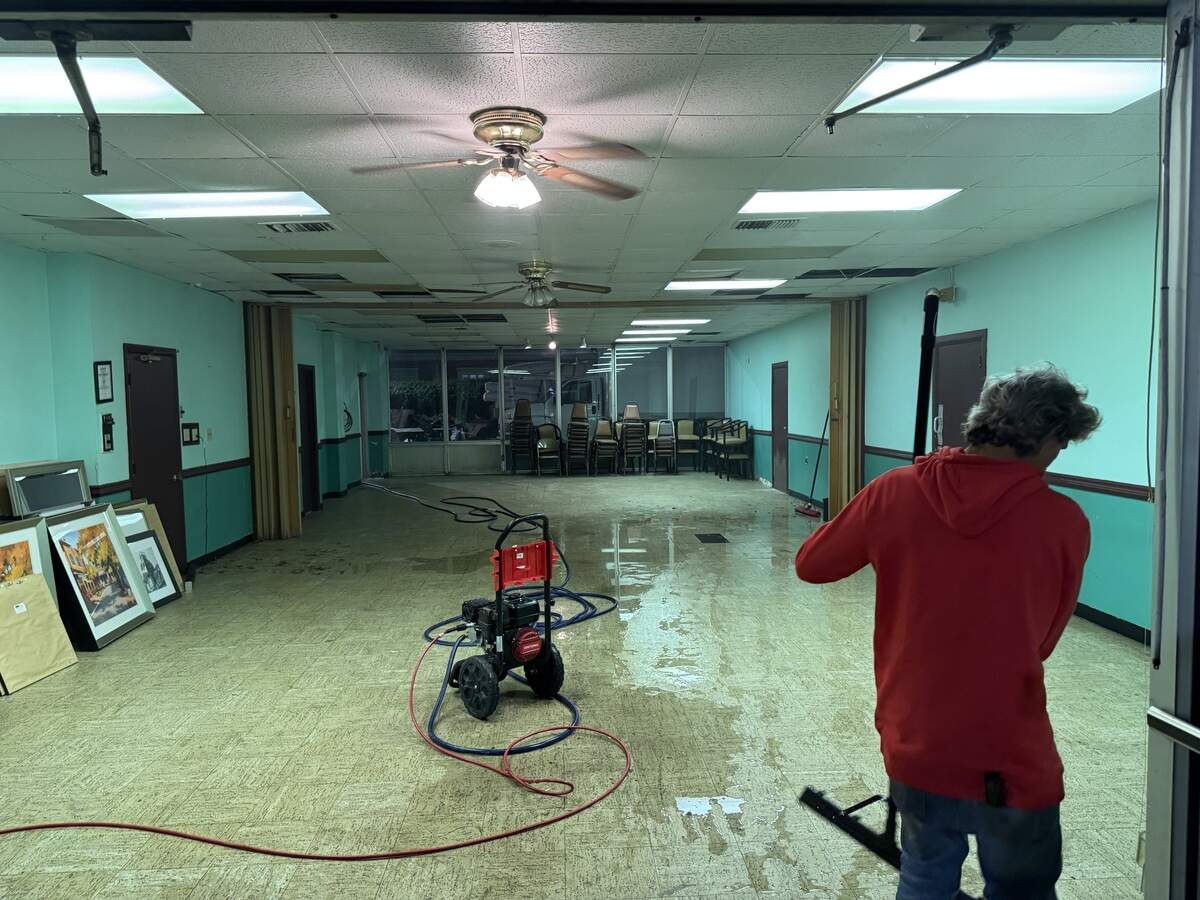
Dean said he paid $1,000 per room, for 55 rooms, to renovate floors, walls, and plumbing. He also paid $20,000 for landfill and landscaping, and $30,000 to clean out and paint the floors and walls of what he called the auditorium — an area where people would meet for programming.
In photos and videos shared by Dean, people can be seen cleaning and throwing things away.
He said people weren’t going to use Medicaid to pay for housing, since that’s not allowed, but rather for treatment at the hotel. But because of how much work needed to be done to renovate the facility, he said, they were unable to start providing treatment. Dean said he was only at the hotel for about three weeks.
Dean said he was confused by who owned the hotel. After he learned about needing a special use permit in late April, he said Parmar informed him he wasn’t the owner. Parmar told Dean he had an agreement that would allow him to lease and eventually purchase the hotel from the actual owner.
Dean said he never learned who the actual owner of the hotel was, but that Parmar said the person would not be interested in getting the special use permit. Because of this, as well as concerns about drugs and guns at the property, Dean said he decided to move people out of the Fayetteville hotel and into the Baymont Inn.
Dean said that because he didn’t sign an agreement at the hotel, he has no way of getting his money back.