After teen lost 2 limbs in Fla. shark attack, she gained 2 friends in Charlotte
Lulu Gribbin has some pretty terrible memories of the 11 weeks she spent in Charlotte last year.
For all 77 of those days, the then-high school sophomore was being treated at various hospitals and clinics here — a six-hour drive from her family’s home in Mountain Brook, Ala. — having lost her left hand and a portion of her right leg in a shark attack during a June 2024 mother-daughter beach trip.
She remembers plenty of agony, in some cases a result of the nine surgeries she endured, in others due to crippling phantom limb pain.
“I would wake up from surgery screaming and crying ... screaming in pain,” recalls Lulu, who was 15 at the time. “I was, like, crying a lot, and screaming a lot. The pain came in so many different ways.”
But while giving an update on life since the attack to The Charlotte Observer earlier this fall, in one of her first major interviews since it happened, she seems to have far more fond memories of her time in Charlotte than bad ones. Not just because doctors here were able to use new and innovative methods to help take her pain away, but also because she formed relationships with those doctors that she now considers among her most treasured.
On top of all that, the sunnily-dispositioned teen may well have formed her life’s purpose here, devising big plans for preventing what happened to her from happening to others and dreaming up ways to help those with similar injuries.
How did Lulu wind up in Charlotte, being from Alabama, and having been bitten by a bull shark while swimming with friends along Florida’s Gulf Coast? Credit word of mouth. While she was being initially treated at a Pensacola hospital, multiple people — including friends of friends and the surgeon who amputated her hand — recommended Glenn Gaston, an orthopedic surgeon and director of the OrthoCarolina Hand Center.
“They just made a quick decision and decided to transfer me,” Lulu says of her parents. And “that might be one of the best decisions they’ve ever made.”
.png "B-Roll still 7 (1).png")
‘I never felt the shark bite me at all’
Like many kids, Lulu had always been scared of the ocean.
She felt more comfortable in the freshwater of Lake Tuscaloosa, where her parents own a house. But even that was fairly frightening to her. Whenever her dad would pull her in a tube or on waterskis behind the boat, as soon as she fell off, she’d thrash her feet to ward off fish and yell for her father to hurry to come pick her up. Please don’t let something bite me, Lulu would pray.
So on June 7 of last year, as some of her bolder friends dove in deeper water for sand dollars off Rosemary Beach in Florida, Lulu refrained from wading beyond where it was about waist-high, out of trepidation. She was content to try to catch rides on gentle waves, from where she could touch bottom.
Then, all of a sudden, she saw the shark — at the same moment she heard her best friend yell it: “SHARK!!”
Lulu initially started racing toward shore, except her instinct told her to stop. Splashing around, she thought, might make her an easier, more-enticing target for the animal. “But no one else stopped swimming,” Lulu recalls. “... And I raised my arm out of the water, and I saw that there was no hand there. ... I never felt the shark bite me at all. Then it latched onto my leg. Thankfully, I couldn’t feel that either.”
She remembers one man swooping in and punching the shark hard enough to chase it off, then another scooping her up into his arms. The next thing she remembers is waking up on the beach, surrounded by strangers, and having tourniquets applied. She lost consciousness again not long after that.
When she regained it, the next day, one of her legs and one of her hands had been amputated.
The story made international headlines, as shark attacks tend to do, and it maybe got a little more attention than it might have otherwise because Lulu was bitten about 90 minutes after another shark attack, about four miles away.
Meanwhile, that night — about 550 miles away — Glenn Gaston happened to catch the story while watching the evening news. “Oh man, that’s terrible,” the doctor said to his wife. “Well, hopefully she finds good care.”
Not 12 hours later, his phone rang. It was Lulu’s parents.
A two-pronged approach to treatment
Upon Lulu’s arrival in Charlotte, five days after the attack, Dr. Gaston’s initial assessment was straightforward.
He noted that her condition was stable, which was the priority. Once that box got checked, Gaston wanted to get a handle on how she was doing emotionally. “And ... day one, you meet her and you’re like, Man, what a powerful spirit,” he says. “This girl just has the attitude of, I am going to overcome.”
Brutal days were ahead for Lulu. Although her arm was healing nicely, her leg had developed an infection. So the early part of her recovery involved a seemingly never-ending parade of surgeries and antibiotics to combat the infection; basically every other day, she was going back into the operating room to have her leg opened up and cleaned out. And because, like most other amputees, her brain was continuing to receive and interpret nerve signals as if her limbs were still there, Lulu also was experiencing severe phantom pain.
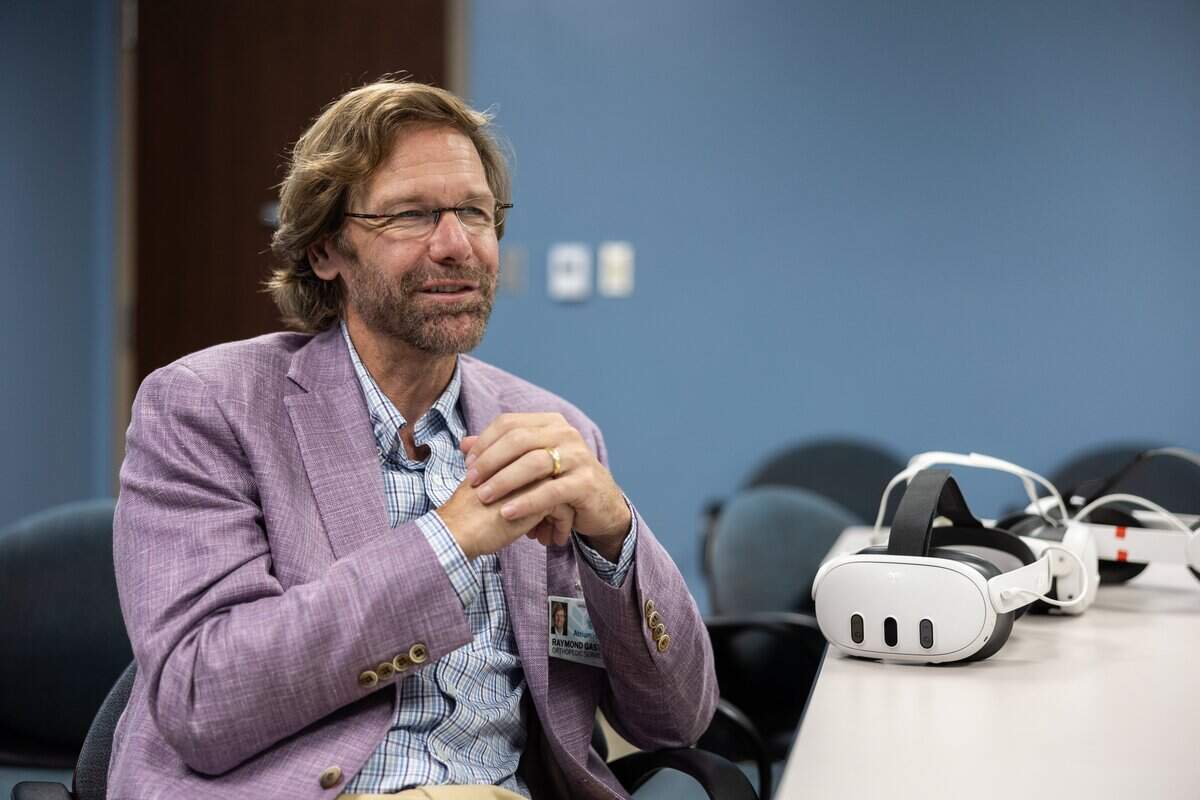
But Gaston could tell from the start that she was uniquely determined — and knew right away she was an ideal candidate for a two-pronged pain-management program they were developing for amputees with his OrthoCarolina colleague Dr. Bryan Loeffler.
The first of the two prongs, Targeted Muscle Reinnervation (TMR), involves a surgical procedure to redirect the nerves that controlled the now-missing limb and connect them to nearby muscles. The second, Targeted Brain Rehabilitation (TBR), uses virtual-reality technology to re-train the part of an amputee’s brain previously devoted to feeling and controlling the missing limb.
TBR, like TMR, isn’t a new concept. The wrinkle here is Gaston and Loeffler’s partnership with a team from the University of Georgia to develop new software, for use with consumer versions of Meta Quest headsets, that immerses amputees in a virtual world and gives them back their lost limb via a simulation. The main goal? To trick the brain into believing the limb is still part of the body, and — through training, over time — averting the onset of phantom limb pain.
Lulu was the first patient the two doctors had ever put on their VR program on Day One.
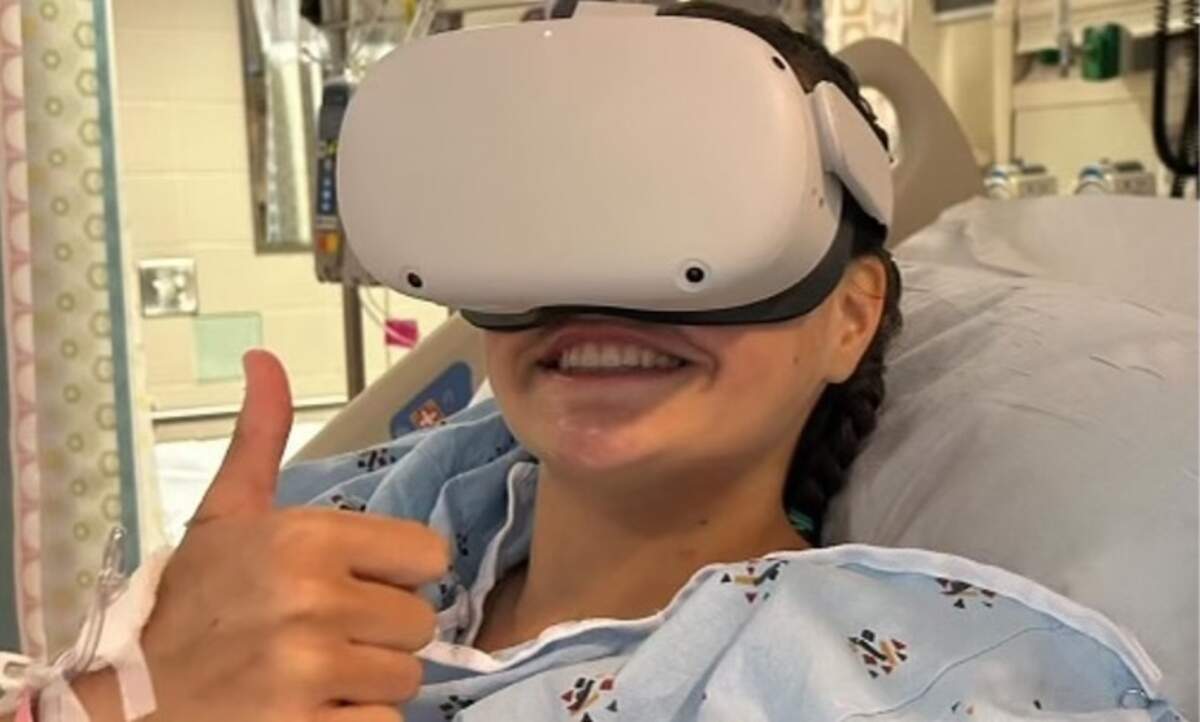
Both that and her TMR surgery were huge successes. Those treatments along with her powerful determination helped put her in a position to get into and master her prosthetic limbs as quickly as just about anyone they’ve ever worked with.
It’s just a bonus, then, that the doctors and Lulu have since become such close friends.
‘You bond in a very special way’
Up until about 12 years ago, Gaston had hardly any experience with amputees.
But after reading a story about TMR, a procedure that had never before been performed in the Southeast at that point, he became interested in learning how to do it and not long after had a perfect first patient: a young woman named Macy Keziah, who lost her arm in a motor-vehicle accident in February 2014.
Gaston and Loeffler did the surgery as a team, and it significantly reduced her phantom limb pain while improving her aptitude with her prosthetic device.
At the same time, they were intentional about connecting with Macy as a human being and not just as a patient. A few months after the procedure, the doctors were there to support her at her first horseback-riding competition as an amputee. A couple of years later, they were guests at her wedding.
Since then, they’ve strived to get as close as patients will let them. Lulu was no exception.
Gaston met with Lulu to work on her recovery and rehabilitation, he says, “every single day for 10 weeks, for an hour a day, which is — for perspective — more than I see my own child during the week. Legitimately.
“So you’re there in the most difficult time of their life, and you bond in a very special way. And then you’re there for such a powerful moment: watching her use her arm for the first time, watching her go hug her family for the first time, walk for the first time. ... I mean, really, it’s like watching your own kid walk for the first time.
“You get to the point where you care that deeply about them.”
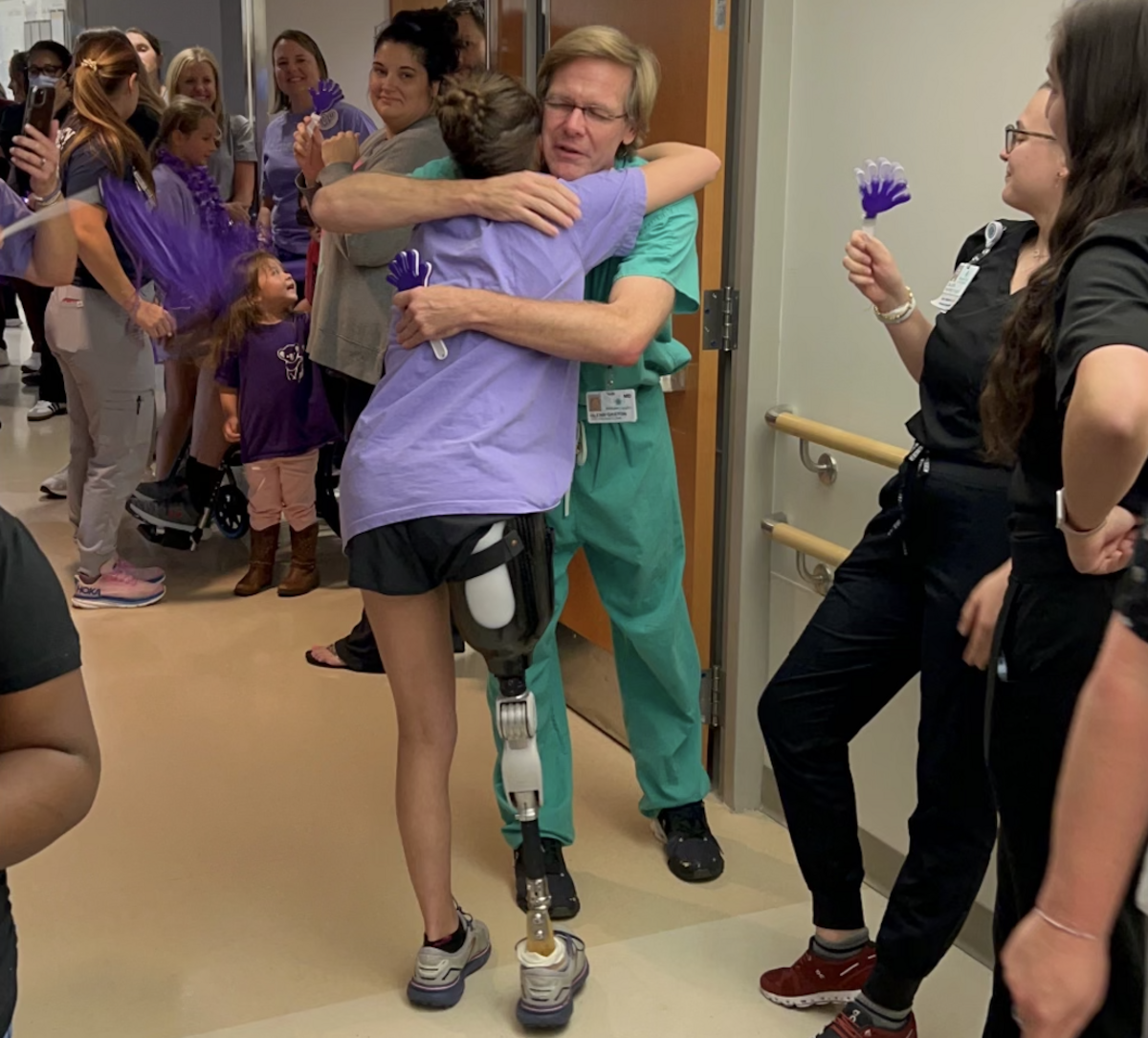
By the time she was released from Gaston and Loeffler’s care at the end of last August, they were practically like family. Since then, their actual families have only gotten closer. Over the past year, Gaston’s youngest daughter Virginia, who is just 10 days younger, has become one of Lulu’s best friends. They’ve gone to college football games and country-music concerts together.
And here’s another clear sign that their relationship goes beyond prognoses and prescriptions: When we asked Lulu to give us one question for Loeffler, ahead of our conversation with him, she replied, “Ask him what marathon he’s gonna run next.”
Making progress in more ways than one
Loeffler laughs when he hears this.
“I actually was supposed to be running the Chicago Marathon this weekend,” he says, when contacted the second week of October, “but because of travel issues, I’ve had to postpone until next year.”
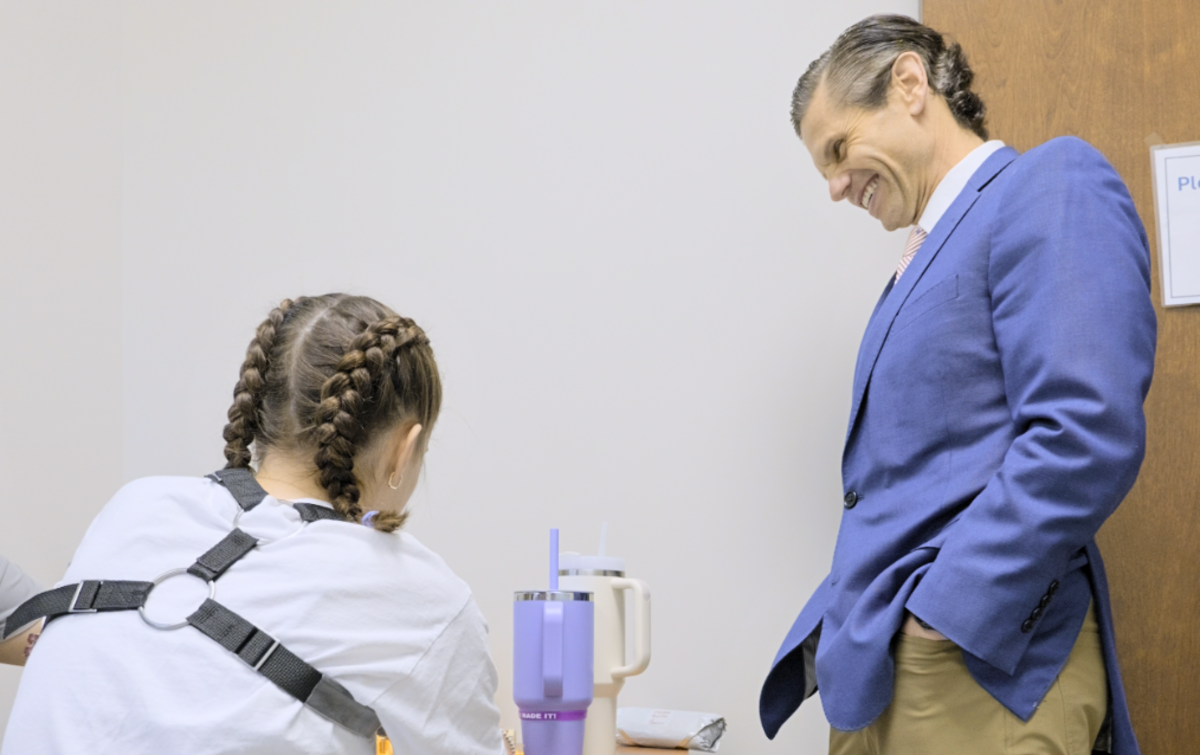
Then he recalls Lulu’s and her family’s amusement when he’d bring her mom Ann Blair and her dad Joe coffee on weekend mornings after 18-mile training runs. Then he mentions that when he does do the Chicago Marathon next year, he’d like to use his participation as a fundraiser for the Lulu Strong Foundation.
Her nonprofit, which recently gained its 501(c)(3) status, is aimed at promoting prosthetic technologies and cutting-edge therapies for amputees — and Lulu says she hopes it can eventually help support Loeffler and Gaston’s pain management program.
The establishment of the foundation is just one of the noteworthy projects patient and doctors have been a part of since meeting.
Lulu also has spearheaded the push for legislation to establish a system to issue a public notice to cellphones when there’s been a nearby shark attack. (Such a warning system, she and her family believe, potentially could have prevented Lulu’s accident.) “Lulu’s Law,” which is awaiting House approval after having been unanimously passed in the U.S. Senate in July, is already on the books in her home state as of Oct. 1.
The OrthoCarolina doctors, meanwhile, just this month saw the VR software the University of Georgia team created for them receive FDA approval as a Class II medical device.
But everyone involved is as excited with Lulu’s progress as they are with these projects.
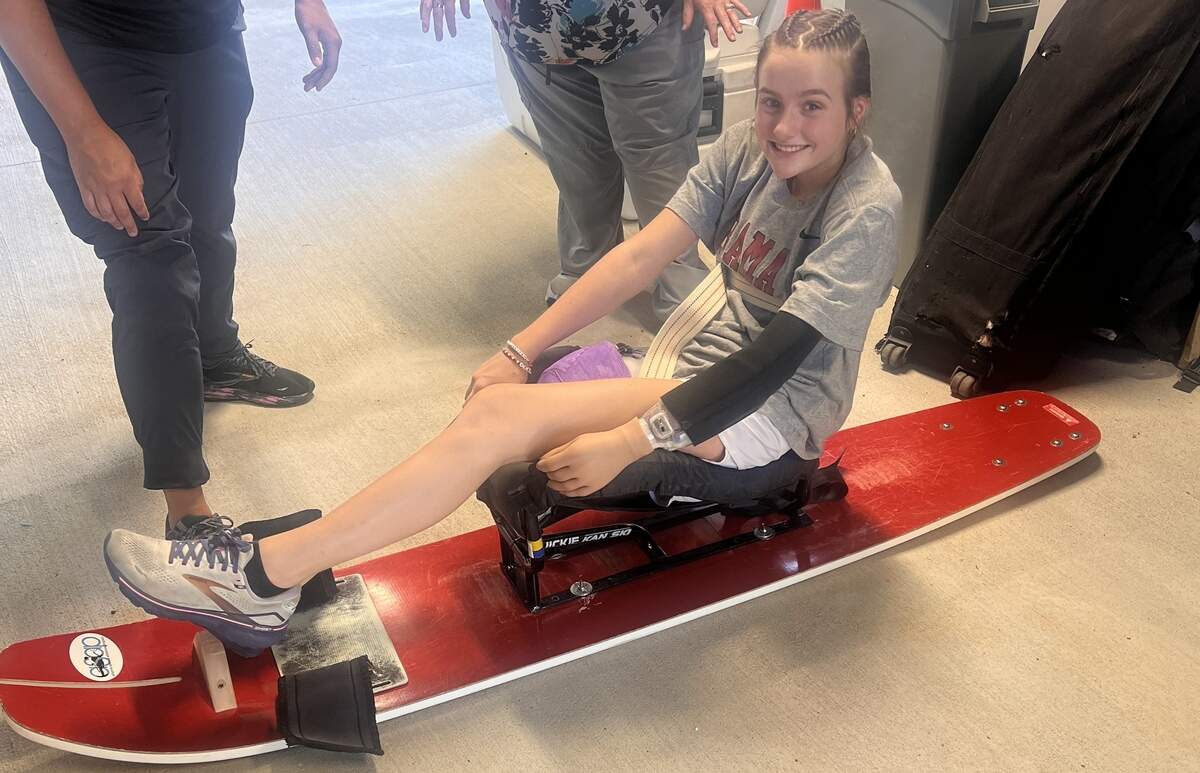
She’s taken up golf. She’s relearned how to waterski. She’s still a little afraid of the lake, but she refuses to let that stop her, just as she’s refused to let the shark attack keep her away from the ocean — she’s been back multiple times. She also recently started running, with the help of a high-tech blade attachment. She says there might even be a marathon in her future.
“Maybe I’ll run one with Dr. Loeffler,” Lulu says. Then she giggles, before adding: “We’ll have to get Dr. Gaston trained up.”
This story was originally published November 3, 2025 at 5:40 AM.