ICE arrests and deportations rising sharply in North Carolina, with more expected
Since President Donald Trump returned to the White House, arrests of people accused of being in the country illegally have ramped up in North Carolina.
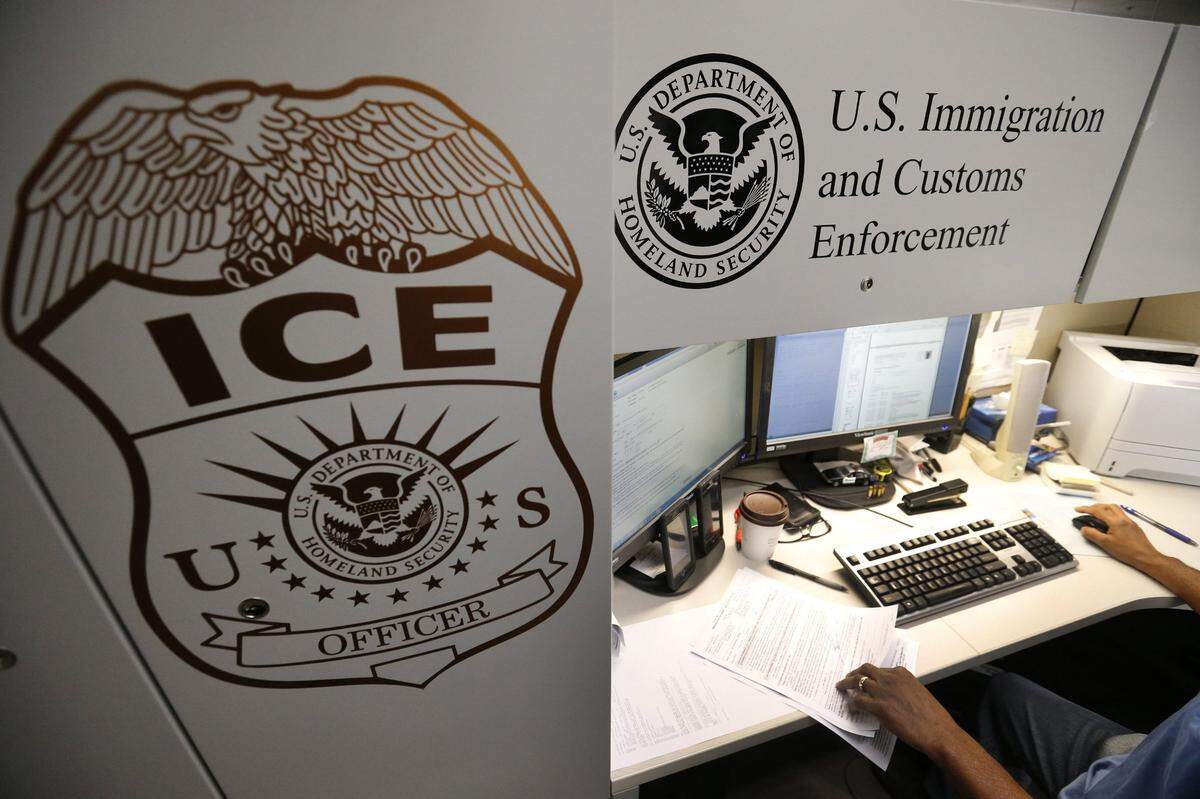
Immigration and Customs Enforcement arrested about three times the number of people in the first half of this year in Mecklenburg County compared to the same time last year.
That’s a steeper increase than the rest of the state, where data shows at least 2.6 times the number of arrests compared to last year.
ICE arrests and detains people for a variety of reasons, including simply being in the United States without any lawful status. People with legal status can be arrested and detained when convicted of an unrelated crime.
Statewide, ICE arrested about 1,940 people from Jan. 20 until the end of June. At least 60% have left or were deported, according to a Charlotte Observer analysis of federal data collected by the Deportation Data Project through Freedom of Information Act requests.
One in three of the people arrested in the first six months were facing criminal charges but had not been convicted, says data collected by the project, which is based at University of California, Berkeley.
And at least 420 people — about one in five — had no reported criminal charges or convictions, according to the data. But ICE says they had immigration violations, according to the data.
The full ICE arrest and deportation counts in North Carolina are likely higher.
That’s because the database, which includes arrests that occurred across the country, has incomplete information. More than 1,800 ICE arrests for the first six months of 2024 and 2025 list no location information at all.
It’s likely these arrests will increase. The Department of Homeland Security said it is “just getting started,” announcing in September that the government has deported about 400,000 immigrants since President Donald Trump took office.
Trump’s “One Big Beautiful Bill” signed into law this summer is “surging hiring efforts and turbocharging” arrests and deportations, according to DHS.
Living in fear of deportation
Charlotte and the rest of North Carolina haven’t experienced the high-profile ICE activity that Chicago, Washington, D.C., Memphis or Portland have, with their widespread raids or highly public street arrests.
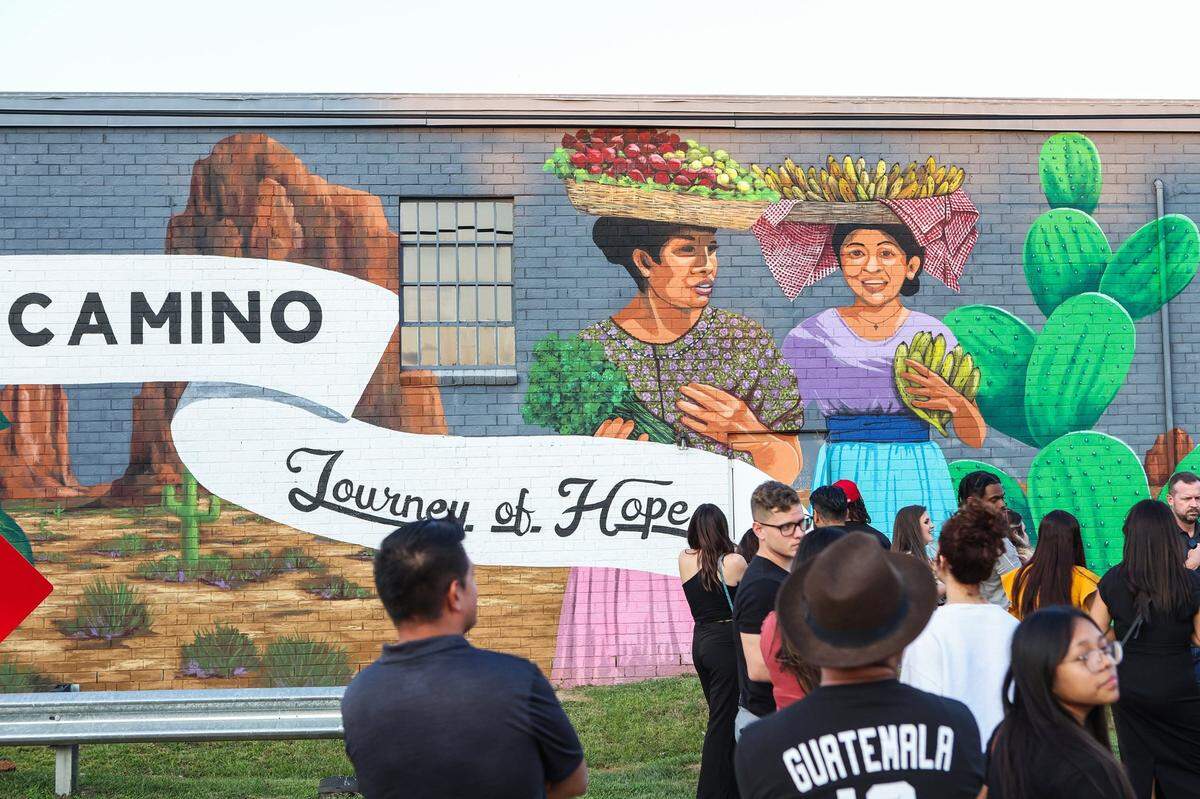
But among local families, including those with mixed immigration statuses, the fear of arrest is pervasive and has changed people’s daily lives, said Rusty Price, CEO of Camino, a faith-based non-profit that provides health and social services to the state’s Latino population.
In Charlotte, organizers canceled September’s Hispanic Heritage Festival of the Carolinas over concerns that ICE agents would raid it. People are skipping dental and medical appointments, keeping their kids home from school or missing work, Price said.
Some people are leaving the country on their own rather than risk being arrested.
ICE spokesperson Lindsay Williams told The Observer that he wasn’t sure what to say about people afraid to leave their homes here because they are afraid of being arrested.
“That would be like any other criminal saying I’m scared to commit crimes,” he said.
The Trump administration’s push to remove people deemed to be here illegally prioritizes arresting immigrants with dangerous criminal records, Williams said. But simply living in the United States without a legal status is enough to warrant arrest, he stressed.
Price rejects the Trump administration’s generalization that every immigrant here without legal status is a criminal.
No one would call him a criminal if he was pulled over without a seatbelt and got a ticket, he said.
“There is administrative law and there is moral law,” Price said. “They may have done something illegal. But we’re doing something immoral.”
‘I haven’t done anything wrong’
While the Trump administration says some 1.6 million immigrants around the nation have “self-deported,” many people are choosing to remain even as their risk of being detained has grown.
Among them is a North Carolina woman from Honduras who entered the United States about 10 years ago with her 7-year-old daughter and a baby on the way to live with her now-husband. He is an American citizen who she’d met in her home country.
The woman spoke to the Observer, in Spanish, on the condition that she not be named because of her risk of being deported. A Charlotte Observer journalist translated her comments.
She has built a life here and raised her kids, who are American citizens. She’s worked as a child educator and paid taxes, she said. Her husband is a citizen. She has nothing in Honduras.
The woman tried twice to get a green card, which she estimated cost her family $20,000. Both times, that meant paying immigration attorneys, sending the federal government tax records, every detail of her and her husband’s bank accounts, photos of their family, letters of recommendation.
Most recently, she tried at the end of last year, thinking she for sure she would be approved, because her son had joined the U.S. Navy.
Her teenage daughter wrote a letter pleading with the authorities to let her mom stay. Her son wrote that it would be detrimental to him if his mom left.
The answer came this spring. Since the woman doesn’t speak English, her daughter had to read the letter from the government. She took the letter into the bathroom and returned in tears.
The letter said she had 30 days to leave the country. Her daughter pleaded with her not to leave.
“I had to gather the strength I didn’t have to be able to give hope to my daughter,” she said.
She’s determined to stay.
“I’m going to trust God. I was going to quit my job here that I love so much, my church, where I serve, where I congregate. I said no, this is my home. I’m not going to change my life for fear of ICE,” she said. “I haven’t done anything wrong to where I should be fleeing like a criminal.”
Who is ICE arresting in NC?
The vast majority of people arrested by ICE this year and last in North Carolina were men in their 30s from Latin American countries, with the largest shares from Mexico, Honduras and Guatemala.
For those people who The Observer confirmed were arrested in North Carolina during both periods, more than half were arrested straight from county jails and state or federal prisons.
A significant difference this year is that ICE agents arrested a larger share of people with criminal charges before they were either cleared or convicted, according to the federal data. About 650 people were in that category during the first six months of this year.
The Observer could not gauge what types of charges were most common among those arrested because the database is missing charge information for most of the people ICE asked jails to hold for them.
ICE asks jails to hold people with a range of charges, from license and traffic violations, having marijuana or coming to the United States illegally to aggravated assault, drug trafficking and homicide.
Williams, the ICE spokesperson, offered some ideas on why the federal data is incomplete.
Officers document a lot of details about arrests when they occur. But that information does not always get transferred to a central database. He chalked the issue up to “antiquated data capturing” and different data entry systems at different field headquarters.
Andrés López, an immigration attorney in Charlotte, suspects otherwise.
“I feel as if they prefer to keep it as secretive as possible because if you were to actually look at the statistics you would realize they’re not really arresting criminals,” López said.
This story was originally published October 23, 2025 at 5:00 AM.