
At Westmoreland Dairy Farm, a 112-year legacy ends as new development soon begins
At the end of the street bearing the family’s name, the Westmoreland Dairy Farm looks like a storybook relic.
As the last operational dairy farm of its size in Mecklenburg County, the property’s main white house — with deep green shingles surrounded by grain bins, a silo and multiple barns — is a visual throwback to an industry that gained prominence during World War I.
But over the past decade, brothers Keith and Wayne Westmoreland have watched the place their family has called home for generations morph. In their pocket of Huntersville, just a four-mile drive from a former dairy farm now known as Birkdale Village, an unrelenting wave of development has whittled away the surrounding farmland.
The Westmorelands milked their last cow in 2011 before shifting to a less demanding kind of farming — cash crops. But even before the pivot, the family leased hundreds of acres to cut feed for their cows or grow more soybean and wheat crops. With their leased farmland flipping to new subdivisions or shopping centers at every turn, it made a profit almost unattainable, the brothers said.
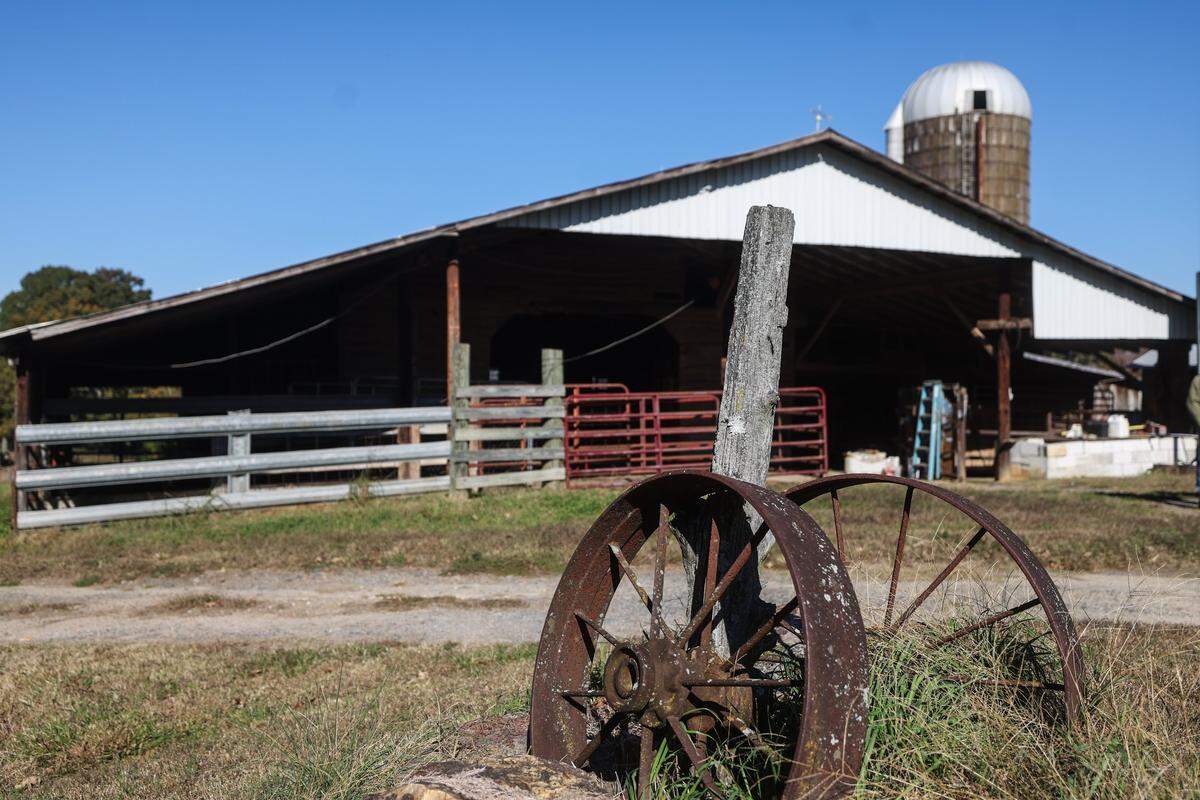
So, after more than a century of keeping their 200 acres in the family, the Westmorelands have decided to sell.
For Keith and Wayne Westmoreland, it’s a difficult goodbye. These 200 acres weren’t just a source of income, it’s where they grew up. And at 67 and 70 years old respectively, it’s the only place they’ve ever lived.
From each of the brothers’ homes, just yards apart from one another on the property, the chimneys of houses from nearby developments can be seen just above the scenic canopy of fall-colored trees in the distance.
While it’s a sign of vibrancy for a community taking on some of the hundreds of people moving to Charlotte each day, it’s also indicative of a larger trend taking place across the county and North Carolina: As development thrives, farm land is disappearing.
Soon, the Westmoreland Dairy Farm will mirror the community surrounding it, as developer Shea Homes intends to turn the land into a residential subdivision. The farm was sold for $24.6 million according to public records, though Keith Westmoreland says it was more than that.
But the decision to sell is something Wayne says he’s still second guessing. And Keith is wrestling with saying goodbye to the deep history that exists here.
“I think a lot of people think we’re just selling a house and moving to another house,” Keith said, gazing at the farm from the side of his pickup truck. “It’s so much more than that.”
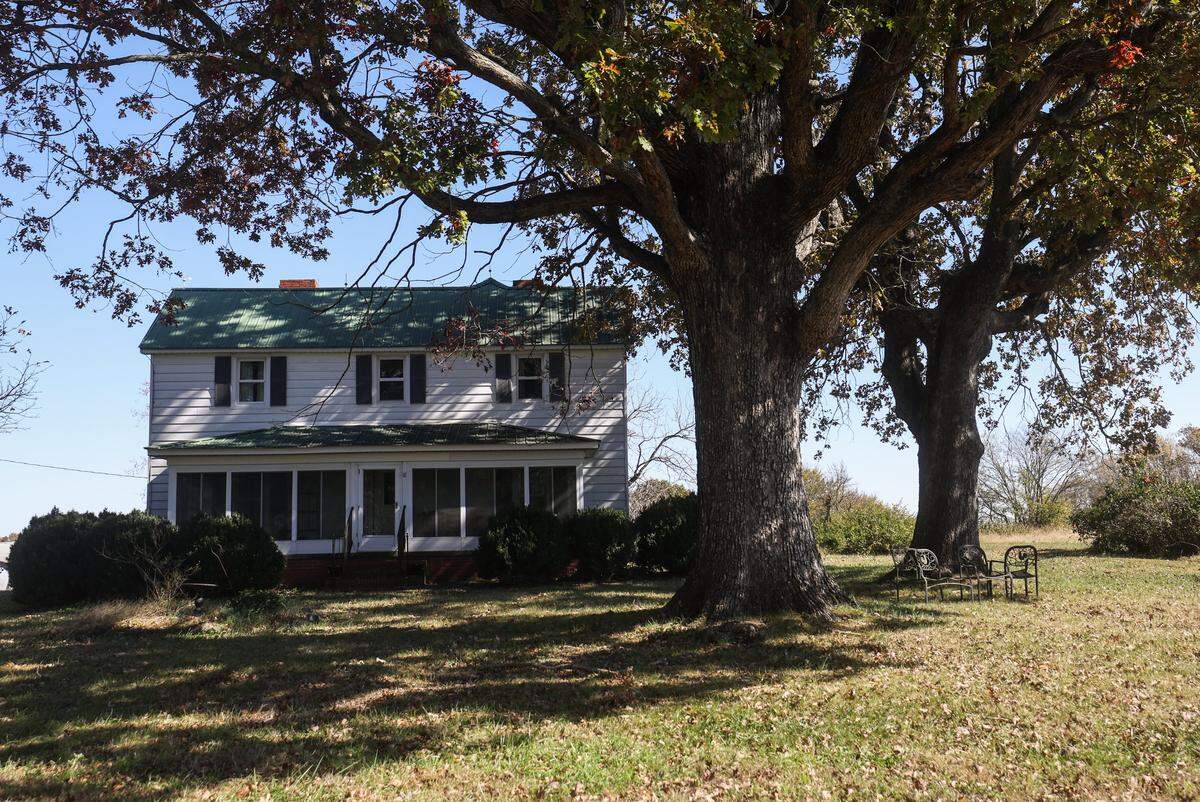
A hell of a living
In 1913, Thomas Calvin Westmoreland and his wife, Zula, purchased the farm’s first parcel of land.
It started out as a cotton farm. Keith Westmoreland’s grandparents would hop into a buggy led by horse or mule to make the 19-mile trek from Huntersville to Trade and Tryon street to sell goods from the farm, he said.
“There were no stop signs. No stop lights,” he said. “But they were going at a slow speed. I’m sure it was an all day event.”
It wasn’t until 1952, after Keith’s father, Thomas McCord Westmoreland, returned from his service in the Navy during World War II that he took on the land and made the pivot to dairy farming.
North Carolina isn’t regarded as a top dairy state, but the industry has been an important part of the state’s agriculture landscape for more than a century, said Brittany Whitmire, dairy extension associate at N.C. State University.
By the 1920s, Mecklenburg County led the state in the number of dairy cattle as farms evolved and families put priority on cows. Dairy became a meaningful investment and safety net for families in the event their main crops like corn or cotton failed.
Over time, advancement in the industry’s technology and management led to a decline in the number of dairy farms across the state. But still today, the industry has prominence. Dairy farming has a $4 billion economic impact and produces more than 31,000 jobs across North Carolina, Whitmire said.
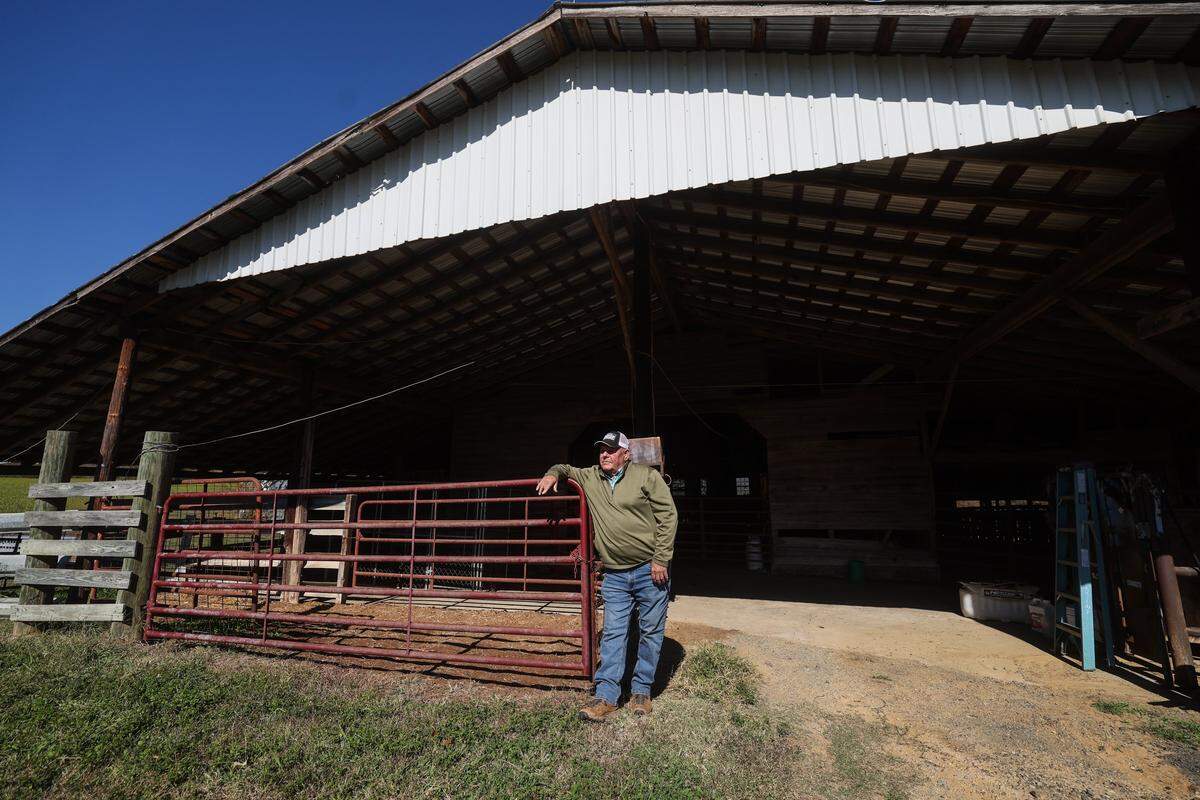
Dairy farming is no spectator sport. Between milking cows twice a day and tending to their needs, the Westmorelands were working a 10-hour day, every day. Unlike crops, cows didn’t allow for breaks. You couldn’t take Thanksgiving or Christmas Day off.
“You were tied to it,” Wayne Westmoreland said.
It was hard work, but it was their work. Even as busy kids and teenagers with after school activities, friends, and outside jobs, the brothers were expected to help their family with farm chores.
Whether it was tending to the cows or cutting feed for them to eat, the work became an extension of them — blurring the lines between who they are and what they do. The farm is where they fought their battles, with themselves or each other, Keith said. It’s where he and his brothers, once boys, became men.
“We didn’t make a lot of money,” Keith Westmoreland said. “But we made a hell of a living. Money can’t buy some of the experiences that I had here.”
Barely keeping their heads above water
For the past decade developers have been calling, asking if the family would be interested in selling their farm land. Back then, the Westmorelands still had a semblance of a choice.
Ten years ago, the impact of surrounding growth on their farm wasn’t fully realized. Developers had yet to swallow up the 400 additional acres the family leased to maximize their crop potential.
But the walls slowly started to close in. Acre by acre, land around them was handed over to developers to build new houses, town homes and apartments. The conversion from farm land to residential kept going until the Westmorelands were reduced only to the 200 acres they own.
Two hundred acres may sound like a lot, but in an industry where the price of crops is set by an ever-changing market, that amount of land didn’t cut it. More land meant more crops. And more crops meant more money.
Without enough land, it put the Westmorelands in a daunting financial situation.
“We’ve been barely keeping our head above water for the past 6, 7, 8 years,” Keith Westmoreland said. “And that’s just to pay bills on the limited amount of crop land that we were able to find.”
This pattern of development seizing farmland and open space is happening all across North Carolina despite state and local preservation efforts, Whitmire said. North Carolina is projected to lose 1.2 million acres of farmland to development by 2040, ranking second in the nation to projected farm loss behind Texas, according to the American Farm Trust.
As one of the most densely populated areas in the state, Mecklenburg County has been at the forefront of farmland loss. Between 2010 and 2020, the county’s population increased 21.3%. Within that same time frame, the county’s farmland acres decreased by 50%, according to the North Carolina Office of State Budget and Management.
Next generation
In September, the Mecklenburg County Board of Commissioners adopted a voluntary agriculture district program — an initial step to act on the county’s farmland preservation plan, which was passed in 2023. Through these voluntary agriculture districts, landowners are able to place a 10-year easement on their property that prevents farmland from being converted. By the end of this fiscal year, the county hopes to have at least 500 acres of farmland enrolled into the program, said Erin Stanforth, Mecklenburg County sustainability and resiliency manager.
The districts are part of a state program that a majority of North Carolina’s 100 counties have already signed onto. Mecklenburg County’s buy-in is too little too late, Chris Westmoreland, Wayne’s son, said.
“That should have been done 30 years ago,” he said. “People that own land are being forced to sell it to be able to pay their taxes in some cases.”
Family dynamics and the draw to the industry have also played a role in farm loss, the Westmorelands say. Wayne recalls the days when dairies were everywhere. At one point, as many as 11 dairy farms were represented in the congregation at their church, Mount Zion United Methodist.
But not all of them had generations willing to keep the farms going.
“Me and Wayne stayed here. Then the third, fourth generation came to farm,” Keith said. But that doesn’t happen often. “That’s why there’s no farm. That’s what happened to a lot of the dairy farmers. The kids didn’t want to continue.”
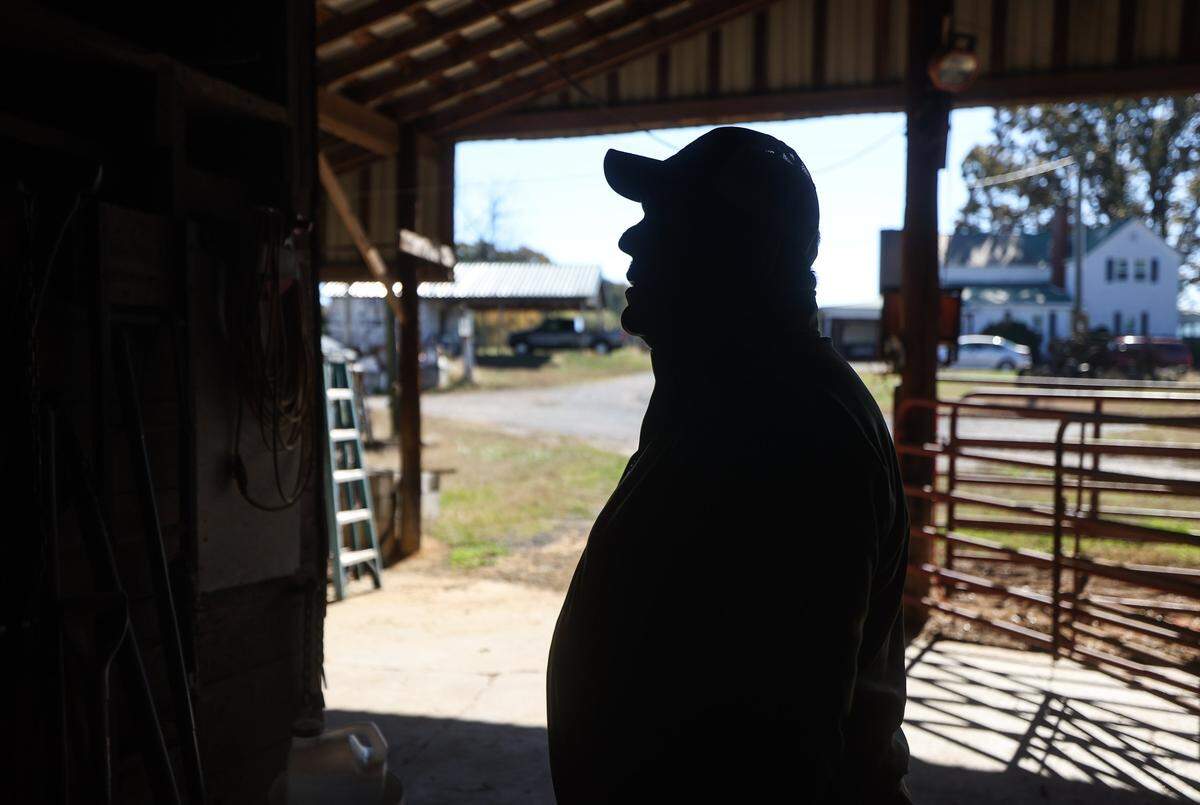
That isn’t the case for the Westmorelands. While they’re leaving the land behind, Chris is going to continue farming in a different county. Before they have to leave the farm next August, the Westmorelands will find a way to transfer the massive grain bins to Chris’s property.
“I know it’ll be a different place, it’ll be a different setup, it’ll be different but it’s carrying on a little bit of this legacy,” Keith said. “Even though it’s moving and it’s changing, there’s still gonna be somebody with our last name farming. And I’m proud of that.”
‘This is me’
To say Keith Westmoreland knows his family’s land like the back of his hand would be an understatement.
In minutes, he can lead you to the creek where he and his brothers played for hours until their mother, Ruth, summoned them with the ding of the dinner bell.
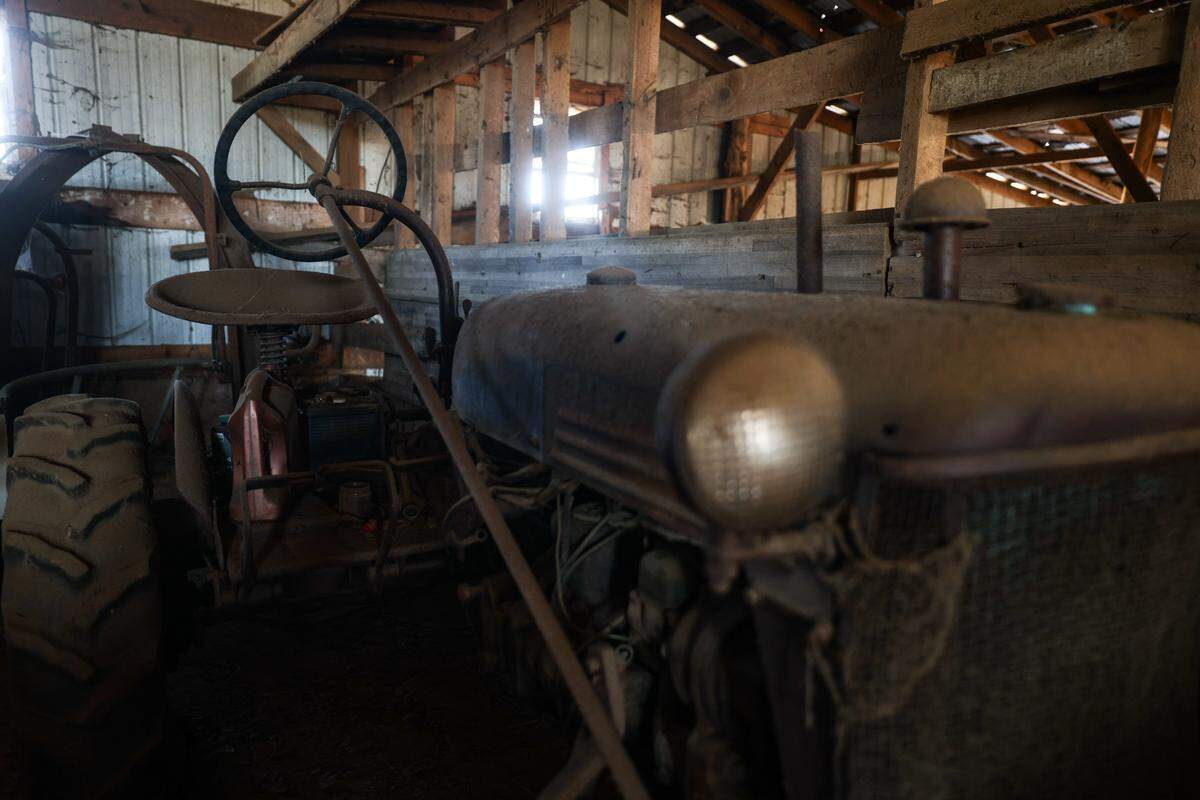
He can show you the barn where stacks of lumber left behind from a previous owner helped his grandfather build the house where generations of Westmorelands would grow up.
And in a quick ride on his Ranger, he can take you to the hill where his father planted azalea bushes for their mother before Keith was born. They’ve survived all these years.
But his deep reverence for his family’s land came to a head in the milk parlor.
In the dark parlor, through tear-welled eyes, Keith remembers the days he and his father would milk cows together for hours. In the center above the milking machines he points to a crossbar where Keith once installed a Little Tikes swing for his son, Kasey, when he was a baby so they could keep an eye on him.
It was a special place, but after his father died unexpectedly in 2004, it was also one of the hardest places to be. Moments full of conversation were replaced by quiet tears.
“A couple weeks after Daddy died, I found myself going to the back door to go ask him a question” he said.
This farm isn’t just where he lives, it’s informed every part of who he’s grown to be. Which is why stepping away is so difficult.
“This is more than home. This is me. This has been my (brothers). And my kids, this is them,” he said. “Money is not everything … but we got to survive too. Hopefully doing what I’m going to do is going to make their survival a little bit easier when they’re my age.”
This story was originally published November 11, 2025 at 5:17 AM.