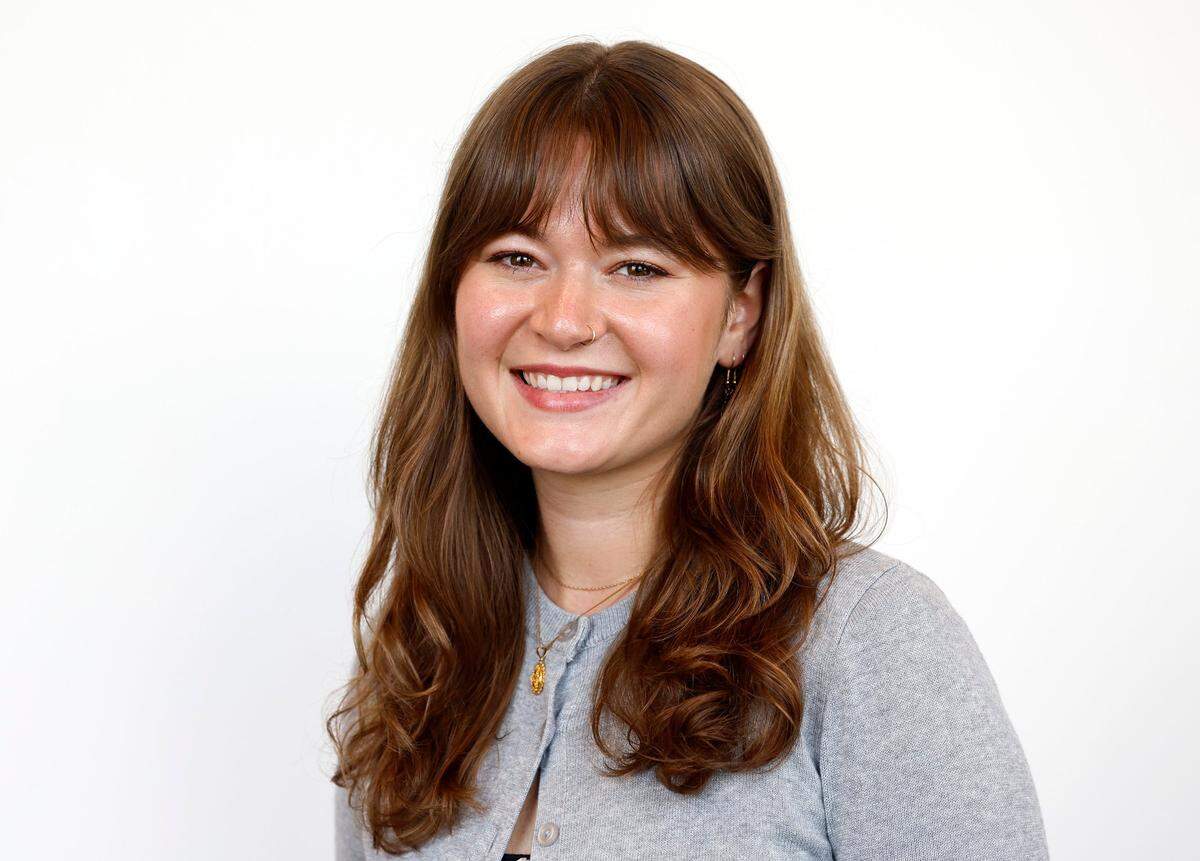
D.G. Martin, UNC leader, political candidate and longtime TV host, dies at 85
David Grier “D.G.” Martin Jr., a former University of North Carolina system vice president, congressional candidate, lawyer and the host of UNC-TV’s North Carolina Bookwatch for two decades, died early Tuesday at his home in Chapel Hill, his son said. He died with his wife by his side after a battle with melanoma. He was 85.
Martin ran twice for a Charlotte-based seat in Congress in the 1980s before shifting into higher education, where he became a top official in the University of North Carolina system and later its chief legislative liaison. After leaving that role in the late 1990s and losing a bid for the U.S. Senate, he spent decades as a weekly columnist and the host of North Carolina Bookwatch. A former UNC System president called him “a wonderful representative and ambassador” for the state.
He was described by friends and family as exceptionally kind, friendly and curious.
“He was a dad who never really told us what to do, but he was a dad who just set an example,” his son, Grier Martin, said in an interview with The Charlotte Observer. “He led by example, rather than order, and set a model for what a parent should be, what a man should be, what a human being should be.”
From Davidson basketball to the campaign trail
Born in Atlanta, Martin grew up in Davidson, where his father, David Grier Martin, served as president of Davidson College from 1958 to 1968. He graduated from North Mecklenburg High School and Davidson College, where he played on the basketball team, according to the North Caroliniana Society. He later served in the U.S. Army’s Special Forces and attended Yale Law School before returning to Charlotte to practice law.
Martin ran twice for U.S. House seats in the 1980s as a Democrat during a period of Republican dominance. He narrowly lost to Alex McMillan in 1984 in what became one of the closest House races in the country, his son said, and ran again in 1986, falling short. In 1998, he lost the Democratic primary for U.S. Senate to John Edwards.
Those defeats weighed on him, his son said.
“People don’t get this about him, but he’s intensely competitive, not in a jerk way, but definitely competitive,” Grier Martin said. Each of the losses, including the 1998 Senate race, “hit him very, very hard.”
The competitiveness never quite left him. His son joked that Martin later ran the Marine Corps Marathon and checked afterward to make sure he had finished ahead of Edwards.
A behind-the-scenes power broker at UNC system
It was in the years after his House campaigns that Martin left his deepest institutional mark. In 1987, he joined the University of North Carolina system as secretary of the university and later served as vice president for public affairs and the system’s chief legislative liaison. He worked closely with presidents and the UNC Board of Governors during his career.
Wyndham Robertson, a former UNC vice president who worked alongside Martin, said his relationships in Raleigh made him indispensable.
“He knew everybody in the legislature, and everybody in the legislature knew him and liked him,” Robertson said. “He had the world’s most fabulous smile, and people responded to him in a positive way, and it was partly because of that, but also because the part of him that generated the smile was so real… He loved people.”
As secretary of the university, Robertson said, Martin served as the shepherd of the Board of Governors and became a behind-the-scenes problem solver for presidents navigating political shifts.
“He was a real trouble-shooter. You could send him out on almost anything, any kind of mission, and he would come back having made the situation better, whatever it was,” she said.
His later public service included leadership for the William R. Kenan Jr. Fund and work with North Carolina’s Clean Water Management Trust Fund, along with roles at the Trust for Public Land, the Triangle Land Conservancy and in interim leadership positions at UNC Pembroke and North Carolina Central University, according to the North Caroliniana Society.
Author, columnist and Bookwatch host
Martin reached North Carolinians for decades through both print and public television. He began writing a weekly column in 1985 on books, politics and public life, and later spent 20 years hosting North Carolina Bookwatch, interviewing more than 400 authors writing about the state. In 2020, he received the North Caroliniana Society Award in recognition of that lifetime of cultural and public service.
In 2016 he published a book, North Carolina’s Roadside Eateries: The Traveler’s Guide to Local Restaurants, Diners, and Barbecue Joints.
Tom Ross, the former president of Davidson College and later of the UNC System, said Martin’s influence extended well beyond titles.
“He was a very careful and thoughtful person, and whenever he was involved in any decision-making, you could be sure that he had thought through all of the ramifications of it,” Ross said. “He loved the university and what it meant to the state of North Carolina.”
Ross also recalled the everyday generosity that defined Martin. He said he and his wife would often see Martin while on a walk, doing favors for his neighbors.
“We would see him picking up the newspapers from the curb and putting them on people’s front door steps so they wouldn’t have to go out and get them,” Ross said. “He was just a happy, positive, generous person.”
‘It’s a big loss for the state of North Carolina’
For his family, Martin’s intellectual curiosity and devotion to people defined him as much as any public role. Even late in life, Grier Martin said, his father collected language dictionaries, worked to learn new languages and filled his books with handwritten notes.
“He was incredibly curious,” his son said, describing shelves lined with marked-up books and sermon notes written on church bulletins.
That same curiosity, his son said, drove Martin’s lifelong dedication to public service.
“A long-standing desire to contribute to the public good,” combined with that “intellectual curiosity,” is what drew his father to politics and policy in the first place, he said.
As North Carolina remembers his public legacy, those close to him remember who he was as a person.
“It’s a big loss for the state of North Carolina. (He was) a wonderful man who really devoted his life to trying to make other people’s lives better and richer,” Ross said. “Through books and through his columns and through his personal interactions, I think we’re all blessed and better off having known him.”
This story was originally published December 9, 2025 at 4:50 PM.