
Can there be civil debate on 100 college campuses? Davidson wants to make it happen
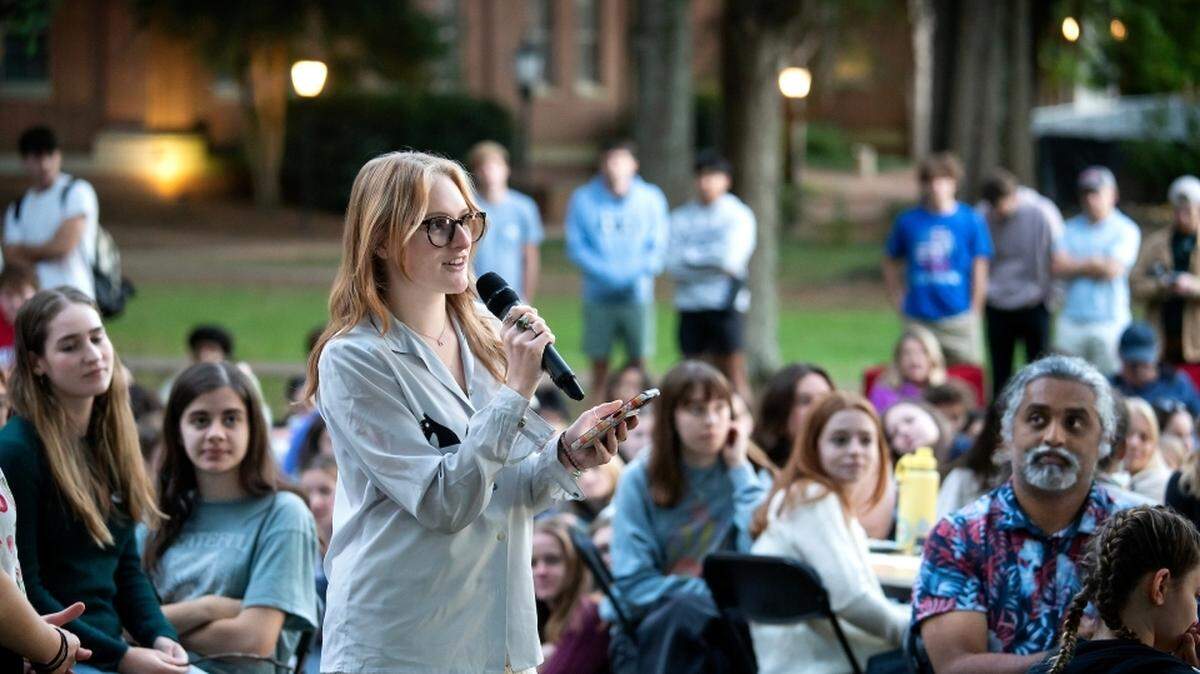
Davidson College will soon lead the charge in teaching a network of 100 universities and colleges across the nation how to cultivate respectful disagreement and civil debate.
The school just north of Charlotte won a $4 million grant — the largest competitive government grant in the school’s history — from the U.S. Department of Education’s Fund for the Improvement of Post Secondary Education. Civil discourse was one of seven priorities laid out by the department last November to help address needs on college campuses nationally.
The initiative will be led by Davidson’s Institute for Public Good, which launched five months ago and aims to equip students to become “ethical public leaders.”
The Institute for Public Good will help form the Deliberative Citizenship Network, which will encompass 100 colleges and universities across the country. Davidson is currently looking for interested schools to participate, Davidson spokesman Jay Pfeifer said. The Associated Colleges of the South and the Institute for Citizens and Scholars have committed to help the college build the network.
Davidson said the money, which will be spread out over four years, will be used to:
- Help train faculty and staff in facilitating forums on difficult topics and weaving those strategies into classroom conversations.
- Support student-led teams that want to hold discussions and debates around contested public issues.
- Gather partners from the various institutions to share successful tools and approaches.
- Produce tools, teaching resources and ways to assess results that are shared publicly online.
For years, Davidson has led efforts to engage students, staff and alumni in civil discourse, says Chris Marsicano, executive director of the Institute for Public Good.
In 2020, Graham Bullock — professor of political science at Davidson — led the creation of the similarly named Deliberative Citizenship Initiative. This initiative aims to productively engage the Davidson community on contentious topics facing society. It was born out of a desire from different members of the Davidson community to break through polarization.
Marsicano hopes this grant money will help Davidson build upon the work it has done and share its knowledge about facilitating public discourse with others.
“When you’re talking about Davidson, you’re talking about a school that draws students from red states and from blue states. You’re talking about a school that has strong academic departments that believes in critical thinking, believes in reaching across the aisle to solve problems. Any kind of major federal grant that’s designed to help students do that better, that aligns with our mission and vision — it was sort of a no-brainer to go after,” he said.
Davidson has had its own battles addressing freedom of speech on campus. In 2018, a group called the Davidsonians for Freedom of Thought and Discourse, led in-part by former North Carolina Governor Jim Martin, raised concerns about “free speech suppression” among other issues.
The group, with a membership of more than 250 alumni, caused university leadership to create a task force to form Davidson’s own free speech doctrine. In 2021, the college also released a statement affirming its position on free speech.
In a time when the country is deeply polarized, this program is needed now more than ever, Marsicano said.
“The vision of this grant is effectively to say polarization is not just in Mecklenburg County, but across the country,” he said. “And if we’re going to try to make a dent in that polarization, if we’re going to try to make it so that people can listen to each other, learn from each other, debate and deliberate across difference, we’re going to need to make sure that there are more campuses than just Davidson fighting this battle.”
Davidson is in the process of writing job descriptions for roles that will help support the effort. Training for interested schools will be held virtually and in person.
Colleges and universities that are interested in joining the Deliberative Citizenship Network can send an email to publicgood@davidson.edu.