Monroe asked for help saving water during ‘severe drought.’ Is Charlotte next?

The Charlotte region’s drought could worsen in the coming months if rainfall doesn’t keep up with growing demand for water, the Catawba Riverkeeper says.
Mecklenburg County and surrounding counties, including Union and Cabarrus, are currently classified as being in “severe drought,” according to the U.S. Drought Monitor, with 9.4 million North Carolina residents living in areas facing drought. Stream levels across the Charlotte area are running at about 67% of what they would normally be this time of year, Catawba Riverkeeper Brandon Jones said, leaving conditions “very dry” heading into the spring.
If rainfall does not pick up in the coming months, particularly as utilities begin refilling reservoirs ahead of summer, Jones said drought impacts could worsen, potentially leading to voluntary conservation measures across more communities. One town in the region has already begun asking residents to reduce water use.
“The challenges are growing every year. We have more population, we have more energy use, we have more water use, more demand on this water” Jones said. “It really exacerbates this problem of droughts that are increasing in our area.”

The greater the demand for water the shorter amount of time you have to prepare and prevent drought conditions, Jones said. Mecklenburg County’s population grew 8% between 2020 and 2024, according to U.S. Census Data. In that same time, Union County grew 10.6%, Cabarrus grew 8.5% and Gaston County grew 6%.
That dynamic helps explain why some communities are already taking action. In Union County, the city of Monroe last month asked residents to voluntarily conserve water for the first time in 19 years after drought conditions lowered reservoir levels in the city’s water supply system.
“(It) is a proactive conservation to slow the drawdown of our reservoirs and reduce the likelihood of more restrictive measures later,” Monroe staff told The Charlotte Observer in a written statement.
Monroe’s drinking water comes from Lake Twitty, Lake Lee and Lake Monroe, along with a supply agreement that allows the city to receive up to 1.99 million gallons per day from the Catawba River basin, according to the city. Officials said extended dry periods reduce inflow and can lower reservoir levels, even when short-term rainfall occurs. The recent snowstorm in the area didn’t help improve conditions either, as ten inches of snow correlates to only one inch of precipitation, the city said. Short-term rainfall events also don’t make a meaningful difference.
And according to federal data, the state has just seen its 25th driest January and December on record.
Jones said Monroe’s response reflects how drought can surface first in communities with smaller or more constrained systems, even within the same region.
“There’s a lot of cities that are built right there on the ridge line, and unless they have a direct connection to the Catawba… they could be less resilient than other communities like Charlotte,” Jones said.
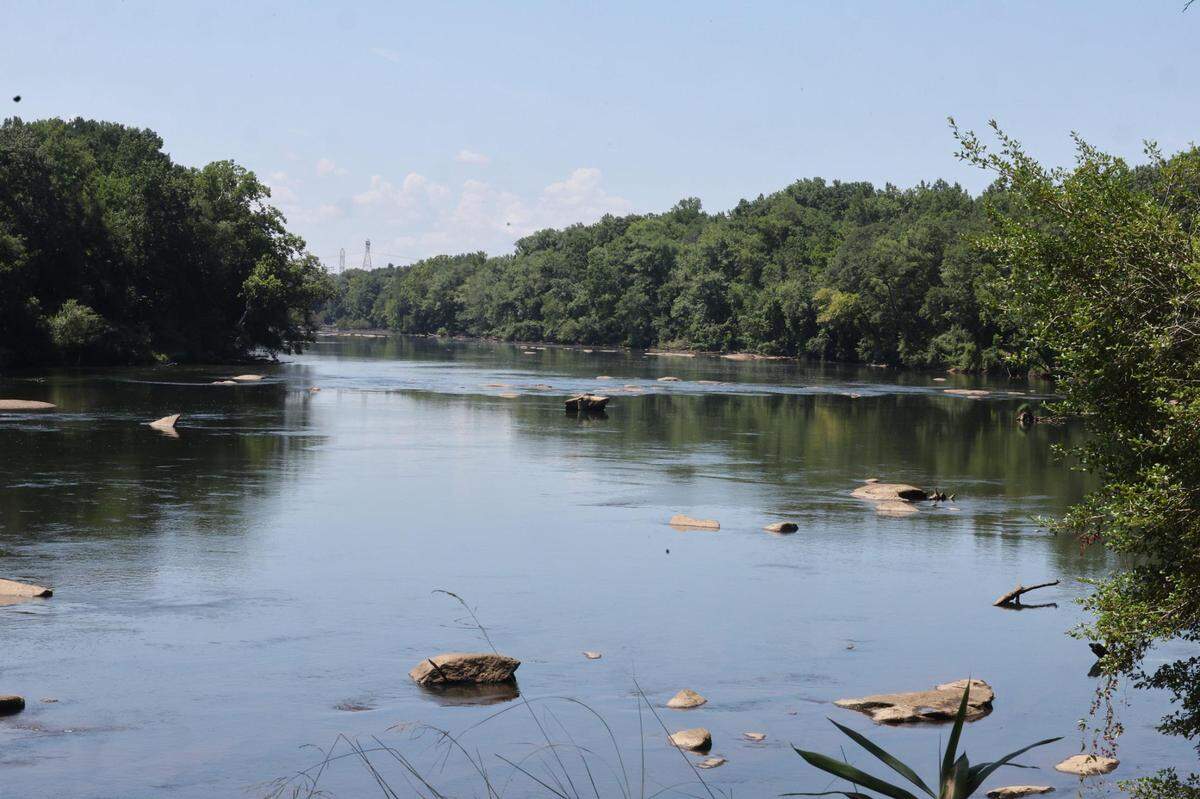
Water level changes on Catawba basin
The broader Catawba River system, Jones said, is still holding up for now. Large reservoirs such as Lake Norman and Lake James are typically drawn down during winter months for lake management and flood control. That planned drawdown has coincided with a dry period that began last fall.
But once utilities begin raising lake levels ahead of summer recreation, Jones said, the margin tightens.
“If we don’t get rain at the same time we’re trying to raise those reservoirs, we will go into drought conditions on the main stem of the Catawba,” Jones said. “Then they’ll start going into that low inflow protocol and asking for similar types of things that Monroe users have been asked to do.”
If that happens, communities across the system would follow a coordinated drought response created as part of Duke Energy’s federal relicensing process in 2015. It wasn’t in place during the region’s last major drought in 2007, Jones said, and the area is much better prepared now.
The first stage, he said, typically involves voluntary conservation and public messaging aimed at stretching supplies, which Monroe has already done.
As drought intensifies, those measures become more restrictive.
“Once we get down into stage two and stage three, that’s where things become more difficult,” Jones said. “They’ll completely eliminate all recreational flows. Each of the municipalities has a plan, and it’s a little bit different depending on their water source and their constituents, but they will be working together.”
How will drought affect Charlotte, Concord, Gastonia?
For now, not every city is feeling immediate pressure on its water supply.
In Charlotte, officials say current drought conditions have not affected the city’s water supply or day-to-day operations. Jennifer Frost, public affairs manager for Charlotte Water, said the utility remains well positioned to meet customer needs and is not anticipating mandatory conservation measures at this time.
Charlotte Water primarily relies on surface water from the Catawba River system, with intakes on Lake Norman and Mountain Island Lake, Frost said. While mandatory restrictions are not expected, Frost said the utility encourages everyday conservation and would coordinate closely with other utilities along the river if drought conditions worsen.
In Concord, Mayor Steve Morris said the city is in good shape when it comes to water availability because of long-term planning and multiple sources. Concord draws from Coddle Creek Reservoir, Lake Fisher and Lake Concord and purchases water through an agreement with Stanly County, he said.
Farther west, Two Rivers Utilities, the largest regional water provider in Gaston County, is monitoring drought conditions but says operations have not been affected. Dandria Bradley, communications director for the city of Gastonia, said the utility has been under a “Stage 0 drought watch” since November, a designation that has increased monitoring and planning but has not yet required changes to operations.
Bradley said Two Rivers Utilities staff are preparing for the possibility of tighter conditions if dry weather persists. Drought planning is coordinated at the basin level, meaning responses are guided by conditions across the broader Catawba-Wateree system.
“The same drought can look very different depending on where you are and how your system is built,” Jones said. “The challenge is making sure we’re planning for that future now, because once you’re in a drought, your options get very limited, very fast.”
This story was originally published February 10, 2026 at 5:00 AM.